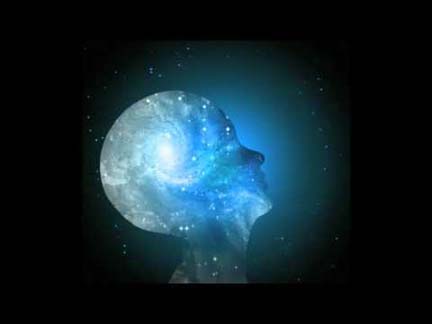
Scientist asks, “Are we really Beings of Light?”


PHOTO: AscendedHealth.com

PHOTO: AscendedHealth.com


“The Living Light: Can biophotonic light emitted from trained probiotic microbes help balance the body?”
Presented by Compton Rom Bada at the Arizona Naturopathic Medical Association (AzNMA) Spring Conference, June 2-3, 2012.


Are humans really beings of light? Our cells release biophotons.

In the 1970’s, Dr. Fritz Albert Popp coined the term “Biophotons”, for the ultra weak photonic emissions given off by cells during reactions. This light is very weak – typically several million times as faint as the light from a firefly. He was able to confirm that living cells emit small bursts of light. He determined that cells do not just radiate light, they also absorb light. He later found out that DNA is a source of our inner light…


< Read or download the PDF of “The Living Light: Can biophotonic light emitted from trained probiotic microbes help balance the body?” >


links submitted by Robert Anderson


“The Neurons that Shaped Civilization”


Vilayamar Ramachandran PHOTO: ted.com

Vilayamar Ramachandran PHOTO: ted.com

In this 8-minute video of a TED talk filmed in India in 2009, neuroscientist Vilayamar Ramachandran gives a brief explanation of what he calls “mirror neurons” and their activity, which he claims is proof of empathetic intelligence. The talk also gives his takes on science and being One with the universe.

< Watch the 8-minute TED Talk by neuroscientist Vilayamar Ramachandran online. >

link submitted by Michael McIntyre


Developing the Will


2013-REP-Harold_Boulette_Solar_Wind


The next task to which the neophyte has to apply himself is the training of his will. It may be thought that for some people this is a hopeless task, for they are naturally weak-willed. The will, however, is not a separate organ of the mind which may function adequately or inadequately. The will does not secrete force as the the liver secretes bile. The will is simply the power to concentrate the available energies. …
The strong will is really the single-pointed will, as we see all too clearly in the drunkard who is too weak-willed to stick at any work, but shows an amazing tenacity in obtaining alcohol.
The secret of a strong will, therefore, is to concentrate it upon a single object; this can only be achieved by eliminating all competing objects which divide the attention of the will...” ~Dion Fortune

“I don’t completely agree with everything Ms Fortune says about the will, but in general I do agree. I think it is largely a combination of two things rather than one: how much you concentrate on the thing you want, and how badly you want it. It is true though that conflicting desires can mess things up.”


To read the complete blog post, click on: http://blog.spiritsun.net/2014/02/20/developing-the-will.aspx


New Church Guild Established


PHOTO:  thesavoysocial.com

PHOTO: thesavoysocial.com


A new Church Guild, “The Savoy Social,” was established on April 30, 2014 under the auspices of the International Community Guilds. The new web site is up and running, and full of beautiful photos.


< Visit The Savoy Social web site to see what services are being offered. >


The International Community Guilds are religious corporations organized under the Nonprofit Religious Corporation Law, Section 501 (d) of the Internal Revenue Code. Incorporated under the laws of the State of California. The primary purpose of the corporation is the financial and material support of ministers and members of the International Community of Christ in a way that is consistent with a religious life. The Guilds can provide stipends and living support, that is, medical and dental care, transportation, food, clothing, utilities, and housing. There is a common treasury by which to do so, much in line with the system of the Essenes. No net earnings inure to the benefit of any individual; rather they are made as donations to the Church for its support.

The Guild Corporation was authorized by Charter received from the Head Overseer, the late Bishop Gene Savoy, Sr., in February of 1992. In essence, the structure allows the Church to engage in commercial activities without any tax liability because the activities solely support the Church and its ministers/members. Each working unit is known as a “guild,” which has a stated product group or service field.


“VLT spots largest yellow hypergiant star: Mix of new and old observations reveals exotic binary system”


HR 5171, the brightest star just below the center of this wide-field image, is a yellow hypergiant, a very rare type of star with only a dozen known in our galaxy. Its size is over 1,300 times that of the Sun—one of the 10 largest stars found so far. Observations with ESO's Very Large Telescope Interferometer have shown that it is actually a double star, with the companion in contact with the main star. PHOTO: ESO/Digitized Sky Survey 2

HR 5171, the brightest star just below the center of this wide-field image, is a yellow hypergiant, a very rare type of star with only a dozen known in our galaxy. Its size is over 1,300 times that of the Sun—one of the 10 largest stars found so far. Observations with ESO’s Very Large Telescope Interferometer have shown that it is actually a double star, with the companion in contact with the main star. PHOTO: ESO/Digitized Sky Survey 2


“The European Southern Observatory’s Very Large Telescope has revealed the largest yellow star — and one of the 10 largest stars found so far. This hypergiant has been found to measure more than 1,300 times the diameter of the Sun, and to be part of a double star system, with the second component so close that it is in contact with the main star.”


< Read the article posted March 12, 2014 online at sciencedaily.com. >


link provided by Frieda Nelson


The Holographic Model


2013-REP-Harold_Boulette_Solar_Wind


Because the world is increasing in frequency, you may be experiencing reality in a new, faster, more multidirectional way that supersedes the sequential, one-thing-at-a-time, linear processing we’ve come to know so well. Today—right now—we’re shifting to a new inner geometry of perception—one based on the sphere and the hologram. …
With spherical perception, every point of view can expand and contract spherically to include more or less of the unified field of consciousness-and-energy, with everything contained in the present moment. With holographic perception, any part of the brain, any part of life, and any point of view can contain the entirety of the whole self and whole reality. As I mentioned before, science is gradually discovering that both your brain and the universe are like a hologram.” ~Penney Peirce

“Most of us know that a hologram is a kind of three dimensional image that is reproduced by shining a laser, or lasers, on the film it is recorded on. Not as many are aware that if you cut the recorded holograph in half, unlike a normal photograph, when you shine a laser on each half, each part will show the entire image. This happens even when the film is cut into four, ten, or even twenty pieces. It seems like the whole image is recorded on every part of the film.

“So when we consider the physical universe as a hologram, this has some interesting implications. . .

To read the complete blog post, click on: http://blog.spiritsun.net/2014/02/26/the-holographic-model.aspx


NOAH and THE ARK: Part 3


2014-REP-ark 2


The Ark

In Noah’s story (Genesis 6–8) we will begin with word ark. In Hebrew the word is tebeh, which frequently occurs in Noah’s story but appears only twice in the rest of the Old Testament (OT); both in Moses’s stream-drifting episode as an infant. So Tebeh is exclusive to Noah and Moses; all other accounts in the OT use the equivalent words boat, ship, or vessel.

Tebeh (Ark) has an explicit meaning, made up of the letters Tav, Bayt, and Hay:

Bayt—the archetypal container
Tav— the utmost resistance to influence or destruction
Hay— the essence/principle of primordial life

In other words: “The Ark is the most destruction-resistant archetypal container to support the essence of life.”

Noah in Hebrew letters is Noun and Hhayt:

Noun—individual existence
Hhayt— sphere for undifferentiated energy

In other words: “Noah is the embryo, the potential of every individual existence.”

Traditionally, each Hebrew letter also represents a number. Aleph was 1, bayt was 2, etc., with the second row of letters signifying a series of tens: yod was 10, kaf was 20 and so on. The third row designated numbers by hundreds. To differentiate a letter from a number in any text, a line was simply drawn under the letter. With this in mind we can look at the cubit dimensions of the Ark: 300 (Sheen) x 50 (Noun) x 30 (lammed):

Noun—individual existence
Lammed—controls/connects primordial movement
Sheen—Breath of God

“The Ark dimensions are the atmosphere for the individual to be moved by the Breath of God: a sacred place.”

 When we put the Man Noah (the potential of individual existence) in the Ark (the most destruction-resistant archetypal container to support life) and add the ark dimensions (the atmosphere connected to the Breath of God), we can see the Ark is designed for a voyage that will exalt human potential. This is the blueprint for the entire episode of the Ark on the Flood Waters.

In constructing the ark, Noah is instructed to use “gopher” wood. The Hebrew word gopher (not to be confused with the English word for a certain rodent) appears nowhere else in the Hebrew Scriptures. A word that appears only once in a given document is called a hapax legomenon, a Greek term meaning “something that happens only once,” and is often abbreviated as hapax. Four hundred words in the Old Testament are true hapaxes, and twenty-nine of these have no meaning. Gopher falls in this latter category. The word is composed of three letters:

Ghimel—archetypal organic movement
Phay—essences; building blocks of individual life
Raysh—universal container

In other words: “Gopher is the building blocks of individual existence that can be organized into any form and any container.”

Genesis 6:14: “Make thee an ark of gopher wood, rooms shalt thou make in the ark, and shalt pitch it within and without with pitch.” The word pitch is translated from kopher in Hebrew, made up of the letters Kaf-Phay-Raysh. In the 106 other uses in the OT, kopher is translated to mean “atonement” or a synonym thereof. Genesis 6:16 is the only instance of the word’s being translated “pitch.” The key to understanding gopher is found in its relationship to kopher. The gopher wood is sealed with pitch on both sides; thus we have pitch-gopher-pitch. The matrix below reveals the true content of verse 14 and sweeps away all obscurity around the term gopher:


Pitch       Kaf          Phay    Raysh
Gopher  Ghimel  Phay    Raysh
Pitch       Kaf          Phay    Raysh

Immediately we can see the bonding of triple Phay and triple Raysh: an incredibly resilient structure. Kaf is the archetypal container for individual life and in Hebrew means “the hollow of the hand.” It is ready to receive all that comes. If you can imagine (Ghimel) the essence of organic movement expressing (Kaf) both hands stretching out to embrace all that may come, rooted upon an unshakable foundation . . . then you, the reader, are about to embark on the Ark.

The Ark story is not a single historical event, but a continuous one. It is the realization for the unbound capacity to explore the extent of the cosmos—be it inner or outer worlds—so the individual may flourish to become a ‘being’ beyond one’s personal gravity of prediction. The story has nothing to do with catastrophe, destruction, or divine revenge. The storyline, originally passed on as an oral tradition, is simply a vehicle for the inner message. The Rabbim would figuratively put this story on and wear it like a vest or breastplate; carry the inner message in their chest. When I first heard this it seemed like utter nonsense, when actually it is quite a pleasant experience. Most of us in the Western world conceive of thought as being located in our heads, but this is not true of all cultures. To give you a sense of this, read the following sentence, a memo that might show up on your desktop:

“The meeting for next Wednesday has been moved forward two days.”

Now answer this question: What day will the meeting occur? There are two correct answers. About half of people answer “Monday” and the other half will say “Friday.”

People that answer “Friday” perceive time as static and only they themselves move through the corridor and so they move themselves to a site in the future. People that answer “Monday” perceive themselves as static and see time moving or passing by them: since time moves past them it can only move to an earlier event: Monday. This cognitive preference is due to how we orient ourselves to objects. It also defines our ability to locate thought outside ourselves and place it between objects. If you look around the room you are in right now you might notice a table, chair, lamp, and other items. In and of themselves those items have little if any connection; it is our attention that bridges these items and brings continuity to the scene. In effect, our thoughts glue these articles together, and essentially our thoughts reside between the objects.

When an American is shown a picture containing a conspicuous object with other visuals as background, they will report more details about the conspicuous object than would a Chinese or Japanese person. By the same token the Japanese and Chinese can give more details of the background visuals than can an American. Americans are comparatively more object oriented than Japanese or Chinese, who are comparatively more environmentally oriented. There are several neurological studies—hard data, specific brain areas being active—that support these cognitive preferences within these cultures. It is not just a psychological phenomenon; the brain is actively different. We have the capacity to place our attention, our mental projections, and not confine them to areas strictly inside our heads.

When we gesture within the context of a conversation, motor neurons are responding to the visual, emotional, and or sensual content of our thoughts. Essentially our mental projections inhabit different parts of our body for brief moments and this is no less real than the neural activity prompting the movement or gesture. Going a step further we can allow those thoughts to inhabit and hold themselves in those gestural repositories in the same manner we would perceive thought to reside in our skulls. To have a feeling in our belly, chest, hands, or about the shoulders is no less peculiar than carrying or experiencing a “thought” in those same locales.

The key to posting thoughts in areas other than the head is in converting word content into images or concepts. It is simpler to mentally inscribe the figure of a triangle on one’s chest, say, rather than the letters t-r-i-a-n-g-l-e. It is more economical to use an image. By the same token, if one embodies the Noah story and firmly images the concepts, the story can be posted within the chest; the concepts can be absorbed into and expressed from the chest for extended periods with a minimal amount of personal administration. In this way the message contained in the storyline becomes a living artifact, rather than fractured moments of recollected memories coming to the surface of our attention. This is the purpose of autoit expression and at the heart of this qabalistic art as the biblical authors had originally intended.

In Genesis 6:16 Noah is instructed to place a window, one window, in the ark. Tsohar, tsaddle-hay-raysh, is the Hebrew word translated as “window” in the context of this verse. Tsohar appears 23 other times in the OT, and in every one of these instances it is translated as “noon,” “midday,” or “noonday”; Tsohar means light in its highest azimuth. The translation “window” can only be a deliberate allegory by the author; challown (pronounced khal-LONE) is most commonly used to indicate the word window in the OT. At this point, the reader should be able to assign his or her own interpretation of tsohar.

In the construction of the ark described in three verses—14 through 16—at the core of every element—ark, gopher wood, pitch, window, and the dimensions—there is a dense occurrence of words having exclusive meanings, singularities, and anomalies, which goes beyond any rich coincidence. All of this suggests that the English interpretation has been excessively suited to the view of the translators to such an extent that the story no longer reflects the original narrative. The story continues with the ark’s having three levels, for which the reader would have an array of interpretation for this allegory.

Genesis 6:17: “And behold, I, even I, do bring flood of waters upon the earth, to destroy all flesh, wherein is the breath of life, from under heaven: and every thing that is in the earth shall die.” To understand the interaction of the components in Genesis 6:17, we have to visit the first chapter of Genesis where after the creation of light, Elohim (God) separates the “waters” with a firmament. The firmament is renamed “heavens” and we then have this construction: waters<heavens>waters” or mayim<shamayim>mayim in Hebrew, and the schema is:

mem-yod-mem (Mayim or Waters)
Sheen-mem-yod-mem (Shamayim or Heavens)
mem-yod-mem (Mayim or Waters)

Sheen, traditionally, is equivalent to the “breath of God.” This is the second cosmogony (after Elohim creates a “double light”) in order to establish the potential for a physical realm. The archetypal or ethereal waters are infused with the breath of God that bonds and creates a material representation of the ethereal waters.

When God says “I, even I, ” will flood the earth with water, the “I, even I,” is critical and establishes that once again, as in the beginning, God will reestablish the heavenly waters upon the earth. The flood is not a threat but a restoration of Sheen “wherein is the breath of life, from under heaven,”. And the Ark containing Noah (the archetypal embryo) will be bathed in these waters that the human spirit can once again achieve its highest potential and return to a state that was originally in accord with God and the heavens. The waters only destroy that which is not aligned with Sheen; that is, no flesh can endure terrestrial waters but spirit can propagate and thrive upon the ethereal waters, and the Ark is the key for a safe voyage.

The Ark allows a terrestrial trek wherein one is not separated from the creator, and all of the human family—Noah’s wife, sons, and their wives—are afforded this opportunity. Noah is instructed that the Ark is to have all of life two by two and by this is meant nothing more than: Man is also a material being and as such must engage in the material world, but this is engagement need not be excessive. All the animals on the Ark are therefore not excessive, but only paired as a reminder that there is terrestrial food and there is also food of the spirit. To be truly human one must also feed the spirit.

We could continue through the end of Genesis 7, but at this juncture further exposure of Noah’s flight would become laborious for most readers. All the explanations, to this point, should give one a pretty good glimpse of how the ancients enabled the Torah in a much different fashion than readers of the modern times.

The segment that follows in the book turns to the other Ark—The Ark of the Covenant—discloses the true identity and location of this elusive artifact, and once and for all puts to rest any speculation on the matter that has ever existed. It is a much different exposé than Noah’s Ark, which turns out to be so obvious that originally the author was struck with disbelief. We look forward to presenting this next section of the book to Communique readers when it becomes avalable.


by Michael McIntyre, 2014


Become a Peru Tour Sponsor


Mt. Huascaran, Peru’s highest peak.

Mt. Huascaran, Peru’s highest peak.

Recently Community members received an announcement of the Andean Explorers’ August 2014 trip to Peru, Peru’s Sacred Places of Power, Cultural Tour & Pilgrimage. And you have probably already received an invitation to accompany Sean Savoy and the Andean Explorers on this unique Pilgrimage into the central Andes of Peru. You may have also read about the tour here in ANNOUNCEMENTS in the Community Communique.

Please see the attached flyer and give special attention to the third portion of the Tour, “The Christ of the Andes Pilgrimage (August 13-17).”

< Read the promotional flyer. >

 The Pilgrimage starts with a short morning flight into the central Andes. From Huaraz, the capital city of Ancash province, the tour will take travelers to the Santa River valley, known as the Callejón de Huaylas (the Valley of Huaylas), the “Switzerland of Peru.” There tour participants will visit the picturesque towns of Carhuaz, Caraz, Recuay and the national shrine of Yungay. This latter city is where Jamil (1959-1962), known as “El Ni o” (the Christ) of the Andes, lived and later died as a result of the 1962 avalanche that destroyed Ranrahirca, one of the five towns of the valley, and nearly destroyed Yungay at the foot of Mt. Huascarán. In 1970, Yungay itself was the site of a major earthquake causing the rock, mud, and ice of Huascarán to fall again and inundate the town. Now, Yungay is a national memorial and a pilgrimage site for people everywhere.

You are encouraged to support this pilgrimage to Yungay, where participants will walk in the footsteps of Jamil, whose story is told in Jamil: Child of Light by Gene Savoy.

 < Read the tour sponsor form. >

By sponsoring the tour, you will help participants learn about the history of Peru from a fascinating and unusual perspective. With this tour, we are tying Peruvian history directly to the work of The Community. Tour members will learn how our pioneering work and innovative theories have lead to deeper understanding of and new insights into the mysteries of pre-Columbian America.


“Cities and the Wilderness”


2013-REP-Harold_Boulette_Solar_Wind


Let us avoid staying in towns and villages; it is better for their inhabitants to come and visit us. Let us seek the wilderness and so draw after us the people who now shun us. For scripture praises those who ‘leave the cities and dwell in the rocks, and are like the dove’ (cf. Jer. 48:28). John the Baptist lived in the wilderness and the population of entire town came out to him. … For holiness is held in higher honor than wealth;how many rich men there were at that time, proud of their glory, and yet today they are quite forgotten; whereas the miraculous life of this humble desert-dweller is acclaimed until this day, …Let us abandon sordid commerce, and so acquire the ‘pearl of great price’ (Matt. 13:46).” ~The Philokalia

Today, we would say avoid cities and the suburbs of big cities rather than towns and villages. In most areas now, there is little wilderness left, and even if there is, trying to live in it is impractical. Still, the idea remains a sound one for a number of reasons. One reason is because we are benefited by regular contact with nature which people living in large cities rarely get. Not that, as some claim, nature and the natural world is holy in some way, but because nature obeys the Law of God, while many men try to avoid it. Another reason is that there tends to be a lot more negative energies, angry energies in cities or crowded areas simply because they are so crowded, and those low-frequency energies make it more difficult for the spiritual aspirant to raise her frequencies to allow contact with spiritual beings. Another is that spiritual techniques should be practiced outdoors, but in a place where you are not being watched, especially by doubters.

If, however, you do live in a large city or suburb and it is not practical for you to move, you can get around this problem. . . .

To read the complete blog post click on the link: http://blog.spiritsun.net/2014/02/28/cities-and-the-wilderness.aspx

Contributed by Harold Boulette


NOAH and THE ARK: Part 2


2014-REP-ark 1

Let us look at the Hebrew word AWR, which means “light.” This word is found very early in the Hebrew scripts: Genesis 1:3.

AWR is made of the three letters Aleph Waw Raysh.
Aleph, the unthinkable of all that is and all that is not, meets
Waw, the copulative or fertilizing agent, which connects
Raysh. Each germ of light has an envelope. Raysh is the ultimate expression of this. It is the cosmic envelope, conceivable in the same manner one might ponder the finiteness or limits of the physical universe.

The schema AWR can be cognized as the unconditional movement of the discontinuous and unthinkable Aleph imprinting itself on Raysh, the exalted multiple and infinitely expanding container. The true context of AWR is an ever-occurring primordial event. It is the Wedlock of Two Infinities. It is around all everywhere, in all everywhere, and beyond all everywhere—it is alive. It first appears in Genesis 1:3.

And God (Elohim in the original Hebrew) said, “Let there be light,” and there was light.

Poetic as this verse seems, it would have been just as easy for the author to state, “Then, God made Light”. Or, “God, then, made Light.” But, the word light is generated twice in this verse, and with reason. There are two functions taking place. In the first use, And God said, “Let there be light.” Light, or awr, is an issue of God’s breath. Awr in this usage has an etherical quality. In the second use, “and there was light,” awr has become more tangible. It embraces substance. The unseen light brings forth the visible light. There is an inner light. There is an outer light. The unseen light is the cause and support of the visible. The unseen light is closer to God. Realizations of these interactions can be endless.

Although each word or verse is designed to deliver a particular message, the constant underlying intent of these authors is to immerse the reader in a regenerated state of awe for the ever-unfolding revelation of creation that breathes from realms beyond our conception to the smallest, most minute and isolated expression; all of this is in the constant flux of existence reinventing itself. Eventually this venture gives way to Infinity, which instills the key to all riddles. The intention here is to unveil the mindset of a cultured and educated person, long gone, distanced from us by more than two thousand years. That is our interest. This is not a Bible interpretation. So, let’s look at the word God in Gen 1:3 And God [Elohim] said, “Let there be light.” Elohim in Gen 1:3 is composed of the letters Aleph-Lammed-Hay-Yod-Mem:

Aleph—all that is and that is not
Lammed—a connecting agent
Hay—potential of universal life
Yod—temporal existence
Mem—maternal waters of cosmic fertility

Elohim is the casual architect of temporal creation; a fitting name for God in Genesis. The entire verse can be viewed as Aleph generating the capacity to create, which first imprints on the unseen world . The unseen imprint then makes an imprint of itself in the physical world. Aleph generates a double light, which brings forth the creation of the physical world. This is Einstein’s contemplation, E=mc2. This small example typifies the wealth of information contained in the first chapter of Genesis, only accessible by means of the ancient qabalistic autoit art.

So if we can imagine an aged and bearded Hebrew rabbi, draped in coarse linen, a single-candled room, and he intent on a tattered and worn text. We can guess he is not just mentally regurgitating written script to form a linear sentence in his head. Here is a little story:

There wasn’t much time. The man hurried to his automobile and arrived at
at the airport at 8:00 am. His package was disintegrating. It wasn’t long before the
the police would notice him. His fear at this is point pounded his heart.
Bang! Bang! He heard he the gunshot. Quickly he hit it the floor and blood pooled 
from his head. Five of his of fingers were missing. The end was near.

If you carefully read through the story there are several errors:

There wasn’t much time. The man hurried to his automobile and arrived at
at the airport at 8:00 am. His package was disintegrating. It wasn’t long before the
the police would notice him. His fear at this is point pounded his heart.
Bang! Bang! He heard he the gunshot. Quickly he hit it the floor and blood pooled 
from his head. Five of his of fingers were missing. The end was near.

Oftentimes when reading we dismiss articles and smaller words like the, of, at, in, on, a, is, it. It is easier to remember 7 0 2 7 7 5 2 8 4 2 as 702- 775-2842 in telephone format. We take individual bits of information and group them into packets. It is more efficient to remember three groups of information rather than 10 individual parts. This is called ‘chunking’. “The feathered animal having claws and a beak lifted off a tall green monument and made its way to another tall green monument.” or “The bird flew from one tree to the next.” Language itself, is a form of chunking. When reading, people will often make several chunks from a sentence, instead of laboriously reading one word at a time, in order to absorb the material more quickly.

Aoccdring to rscheearch, it deosn’t mttaer in waht oredr the ltteers in a wrod are, olny that the frist and lsat ltteres are in the rghit plceas. We dno’t raed ervey lteter by ilstef but the wrod as a wlohe uint.

So we have this tendency to condense written language when reading. We easily dismiss small or article words. We contract groups of words into manageable units. Essentially we compress thought. For the autiot reader, every word breathes panorama. Releasing. Reaching. Escalating. Our language is one of exclusion. When we think the word ‘chair’, essentially we block out every thing except ‘chair’. We isolate and close the door to all other possibilities. Autiot blossoms and launches the reader. The mind of the modern reader isolates and compresses thought. Thoughts of the ancient Rabbim were mind expanding.

< PART 3 >