“Let’s Talk about Electric Sunbeams”
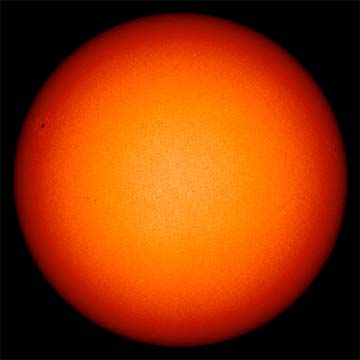
Latest image of the quiet Sun from the Solar Dynamics Observatory (SDO ) satellite (March 25, 2013). PHOTO: ESA/NASA
“Almost 70 years ago, Dr. C. E. R. Bruce offered a new hypothesis about the Sun. Being an electrical researcher, as well as an astronomer, Bruce proposed that the Sun was a discharge phenomenon.
“Years later, in 1972, the late Ralph Juergens wrote a series of articles suggesting that the Sun is not an isolated body, but is the most electrically active object in the solar system—the focus of a radial electric field extending outward almost to the next star system. Juergens was the first one to link electricity in the Solar System to the galactic circuit and to theorize that the Sun might have an external power source.”
< Link to the article “Electric Sunbeams” by Stephen Smith posted online at thunderbolts.info. >
< Link to a PDF of the same article here. >
Read the article.
Read the commentary below by Consociate Dr. Stephan Fuelling.
Then leave your own comment: Let us know what you think!
Commentary by Dr. Stephan Fuelling
The Electric Universe ‘model’ does not explain what is observed nor does it predict anything that can be measured.
The article you sent wants to explain the output of the sun by ‘electric arcs’. If there were these arcs, what is the process of creating the needed potential difference (voltage)? The other ‘theory’ from Ralph Juergens claims that the sun is an active electric body (as the ‘anode’ with the galaxy as the ‘cathode’), what is the process that continually replenishes the potential difference or charge of the sun? It should have been exhausted a long time ago. Where does this charge come from? Meaning, if the sun was charged and a current flows and heats the sun’s atmosphere, the sun slowly discharges. Therefore, its potential (voltage) slowly decreases. But the voltage would have to be kept constant over billions of years, so the sun would have to get recharged constantly, which requires an equal but opposite current, where does this go and how is it generated? It does not make sense.
Mainstream science explains that the sun creates its power from fusion, it burns hydrogen to helium, this not only explains the energy output of the sun, it also explains the existence of red dwarfs, which are too small to produce a large fusion output but just fizzle a little. It also explains the big red giants, stars that have exhausted their hydrogen reservoir and are burning helium and heavier elements until they either become white dwarfs (the ‘ashes’ of the former star) or become a supernova and, if they were really big, end up as a black hole. None of the ‘electric universe’ models can explain any of this. In addition, the fusion process creates neutrinos. But there was a discrepancy with the measured neutrino flux from the sun on earth, and so it was theorized that the neutrinos on their way through the sun and to the earth changed by some amount into another neutrino type. This recently has been verified, so one can see how a theory that had been developed to explain the observed neutrino discrepancy and its prediction could later be verified in experiments. That is how science works!
< http://phys.org/news/2013-03-rare-shape-shifting-neutrino.html >
These ‘electric universe’ models are all fantasies, these are not even theories, because it is not thought through, does not contain any mathematical theory behind it. As Wolfgang Pauli noted: “Some theories are not even wrong,” meaning, they contain nothing whereby someone could test the theory against observables in nature and thus prove it wrong.
< http://en.wikipedia.org/wiki/Not_even_wrong >
If a theory cannot be tested, what good is it? The same with blind faith…
However: when the solar system formed and there was the protoplanetary disc around the sun, there were electrical processes that may have created so-called chondrules.
< http://www.space.com/20390-solar-system-rock-origins-explained.html >
Also, there are theories that Saturn’s rings display some electrical properties:
‘Mysterious spokes have been seen in Saturn’s rings, which might form and disperse over a few hours. Scientists have conjectured that these spokes might be composed of electrically charged sheets of dust-sized particles created by small meteors impacting the rings or electron beams from the planet’s lightning.’
< http://www.space.com/48-saturn-the-solar-systems-major-ring-bearer.html >
There are also many electromagnetic phenomena in the sun, the sun is a plasma body, which is conductive and therefore generates currents, magnetic fields, and electrical potentials. A solar wind energy source has recently been suggested:
< http://science.nasa.gov/science-news/science-at-nasa/2013/08mar_solarwind/ >
This could explain the much hotter corona (3.5 million degree F). But it is only a theory and needs to be tested. Future missions to the sun may prove it right or wrong! I also read of another theory, whereby the heating of the corona is based on ‘magnetic reconnection’, whereby magnetic flux is shorted out when magnetic field lines overlap and ‘reconnect’, thereby ejecting the cut-off magnetic loop. The magnetic energy of this loop is then released in the corona, heating it up. The magnetic reconnection is currently a hot topic in science. Or both theories could be correct, then the solar corona is heated by both processes (or more). Future comparison between modeling and new solar data may shed more light into this.
So while there are some interesting electrical phenomena in Saturn’s rings and the sun or the protoplanetary disc, these are limited to their immediate environment. The observed electrical phenomena always occurred where there was a high enough plasma or charge density. But there are also some interactions between the sun and the earth: Solar coronal mass ejections can cause electrical phenomena on earth. One such dramatic event was the ‘Carrington event’ in 1859, a solar superstorm that caused telegraph wires to glow. This was due to the compression of earth’s magnetic field by the impact of the solar ejecta , that induced high voltages (and currents) across the landlines. The northern and southern lights are electrical in nature, strong solar winds or coronal mass ejections divert charged particles along the magnetic field lines of the earth, and when they hit the upper atmosphere, they excite and ionize the air, causing light emission from these ions or molecules. There may be other electrical phenomena, but they must withstand scientific scrutiny.
With best regards,
Stephan