The Human Face of Alfred Russel Wallace, Part 3
III
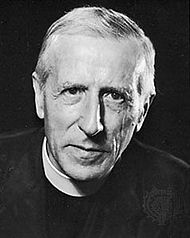
Pierre Teilhard de Chardin
The third version of the idea I shall mention, the most mystical of all, is the invention of a writer much less splendid than Spengler, although he was more gifted with those classical virtues usually called “rational.” I am referring to the author of The Apparition of Man, the distressed but obedient Jesuit priest Pierre Teilhard de Chardin. When he died, he left unpublished (because disallowed by the Roman Church) the manuscript of The Human Phenomenon, a variation or expansion of The Decline of the West. The human which Spengler imagined is, ultimately, no more than an aggregate of parallel subspecies rooted in humus, an accumulation of the humble vassals of the earth, grown over millennia on distinctive soils like varieties of vintage grapes, unequipped to live outside of Time, with no sense of the Immortal and no sense of the Eternal except as a Return. Teilhard’s human is semidivine, a prolonged but terminal creature of mind deployed within the expansive realm of the demiurge, hovering between earth and Heaven—but never reaching the Eternal, the Immortal. Both processes are limited; but Teilhard’s is more centripetal. In The Human Phenomenon the nexus between the historical and the spiritual is not the physical face generated out of the past, as in the previous parables, but a disembodied countenance from the future that mysteriously represents the human.
In biological terms every organism depends upon the process of cephalization, the differentiation of the head as the guiding region of the body, to become first an individual and then a person (a consciously transcendent individual). Before Teilhard passed away in 1955, he announced his discovery that mankind is now converging in such a blossoming complex. The “pessimist” (Teilhard’s term) reduces history, the particular slice of six thousand years or so for which we possess written or dated documents, to a number of civilizations which have fallen into ruins one after the other. Teilhard saw beneath these successive oscillations the great spiral of life following the master-line of its evolution, thrusting up irreversibly in relays toward an ever more highly organized consciousness of the universe. He saw this convergence manifest first on the genetic level, slender and granular as this first membrane may be, when increased interbreeding among all human variants resulted in the type man, and Homo sapiens differentiated into distinct races (subspecies), practically covering the earth with a mosaic of cultures (inter-thinking groups). In the traditions that became organized, and in the collective memory that developed, Teilhard distinguished a common pool of thought beginning to close in on itself and encircle the earth; he also recognized that, however hominized the apparition of political and cultural units may appear, this form of the history of mankind really only prolongs the organic movements of life. Only in the Neolithic Age did he detect the forces of a new kind of coalescence beginning to manifest above the genealogical verticils: a complex of psychical groupings—geographical distribution, economic links, religious beliefs, social institutions—that submerge “the race” and begin to react among themselves. He saw increased numbers and improved communications leading these new units over time into an accelerated process toward the union of the whole human species into a single culture based on a single self-developing framework of thought. It was obvious to him that this great binding of human elements has never stopped; for Teilhard, the periods called “historic” are nothing else than direct prolongations of the Neolithic Age. It was also obvious to him that, during historic time, the principal surviving axis of anthropogenesis has passed through the West (See Footnote 1); Teilhard proposed that a neo-humanity has been germinating round the Mediterranean during the last six thousand years and precisely at this moment has finished absorbing the last vestiges of the neolithic mosaic, thus budding another layer of inter-thinking humanity, the densest of all.
Teilhard imagined the sphericity of man’s environment—the banal fact of the earth’s roundness—to be the cause of this intensification: Man’s thought confined to spreading out over the surface of the earth’s sphere, idea encountering idea where previously race encountered race, has resulted in an organized web of thought. This piece of evolutionary machinery, capable of generating high cultural energy, has become the bounding structure of evolving man, marking him off from the rest of the universe yet facilitating his exchange with it, like the membrane of an animal cell. With his genius for fruitful analogy, Teilhard pointed out that the process of evolution on earth is itself now in the process of being cephalized: The development of humankind into a single inter-thinking unit is providing the evolutionary process with the rudiments of a head. Teilhard’s formulation implies that we should consider inter-thinking humanity to be a new type of organism, whose destiny is to realize new possibilities for evolving life on this planet. He thus makes of the human precisely at this moment an incomparable terminus a quo, a creature who proceeds from the boundary of the present because it is destined to do so; its evolution toward the future a condition for its existence in the present.
Quite possibly Spengler was not acquainted with Wallace’s text; Teilhard perhaps knew and did not admire the text of Spengler. If the doctrine that all people are pale imitations of immortal Spirit is valid, such facts are insignificant. Strictly speaking, it is not necessary to go that far; each of these authors has his precursors, others who recognized the same facts and presented the essential facets of their sciences before they did. Spengler’s precursors are poets: I have found reference to the eye as glance in the verse of Guirat de Bornelh (“The eyes are the scouts of the heart”), to the eye as visage in a sonnet of Dante (“The eyes are the windows of the soul”), to the mouth expressive of understanding in Whitman’s “Song of Myself” (“I carry the plenum of proof and everything else in my face,/ With the hush of my lips I confound the topmost skeptic”), and to the head as the throne of the nonvegetative side of life in Thoreau’s Walden (“My head is hands and feet. I feel my highest faculties concentrated in it”). Spengler contradicts none of these earlier expressions. The writers of scripture who recorded the Fall of the Heavenly Host no doubt inspired Wallace to respond to the significance of that allegory with courage and science. More obtrusive, at first appearance, is Teilhard’s overwhelming image of the universe, in which the survivors of the human phylum he envisioned have persevered in the same way as flowers or trees or animals or individual humans; that is to say, as have “the other thoughts of the Creator of this world.” In the final analysis, Teilhard’s cerebral metaphor is nothing else than the expansion or prolongation of Spengler’s cultural archetype within the monistic limits predetermined by the councils of the Church of Rome.
One last observation. All three authors—Wallace, Spengler, Teilhard—either inadvertently or with conscious intent, have exposed the wrinkles in the human countenance and mankind’s blemish on the Eternal. None of them, through his science, has provided a new solution to the universal problem of the ancients: to discover the way out of the gross fate of physicality. The complex process that Teilhard described involves not only humankind but the entire universe in an organic folding in on itself, which leads in turn to the evolution of a progressively more conscious—more highly organized—Mind. Past the final point of convergence, where self-developing Mind meets itself, Teilhard did not venture. In his optimism, however, he did predict that this convergence—the union of the whole human species—is inevitable, and he left us with the hope that this union may contract for new terms. The cosmos of History of which Spengler conceived is a kind of repertory theater where humans improvise their Destiny in the forms of stock characters and in the outline of a mortal plot which they play out again and again in Time (Immortality is outside of Time and, therefore, outside of History). Within these dramatic limits Spengler was, of course, correct. That he considered these limits satisfactory is another matter. In the Cosmos of the ancients, Destiny is a function of Immortal Life and History merely a counterfeit. Wallace imagined that we may be growing in countenance more and more like the Angels who guide our development; but in the context of ancient doctrine, his hypothesis, carried to its logical conclusion, would lead us (or a portion of us) to resemble the Dark Angels who are our nearest spiritual ancestors. Avowedly ignorant of spiritual cosmology, Wallace made his proposition without any ill intention, of course; he simply could not conceive of the possibility that man is consciously able to form another kind of spiritual body, one that is immortal, a body like that of the Angels of Light, the Heavenly Host.
The problem remains. If it cannot be solved from the dark biological side, perhaps we shall have better luck from the bright spiritual side: As mere mortal creatures, we are the offspring of higher dimensions but not part of them. We require spiritual assistance to hold our own against the Powers of Darkness, and we can free ourselves only as spiritual beings. This is the universal doctrine of Salvation.
Robert G. Petrovich, July 1995
FOOTNOTES
(1) In Book Three, Chapter II of The Human Phenomenon Teilhard compared the progress of hominization in the course of these six thousand years to the whole series of cases, situations, and appearances usually met with in any phylum in a state of active proliferation: a gradual falling away of the oldest splinters; the accentuation and domination of certain other stems, more central and more vigorous, that attempt to monopolize the land and the light, some branches withering, some sleeping, some shooting up and spreading everywhere, here and there disappearances that cause a thinning out, here and there fresh buddings that make the foliage more dense. Later in the same chapter, Teilhard noted that Old China lacked the inclination and the impetus for deep renovation and was still Neolithic well into the nineteenth century; that India allowed itself to be drawn into metaphysics and was lost there; that the old American centers, too isolated, were completely extinguished; that the Polynesian center, too dispersed, continued to radiate in a vacuum. These considerations led Teilhard to the conclusion that, at the present time, all the peoples of the earth, to remain human or to become more so, are inexorably led to formulate the hopes and problems of the modern earth in the same terms that the West has formulated them.