A Note on Homogenesis, Part 2
SUPPLEMENTS
SUPPLEMENT 1
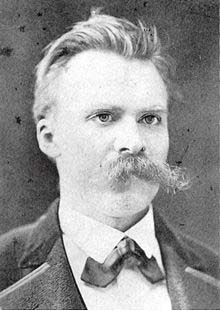
Nietzsche 1875
Translations by Walter Kaufman (Beyond Good and Evil; Prelude to a Philosophy of the Future, Friedrich Nietzsche, 1966).
SUPPLEMENT 2
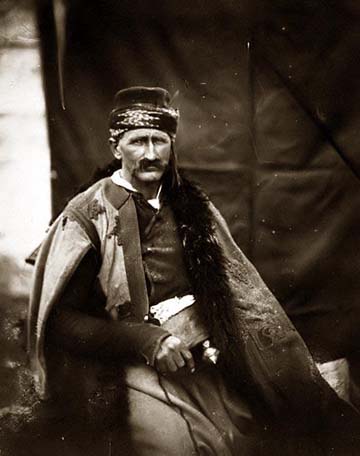
Regional outgrowths of the Serbian – in Montenegro, in Bosnia, in Macedonia, in Lika, in Dalmatia, in the Baèka, Banat or Baranja regions of Vojvodina, in Slavonia, in Old Serbia, in Central Serbia – whether Muslim or Roman Catholic or Eastern Orthodox Christian – are really one racial family of peoples. The Croat (Khorvat) bears a heritage and fate similar to that of the Serb. The forms “Choratos” and “Chorouatos” have been found among inscriptions in ancient Tanais on the Don. According to the records of the Byzantine Emperor Constantine Porphyrogenitus (AD 912-925), the White Croats (Belochrobati), a “Slavic” people, occupied the upper Vistula and northern Bohemia. Arab travelers of the time noted certain Sarmatian characteristics among them: they had, besides the king, a viceroy called župan; they practiced artificial cranial deformation; and the names of their chiefs were non-Slavic. After the eclipse of the Huns, the Sarmatian Croats, like the Sarmatian Serbs, remained in northern Europe to rule the country themselves. Ultimately the Croats, like the Serbs, were slavicized, and their name was taken by the subject population. These new people were known as White (or Western) Croats just as the Serbs in Saxony were known as White Serbs (T. Sulimirski, The Sarmatians, pages 190-192). Such facts suggest that it may be more accurate to speak of the two modern peoples in adjectival form – the Croatian and the Serbian – to remind us that they are actually Sarmatian modifications of the West Slav.
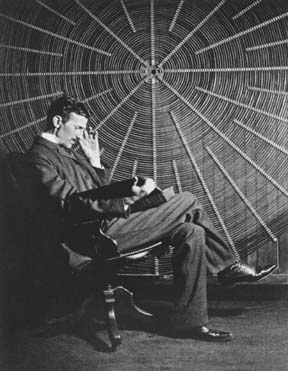
20th-century Serbian scientist and inventor Nikola Tesla
SUPPLEMENT 3
From standard references at hand I draw the following illustrations of these other complexes:
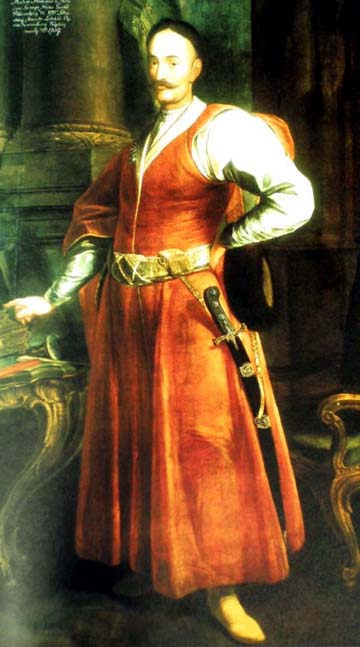
Polish noble Stanisaw Antoni Szczuka (1652-1710) in a representative Sarmatian-style outfit: a red kontusz tied with a pas kontuszowy. Underneath a żupan with a low collar. Left hand holds a fur cap with a low band. Characteristic hair and moustache. Unknown Polish artist.
The Pole and the Russian. No certain historical data exists for the Pole until the tenth century, but traditions of the West Alan (possibly the Alanic Antae) survived among them for centuries after the Alan’s fifth-century invasion and the consequent mixing with the indigenous Slavs who had arrived in the area during the first century of our era. The belief in a Sarmatian origin of Poland was widespread among the nobility of that nation for centuries. The most striking survival is in Polish heraldry: ancient tamgas, the religious monograms of the West Alan, appear in stylized form as crescents, arrows, and horseshoes. The beliefs associated with the tamgas spread also among the conquered Slavic population further east. The symbols turn up again in the coats of arms of the Rurikovich dynasty of Old Russia. Evidently the West Alan ruler was gradually Slavicized (a process completed not earlier than the sixth century) and the new breed was subjected to the Turkic Avar and the Caucasian Khazar before this vast disarray of people invited the Viking Rurik and his Swedish followers to govern them. With the assimilation of the Finn, beginning in the ninth century, Russian settlers in the country of the Upper Volga acquired the mental characteristics of steadfastness and fatalism that made them a new type, distinct from the Old Russian of Kiev and Novgorod. (The Tatar invasion of Russia during the thirteenth century practically mixed no blood.)
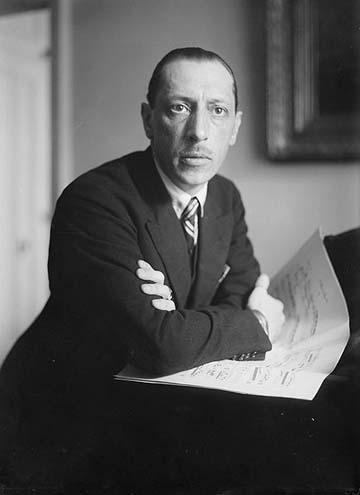
20th-century composer, pianist, and conductor Igor Stravinsky circa 1920-1930 PHOTO: George Grantham Bain Collection
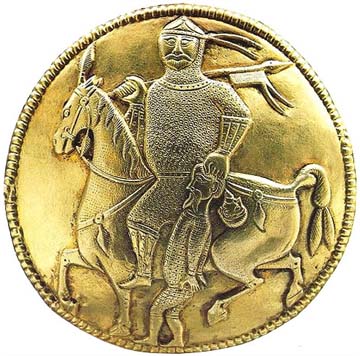
Bulgar warrior horseman of one of the steppe khanates 8th-10th century CE with captive, featured on an ewer from the Treasure of Nagyszentmiklos.
The Bulgarian. Of the Bulgars, a Turanian race who came westward after the Huns, a small horde of the Utigari tribe broke off to invade the Balkan peninsula and gradually merged into the Slavic population to form the modern Bulgarian.
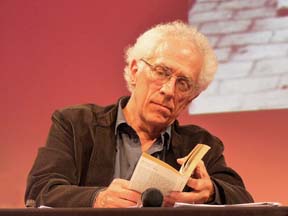
Tzvetan Todorov, 20th-century Bulgarian literary theorist, 2011 PHOTO: Ji-Elle
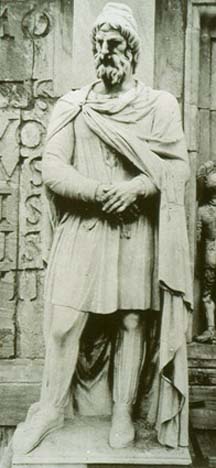
Statue of Dacian on triumphal Arch of Constantine, 4th century CE
The Rumanian. The eighth century blended the primary elements of the Rumanian nation: (1) a few remaining Dacians of the ancient Thracian stock called “Getae” by the Greeks and annihilated by the Romans; (2) the old growth of Roman colonists forsaken by Emperor Aurelian in the third century who had developed into bellicose, Latin-speaking nomads, the “Vlachs” or “Rumans”; (3) numerous Slavic newcomers. Not until the thirteenth century did Ruman state history begin.
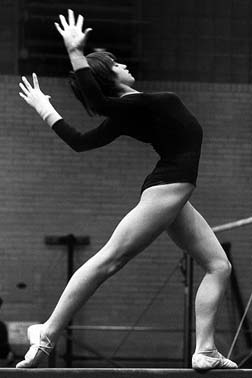
Romanian gymnast Nadia Elena Comăneci, Olympic gold medal winner and the first female to be awarded a perfect score of 10 in an Olympic gymnastic event, October 1977. PHOTO: Dave Gilbert
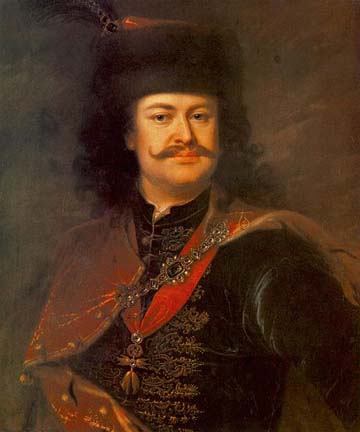
Francis II Rakoczi, 18th-century Hungarian aristocrat, 1724 PAINTING: Adam Manyoki
The Hungarian. The Hungarian nation appears in history under two names: “Magyar” (used by themselves) and “Hungarian” (used by foreigners). The predecessors of the Magyar, the Hun and the Avar, had ranged the Hungarian plain for two centuries before the Magyar arrived. At first, Roman emperors sought the aid of the seven tribes who were united under the Magyar chieftain to help them fight the enemies of Byzantium. In the ninth century perhaps as many as one million uninvited nomads, among them two hundred thousand men under arms, were led with discipline by their chieftain across the Carpathians. The new military state of Magyarska (Hungary) appeared about the year one thousand. In time, the Magyars mixed with the Slavs within the limits of their kingdom and with the descendants of Roman colonists to the southeast of it and thereby enhanced the complexion of their race. Attila “the Hun” was regarded as a Magyar hero. The national dress of the Magyar nobleman, worn until the early twentieth century, was named for him – the “Attila.”
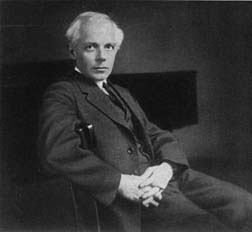
Bela Bartok (1927), 20th-century Hungarian composer, pianist, and founder of ethnomusicology
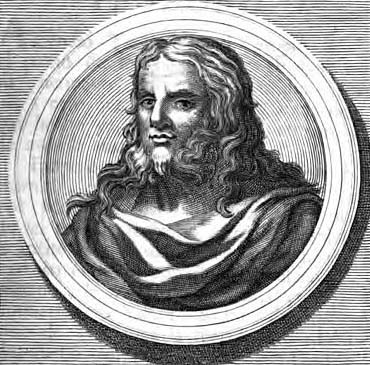
The Spanish. While Greece, the parent of classical European civilization, was still in a state of barbarism, the Iberian and the Celt amalgamated at the center of Spain in admirable cities where they taught philosophy and the arts. This early population was cultivated and, for several centuries, increased by the colonial soldiers of Rome. During the fifth century, the Vandal, the Suevi, and the Alan burst in and chose lots for the three administrative units of Iberia apportioned by Rome. A state of division and confusion was inaugurated and sustained for a thousand years: first by the stern authority of the Visigoth; next by the inconstancy of the Frank; and finally by the Arab, whose imposing slave armies brought them first victory and then destruction. When the slave armies disassociated themselves from the Arab, the Mauritanian Negroes, who formed one of the slave armies, came to be known as Moors. References at hand do not make clear whether the members of the second slave army, Slavs who were sold by the Germans to the Jews and then to the Arabs, remained as settlers.
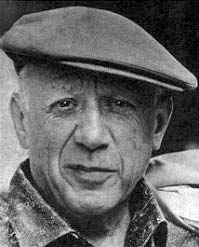
Spanish painter, sculptor, and stage designer Pablo Picasso (1962), co-founder of the Cubist movement and one of the most influential artists of the 20th century
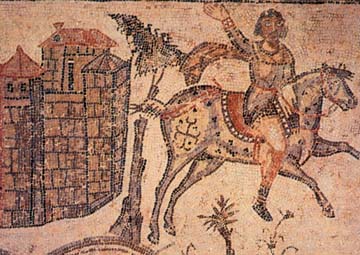
The Berber. The Vandals, pushed westward by the Huns in the fifth century, joined the union of German tribes and crisscrossed the Alps in search of a new home before they took possession of southern Spain and gave their name to Andalusia (Vandalusia). Later the Roman governor of Africa invited them to assist in putting down a revolt against the Empire. The Vandals crossed the Straits of Gibraltar in a body, took possession of the Roman provinces along the north coast of Africa eastward as far as Tunis, and made of these provinces a kingdom for a hundred years . . . until the Romans restored the region to themselves. The Vandals disappeared as a race, but their descendants, with light hair, blue eyes, and fair skin, still live among the valleys of the Atlas Mountains, where they are known as Berbers and keep themselves distinct from the Arab population.
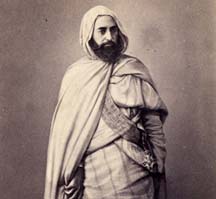
Banu Ifran Berber Emir Abd al-Qadir (1808-1883), Algerian Islamic scholar, Sufi, and political and military leader circa 1860
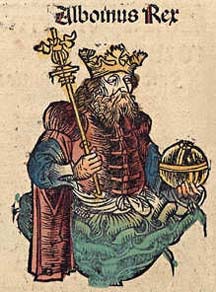
Alboin, king of the Lombards (560-572), led the Lombard migration into Northern Italy. IMAGE: woodcut from the Nuremburg Chronicle, 1493
The Northern Italian. The Lombards lent Attila their aid in his expeditions, and allied themselves with the Turkic Avars to drive out the Gepidae, before they descended from the Alps with their wives, children, wagons, oxen, and flocks to take possession of the whole of northern Italy. There, in the sixth century, this germanic people still drank liquor from the skulls of their enemies when they assembled at the festivals of Odin. The Goths, who had arrived before them, became a defeated people; those who remained gradually put aside their ferocious ways and mingled with the mild climate, the fertile soil, and the other Italians.
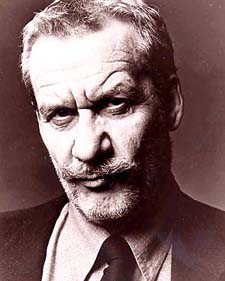
Contemporary Italian songwriter, singer, and pianist Paolo Conte.
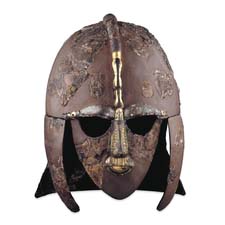
Helmet from the 7th-century ship burial at Sutton Hoo, presumed to be of an East Anglian king.
The English. The ancestors of the modern English were known to the Britons of the fifth century (whom they displaced) as cruel and merciless pirates who captured men and women for the slave market and tortured to death one of every ten as a sacrifice to their gods. Those fierce and restless conquerors, for the most part young men who seized the daughters of slain Britons for their wives, gave to their new lands mild names: the South Saxons, Sussex; the East Saxons, Essex; the two gangs of Angles, the North folk and the South folk, the names Norfolk, Suffolk, and East Anglia.
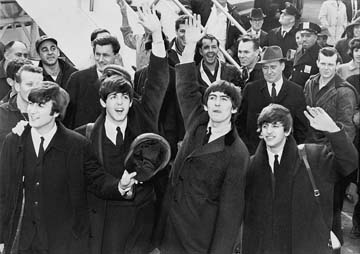
The Beatles John Lennon, Paul McCartney, George Harrison, and Ringo Star wave to American fans in 1964. PHOTO: UPI, photographer unknown
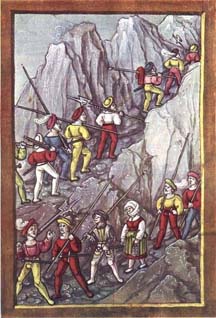
Swiss mercenaries crossing the Alps painted by Diebold Schilling (1513).
The Swiss. In the Swiss Alps, the Helvetian eked out an unquiet existence, and the Rhaetian and the Allobroge led wild lives of war and pillage, before Roman culture made the miserable conditions of these Celtic peoples vanish by degrees. The Allobroge exchanged the sword for the plow; the Rhaetian adopted the gentle habit of Alpine farmer or mountain guide. During the fifth century, the obstinate struggle between Roman and Teuton was decided in favor of the Teuton. The great migrations of the Alamanni and the Burgundians established in the Alps a germanic way of life. At the end of the fifth century, the Franks overcame the Alamanni who remained.
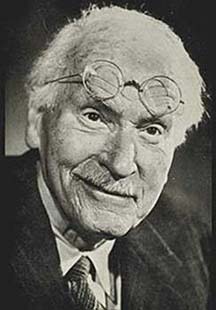
20th-century analytical psychologist Carl Gustave Jung
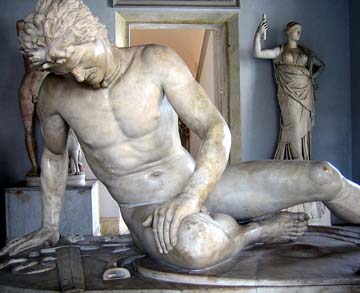
The “Dying Gaul,” an ancient Roman marble copy of a lost Hellenistic sculpture commissioned between 230-220 BC.
The French. The medieval French were a compilation of half-civilized Gauls, cultured Romans, barbarous Germans, and expatriated Britons – almost every physical type found in Europe – who had collected on the same countryside during two thousand years. The germanic Frank rudely shocked them all into transformation. Two peoples were exempted: the Celtic Gaul of Britanny and the Gascon, a descendant of the Iberian, were able to resist the germanic influx.
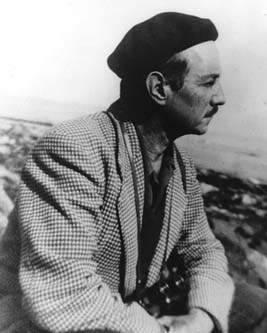
20th-century French poet Saint-John Perse (pen name of Alexis leger), who won the 1960 Nobel prize for Literature “for the soaring flight and evocative imagery of his poetry.”