Reno Community Hosts 2009 Annual Convocation
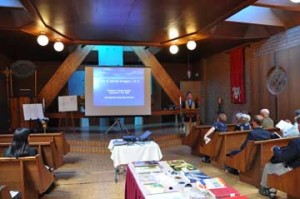 The Community’s annual Convocation officially opened on Wednesday September 9. It was prefaced on Monday and Tuesday September 7–8 with Residence Training III seminars on Color and Sacred Imagery for those Consociates needing to complete these requirements.
  These early attendees also enjoyed an evening at the Steamboat Hot Springs Spa on Monday evening. Another such spa evening was offered on Wednesday as well.
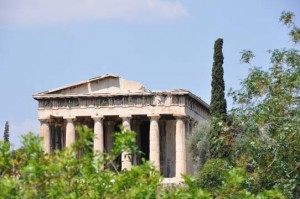
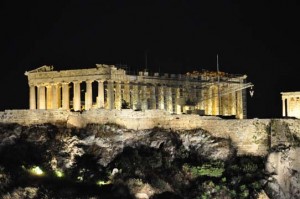
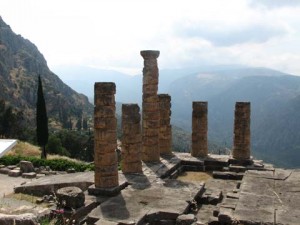
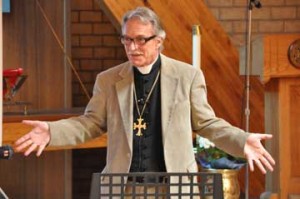
The first Convocation event was a Project “X” seminar on the ancient solar cultures of Greece and included lectures given by the Right Reverend Gene Savoy Jr. during the Project “X” tour of Greece in May–June 2009 as well as talks by guest lecturers the Reverend Dr. Bill Bartlett and Dr. Tom Lee, the new Community Archiater (physician). 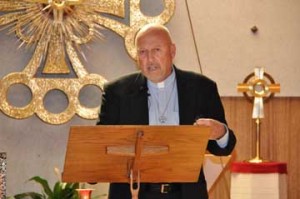 Dr. Bartlett spoke on solar teachings in the Buddhist tradition, and Dr. Lee on health and healing modalities planned for Steamboat Healing Center. The lectures were offered in the Chapel of the Holy Child and the Monastery Gardens in Sanctuary.
The usual annual Convocation events took place over the remainder of the week, including the Andean Explorers Foundation meeting and awards banquet and presentation held at the Tuscany Room of the Peppermill Resort and Casino in Reno on Thursday evening. The Right Reverend Sean Savoy presented slides and commentary on his recent trip to Peru to continue the society’s work there.
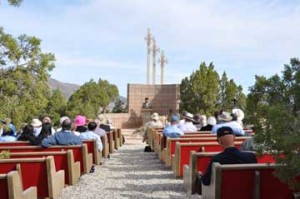 The week’s events included the thirtieth annual Clergy Counsels, lectures held at the Monastery Gardens in Sanctuary on Asclepian healing traditions and techniques. Again, these lectures were adapted from those given by Bishop Savoy in Greece earlier in the year. This year’s program included a celebration of The Community’s Golden Jubilee, commemorating fifty years (1959–2009) of the Second Advent Church. A high point of the celebration was the interfaith prayer service for world peace held at sunset on Friday evening September 11 at the open-air Church of New Pentecost and Church of the Americas at Red Rock Consecrated Sanctuary. Clergy from numerous sects and denominations around Reno participated and offered prayers for peace from their traditions. It was a special experience and a fitting tribute to the second anniversary of the passing into Light of The Church’s First Apostle, the Most Right Reverend Gene Savoy Sr.
As a side note, unbeknownst to The Community members at the time, the evening also introduced it to one Devashish (aka David Mitchell), who was a last-minute replacement for Rajan Zed, the intended representative of the Vedic tradition. Devashish was quite taken with the experience at the Sanctuary and later introduced Community leaders to his teacher, Swami Sri Atmananda of India, and the Satya-chetana Movement that the swami heads and with whom The Community has since formed a collaboration to reintroduce the Teachings of Light to the Vedic and Brahmanic traditions (see related articles).
On Saturday evening, topping off a day of final Clergy Counsels, Communion Service, and the Emancipation of Acolyte Marie Walters, was the Counsels banquet and program at Bishopstead. As a Golden Jubilee celebration, the dinner was deemed a Vigil Meal and began with a simple course of Essene bread and wine similar to a Community Pannuches meal. The evening’s introduction also included the first-level ordination of Dr. Tom Lee and a rededication of the Chapel of the Innocents at Bishopstead. A buffet supper in several courses created by Community chef Francine Petrovich followed this ritual course. Between courses, the attendees were treated to musical performances by the Community schola, directed by the Right Reverend Gary Buchanan, as well as relevant readings from Second Advent scripture.
The final day of Convocation, Sunday September 13, began with a concelebrated Jubilee Sunrise Divine Service at the Cathedral Church of the Americas at Red Rock Consecrated Sanctuary, followed by the second-degree ordination of the Reverend Dr. Bill Bartlett. Afterward, a fellowship breakfast at the open-air refectory was enjoyed by all. The final event at Red Rock was the rededication of the open-air Church of New Philadelphia in the northlands of the Sanctuary. The church’s table had been restored after being damaged by vandals and the elements. Head bishop Gene Savoy Jr. presided.
The Convocation ended with an optional trip to Lake Tahoe on Sunday afternoon.