Project “X” Tours Japan Day by Day: DAY 8
16 MAY
Breakfast at hotel. Depart by bus for Ise, Mie Prefecture, on the Shima Peninsula, home to the Ise Grand Shrine (Ise-jingu), Japan’s most sacred Shinto shrine. Lunch and more sightseeing in Ise. Dinner and overnight at Hotel Ijika-so on the sea.
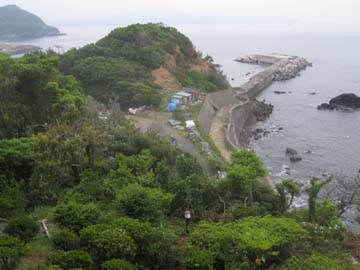
View from the Hotel Ijika-So. PHOTO: Ron Theriault
RADIATION PROTOCOL POSTED ON YOUTUBE
After breakfast on May 16, Gary Buchanan posts his radiation protocol on YouTube. Link to the YouTube Radiation Protocol video.
ISE GRAND SHRINE
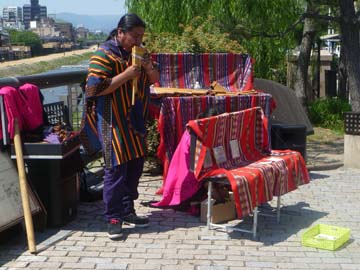
Vendor on the old approach to Ise Inner Shrine. PHOTO: Sonya Savoy
“We boarded the bus at 9:00 AM on our way to the Ise Shrine.
“We visited two shrines at Ise, the newer and the older. The older is being rebuilt, as is the custom, every twenty years.
“There is an entire town built around the sanctuary — lots of shops — and where our restaurant for lunch is located.
“Many of us notice and photograph rainbow rings around the sun.”
—Journal entry by Gary Buchanan
Mythology is as important to the Japanese people as it was to the early Greeks. The difference is that the descendants of the gods no longer reign as kings in Greece; in Japan, the descendants of the kami (spirits) remain the ancestors of many ancient clans, including the imperial family. Ise is home to Ise Grand Shrine (Ise-jingu), the most sacred Shinto shrine in Japan. The history of the city is linked to that of the Ise Grand Shrine. Ise has long been a popular destination for travelers. The settlements that grew around both the Inner and the Outer Shrine developed into small villages, and these grew into the present city of Ise.
Ise Grand Shrine has two main parts, the Inner Shrine and the Outer Shrine. They are about three miles apart and are joined by a pilgrimage road. Both parts of the main sanctuary are situated in two hundred acres of “divine forest” that has been untouched since the time the shrines were founded nearly two thousand years ago. The forest is now a national park.
The imperial Sacred Mirror (Yata no Kagami), one of the Three Sacred Treasures of Japan, is said to be housed within the grounds of the shrine.
The shrine, rebuilt every twenty years with fresh lumber, is in its 61st reconstruction, which indicates that this tradition has been carried out for the past 1,220 years. It is customary for pilgrims to visit the Outer Shrine before following the pilgrimage route to the Inner Shrine. Even the emperor follows this custom.
The Outer Shrine, founded about 1,500 years ago, is dedicated to Toyouke-Omikama, the goddess of life’s basic needs, and is surrounded by beautiful grounds and walking paths.
The Inner Shrine, founded about 2,000 years ago, is dedicated to Amaterasu-Omikami, the sun goddess, the gentle harmonizing presence who blesses everyone indiscriminately with serene light.
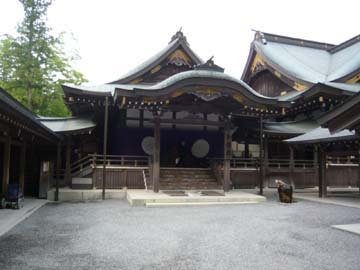
Ise Grand Shrine. PHOTO: Sean Savoy
Cultural facilities—a history museum, fine art museum, agricultural museum, and library—are housed at the top of Mount Kurata, a small hill at the midpoint of the pilgrimage road between the Outer Shrine and the Inner Shrine. Outside the grounds of the shrine are numerous historical-looking merchant buildings and eateries. The area hosts festivals of nature of all kinds throughout the year and is very popular with Japanese tourists.
Tour Ise Grand Shrine on the official web site .
SIGHTSEEING IN ISE
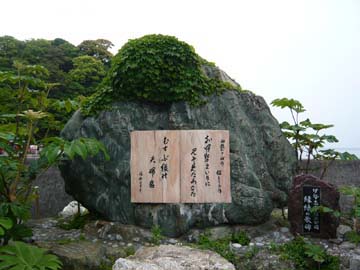
Scene from the seaside town of Futamigaura near the Married Rocks. PHOTO: Sean Savoy
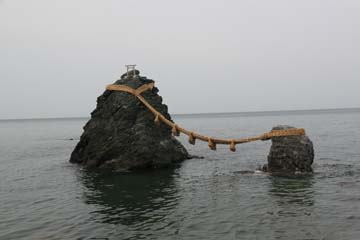
The group stops by the Married Rocks in the sea, a traditional Japanese site. PHOTO: Rob Roy