The Divine Child of Virgil, Part 2


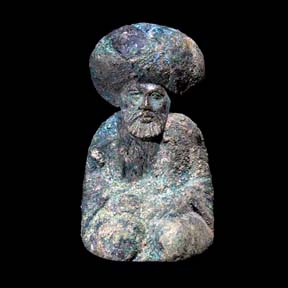
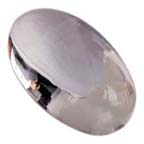
A bust of Virgil from his tomb at Naples, Italy. PHOTO A. Hunter Wright

2

Virgil was a poet not a prophet. He used in his poem the phrase Cumaeum carmen (“song of the Cumaean Sibyl”) not to write an oracle but to call to mind in his Roman readers the renowned oracle which Rome called The Books of Fate (Libri Fatales). These are the same texts that we call, in the form we have them, The Sibylline Oracles. For hundreds of years, The Books had been preserved in Rome and consulted only upon order of the Senate and only in the most dangerous of times, until they were destroyed in the conflagration of the Temple of Jupiter during the civil war of 83 B.C.E. After the destruction of The Books, the Roman government took great pains to replace them from the oracular collections of Samos, Ilium, Erythris, Africa, and Sicily. The Books were known to the general public only in adulterated and unauthorized copies. Virgil could have found his Cumaeum carmen only in a copy that had found its way to Italy and to him from the busy hands of some Roman soldier, a copy not worthy of admission to the secret collection in Rome.

Roman imagination had long dreamed of a Golden Age that belonged to the infancy of the world. Virgil, in his poem, gave to Rome the image of a Golden Age of the future. Stoic doctrines speak of periodic renewal (apokatastasis) and Virgil may have derived his image from that familiar doctrine, but the main concept of the Golden Age described by Virgil – that human perfection lies not in the past but in the future – is dominant in the thought of the Hebrew. The other remarkable concept in Virgil’s description of the Golden Age, which is also unusual to the classical mind but not to the Hebrew (Isaiah 9:6), is the announcement of the future perfect state by the birth of a wonderful child, a child with a divine nature, deum suboles (line 49), the firstborn of a new race, noua progenies (line 7). The image of nature responding to the birth of the child in lines 18–19 and 29–30 of Virgil’s poem may be found in Hesiod also, but the image appears with far more grandeur in Isaiah (35:1, 40:13) and in the Sibylline Oracles (Book III, 743–59). The roar of the lion that no longer strikes fear in line 22 of Virgil’s poem parallels Isaiah 11:6 and reproduces nearly verbatim lines of The Sibylline Oracles (Book III, 787–94). R.H. Charles, the editor of our modern edition of the Sibylline books, tells us that a cultivated (but anonymous) Jew living in Egypt in the middle of the second century B.C.E. had taken the ancient Hebrew oracles known to him and pieced them together to form, with the exception of a few passages, lines 9–819 of Book III of The Sibylline Oracles. It just so happens that it is from this Book of Oracles, lines 785 et passim – the lines that were written at another time when men’s minds were full of the thought of the coming judgment of God – that Virgil borrowed the elements for his description of the Golden Age to come: the judgment of God that will be a prelude to the establishment of a blessed kingdom among the godly on earth (III.767ff); the godly who will enjoy peace under the rule of a blessed one to come (III.702ff); the earth that will bring forth fruits in extraordinary abundance (III.741ff); the rough places of nature that will be made smooth (III.777ff); the animal world that will share in universal peace and goodwill (III.785ff).

On the day that Virgil determined he would include these prophetic passages among the building materials of his poem, he no doubt considered their oracular power and knew that the words would resonate with the rulers of Rome and with the populace alike. What Virgil did not know is that his copy of the Sibyl’s Book had been grafted, three centuries before, with Hebrew prophecy that had been translated into Greek. Neither did he know that the passages from The Book which he had borrowed for his poem were taken from this grafted prophecy. Nor did he know that this prophecy aligned with the prophecy of Isaiah, with the Essene prophecy of the “Wondrous Child” hymned in the Dead Sea Scrolls, with the Brahman prophecy expounded in the Puranas, with the Zoroastrian prophecy in the Zend-Avesta, with the prophecy of the Buddhist Pali Canon, with the prophecy in the Mandean Ginza on the “Messenger of Light,” and with the prophecy of Islam on the Mahdi that would not be written for another seven hundred years. The original purpose of the oracular words had been to reveal how God’s purpose, as known to the Hebrew prophets, would be fulfilled. Virgil dissembled these words when he embedded them in his poem for a Roman purpose: to announce and illuminate the birth of a Roman boy-child who would restore the Roman world to a place of glory in the cosmos.


To read Part 3, click HERE.


Project “X” Tours Japan Day by Day: DAY 12


20 MAY


Jalayne Grady painting pottery at artisan display. PHOTO: Sean Savoy


Breakfast at hotel. Tour 2 of the 88 temples on Shikoku’s pilgrimage route. The second temple, Gokurakuji (Sun Light Mountain), is called the Temple of the Pure Land. Lunch and then a visit to Izanagi Shrine. Transfer to Osaka. Free for dinner. Overnight at Hotel Laforet Shin-osaka.


GOKURAKUJI

Gokurakuji Temple. PHOTO: Jim Elliott


“Gokurakuji (Sun Light Mountain) is large and is called the “Temple of the Pure Land.” We are particularly impressed with its geographical alignments and prominent sundial-astronomical meter near the entry.”

—Journal entry by Gary Buchanan


Buddha image. PHOTO: Sean Savoy


Water scene at Gokurakuji Temple. PHOTO: Ron Theriault


IZANAGI SHRINE


Shinto priest lecturing at lesser Izanagi Shrine. PHOTO: Sean Savoy

“At the lesser Izanagi Shrine we meet up with a Shinto priest who lectures for a couple of hours on the site, its orientation, while several of our group make sure they ring the large bell hanging in a small pagoda nearby.”

—Journal entry by Gary Buchanan


Garden at Izanagi Shrine. PHOTO: Ron Theriault


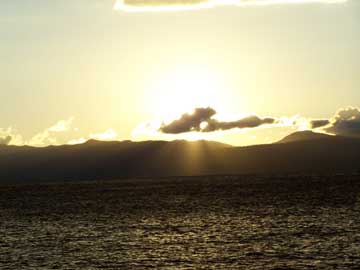
Sunset from Naruto Island. PHOTO: Jim Elliott


<DAY 11>

<DAY 13>


The Divine Child of Virgil, Part 1


A bust of Virgil from his tomb at Naples, Italy. PHOTO A. Hunter Wright

1

 For two thousand years, readers of Virgil’s Fourth Eclogue have speculated, without success, on the identity and nature of the Divine Child described in that poem: How did the prophetic image of the Child enter the poem and why? Where did the image of the Child come from? Who is the Child?. It is the  intention of these pages to bring  speculation to an end.


Late in the year 40 B.C.E., somewhere in Italy, perhaps in Rome or in Sicily or, more likely, in Campania, at Naples, just south of Cuma, the oldest Greek city in Italy and the home of the Cumae Sybil, the young poet Publius Vergilius Maro, a native of Mantua descended from the bardic Celts and a citizen of Rome, better known to us as Virgil, was attempting to solve an aesthetic problem. Reclusive and painfully shy, Virgil had recently turned from writing the glorious epic of Rome, thinking himself unequal to the task. He had also resisted writing a heroic poem on the part which his patron, Gaius Asinius Pollio, played two years earlier in the final battle of the civil war, when Pollios, as general, saved Virgil’s family farm, the root of Virgil’s livelihood, from confiscation when Octavian was awarding land to his troops for their victory at Philippi. Now the glory of his patron was again on the rise: that past September, Pollios salvaged the promise of a lasting peace after a decade of war by designing the Treaty of Brundisium, and he was now about to enter his consulship. Virgil, obligated to Pollios, could procrastinate no longer: the project before him had to be dedicated to his patron.

Virgil had already read with insight the real condition of his troubled and factious time. The ideas he had to express in the poem which he was creating were profound, even soteriological: the world, in need of regeneration, required a new spirit; the Roman Empire had the duty and was intended by Providence to introduce this new spirit; Providence itself would send a special deliverer to begin the act of regeneration, the divine boy-child promised and celebrated each year in the Mysteries of Demeter at Eleusis. Virgil decided: he would praise his patron Pollios in his praise of the blossoming promise of that divine child to come, a child expected to be born within the year, the first year of his patron’s consulship. To accomplish this task, Virgil, who owed more to his Greek predecessors than many other great poets, borrowed from them: from Theocritus, his tone, his artistic structure, and his subjects; from Hesiod, his pastoral images; and from the Oracles of the Sibyl, his prophetic vision. Virgil set to work on the poetic composition that would become his Fourth Eclogue, first drafting his solution to the problem in prose, later turning the first proof before him slowly into sixty-three lines of verse shaped around the mystic number seven (7×9). Suetonius gives us a glimpse of Virgil’s method: The poet would take up each part of his argument as he felt moved to do, in no particular order, compose each morning a number of verses, then reduce them in number for the remainder of the day; and so that the flow of his thought might not be checked, he left the unfinished parts bolstered up with a few slight words (put in, he joked, like props to support the structure until the solid columns arrived). In this way Virgil proceeded for many days, turning even the oracular Greek into Roman verses. His poem, when completed, sang of the Roman consul, spoke of a crime committed by the Roman people, of a terror that gripped the world, and of a mysterious act of primeval treachery, and announced the impending birth of a divine boy-child, “the Light of Ages,” and praised his coming, the sign of the beginning of a new Golden Age.

Virgil’s Ten Eclogues, his first series of poems, was published in 39 B.C.E. The poems were so well received by the literary circle of Rome that his patron Pollios introduced him to the leader of the circle, the wealthy and influential government minister Maecenas, who, in turn, introduced him to the future Caesar Augustus, Octavian. Virgil’s second series of poems, Georgics, was written in honor of Maecenas and with the encouragement of his new patron. Near the end of his life, Virgil wrote his final poem, Aeneid, which succeeded magnificently at the task he had set out for himself initially: to write the epic of Rome. With that poem, Virgil gained fame as the “Roman Homer.”

To read Part 2, click HERE.


Ancient Wisdom From World’s #1 Tonic Herb Expert

 Member Robert Anderson recommends “Three Treasures of Life with Ron Teeguarden” as a quick and easy video teaching of how to generate chi and heal the body-mind of self and others and thought it worth sharing with Community Communiqué members.

He says, “Ron Teeguarden is perhaps the foremost expert on Chinese herbalism, particularly tonic (health-building) herbs. His line of Dragon Herbs includes some of the most powerful formulas on the planet. The following was delivered to the attendees of the Longevity Conference held in May 2012 in Orange County, California (featuring David Wolfe et al.), and includes some helpful techniques for generating and circulating chi w/in the body for healing of self and others. It can serve as a quick intro to such healing modalities or a helpful refresher for those already familiar. Notice, he mentions just at the end that the ‘deeper’ use of the technique is applied to the force centers (chakras), and Cosolargists will recognize the technique as well as being privy to the greatest tonic of them all: Divine Light.”

Dr. Tom Lee, another Communiqué member, concurs that the video provides some practical techniques for health and power: “These videos are wonderful as entry efforts at getting people interested in building their health experiences through ancient techniques to work on the body, mind, and spirit. “I would not rate these presenters as ultimate Masters, but they are certainly informative teachers. Their interests and skills are consistent with our teachings and studies. Efforts directed toward all the ancient mysteries will lead toward Source and our Community of Light.”

Link to longevity.com to watch the video “Three Treasures of Life with Ron Teeguarden.”

Link submitted by Robert Anderson


Project “X” Tours Japan Day by Day: DAY 11


19 MAY


Breakfast at hotel. Departure by bus over Shikoku (third of the four main islands of Japan) to catch the ferryboat to Nu-shima Island to observe the naturally occurring tidal whirlpools (vortices) in the Naruto Strait. Lunch on Nu-shima. Return to Shikoku for dinner and overnight at Hotel Renaissance Resort, Naruto. Dance at hotel.

Jamila Savoy at the Renaisssance Resort, Naruto. PHOTO: Jim Elliott


NU-SHIMA ISLAND


Tour ship. PHOTO: Rob Roy


Tour members aboard ship. PHOTO: Rob Roy


Yukinori Matsushita shipboard. PHOTO: Rob Roy


Koshu Kawahara and others in the stern of the ship. PHOTO: Jim Elliott


“We have a box lunch at the place, then take a large vessel out into the harbor to observe the tidal whirlpools (vortexes) in the Naruto Strait. It is a beautiful and sunny boat ride, with everyone laughing and taking pictures. An afternoon on the water seems to be exactly what was called for … especially for me … to wind down from the activities of the previous day. . . .

“After the boat ride, we take a hike around the island, up and over the hills in a circle, observing the sites: ocean, forests, paths, small shrines here and there, and the village itself.”

—Journal entry by Gary Buchanan


On the hiking trail on Nu-shima Island. PHOTO: Ron Theriault


Waterfront shrine on Nu-shima Island. PHOTO: Ron Theriault


Outside Gokuraku-ji Temple in Naruto City. PHOTO: Sean Savoy


After dinner on this evening there is a performance of Japanese dance: “Awa odori,” the Dance of Fools. Awa Odori is the largest dance festival in Japan. The heart of the tradition lies about ten miles away in Tokushima City and is usually held August 12-15.
Dance performance at Renaissance Resort, Naruto. PHOTO: Jim Elliott

Jim and Karen Elliott made an evening appearance in stylish hotel-supplied bath robes at Hotel Naruto. Many Japanese guests were wearing similar robes all over the hotel as per usual in a resort. PHOTO: Ron Theriault


<DAY 10>

<DAY 12>


Project “X” Tours Japan Day by Day: DAY 10


18 MAY


Golden Pavilion. PHOTO: Sean Savoy


Breakfast at hotel. Today is a day at leisure to explore Kyoto. Reservations are needed to visit the Kyoto Imperial Palace (Kyoto Gosho). There may be an opportunity to see the famous geisha and their apprentices in the various districts of old Kyoto. Free for lunch. In the evening, attend Sonatherapy seminar on Wave Front Bioresonance in Osaka. Rev. Gary Buchanan delivers lecture; Rev. Yukinori Matsushita interprets for Japanese attendees. All participants receive certificates. Free for dinner. Overnight at Hotel Keihan Kyoto.


Kazu Kakuichi talks privately with Dr. Buchanan about Sonatherapy before the lecture. PHOTO: Sean Savoy


“We breakfast at the hotel, then later Yuki and I meet with Kazu Kakuichi, an old friend going back two years — one who has visited us at the Healing Center at Steamboat.”

—Journal entry by Gary Buchanan


KYOTO IMPERIAL PALACE

Imperial Palace, Kyoto. PHOTO: Jim Elliott


Kyoto Imperial Palace (Kyoto Gosho) is an imperial palace of Japan, although the emperor of Japan has not been in residence there since 1869. The palace is situated in a rectangular enclosure that contains gardens and numerous imperial halls and residences. The palace has been destroyed and rebuilt eight times; the version currently standing was completed in 1855 and attempts to reproduce the original Heian Period architecture.


Garden at the old Imperial Palace in Kyoto. PHOTO: Ron Theriault


SIGHTSEEING IN KYOTO

Notable sites in Kyoto are the canal-lined older streets, the Arashiyama District with its picturesque mountain lake, the Gion and Pontocho geisha quarters, and the Philosophers Walk, a cherry tree–lined pedestrian path that passes many temples and shrines and takes about thirty minutes to complete.

The Gion District, famous for the preservation of forms of traditional architecture and entertainment, remains dotted with old-style Japanese townhouses and teahouses where the patrons of Gion—from the samurai of old to modern-day businessmen—have been entertained by geisha in an exclusive manner for centuries.

Read more about Kyoto and visit a picture gallery on Wikipedia.


Bullet train in Kyoto Station. PHOTO: Jim Elliott

Visit Jim Elliott’s public gallery of Kyoto Station photos.


SONATHERAPY SEMINAR ON WAVE FRONT BIORESONANCE

Audience filling the lecture room in Kyoto. PHOTO: Jim Elliott


“Gradually people begin to fill the room, and at around 7:00 PM we begin the presentation to a packed house. Yuki is translating for me, Jim Elliott takes photos, and we record the entire lecture. I sign copies of SONA, and the lecture appears to be a success, in terms of attendance, reception, and in helping pay for my trip to Japan.”

—Journal entry by Gary Buchanan


Gary Buchanan lecturing in Kyoto. PHOTO: Jim Elliott


Yukinori Matsushita translates as Gary Buchanan delivers lecture. PHOTO: Jim Elliott


 <DAY 9>

<DAY 11>


Project “X” Tours Japan Day by Day: DAY 9


17 MAY


Miyuki walking in the rain outside Ginkakuji Temple. PHOTO: Gary Buchanan


Breakfast at the hotel, facing the Pacific Ocean. Then, departure by bus from Ise to Kyoto at the center of the island of Honshu. Kyoto was Japan’s capital and imperial residence from 794 to1868 C.E. Sightseeing in Kyoto including Ginkakuji Temple. Rain! After lunch, visit the Temple of the Golden Pavilion (Rokuon-ji-kinkaku) and the Ryoan-ji Temple. Free for dinner. Overnight at Hotel Keihan Kyoto.


Ginkakuji Temple forest overlooking the city of Kyoto. PHOTO: Gary Buchanan


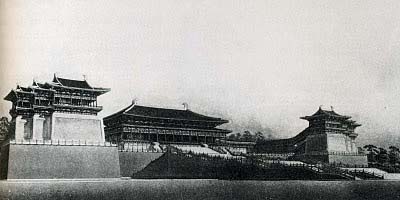
Near the end of the eighth century, when the influence of Buddhist priests on the imperial government became too great, the emperor Kammu built a new capital—Heian-kyo (“tranquility and peace capital”)—designed as a scaled replica of the then Tang dynasty ‘s capital of Chang-an (present-day Xian) in China. The new city grew into Kyoto, which remained the capital of Japan until Tokyo was chosen in 1868.

The numerous historic monuments of ancient Kyoto are listed by UNESCO as World Heritage Sites. With its 1,600 Buddhist temples and 400 Shinto shrines, as well as palaces, gardens, and architecture intact, it is one of the best-preserved cities in Japan and holds some of the most famous temples in Japan.


Kobo Daishi


Kyoto was another place that was significant in the life of Kobo Daishi. Kyoto was where Kobo Daishi first studied meditation as a youth before he left for China in 804; and it is where he returned two years later and received permission from the emperor to teach. In Kyoto, Kobo Daishi established the first tuition-free university for commoners and taught for ten years, moving from temple to temple around the capital until he was granted Mount Koya-san to create a spiritual training center. At the Imperial Palace in Kyoto, shortly before his death in 835, Kobo Daishi performed a week-long service for the eternal peace of Japan.


GINKAKUJI TEMPLE

Ginkakuji Temple Gardens entrance. PHOTO: Sean Savoy


Ginkakuji Temple Gardens.


Ginkakuji Temple Gardens. PHOTO: Rob Roy


Ginkakuji Temple Gardens.


Ginkakuji Temple Gardens. PHOTO: Sean Savoy


Ginkakuji Temple forest. PHOTO: Sean Savoy


Read about the Temple of the Silver Pavilion at Ginkakuji Temple in Wikipedia.


Map of Ginkakuji Temple Complex. PHOTO: Rob Roy


TEMPLE OF THE GOLDEN PAVILION

Temple of the Golden Pavilion. PHOTO: Sonya Savoy


The Temple of the Golden Pavilion (Rokuon-ji-kinkaku) is a Zen Buddhist temple and one of the most popular buildings in Japan. Each of its three floors is styled on a different architectural heritage period. Its garden is an excellent example of Muromachi Period garden design and is one of 17 World Cultural Heritage Sites in Japan.

Read more about the Temple of the Golden Pavilion at Kinkakuji-ji in Wikipedia.


TO-JI TEMPLE

Five-story pagoda of To-ji.

Toji Temple Main Hall.


In Toji Temple are housed fifteen gold statues that Kobo Daishi brought back from China.

Read about Toji Temple in Wikipedia.


RYOAN-JI TEMPLE

Tour members at the Ryoan-ji Temple Garden. PHOTO: Ron Theriault


Read about Ryoan-ji in Wikipedia.


<DAY 8>

<DAY 10>


INSIGHT BOOK REVIEW: Three Books on Near Death and Pre Death Experiences

Into the Light by John Lerma MD (2007)
Messages from the Light by Christophor Coppes (2011)
Saved by the Light by Dannion Brinkley (1994)

PHOTO: HowStuffWorks.com


Late last year (2011) the story of a high school student from my town appeared several times on the local news. The student was Ben Breedlove, who had been born with a heart condition that caused doctors to predict that he would not live beyond his teen years. In December of that year he created a YouTube video called “This Is My Story,” which “went viral.” In it he described (using only note cards) the near-death experiences that occurred to him during traumatic episodes resulting from his heart condition and concluded the video with the simple question and answer: “Do you believe in Angels or God? I do.”

This powerful and unusual story prompted my curiousity about other reports of near-death experiences, so I went to an online book seller and chose three books from among the many available: Messages from the Light by Christophor Coppes (2011), Into the Light by John Lerma, MD (2007), and Saved by the Light by Dannion Brinkley (1994).

In Messages from the Light, Christophor Coppes attempts to sum up and organize the entire body of known near-death experiences (NDEs). His approach appears to be to regard NDEs as evidence of a nonphysical parallel universe that can be known by examining the fragmented descriptions of those who have glimpsed it, almost as I imagine Renaissance Europeans might have tried to understand the New World by analyzing tales from returning explorers.

He describes the typical elements that appear in such experiences, some of which have become almost cultural clichés; for instance, the dark tunnel with a beckoning light at the end. Of course, not all NDEs begin this way, nor do they all contain all of the commonly reported elements. Nevertheless they all display a remarkable consistency. For instance, the “life review,” whereby a loving being of light meets the person and reviews all the events of the individual’s life, is almost universal. This is not done in a judgmental way but in a way that all the consequences of the person’s decisions and actions are experienced firsthand. Another common feature is the insistence by the NDE experiencer that the experience is “more real” than this life.

Coppes picks out messages from NDEs that seem to be of universal interest (as opposed to those that are of interest only to the person involved) and draws his own conclusions from them about how to live a better life in this physical world. He also investigates NDEs that are negative or frightening in character (which do make up a small fraction of reported experiences) and NDEs of those who attempted suicide. He considers an obvious question: If the life on the other side is happier and more real, then why not end one’s own life? Here he notes that whenever this thought comes up during an NDE, the answer comes back that suicide is a mistake: Everyone has a specific purpose in this life that is short-circuited by exiting prematurely.

Dr. John Lerma, author of Into the Light is a palliative-care physician who practices at a large and well-regarded hospice in the Houston area. He is responsible for prescribing pain medication that allows patients to be as comfortable as possible without being comatose and arranging for other care as might be required by the patients or requested by their relatives. His book contains sixteen fairly detailed accounts of individual patients and their near-death experiences, ranging from a nine-year-old boy who had three Angelic buddies and swam with dolphins during his NDE, to a retired Catholic priest who joyfully refused all pain medication because he was convinced that his experience of pain was beneficial to humankind.

Dr. Lerma, by the very nature of his practice, spends a great deal of time at the bedsides of terminally ill people, and so many patients begin to open up and honestly describe their experiences to him. NDEs, at least during the period of time covered in the book, were routinely dismissed as hallucinations or delirium by other MDs, and in the face of such treatment, most patients learned to keep quiet. By maintaining an open mind, Dr. Lerma slowly gained the confidence of these sixteen patients and, by his account, personally much more.

All the near-death experiencers in this book also insist that their experiences are more compelling and real than the life they are about to exit. They report Angelic beings of various forms and statures who appear to them when awake, as well as compelling experiences during sleep. These patients sometimes were also able and willing to let Dr. Lerma ask a question or two himself to a visiting Angelic being.

The figure of Jesus also appeared to two or three patients, each time at the foot of the bed, unlike the Angelic beings, who appeared in corners or other places in the room. Dr. Lerma asked about this, and the answer was that it was symbolic of the washing of the feet as a sign of respect and that those in the spiritual world hold us in the physical world in high regard. He also once asked another patient, “Why Jesus, and not Buddha or some other great religious figure?” and the answer was, “Dr. Lerma, is that really important?”

Despite there being only sixteen experiences in this book, as opposed to the hundreds that were surveyed in Coppes’s book, they make up for that by their depth, the contexts of the persons who experienced them, and the conversational quality of many of them. The phrase “negotiating with Angels” appears more than once in this book. Negotiating not about whether to stay in this world or not but about arrangements to either forgive or provide for their family members before they leave permanently. I get the feeling that there is much wisdom embodied in the experiences documented here—what is said in the context of a person’s life, what is said for the benefit of everyone else (presumably including the readers of the book), and what is left unsaid. I plan to visit this book again.

Saved by the Light was ghost-written by Mr. Paul Perry, who in his foreword to the book describes wanting to write a book about the best and most revealing near-death experience. Putting this question to Dr. Raymond Moody, the “father of near-death studies,” in 1992, Perry found out about Dannion Brinkley. Perry subsequently spent an extensive amount of time with Brinkley, interviewing him, and even living for a period of time in Brinkley’s home, sleeping on Brinkley’s couch.

Brinkley was by his own admission not the nicest of people. Most of his early life was spent as a contractor for the U.S. Armed Forces, in what seems like a special operations role. In 1975, at the age of twenty-five, Brinkley was struck by lightning while talking on a landline telephone in his home state of South Carolina. The resulting injuries were severe enough that doctors did not expect him to live, even after he recovered from being clinically dead. It was during this latter event that he had his long and detailed NDE.

The description of his NDE life review consists mostly of the recounting of things that he regrets, such as the numerous fights and other trouble he got into while growing up. After the life review he was ushered into a wondrous lecture hall in a crystal cathedral, where thirteen beings of light behind a podium communicated information to him. The first twelve each presented images of future events such as images of hollow people, who symbolized the Spiritual emptiness of America after the Vietnam War, nuclear and other ecological disasters, and wars in the Middle East and elsewhere. The book jacket states that 117 revelations were given, 100 of which have been realized. Nowhere near 117 are described in the book, and while many of the revelations have come to pass, the dates ascribed to many others in the crystal cathedral have passed without the associated events transpiring.

The thirteenth light being did not have predictions but instead stated that the preceding visions of future events were not necessarily cast in stone—that humans are powerful Spiritual beings. He said that those who go to earth are heroes and heroines who have the courage to go to earth to expand their beings and become cocreators with God. In furtherance of this the thirteenth being went on to direct Brinkley to establish healing centers. There were seven types of rooms to be used in these centers, each being specially designed to perform a specific function.

After this, the NDE ended, and most of the rest of the book is taken up with Brinkley’s recovery from the debilitating physical effects of the lightning strike. Like others who have experienced near-death, Brinkley found his experience so compelling that he was moved to try to communicate it and the importance of establishing the healing centers, even though his ability to talk was shattered. His friends and family described him as constantly babbling like a madman the first few weeks and months after the strike. His ability to walk and speak eventually returned after much effort. This story is of interest in itself; however, I wish that more of the book had been oriented toward describing the healing centers and his progress toward making them a reality.

These three books provide a good enough introduction to NDEs, but there are now available extensive writings on the subject. Coppes’s book contains a bibliography and is well documented. Both Dr. Lerma and Dannion Brinkley have published additional books, and there exists a Journal of Near-Death Studies, as well as at least two websites that are dedicated to this topic. (Near Death Experience Research Foundation and International Association for Near Death Studies).

Cosolargists will not be surprised by the appearance of the word “light” in the titles of these three books as well as many others. There can be little doubt that Spiritual life is composed of light or some form of energy that is closely related to light. Also of note is the report of a vibratory level in some NDEs with higher, brighter beings and regions having a more rapid rate of vibration than lower and darker regions.

Finally, one of the most fascinating aspects of these experiences is the insistence that they represent a form of existence that is more real than physical life. For me this is strong evidence that this physical plane of existence was either created by mistake or for a purpose which has not yet been generally revealed.

Submitted by Ron Theriault


Project “X” Tours Japan Day by Day: DAY 8


16 MAY


Breakfast at hotel. Depart by bus for Ise, Mie Prefecture, on the Shima Peninsula, home to the Ise Grand Shrine (Ise-jingu), Japan’s most sacred Shinto shrine. Lunch and more sightseeing in Ise. Dinner and overnight at Hotel Ijika-so on the sea.

View from the Hotel Ijika-So. PHOTO: Ron Theriault


RADIATION PROTOCOL POSTED ON YOUTUBE

After breakfast on May 16, Gary Buchanan posts his radiation protocol on YouTube. Link to the YouTube Radiation Protocol video.


ISE GRAND SHRINE

Vendor on the old approach to Ise Inner Shrine. PHOTO: Sonya Savoy

“We boarded the bus at 9:00 AM on our way to the Ise Shrine.

“We visited two shrines at Ise, the newer and the older. The older is being rebuilt, as is the custom, every twenty years.

“There is an entire town built around the sanctuary — lots of shops — and where our restaurant for lunch is located.

“Many of us notice and photograph rainbow rings around the sun.”

—Journal entry by Gary Buchanan


Mythology is as important to the Japanese people as it was to the early Greeks. The difference is that the descendants of the gods no longer reign as kings in Greece; in Japan, the descendants of the kami (spirits) remain the ancestors of many ancient clans, including the imperial family. Ise is home to Ise Grand Shrine (Ise-jingu), the most sacred Shinto shrine in Japan. The history of the city is linked to that of the Ise Grand Shrine. Ise has long been a popular destination for travelers. The settlements that grew around both the Inner and the Outer Shrine developed into small villages, and these grew into the present city of Ise.

Ise Grand Shrine has two main parts, the Inner Shrine and the Outer Shrine. They are about three miles apart and are joined by a pilgrimage road. Both parts of the main sanctuary are situated in two hundred acres of “divine forest” that has been untouched since the time the shrines were founded nearly two thousand years ago. The forest is now a national park.

The imperial Sacred Mirror (Yata no Kagami), one of the Three Sacred Treasures of Japan, is said to be housed within the grounds of the shrine.

The shrine, rebuilt every twenty years with fresh lumber, is in its 61st reconstruction, which indicates that this tradition has been carried out for the past 1,220 years. It is customary for pilgrims to visit the Outer Shrine before following the pilgrimage route to the Inner Shrine. Even the emperor follows this custom.

The Outer Shrine, founded about 1,500 years ago, is dedicated to Toyouke-Omikama, the goddess of life’s basic needs, and is surrounded by beautiful grounds and walking paths.

The Inner Shrine, founded about 2,000 years ago, is dedicated to Amaterasu-Omikami, the sun goddess, the gentle harmonizing presence who blesses everyone indiscriminately with serene light.

Ise Grand Shrine. PHOTO: Sean Savoy


Cultural facilities—a history museum, fine art museum, agricultural museum, and library—are housed at the top of Mount Kurata, a small hill at the midpoint of the pilgrimage road between the Outer Shrine and the Inner Shrine. Outside the grounds of the shrine are numerous historical-looking merchant buildings and eateries. The area hosts festivals of nature of all kinds throughout the year and is very popular with Japanese tourists.

Tour Ise Grand Shrine on the official web site .


SIGHTSEEING IN ISE

Scene from the seaside town of Futamigaura near the Married Rocks. PHOTO: Sean Savoy


The group stops by the Married Rocks in the sea, a traditional Japanese site. PHOTO: Rob Roy


<DAY 7>

<DAY 9>


Project “X” Tours Japan Day by Day: DAY 7


15 MAY


Sunrise at Mount Koya. PHOTO: Keiko Inoue

Sunrise at Mount Koya. Attend Buddhist service and breakfast at the temple. Then, on to visit temples at the old Japanese capital city of Nara, including Tachibana Temple where Prince Shotoku was said to be born in a manger like Jesus, and Todai-ji Temple. After lunch, continue on to visit Heijo-kyo or the “citadel of peace.” Dinner and overnight at Hotel Sun Route Nara.


SUNRISE SERVICE

“We are up at 3:30 AM for departure by bus from the temple to a spot on Mt. Koya for a Sunday Divine Sunrise Service. Gene, Sean, Yuki, and I wear collars and vestments.

Sunrise Divine Service on Mt. Koya. PHOTO: Rob Roy

“Yuki and his team have found a select site, a construction yard on the side of Mt. Koya facing the eastern horizon. It is actually quite appropriate, as it brings to mind our construction yard at Red Rock Consecrated Sanctuary back home.

“At the site we set up a table for Gene, Sean, and Yuki to officiate. I set up just behind them on a large, flat, wooden table top — sitting on a plank — and playing the small piano keyboard.

PHOTO: Sean Savoy

“We have a slightly altered Divine Service, including prayers by Yuki in Japanese, and the singing of ‘Grant Life Unto Me’ in Nihon by our Japanese Community members.

“Shortly after 5:00 AM the sun makes its way up through the trees on the horizon.

Sunrise on Mt. Koya. PHOTO: Sean Savoy


“It is a soft and comforting sun, quite special.

“We then intone the “AOUMENIMs” and set the disk in motion.

PHOTO: Sean Savoy

“After the concluding prayers I play ‘Meditation II,’ and we remove ourselves to the side for unvesting. We quickly disassemble the set-up for return to the temple.

“At 6:30 AM we attend a half-hour Buddhist service in the temple.”

—Journal entry by Gary Buchanan


Sekisho-in Temple garden. PHOTO: Keiko Inoue


NARA AND TACHIBANA TEMPLE

In the prefecture of Nara, covered by mountains and forests, the group visits Asuka National Historic Park. Here there are located numerous ancient temples of the Nara Period of Japan (710-794), the time when the royal court of Nara established relations with Sui and then Tang China.

Even today strict rules govern construction in this historic town.

Sean Savoy in Nara on replica of diplomatic ship used for envoys to Tang China. PHOTO: Rob Roy

For a photo gallery of the ancient temples of Asuka National Historic Park, visit the official web site.

For information on Nara prefecture and maps of its location, read this article on Nara Prefecture in Wikipedia

The unique five-storied pagoda is the tallest wooden tower in Japan. PHOTO: Ron Theriault


The entire city of Nara is a protected preserve for deer. Deer are everywhere, roaming the streets, filling the parks, and children and tourists are everywhere petting and feeding them.

Deer being fed by tour members. PHOTO: Jim Elliott


Among the many temples located in this area is Tachibana Temple, where Prince Shotoku (574-622 CE) was said to have been born in a manger like Jesus; one of seven major temples built by Shotoku.

Tachibana Temple. PHOTO: Ron Theriault


Tachibana Temple interior shrine. PHOTO: Ron Theriault


Tour member paying respects at a shrine. PHOTO: Ron Theriault


HEIJO-KYO

Building from the Nara Period in Heijo-Kyo. PHOTO: Rob Roy

Interior of the building pictured above showing sunburst figure. PHOTO: Rob Roy

Exterior view of Todai-ji Temple in Nara. PHOTO: Jim Elliott


Todai-ji Temple interior with seated Buddha. PHOTO: Ron Theriault


“Heijo-Kyo, the ‘Citadel of Peace,’ is amazingly BIG! It is the largest wooden building in the world — with tens of thousands of visitors daily. The largest statue of Buddha in the world is inside.”

—Journal entry by Gary Buchanan


Sun over Heijo-Kyo. PHOTO: Sean Savoy


Gary at the piano in the Pearl Falco shop in Nara. PHOTO: Jim Elliott


 <DAY 6>

<DAY 8>