“Advanced Ancient Civilizations : Results of the LAH Expeditions from 2004-2011″

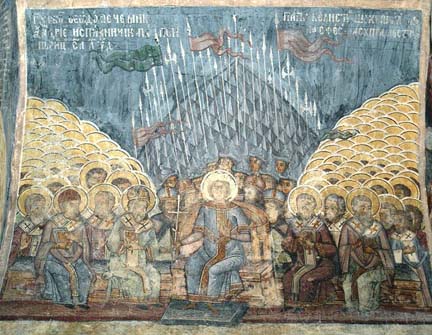
PHOTO: lah-conf-en.ucoz.com

Stephan Fuelling found a video report from the 2011 international conference of the Laboratory of Alternative History (www.lah.ru) that summed up the organization’s findings from 2004 to 2011 on the building of ancient stonework in Egypt, South America, and the Middle East. The researchers and their organization are from Russia, and the report is in Russian, but with a very good voice-over done in English. The presentation includes a number of photographs and explanatory diagrams.

Stephan’s comment: “This is a VERY interesting 38-minute video about the stone masonry of the ancients around the world, and comparison with current technological capabilities are discussed.”

Watch the lecture presentation published on YouTube April 11, 2012 here.


link submitted by Stephan Fuelling


ADVOCATES OF HUMAN SPIRITUAL RIGHTS: Jacquetta Hawkes

     It seems that a new religion must exalt the Sun of Life more successfully than Christianity has ever succeeded in doing. . . . Akhenaten in his gardens by the Nile had a vision of what might be, but it was too soon. If we cannot move nearer to this vision now, it will be too late. . . .
      Meanwhile the sun shines upon us all in turn. . . . There is just a chance that it may awaken us to a Good Morning.
Man and the Sun, Jacquetta Hawkes


A young Jacquetta Hawkes PHOTO:  Nicholas Hawkes

A young Jacquetta Hawkes PHOTO: Nicholas Hawkes

Jacquetta Hawkes (1910–1996) was the daughter of Nobel Prize–winner Sir Frederick Hopkins, the first cousin of poet Gerard Manley Hopkins. Hawkes began to grow an awareness of the poetry of history at an early age and was drawn to archaeology, which she read for her degree at Newnham College in her hometown of Cambridge. In 1931 she began her lifelong work conducting research and excavations in Britain, Ireland, France, and Palestine. Her first book was on the archaeology of ancient Britain; her last, on the archaeology of the entire ancient world. During and immediately after World War II, she held several government posts and founded the United Kingdom Commission for UNESCO, the United Nations education and cultural organization. Over the next forty years Hawkes wrote prolifically, authoring bold and poetic books on archaeology, geology, and the history of humankind.

In 1962 she published Man and the Sun. The book was regarded by some to be a belated product of the school of comparative religion founded by Sir James Frazer. Her earlier book Man on Earth (1954) had been an informative and beautiful synthesis of science and imagination that attempted to give to the layperson an impression of what has been happening to humankind on earth, a history of the emergence of the human species. Man and the Sun went further. This book was a synthesis of cosmography, geology, biology, archaeology, and the cultural history of religions in which Hawkes showed her wide and deep learning in condensed and felicitous language and provided poetic descriptions that detail not only humanity’s physical dependence on the radiations of the sun but also the sun’s pervasive effects on human minds and spirits. Her marvelous presentation of the early history of the Roman Church, its marriage to the older religions that flourished in the empire, and its emergence as an organized and universal state religion graphically depicts the transition of Christianity from a mystical Church into a temporal one. Her treatment of the older religions that revered the sun contributes greatly to humanity’s knowledge of the past. The book also contains the hope for a future religion of Christianity that will respond to the higher aspects of the sun and the Intelligible Light that it transmits to the world.

What Jacquetta Hawkes wrote on the subject of religion enlightens the reader and leads to new avenues of thought. Her writings are a valuable contribution toward general recognition of the future and the importance of a newly emerging Christianity.


Robert Petrovich
October 2002


Changes to 2013 Japan Tour Itinerary

2009-SPM-JapanMission

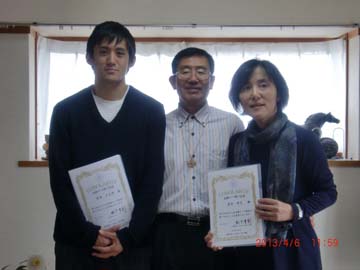
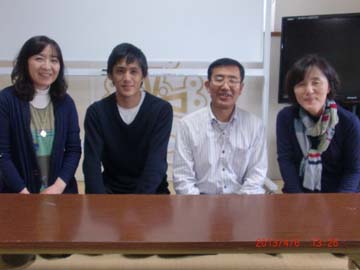
The itinerary for the official seminar to be held in Japan May 24–29, 2013, has been altered slightly. The new itinerary appears below together with a downloadable document that holds details of the seminar agenda.  Traveling from the Reno Community to participate in the seminar sponsored by The Cosolargy Institute of Japan are Bishop Gene Savoy Jr., Sabrina Savoy, Reverend Robert Roy, Noriko Roy, Joseph Roy, and Deacon Stephan Fuelling.

Gene Savoy Jr. will be speaking to celebrate the publication of the Japanese-language edition of Gene Savoy Sr.’s book Project “X”: The Search for the Secrets of Immortality.


REVISED ITINERARY (as of April 8, 2013)

May 23
Arrival at Fukuoka Airport
Visit offices of Manners Sound Research Co., Ltd.
Dinner with Yukinori Matsushita and guests
Overnight at Kurume Esprit Hotel

May 24
Guided tour around Saga-shi, Kurume-shi, Fukuoka-shi
Yoshinogari Historical Park (The Remains)
Saga Castle History Museum
Saga Shrine
Ise Shrine
Xu Fu Kan Longevity
Sunset Service at Megalith Park
Overnight at Kurume Esprit Hotel

May 25
Communion of Fellowship at headquarters of Cosolargy Institute in Japan
Ino Noh Theater
Dedication dance by Mizuho Asano
Presentation on Project “X” by Bishop Gene Savoy Jr.
Dinner and social gathering with participants at Cineate-ku cafe
Overnight at Kurume Esprit Hotel

May 26
Sunrise Service at the ancient solar site of Yakinotouge
Ordinations
Social gathering  at offices of Manners Sound Research Co, Ltd
(Afternoon schedule to be announced)
Dinner
Overnight at Kurume Esprit Hotel

May 27
Ferry from port of Hakata to Iki Island
Visit Ikinoku Museum and Haranotsuji Site
Q & A with Gene Savoy Jr. at Iki Byu Hotel
Dinner, Iki Noh Dance performance and overnight at Iki Byu Hotel

May 28
Visit shrines on Iki Island
Kojima Shrine
Tsukiyomi Shrine
Ondake Shrine
Ferry from Iki Island to port of Hakata
Overnight at Kurume Esprit Hotel

May 29
Breakfast at Kurume Esprit Hotel
Meeting with Yukinori Matsushita
Seminar program ends


<Download 2013 Japan Seminar details here (as of April 8, 2013) >


Following the seminar program, a further excursion is planned. Attendees from Reno will be returning to the United States on June 4, 2013.


ADVOCATES OF HUMAN SPIRITUAL RIGHTS: Theodor Herzl Gaster

Theodor Gaster ARCHIVE PHOTO

Theodor Gaster. ARCHIVE PHOTO

Even if the Torah be correctly expounded by prophet and teacher, men, it was held, can and will receive it only if they be correctly attuned. And that attunement comes—if we may mix the metaphor—through inner “enlightenment.” . . . The acquisition of that light, however, was not attributed to any sudden, spontaneous act of grace. Rather it was the result of man’s own voluntary exercise. . . . The choice of using it or ignoring it had been left, in the case of man, to his individual will. If he heeded the gift, he achieved harmony with the eternal cosmic scheme and broke the trammels of his mortality. Automatically, he was embraced in the communion of eternal things; he became one with the great forces of the universe, with what we would call Nature, and with the non-mortal beings of the celestial realm-—the “holy ones” who stood for ever in direct converse with God. He achieved, in short, what mystics term the “unitive state.”

It was this state that the members of the community claimed for themselves. This was the ultimate goal of their entire spiritual adventure; the aim and raison d’ tre of the Torah and of the disciplined life which it enjoined. They held that by virtue of their “enlightenment” they were members not only of the consecrated earthly brotherhood but eo ipso of the Eternal Communion. . . . This is . . . the sound mystic sense that, given the right spiritual posture, given the victory over that darkness which is set before him along with the light, man may live even on earth in a dimension of eternity.
— T. H. Gaster, Dead Sea Scriptures in English Translation, pp. 6–7

Theodor Herzl Gaster (1906–1992), a scholar of comparative folklore, had an academic career that spanned five decades. He was one of the world’s most distinguished Hebraists and an authority on the intertestamental period, from which the Dead Sea Scrolls derive. His father, a recognized scholar of Samaritan literature and biblical studies, went blind when Gaster was a boy, and the boy became responsible for reading books out loud to keep his father abreast of scholarship, an experience that heightened Gaster’s interest in language, scholarship, and mythology. In his youth he studied Greek, Latin, and archaeology at the University of London; in 1943 he received his PhD from Columbia. During his academic career, Gaster wrote ten major books and contributed numerous articles to periodicals, encyclopedias, and dictionaries. Of the ten books, two were translations, The Oldest Stories in the World (1952) and Dead Sea Scriptures in English (1956), and five dealt explicitly with Jewish myth, legend, and folklore—all focused on the traditions of the Near East.

Like his contemporary Joseph Campbell, Theodor Gaster had a gift for storytelling, and he applied his historical and linguistic acumen to the texts and societies of the early Hittites, Canaanites, and Hebrews. Unlike Campbell, who saw myth as a story from which the modern-day reader may gain some insight, Gaster saw myth as a testament to a different mind-set. Gaster’s goal was to understand myths in the context of the time in which they were created. All words, he said, are only translations of the thoughts behind them. Gaster gave us a clue to the deep significance this statement had for him when he wrote his commentary on a fragmentary text from the Dead Sea Scrolls:

The interpretation rests on the device . . . of reading further meaning into a text by mentally correlating it with other passages in which the same words are used in different contexts.

This, he said, is the way ancient words were interpreted and elaborated by the authors of the Scrolls and is a device of rabbinic tradition. Gaster might also have said that this statement serves to describe his own scholastic method as well.

Gaster was able to work in twenty-nine languages and dialects, an ability that enabled him to amass the cross-cultural parallels of whatever he was working on from the original sources. Gaster considered Sir James G. Frazer, the author of The Golden Bough and of Folklore in the Old Testament, to be his “great predecessor” whose “disjointed disquisitions” on the Old Testament he, Gaster, was able to bring to complete coverage (The New Golden Bough, 1959). Yet Gaster recognized that he did so “by standing on the master’s shoulders” and by applying Frazer’s method of comprehensive comparison. Gaster’s published researches—his books—are each in their own way intended to be exhaustive. Gaster worked from a card file that he began to compile in 1934. The file had run to seventeen thousand items by the time he wrote his last major work, Myth, Legend, and Custom in the Old Testament. This last book, published in 1969, was, in his words

an attempt to gather into one place all that can be derived from Comparative Folklore and mythology for the interpretation of the Old Testament. . . . What I have done, then, is to go through the Old Testament from cover to cover and pick out, verse by verse, anything on which Comparative Folklore or mythology may throw light. In this effort, I have kept my sights not only on elucidating the overt sense of the text but also on recovering by the aid of such material the undercurrents of thought and the subliminal elements of the writers’ minds.

Of his method of interpretation in this project he had this to say:

In interpreting . . . I have generally used the control of context, choosing that explanation which best accords with the acknowledged tenor and meaning of other usages with which it is ceremonially associated.

Gaster employed a similar method to produce his translation of the Dead Sea Scrolls. With Dead Sea Scriptures in English Translation his purpose was to provide a complete and reliable translation of all the principal and intelligibly preserved documents retrieved from the Dead Sea caves, together with the related Zadokite Document, which was discovered nearly fifty years earlier in an old synagogue in Cairo. Gaster concerned himself only with what the scrolls themselves had to say, not with what was being said about them. In this way, he provided us with his most valuable contribution: his interpretation of the Dead Sea Scriptures, an expression made in both his careful translation of the Scrolls and the considered commentaries on the Qumran Community that he was able to draw from them. Gaster recognized that the scriptural passages that were interwoven in all the texts of the scrolls by their authors were often understood by them in an uncommon way. He consulted ancient versions of Old Testament texts in the original languages in the attempt to recover from those sources any traces of the tradition that the authors may have followed, and he found in them clues to expressions in the scrolls that would otherwise be obscure. He combed through New Testament texts to find the affinities there, and he compared the practices of the spiritual Community described in the scrolls with the practices and traditions of the edah Community of the early Church in Palestine, of the Mandeans, of the Samaritans, and of the Manichaeans—all in order to approach the same understanding of the words of the scrolls as the authors themselves had. Gaster earned significant recognition in the late 1940s when he was among the first scholars to examine the newly discovered scrolls. His Dead Sea Scriptures, one of the first English translations of the Dead Sea Scrolls, he single-handedly edited and translated from facsimiles of the original scrolls at a feverish pace, taking only thirty days, during which he consumed vast amounts of hot tea and wrapped his head in cold towels to ward off sleep.

Dead Sea Scriptures sold over 200,000 copies from the first edition in 1956 to the last edition in 1976. Today it is out of print. Perhaps this fact is significant. A comment he makes in the final paragraph of the preface to Myth, Legend, and Custom in the Old Testament, his last book, about the difficulties he had faced throughout his career is telling:

I have had no help from colleagues in preparing this book, and have indeed been constrained, over these long years, to plow a lonely furrow.


Robert Petrovich
October 2002


“Man Proposes, God Disposes,” Part 2

*   *   *

A bust of Virgil from his tomb at Naples, Italy. PHOTO: A. Hunter Wright

Both Virgil’s act of creation and the ambivalent act of destruction and recycling performed by the Egyptian populace were acts of remembrance; both were self-serving, and both were accidentally and unconsciously irreverent. Both had borrowed materials from a predecessor in order to apply them to a new purpose, and both had performed a service to people of the future and a disservice to God: They had profaned an image devoted to God and thus unknowingly salvaged it from oblivion. In time, this secret has been revealed.

In the mid-nineteenth century, on the east bank of the Nile, halfway between Memphis and Thebes, the ruins of an ancient and unidentified city, literally covered by the sands of time, were found by the army of Napoleon excellently preserved. Its outlines were mapped by the army’s engineers, and the reliefs on its tombs and temples and boundary steles were recorded by archaeologists. Later in that century, a poor woman of the house of Ishmael, who was digging on the ancient site for nitrogen-rich fuel for her hearth, accidentally uncovered a cache of three hundred letters written in cuneiform on clay tablets that identified the unknown city as Akhetaten and its builder as the then-unknown pharaoh Akhenaten. Today the sacred city of Akhetaten remains the only ancient Egyptian city whose internal plan is preserved in detail. During the twentieth century, three millennia after the mysterious and damaging enmity that arose between Egyptians and Israelites, more than one student of Egyptology has proposed that Akhenaten might be another child of the Hebrew scriptures, one whose name was also banned in Egypt and whose memory was buried in Israel by biblical redactors. Among the ancient adherents of this school are Lysimachus, Tacitus, Strabo, and Manetho; among the modern adherents are Sir Matthew Flinders Petrie, James Henry Breasted, Arthur Weigall, Alan Gardiner, E. Wallis Budge, Sigmund Freud, and Ahmed Osman. Breasted was the first modern scholar to recognize that the name Moses means “child” in the ancient Egyptian language (The Dawn of Conscience, 1934, page 350). Freud popularized this meaning to identify the Jewish figure Moses with the Egyptian Akhenaten or one of the heretic king’s followers (Moses and Monotheism, 1937). Osman went further and put this meaning into a theory with dramatic context (The Hebrew Pharaohs of Egypt, 1987; Moses and Akhenaten, 1990) by historical identification of biblical characters: All the kings who ruled from the sacred city of Akhetaten, the so-called Amarna kings—Akhenaten (Amenhotep IV), Semenkhkare, Tutankhaten (Tutankhamun), and Aye—are identified as descendants of the house of Jacob; that is to say, Israel, through Yuya, the vizier to Amenhotep III, who was, historically, the biblical patriarch Joseph. The usurper Horemheb is identified as the biblical oppressor king “who knew not Joseph” (Exodus 1:8); Akhenaten he identified as the biblical Moses. Osman proposes that after Akhenaten fell from power and fled into exile—when it became a crime to utter the name Akhenaten, the name that had been part of his royal and religious power while he sat on the throne—he was referred to unofficially as “the fallen one” or “the rebel of Akhetaten”; and his followers, faced with the accusation that their leader was not the real heir to the throne and being forbidden to speak his name, invented for him a nickname—Mos, meaning “the child” or “the son” or “the son and rightful heir”—to indicate that Akhenaten was the legitimate son of Amenhotep III and the rightful heir to his father’s throne. That nickname, claims Osman, has come down to us in its Greek transliteration, as Moses.

In 1907, after centuries of speculation, three British scholars published extensive findings and thorough research to prove that the prophetic Hebrew image of the Golden Age of the future had been grafted into Virgil’s Fourth Eclogue (Virgil’s Messianic Eclogue: Its Meaning, Occasion & Sources). A century of historical and literary clarifications followed. Our time offers a further point of clarification: The Divine Child who would fulfill the original intention of the oracle was born not around 40 BCE, as Virgil had hoped, nor nearly forty years later in Bethlehem, as medieval Christians believed, but in the year 1959 of our own age. The Child’s name was Jamil (See Jamil: Child of Light).*

_______________________

* My note “The Divine Child of Virgil” provides an account of how the image of the Divine Child came to enter Virgil’s Fourth Eclogue and a summary of these findings.

Robert Petrovich
July 2012

FURTHER READING:

Jamil: Child of Light, Gene Savoy (1973)
< For ebook, click HERE >
< For printed text, click HERE >


JAPAN REPORT: Letter From Japan, December 16, 2012


Sunrise on Aoshima Island. PHOTO: Miyuki Okayama

On the morning of December 16, we performed the ceremony of the Sunrise service on Aoshima Island of the Miyazaki prefecture. We celebrated the completion of the two-year Academy course by the students of the 3rd graduating class after the Sunrise ceremony.

Yukinori Matsushita (3rd from left) with students of the 3rd Academy class after the Sunrise ceremony. PHOTO: Miyuki Okayama

After that, we visited the Aoshima shrine to pray.

Aoshima shrine. PHOTO: Miyuki Okayama

The Aoshima shrine is located on Aoshima Island, and the shrine occupies most of the area of the island.

The Aoshima shrine is located on Aoshima Island. PHOTO: Miyuki Okayama


We also visited Udo-Jingu shrine on that day. Udo Shrine has a very old history. This shrine is situated in a giant cave perched atop a cliff overlooking the ocean.

At Udo-Jingu shrine. PHOTO: Miyuki Okayama

lt is said to have been built by Sujin, the tenth emperor of Japan, and enshrines the deity Ugayafukiazu-no-mikoto.

Yukinori Matsushita at Udo shrine. PHOTO: Miyuki Okayama

This is the shrine Bishop Savoy and others from the U.S. visited during the 2011 Japan seminar tour. It was a very beautiful day.


Sincerely,

Miyuki Okayama
Japan Correspondent


Group at Udo shrine. PHOTO: Miyuki Okayama


“Man Proposes, God Disposes,” Part 1

A bust of Virgil from his tomb at Naples, Italy. PHOTO: A. Hunter Wright

Late in the year 40 BCE, the young Roman poet Virgil composed a poem to celebrate his patron Pollios on the latter’s ascension to consulship. The poem has come down to us as Virgil’s Fourth Eclogue. In it the poet praises Pollios in his praise of the blossoming promise of a divine child to come, a child expected to be born within the year, the first year of his patron’s consulship. The poem sings of the Roman consul, speaks of a crime committed by the Roman people and a mysterious act of primeval treachery, and announces the impending birth of a divine boy-child, “the Light of Ages,” whose coming is to be the sign of the beginning of a new Golden Age. Virgil, a poet and not a prophet, attributed the inspiration of his poem to the Cumaean Sibyl in order to call to mind in his Roman readers the renowned Libri Fatales, or Books of Fate, which we know, in the form we have them, as The Sibylline Oracles. Romans had often imagined a Golden Age that belonged to the infancy of the world. In his poem, however, Virgil gave to Rome images of a Golden Age of the future, announced by the birth of a wondrous child of divine nature, the firstborn of a new race to which nature itself would respond by bringing forth fruit in abundance, by making rough places smooth, and by bringing to the world a universal peace in which even the animals would share. When Virgil incorporated these prophetic images of the Golden Age to come into his poem, he knew their oracular power would resonate with the rulers and populace of Rome. What Virgil did not know is that his copy of the Sibyl’s book had been grafted, three centuries before, with Hebrew prophecy translated into Greek and that the passages from The Book of Fates that he had borrowed for his poem were part of this prophecy.

The original purpose of the Hebrew words had been to reveal how God’s purpose in the world would be fulfilled. When Virgil embedded these words into his poem, he used them for a Roman purpose: to announce and illuminate the birth of a hoped-for boy-child who would restore the Roman world to a place of glory in the cosmos. As fate would have it, the wondrous boy-child whom Virgil expected did not appear.

The void in Virgil’s prophecy remained to be fulfilled in a future century. In 339 CE Emperor Constantine’s bishop of Caesarea, Eusebius—under the mistaken impression that he was living in the fourth century of the prophesied millennial Golden Age—proposed to fill that void when he identified the Divine Child of Virgil’s poem with Christ Jesus (Oration in Praise of Constantine, chapters 19–20), thus making Virgil into the gentile prophet of Christ for Christians of the Middle Ages and beyond.

* *

Another such act of fabrication was committed in Egypt centuries before Virgil: In the early fourteenth century BCE, in the semicircle of the Amarna Plain, generations of villagers picked out adobe bricks from the walls of uninhabited houses and palaces in a broken, antique city, whose name they probably did not know, to build for themselves new homes along the rim of the plain. The mud bricks that the villagers did not bother to remove, in time, were reduced to ruin and ultimately into deposits of nitrogen-rich soil—that is, all but the foundational ones, which were preserved by the clean, dry sands blown in by desert winds over the ages that followed.

Unknowingly, these villagers had violated an image devoted to God. The convenient-sized mud bricks they took for themselves had once been used to construct the ephemeral holy city Akhetaten, the political capital dedicated to The One and Universal God. The city had been constructed on a sacred tract of land centuries before them by a king who had been raised from childhood to inherit the throne of Egypt: Amenhotep IV, who, once he was consecrated as chief priest and prophet to The One God, Aten, called himself Akhenaten.


Detail from a statue of Horemheb with the god Horus. PHOTO: Captmondo on wikipedia.com

The dismemberment of the walls by the villagers was the last act in the erasure of the city and its founder from memory, an act of forgetfulness first undertaken and encouraged by the general Horemheb, who usurped Akhenaten’s throne for himself and made himself king. In the first years of his illegitimate reign, Horemheb proposed to destroy the memory of the One God and his heretical prophet and to restore the country of Egypt to the stability of religious convention: He forbade the worship of The One God and ordered all standing monuments in the city of Akhetaten to be pulled down and thoroughly smashed. The kings who succeeded Horemheb systematically demolished the stonework of the city’s palaces and temples. Ramses II alone shipped thousands of limestone blocks from the temples of Akhetaten across the Nile to rebuild the temple at Hermopolis. The usurper king also attempted to erase from history the kings of the holy city Akhetaten. He ordered their names expunged from the walls of temples and palaces and monuments throughout Egypt, just as king Akhenaten decades before him had ordered the names of all deities other than The One God to be expunged from the kingdom. After Horemheb, the names of the kings of the holy city were ignored in all Egyptian records and omitted from the ancestral king-lists: the name Horemheb followed the name of Akhenaten’s father in the records and not the name Akhenaten. And just as Akhenaten had proscribed in his reign the utterance of the plural word for the gods, netaru, so did Horemheb in his reign decree it a crime punishable by death to utter the name Akhenaten. The two opponents, Horemheb and Akhenaten, both followed the same Egyptian creed: so long as an inscription exists in the wrong form, the wrong beliefs live. Only one of them followed that cultural creed to good purpose.

* * *

< PART 2 >


2013 Japan Seminar Announced

The Cosolargy Institute of Japan is sponsoring an official seminar to be held from May 24 to 29, 2013. Traveling from the Reno Community to participate are Bishop Gene Savoy Jr., Sabrina Savoy, the Reverend Robert Roy, Noriko Roy, Joseph Roy, and the Reverend Deacon Stephan Fuelling.

The purpose of the journey will be to participate in the seminar program prepared for the benefit of the members of the Cosolargy Institute in Japan. Bishop Savoy will be speaking on the publication of the Japanese-language edition of Gene Savoy Sr.’s book Project “X”: The Search for the Secrets of Immortality.


ITINERARY

May 23
Arrival at Fukuoka Airport
Overnight at Kurume Espuri Hotel

May 24
Seminar program begins
Guided tour around Saga-shi, Kurume-shi, Fukuoka-shi
Visit Yoshinogari Park
Overnight at Kurume Esprit Hotel

May 25
Communion of Fellowship at headquarters of Cosolargy Institute in Japan
Seminar Program presented in Saga-shi.
Dedication dance by Mizuho Asano
Presentation on Project “X” by Bishop Gene Savoy Jr.
Dinner and social gathering with participants
Overnight at Kurume Esprit Hotel

May 26
Sunrise Service at the ancient solar site of Yakinotouge
Ordinations
Ferry from Karatsu to Iki Island
Social gathering and overnight at Iki Byu Hotel

May 27
Visit shrines on Iki Island
Kojima Shrine
Tsukiyomi Shrine
Ondake Shrine
Medake Shrine
Sightseeing on Iki Island
Dinner, Iki Noh dance performance, and overnight at Iki Byu Hotel

May 28
Visit Ikikoku Museum and Haranotsuji archeological site
Ferry from Iki Island to Karatsu
Visit Karatsu Shinto Shrine
Visit hot springs
Dinner party and overnight at hotel in Saga-shi

May 29
Sunrise Service at Shinrin Park
Sightseeing
Seminar program ends

Following the seminar program, a further excursion is planned. Attendees from Reno will be returning to the United States on June 4, 2013.


JAPAN REPORT: Letter From Japan, December 15, 2012

Year-end party at Miyazaki. PHOTO: Miyuki Okayama

On December 15, the members of the Cosolargy Institute from the southern Kyushu area held a year-end party in Miyazaki.

Yukinori Matsushita in the middle of the festivities. PHOTO: Miyuki Okayama

In the southern Kyushu area, many myths, such as the tradition of descent of the emperor from the gods, remain. Miyazaki is a name from the old Hyuga Province, and the meaning of the Chinese character is “a sunny place.” Several members of the Fukuoka and Saga communities, including Bishop Matsushita and I (Miyuki) also participated in the year-end party.

Violin performance during the festivities. PHOTO: Miyuki Okayama

We spent a very pleasant time and enjoyed members’ songs, violin performances, and dance.


Sincerely,

Miyuki Okayama
Japan Correspondent


“In the Universe there is a core from which we obtain knowledge . . . ”

Nikola Tesla

My brain is only a receiver. In the Universe there is a core from which we obtain knowledge, strength, inspiration. I have not penetrated into the secrets of this core, but I know that it exists.
—Nikola Tesla


I resonated with Nikola Tesla’s quote above. His words remind me of the story about Thomas Edison when he had problems with inventing the electric light bulb. When he reached an impasse, he would sit in a chair with several marbles in his hand and drift off to a light sleep. When he was in that light sleep state, his hand would relax and the marbles would drop to the floor, waking him up. On occasion he would have ideas that contributed to the solution he needed. Was he tuning in to the “Core” of which Tesla speaks?

This also reminds me of the technique known for years by psychologists, meditators, and others for obtaining answers from one’s Higher Self. The person seeking answers would get into a meditative or prayerful state just prior to bedtime and state a problem he or she has and ask The Universe or Spirit for answers and ideas that address that particular problem. Sometimes the answers or ideas would be there when the person awoke in the morning. Did the answers come from the “Core” of which Tesla speaks?

Is Tesla’s “Core” another word for God or Spirit?

When Cosolargists are viewing the Sun and receiving IF, is this somehow related to the “Core” of which Tesla speaks?

For those of you reading this in the Communique, what are your reactions to Tesla’s words above? What experiences have you had that may tie into this concept? Please send your thoughts and comments to the Editor of the Communique and let’s get a dialog going.

–Thomas Fee

submitted by Thomas Fee