May 2013 Japan Tour: DAY 3


5/25 Saturday

After breakfast at the hotel, we attended Communion Service at the Cosolargy Headquarters at 9:00 am.


After  Communion Service (front row, left to right) Chieko Nakayama, Yaeno Sanada, Sabrina Savoy, Noriko and Joseph Roy, Shoko Taketomi; (middle row, left to right) Shoko Oba, Miyuki Okayama, Stephan Fuelling,  Eriko Ueno; (back row, left to right) Robert Roy, Yukinori Matsushita, Gene Savoy, Koshu Kawahara, Shinobu Uwataki PHOTO: Stephan Fuelling

After Communion Service (front row, left to right) Chieko Nakayama, Yaeno Sanada, Sabrina Savoy, Noriko and Joseph Roy, Shoko Taketomi; (middle row, left to right) Shoko Oba, Miyuki Okayama, Stephan Fuelling, Eriko Ueno; (back row, left to right) Robert Roy, Yukinori Matsushita, Gene Savoy, Koshu Kawahara, Shinobu Uwataki PHOTO: Stephan Fuelling


We went Kinryu Shrine to see the Statue of Sarasvati in Saga.


Torii gate (Shinto shrine gate) of Kinryu Shrine PHOTO: Stephan Fuelling

Torii gate (Shinto shrine gate) of Kinryu Shrine PHOTO: Stephan Fuelling


Statue of Kobodaishi and SarasvatI  PHOTO: Stephan Fuelling

Statue of Kobodaishi and SarasvatI PHOTO: Stephan Fuelling


We had a lunch at Shoya Japanese restaurant, then went to Ino Noh Theater and watched A dance performance by Mizuho Asano. This event was planned and coordinated by Saga Members Hiroko Soejima, Keiko Inoue, Shinobu Uwataki, Yoko Taniguchi, Chieko Higashi, Yoko Nishimura, Yasuko Nishimura, Terumi Kuroda, Kahori Sano, and Naoko Tokushima.


Dancer Asano Mizuho PHOTO: Stephan Fuelling

Dancer Asano Mizuho PHOTO: Stephan Fuelling


After the performance, Gene promoted the new Japanese translation of the book Project X: The Search for the Secret of Immortality.


Gene Savoy Jr. and Yukinori Mastushita PHOTO: Stephan Fuelling

Gene Savoy Jr. and Yukinori Mastushita PHOTO: Stephan Fuelling


After the performance (front row, left to right) Koshu Kawahara, Kahori Sano, Sabrina Savoy, Naoko Tokushima, Shinobu Uwataki, Noriko, Robert and Joseph Roy, Yoko Nishimura, Yoko Taniguchi, Cieko Higashi; (back row, left to right)  Yasuko Nishimura, Musician, Dancer, Gene Savoy,  Yukinori Matsushita, Hiroko Soejima, Keiko Inoue, and Terumi Kuroda PHOTO: Stephan Fuelling

After the performance (front row, left to right) Koshu Kawahara, Kahori Sano, Sabrina Savoy, Naoko Tokushima, Shinobu Uwataki, Noriko, Robert and Joseph Roy, Yoko Nishimura, Yoko Taniguchi, Cieko Higashi; (back row, left to right) Yasuko Nishimura, Musician, Dancer, Gene Savoy, Yukinori Matsushita, Hiroko Soejima, Keiko Inoue, and Terumi Kuroda PHOTO: Stephan Fuelling


We had a social gathering at Cinemate-ku Jazz Cafe and Bar from 4:00-6:00pm.A light meal was served, and participants spoke with Gene Savoy Jr. about Cosolargy. This event was planned and coordinated by Saga Members (Hiroko Soejima, Keiko Inoue, Shinobu Uwataki, Yoko Taniguchi, Chieko Higashi, Yoko Nishimura, Yasuko Nishimura, Terumi Kuroda, Kahori Sano, and Naoko Tokushima. 


Travel notes by Noriko Roy


< DAY 2 >

<DAY 4 >


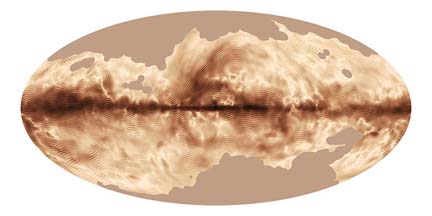
“’Echoes’ of the Big Bang Misinterpreted?”


PHOTO: Discovery News

PHOTO: Discovery News


“Seeing is believing, except when you don’t believe what you see.

“This is according to veteran radio astronomer Gerrit Verschuur, of the University of Memphis, who has an outrageously unorthodox theory that if true, would turn modern cosmology upside down.

“He proposes that at least some of the fine structure seen in the all-sky plot of the universe’s cosmic microwave background is really the imprint of our local interstellar neighborhood. It has nothing to do with how the universe looked 380,000 years after the Big Bang, but how nearby clouds of cold hydrogen looked a few hundred years ago.”

This article proposes an interesting alternative theory and proposes a possible rethinking of how our cosmic neighborhood works.


< Read the complete article by Ray Villard posted June 15, 2012 at news.discovery.com. >


link submitted by Frieda Nelson


“PATH TO LIGHT: Anonymous XX,” Part 1


For the “Path to Light” series, Michael McIntyre conducts an interview for the Community Communique with a speaker who wishes to remain anonymous. This interview was conducted in February of 2014. You are reading Part 1 of 3.


2014-REP-buddha 3


MM: It is my understanding that you wish this interview to be anonymous?

XX:  That’s correct.


What led you to International Community of Christ?

Well, there were strong influences from the time I was three, a Rabbi, several Catholic priests, Buddhist monk, and a Hindu mystic. All these before my eighteenth birthday.

How did they influence you?

It was not so much that they changed my person, my core, but shifted my perspective. Actually a lot of what they passed on to me did not surface until after joining the Community. I was pretty hardheaded in my early years.

What do mean by “shifted your perspective”?

Umm, . . . One day this Buddhist monk, his name was Sahn, was explaining that it was important to not kill any living thing without warrant because it was possible that this ‘living thing’ could be the reborn life of a once-human being. He then went on to explain reincarnation, the best he could; I mean, I was just seven years old. This was all very peculiar to me. Fantasy. Like the Easter bunny, Santa Claus. Then a couple weeks later I was explaining the phenomenon of ‘snow’ to him. He was in utter disbelief. We were in the tropics at this time, where he had lived his whole life, and it never snowed in this part of the world. Few people had televisions, radio was a luxury, it was isolated.

Anyway, he kept shaking his head in disbelief and several times stated how such a thing was impossible. Finally I convinced him of the reality of ‘snow,’ and it came across in his face: he believed me. At that moment it occurred to me that reincarnation could be a real thing. Just because I had never seen or recognized reincarnation, just like Sahn had never seen snow, it didn’t mean that these things weren’t real.

So, then, you understood reincarnation? You believed in it.

No, not necessarily. But it opened me up. I realized I was conditioned by my upbringing and that it was shallow: to think that only one point of view or construct could be correct and that all others had to be excluded.

You’re seven. And you were thinking in these terms?

Maybe not in those exact words, but certainly those exact ideas.

So, this is when your—let’s say—the journey of your spirit began?

No, I was interested in basketball, chess, and girls, but these episodes with Sahn, and there were many, left me to be interested in other religions and a respect for those traditions. At the time, in the early sixties, this view was absent in American culture. The rule then was if you didn’t adhere to the Christian faction, you were doomed. I remember, and it was for a couple days, my father took us on a tour of the Buddhist temples in the area. It was a cultural thing; he loved history.

So we’re in the Temple of the Golden Buddha, which I found out was actually made of brass—the Buddha statue was really brass—all the monks were seated in their orange robes; incense was burning; people were bringing flowers for offering, and my sister was seated right next to me. She was eight at the time. The monks are softly chanting these little prayers, with their hands folded, while making repeated bowing gestures towards the Buddha icon. My sister, being the good little conformist, folds her hands and begins making the same bowing gestures just like monks. My mother was horrified, [and] promptly interrupts my sister’s display, and when leaving the temple remarks to her, “You can’t do those things, you’ll end up in hell.” My immediate response was, “That’s silly mom, she not going to hell for bowing in front of the Golden Buddha.” Nevertheless my mother was convinced, and she was an educated woman; she taught at universities. Even today some people still think like that.

Even though you were just in elementary school, your views were pretty progressive for the time. 

It wasn’t really me so much; it was Sahn. Sahn gave that to me. I still love the man. One day I meet him, and he’s carrying a small bundle of bamboo sticks in one of his hands [and says]: “Come with me. I want you to see this.” He brings me to a patioed area, like a big carport, and lays the sticks on an eating table that has newspaper, rice, and some twine. He snaps the sticks and twines them in the form of a cross.

“What are doing, Sahn?”

“You’ll see.”

He breaks and twines the remaining bamboo, puts it altogether in the form of a diamond and lays it on a piece of newspaper. “You’re making a kite! I love kites.” “That’s right.” He grabs the small bowl of rice, folds the newspaper edges and begins pasting them together with rice. “Is that rice really going to work, Sahn?”

“Always has. But it has to dry for a while”

Couple hours later we’re airborne. Follow me here, I’m going to tie it together with the next story.

A few months later my father takes us oceanside for a week. He has an extra boardinghouse, so he invites Sahn and a few other locals. Early one morning, Sahn and I awake before everyone else. He says, “Let’s go down to the beach.” We’re walking along, and he stops. ”See that temple house on the jungle cliff over there?”  “Yes. It’s big.” “That’s the King’s house. He stays there when he comes to the ocean.”  “Can we go?” Sahn laughed. “Well no, I don’t think they will let us in. He’s not there, anyway.” The tide had just receded; the sand was wet, and we stopped again “XX, see those little marks in the sand?” “Yes.” “Ok, follow them. See where they go. . .Right there!” Sahn kneels down where the markings end and gently starts digging. I have absolutely no idea what he is thinking. Thirty seconds later he lifts this crab up by one of its legs, holds it in front of my face and says “See? Now, let’s see if you can do the next one.” It reminded me of the kite. This man, this monk, had no tools, no weapons, no technology, just his head and two hands, and he did these things. At that point I realized knowledge was the most prized tool and that some things were secret from public knowledge: for that you needed the good fortune of a Teacher. A half-hour later we show up at the boarding house, where the locals were, and open this cloth bag filled with crabs. They all start whistling and clapping, cooked up the crabs along with rice, and invited me to sit down for breakfast. This was rare; they never did this with white people, nor did they speak English other than with Sahn.

Thinking back on it, I believe, in part, Sahn orchestrated the whole crab episode with premeditation in order to show these locals that white people aren’t just these strangers in our land, they are much like us. He was a very intelligent man.


< PART 2 >


“Connecting With God”


2013-REP-Harold_Boulette_Solar_Wind


 There is not in the world a kind of life more sweet and delightful than that of a continual conversation with God. Only those can comprehend it who practice and experience it. Yet I do not advise you to do it from that motive. It is not pleasure which we ought to seek in this exercise. Let us do it from a principle of love, and because it is God’s will for us. … Ah! Knew we but the want we have of the grace and assistance of God, we would never lose sight of Him, no, not for a moment.
Believe me. Immediately make a holy and firm resolution never more to forget Him. Resolve to spend the rest of your days in His sacred presence, …” ~Brother Lawrence


“It is so sad that there are many people in this world who are constantly trying to “better themselves” by going after more material possessions, or just more money. Still others who seek power over men and natural resources. And when they get those things, they are never satisfied, so keep trying to get more, and more, and more, meanwhile depriving others by taking far more than their fair share, or by enslaving others to their illusions of power. The don’t realize that deep down what they really crave is to be reconnected with God and the spiritual worlds that is the source. It is kind of like the person who keeps overeating and still always being hungry because he is eating mostly junk that is not supplying his body’s nutritional needs.

“Even though many people don’t think matters of spirit are important, they may even believe such things don’t exist, but that doesn’t stop something deep down inside us from craving for reconnecting to that source.”


< Read the entire article online at Solar Wind. >


< Visit and bookmark Harold Boulette’s blog Solar Wind at: http://blog.spiritsun.net/ >


contributed by Harold Boulette


May 2013 Japan Tour: DAY 2


5/24 Friday

Gene Savoy, Yukinori Matsushita, other American guests and some Japanese members left the hotel at 9:00 am and traveled to Saga for a guided tour in Saga. We arrived at Niyama Shrine in Kanzaki, Saga at 10:00 am.


Niyama Shrine PHOTO: Stephan Fuelling

Niyama Shrine PHOTO: Stephan Fuelling


At torii of Niyama Shrine  (from left to right) Yukinori Matsushita, Miyuki Okayama, Chieko Nakayama , Shinobu Uwataki, Keiko Inoue PHOTO: Stephan Fuelling

At torii of Niyama Shrine (from left to right) Yukinori Matsushita, Miyuki Okayama, Chieko Nakayama , Shinobu Uwataki, Keiko Inoue PHOTO: Stephan Fuelling


We visited the ruins at *Yoshinogari Historical Park at 11:00 am. This visit was planned and coordinated by Saga Members Hiroko Soejima, Keiko Inoue, Shinobu Uwataki, Yoko Taniguchi, Chieko Higashi, Yoko Nishimura, Yasuko Nishimura, Terumi Kuroda, Kahori Sano, and Naoko Tokushima.


 *The Yoshinogari hills were originally slated for one of Saga Prefecture’s industrial areas, but the project was suspended upon discovery of ruins and relics, until further research into the area could be carried out. In 1986, the site was meticulously studied to understand whether it was a truly important cultural site. The concluding result was that this area was one of Japan’s largest moat encircled villages dating from the Yayoi period (c. 3 BCE – c. 3 CE). The location and layout of the village captured the imagination of Japan as it closely resembled the long disputed ancient country of Yamatai mentioned in early Chinese chronicles. The Yoshinogari ruins are of extremely high academic value and are an important cultural asset.

In 1992, the Yoshinogari ruins were designated a NationalHistoricalPark with the surrounding area made into a SagaPrefecturalPark. In April 2001, the initial phase of the Park was opened to the public. The Park, as of April 1, 2009, measures 73.7 hectares (38.3 hectares of national land, 35.4 hectares of prefectural land).


< Visit the Yoshinogari web site. >


Reconstructed buildings PHOTO: Stephan Fuelling

Reconstructed buildings PHOTO: Stephan Fuelling


Reconstructed buildings PHOTO: Stephan Fuelling

Reconstructed buildings PHOTO: Stephan Fuelling


Exhibition of a ritual with a shaman PHOTO: Stephan Fuel

Exhibition of a ritual with a shaman PHOTO: Stephan Fuel


Exhibition of ceremonial dinner. The color of the peoples’s clothes are different based on their official rankings. PHOTO: Stephan Fue

Exhibition of ceremonial dinner. The color of the peoples’s clothes are different based on their official rankings. PHOTO: Stephan Fue


We had a lunch at Saga Retrokan at 1:30pm. This event was planned and coordinated by Saga Members Hiroko Soejima, Keiko Inoue, Shinobu Uwataki, Yoko Taniguchi, Chieko Higashi, Yoko Nishimura, Yasuko Nishimura, Terumi Kuroda, Kahori Sano, and Naoko Tokushima.


(from left to right) Robert Roy, Yukinori Matsushita, Gene Savoy, Sabrina Savoy PHOTO: Stephan Fuelling

(from left to right) Robert Roy, Yukinori Matsushita, Gene Savoy, Sabrina Savoy PHOTO: Stephan Fuelling


(from left to right) Chieko Higashi, Ms. Kawasahi, Hichiyo Hukuyama, Yoko Nishimura, Miyuki Okayama PHOTO: Stephan Fuelling

(from left to right) Chieko Higashi, Ms. Kawasahi, Hichiyo Hukuyama, Yoko Nishimura, Miyuki Okayama PHOTO: Stephan Fuelling


We visited *SagaCastleHistoryMuseum with  a volunteer interpreter guide at 2:30pm.

This event was planned and coordinated by Saga Members Hiroko Soejima, Keiko Inoue, Shinobu Uwataki, Yoko Taniguchi, Chieko Higashi, Yoko Nishimura, Yasuko Nishimura, Terumi Kuroda, Kahori Sano, and Naoko Tokushima.

*Saga Castle History Museum is a reconstruction of the main keep (honmaru) of SagaCastle built in 1838, during the last years of the Edo Period. It is one of the largest wooden reconstructions in Japan. Over 700 rush mats (tatami) are laid in the building, providing ample space for a wide variety of exhibits including data, images, and models that depict Saga during the fall of the Tokugawa Shogunate and the Meiji Restoration.


< Visit the Saga Castle History Museum  web site. >


Outside view of the Saga Castle History Museum PHOTO: Stephan Fuelling

Outside view of the Saga Castle History Museum PHOTO: Stephan Fuelling


Outside view of the Saga Castle History Museum PHOTO: Stephan Fuelling

Outside view of the Saga Castle History Museum PHOTO: Stephan Fuelling


Visiting group inside the Museum PHOTO: Stephan Fuelling

Visiting group inside the Museum PHOTO: Stephan Fuelling


We visited the *Jofuku Long Life Center in Saga City at 4:30pm, and then the Kannon of the Well. This event  was planned and coordinated by Saga Members Hiroko Soejima, Keiko Inoue, Shinobu Uwataki, Yoko Taniguchi, Chieko Higashi, Yoko Nishimura, Yasuko Nishimura, Terumi Kuroda, Kahori Sano, and Naoko Tokushima.


Painting of Joguku PHOTO: Stephan Fuelling

Painting of Joguku PHOTO: Stephan Fuelling


 *Jofuku, pronounced Xifu in Chinese, came to Japan during the Jomon Era in the 3rd century B.C. It is said that he landed near Shingu and brought with him much Chinese culture and technology.

 Jofuku was at the time serving as a Taoist shaman to the Emperor Shikoutei of the Xin Dynasty in China about 2200 years ago. He was ordered by the emperor to set out in order to “find the elixir of eternal life which is said to be on the mountain of Horai on the sea to the east.” He eventually arrived in Kumano and with him he brought about 3000 people, men, women, and children. Unfortunately for the emperor, he never returned to China.

Jofuku (known aa Xu Fu in Chinese) was a Taoist monk who sailed from China to Japan in search of the fabled elixir of immortality. He is said to be responsible for the spread of Chinese culture in Japan, including farming methods for irrigated paddy rice cultivation, and many different areas in Japan have local legends which claim Jofuku landed there. Saga, which is said to be the cradle of early mass rice cultivation in Japan, also boasts a great number of Jofuku legends—Jofuku is even enshrined as a god of the harvest at Saga’s Kinryu Shrine.


Outside view of the Center PHOTO: Stephan Fuelling

Outside view of the Center PHOTO: Stephan Fuelling


The JofukuLongLifeCenter rests at the foot of Mt.Kinryu, and in addition to introducing the legends of Jofuku to visitors also serves to spread the latest developments in research on Jofuku and his voyages.


Painting of Deity of Mercy created by Kusaba Kazuhisa, using the same technique used to make Arita ware.

Painting of Deity of Mercy created by Kusaba Kazuhisa, using the same technique used to make Arita ware.


< Visit Kusaba Kazuhisa’s web site.


We had a casual Sunset Service meeting at MegalithPark at 6:00pm. This event was planned and coordinated by Saga Members Hiroko Soejima, Keiko Inoue, Shinobu Uwataki, Yoko Taniguchi, Chieko Higashi, Yoko Nishimura, Yasuko Nishimura, Terumi Kuroda, Kahori Sano, and Naoko Tokushima. 

Sunset at Megalith Park PHOTO: Stephan Fuelling

Sunset at Megalith Park PHOTO: Stephan Fuelling


Gathering for sunset at Megalith Park PHOTO: Stephan Fuelling

Gathering for sunset at Megalith Park PHOTO: Stephan Fuelling


We all had dinner at Umenohana Tofu Restaurant at 7:00pm.


After dinner (front row, from left to right) Sabrina Savoy, Noriko and Joseph Roy, Yukinori Matsushita, Gene Savoy, Yoko Nishimura, Chieko Nakayama, Keiko Inoue. (back row, left to right) Shinobu Uwataki, Robert Roy, Stephan Fuellig, Michiyo Fukuyama, Miyuki Okayama, Kazuno Kawasaki PHOTO: Stephan Fuelling

After dinner (front row, from left to right) Sabrina Savoy, Noriko and Joseph Roy, Yukinori Matsushita, Gene Savoy, Yoko Nishimura, Chieko Nakayama, Keiko Inoue. (back row, left to right) Shinobu Uwataki, Robert Roy, Stephan Fuellig, Michiyo Fukuyama, Miyuki Okayama, Kazuno Kawasaki PHOTO: Stephan Fuelling


Travel notes by Noriko Roy


< DAY 1 >

< DAY 3 >


Gregory Sams Interviewed on His Book Sun of God

2014-REP-Sun-of-God-COVER

Ancient Origins recently interviewed Gregory Sams on his book Sun of God, and the interview appears on YouTube. Gregory Sams is the inventor of the “veggie-burger” and the propounder of other revolutionary ideas.

Here are a few words from the blurb for the book on Sams’ web site:

“In Sun of gOd, cultural pioneer and philosopher Gregory Sams takes a fresh look at our solar benefactor. As Sams sees it cultures throughout the ancient world were right to recognize the Sun as a living, conscious being. The implications of a conscious provider in the sky are startling, though often obvious — and in harmony with science, logic and common sense. Sun of gOd explores exciting new ground, adding a crucial piece to the jigsaw-puzzle picture we have of the cosmos. In the light of a conscious Sun, Sams looks at our hard-wired tendency for religion, notions of god and divinity, our place in the firmament, star formation, intelligent light, electromagnetism, feedback, chaos theory, free will, the four elements, and the near-universal self-organization of systems from the bottom up.”

In the Ancient Origins interview, Sams states that the sun is a conscious being and that, while moderns have a hard time admitting the concept, ancients founded their religions on it. The concept is not new to us, but it is seemingly revolutionary today.

Read the introduction, watch the video, and tell us what YOU think. What would you as a Cosolargist say to Mr. Sams? And what could you add to his comments?

< Watch the video of the interview posted on January 14, 2014 by Ancient Origins on YouTube (25 minutes) >


(Please note that the book discussed above is not to be confused with the book familiar to many Community members, Jesus Christ, Sun of God: Ancient Cosmology and Early Christian Symbolism by David Fideler (1993). Jesus Christ, Sun of God reveals many of the sources for the early Christian Gnosis and places special emphasis on the Hellenistic doctrine of the “Solar Logos” and the early Christian symbolism that depicted Christ as the Spiritual Sun—the illumination source of order, harmony, and spiritual insight.)

link submitted by Robert Anderson


“Psychic vs Spiritual Adept”


2013-REP-Harold_Boulette_Solar_Wind


 In the interaction between the different levels of consciousness and the corresponding planes of manifestation lies the essence of occultism. The psychic is one who functions negatively in this interaction; he reacts to the conditions he contacts, and thereby perceives them, but he exerts little or no influence on them. The adept, on the other hand, while perceiving, does not react, and therefore functions positively in his relations to the subtle worlds, sending out his influence upon them instead of receiving their influence into himself. … The true adept is not dependent upon the intervention of spirits, whether divine or diabolical, but himself works directly on the plane of his choice; …
But in addition to his studies of subjects which are essentially occult, there are other sciences with which the student aught to be acquainted if he is to do justice to his task, …” ~Dion Fortune


“While I agree in general with what Ms Fortune is saying, there are some specifics in this quote that I disagree with.

“While she considers psychics and their passive approach to other realms negative, I think it is more often neutral. They are not trying to make a positive influence on them, but neither are they making things any worse. The main problem with psychics is that they look beyond only to the fourth dimension where they gather information that may or may not be true because the demons, or diabolical influences, as Ms Fortune calls them, operate on this level. This is kind of like Dorothy in the Wizard of Oz stopping and staying with the scarecrow instead of continuing on to the Emerald City. This is not necessarily wrong, as long as the psychic is aware that the fourth dimension is not a true spiritual plane, but they usually are not.”


< Read the entire article online at Solar Wind. >


< Visit and bookmark Harold Boulette’s blog Solar Wind at: http://blog.spiritsun.net/ >


contributed by Harold Boulette


“Breaking the limits of classical physics”


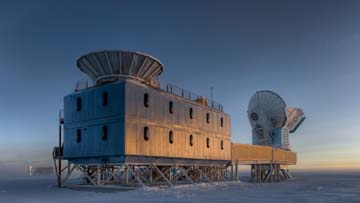
In the quantum optical laboratories at the Niels Bohr Institute, researchers have conducted experiments that show that light breaks with the classical physical principles. The studies show that light can have both an electrical and a magnetic field, but not at the same time. That is to say, light has quantum mechanical properties. PHOTO: Niels Bohr Institute.

In the quantum optical laboratories at the Niels Bohr Institute, researchers have conducted experiments that show that light breaks with the classical physical principles. The studies show that light can have both an electrical and a magnetic field, but not at the same time. That is to say, light has quantum mechanical properties. PHOTO: Niels Bohr Institute.


“With simple arguments, researchers show that nature is complicated! Researchers from the Niels Bohr Institute have made a simple experiment that demonstrates that nature violates common sense – the world is different than most people believe. The experiment illustrates that light does not behave according to the principles of classical physics, but that light has quantum mechanical properties.”

Even though this article is a year old, it reveals in summary form some new and groundbreaking information.


< Read the complete article posted online June 11, 2012 at spacedaily.com. >


link submitted by Frieda Nelson


“Rituals and Spiritual Practices”


2013-REP-Harold_Boulette_Solar_Wind


 In Taoism, even beyond Chinese folk religion, various rituals, exercises, and substances are said to positively affect one’s physical and mental health. They are also intended to align oneself spiritually with cosmic forces, or enable ecstatic spiritual journeys. These concepts seem basic to Taoism in its elite forms. Internal alchemy and various spiritual practices are used by some Taoists to extend life, even to the point of immortality. Immortals, their actions and their relationships with the gods and natural forces form a significant portion of Taoist mythology.” ~from the book Taoism for Know-It-Alls

“I have written many times about the need to engage in spiritual practices, spiritual techniques, spiritual rituals in order to awaken the soul and move along the path of enlightenment. This quote shows that this matches very closely the beliefs of Taoism. It mentions that there are physical and mental benefits to doing these spiritual exercises—and that is true—but, more importantly, there are spiritual benefits.”


< Read the entire article online at Solar Wind. >


< Visit and bookmark Harold Boulette’s blog Solar Wind at: http://blog.spiritsun.net/ >


contributed by Harold Boulette


May 2013 Japan Tour: DAY 1


5/23 Thursday

Gene Savoy arrived at FukuokaAirport. Some Japanese members were there to greet him.  

Gene Savoy and American guests and Yukinori Matsushita and some Japanese members visited Manners Sound Research Co. Office in Kurume.

 We all enjoyed early lunch at Shun, a health food restaurant in Kurume.


Lunch with Japanese members. (from left to right) Miyuki Okayama, Shinobu Uwataki, Keiko Inoue, Yukinori Matsushita, Gene Savoy, Sabrina Savoy, Robert Roy, Noriko Roy  PHOTO: Stephan Fuelling

Lunch with Japanese members. (from left to right) Miyuki Okayama, Shinobu Uwataki, Keiko Inoue, Yukinori Matsushita, Gene Savoy, Sabrina Savoy, Robert Roy, Noriko Roy PHOTO: Stephan Fuelling


Gene Savoy Jr. and other American guests checked in the Hotel Toyoko Inn Kurume.

Gene Savoy and American guests and some Japanese members visited the *Ishibashi Museum of Art in Kurume.

 *Ishibashi Museum of Art opened as the main institution of Ishibashi Cultural Center, which Ishibashi Shojiro, founder of Bridgestone Corporation, donated to his hometown, the city of Kurume, in 1956. Like the other facilities at the Center, it was initially managed by IshibashiCulturalCenter. From 1977, it has been administered by the Ishibashi Foundation together with Bridegestone Museum of Art in Kyobashi, Tokyo. The Asian Gallery opened in 1996. The Asian Gallery was built and donated to the city of Kurume by Shojiro’s eldest son, Kanichiro, so that the paintings, calligraphic works, and ceramics could be put on view and to further enrich the Center. Of the collection owned by the Ishibashi Foundation, Ishibashi Museum of Art takes care mainly of modern Japanese Western-style paintings, Japanese paintings and calligraphic works, and ceramics. Fundamentally, the Western-style paintings are housed in the MainBuilding and the Japanese paintings and calligraphic works and the ceramics are shown in the Asian Gallery. Thematic exhibitions mainly featuring works in our collection are organized three to four times a year and we do our best to provide chances for the visitors to enjoy art repeatedly from different viewpoints.


At IshibashiMuseum (from left to right) Sabrina Savoy, Gene Savoy, Keiko Inoue, Robert Roy, Shinobu Uwataki, Stephan Fuelling PHOTO: Stephan Fuelling

At IshibashiMuseum (from left to right) Sabrina Savoy, Gene Savoy, Keiko Inoue, Robert Roy, Shinobu Uwataki, Stephan Fuelling PHOTO: Stephan Fuelling


Japanese garden at Ishibashi Museum PHOTO: Stephan Fuelling

Japanese garden at Ishibashi Museum PHOTO: Stephan Fuelling


 After the IshibashiMuseum, we visited Kora Taisha Shrine in Kurume.


Gate to the entrance (torii) of Kora Taisha Shrine PHOTO: Stephan Fuelling

Gate to the entrance (torii) of Kora Taisha Shrine PHOTO: Stephan Fuelling


Kora Thaisha Shrine PHOTO: Stephan Fuelling

Kora Thaisha Shrine PHOTO: Stephan Fuelling


Gene Savoy, American guests, Yukinori Matsushita and some Japanese members had dinner at the Japanese restaurant Maruman in Kurume.


Travel notes by Noriko Roy

< DAY 2 >