Spiritual Teachers


2013-REP-Harold_Boulette_Solar_Wind


 When someone has just entered the monastic life and has learned merely about the outward practices of asceticism—how and when monks pray, what they eat and how they dress—at once he claims to teach others concerning things he has not mastered himself. He goes about with a bevy of disciples, although himself still needing instruction; he thinks it easy to be a spiritual guide, not realizing that the care of other men’s souls is of all things the most difficult. For men must first be purified from old defilements, and then with close attention must learn about holiness. But when a person imagines that there is nothing beyond bodily ascetic practice, how will he correct the moral character of his pupils? How will he help those enslaved to evil habits? How will he help those attacked by the passions, when he knows nothing about mental warfare? How will he heal the wounds they receive when fighting, since he himself lies wounded and is in need of aid?” ~The Philokalia

“This is an old problem, but one that has gotten even worse in modern times. A number of people have, without proper training, declared themselves spiritual teachers. Sometimes these people attend a real spiritual school, but drop out after receiving only the most basic teachings and, because there ego has been puffed up rather than controlled, have decided that they are smarter than their teachers and start there own school. Since they don’t really know what they are doing, they only teach superficial things like what to eat and how to pray and therefore the students of this school never become truly spiritual.”


< Read the entire article online at Solar Wind. >


< Visit and bookmark Harold Boulette’s blog Solar Wind at: http://blog.spiritsun.net/ >


contributed by Harold Boulette


Tour Peru’s Sacred Places of Power

The Andean Explorers Foundation
Presents
Sacred Places of Power
Peru Tour & Pilgrimage
Hosted by Sean Savoy
August 2014

2014-REP-cropped-Sean_Peru
This Summer travel with the experienced to breathtaking sites in  mystical Peru.
Sacred Places of Power
Peru Tour & Pilgrimage
Sign up today!   Deposits due by May 1st.
  • August 2014    For as low as $1575!
  • Begin in Historic Lima
  • Sacred Valley of the Incas
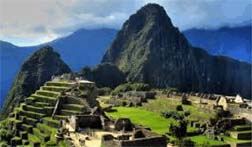
  • The magnificent lost city of Machu Picchu
  • Nasca and the Callejon de Huaylas
  • World class museums and numerous pre-Incan sites
Your Host  is  Sean Savoy, 41, president of the Andean Explorers.Sean Savoy , who is half-Peruvian and was named by MEN’S JOURNAL as one of the leading explorers of the Generation EX, has worked in the jungles and highlands of Peru since the age of 15 participating in and leading many  field expeditions and cultural tours in  Peru.
————————————————————————-

Hello Fellow Adventurer,You are invited to join Sean as he visits some of the earth’s most magnificent and awe-inspiring locations, shedding new light on the Andean Explorers’ work in Peru for over half a century.INCLUDED: High class accommodations, guided tours, personal and educational talks, participation in filming, and invitations to attend
presentations on site and with specialists at Peruvian institutions.nazca lines - bird 2

PRE-TOUR OPTION*: Mysteries of Nazca.
Lima – Paracas – Nazca – Ballestas Isles
August 2 – August 6    (4 days / 5 nights).
MAIN TOUR: Inca Legacy.
Lima – Cusco – Sacred Valley – Inca Trail 

Machu Picchu/Huayna Picchu
August 6 – August 13 ( 7 days / 7 nights).
Lima-de-noche1-1024x496Peru Mountain mist 2POST-TOUR SUPPLEMENT*: Andes Pilgrimage.
Lima – Huaraz – Yungay – Chavin de Huantar
August 13 – August 17 (4 days / 4 nights). Huaraz_0191Huaraz_Yungay

4. FULL TOUR – SCARED PLACES OF POWER. – SAVE $200!

15 days / 15 nights (not including int’l. travel days) – All of the above.

For more details about this exciting trip visit the Tour Host’s website, Sean Savoy.

TOUR ITINERARY, PRICING & OPTIONS:

MAIN TOUR: Inca Legacy.
Lima – Cusco – Sacred Valley – Inca Trail – Machu Picchu
August 6 – August 13 ( 7 days / 7 nights).
Cost: $3200
Note: Continue from Pre-tour (see below) or arrive in Lima night of Aug 6. First overnight in Hotel Estelar, Lima-Miraflores. Land tour begins Aug. 7.

Cusco, Peru

Cusco, ancient capital of the Incas.

The early morning finds you at Lima’s Jorge Chavez International Airport for transport to the ancient Inca capital city of Cusco. Start your Inca tour by visiting Awanakancha, a living  museum of Andean camelids (llamas, alpacas, vicuñas). Then, visit the famous Pisac market as you travel through the Sacred Valley of the Incas. Spend a morning at the community of Huilloc where ancient Inca customs are still alive. You will also visit a rural school. (Small school supplies will be welcomed as a donation!) Participate in the Kusi Runa, as you experience how the Andean men (“runa”) live their daily agricultural life, wearing the typical Huilloc poncho and using traditional tools. The activity ends with a spiritual moment expressed through local dance and music. Then, enjoy a delicious home-cooked Andean lunch with local products harvested in traditional and sustainable ways. Later, visit the ancient ruins of Ollantaytambo.

Machu Picchu

Machu Picchu

As the Sacred Valley tour continues, you will board the Vistadome train to the base of Machu Picchu, the “Lost City of the Incas,” for the trip up to the ancient citadel by bus. Return to Machu Picchu the next day by bus for sunrise and to tour the entire city. On the way back to Cusco you will be able to visit the spectacular ruined fortress of Sacsayhuaman and the vestiges of Puka Pukara, Tambomachay and Qenquo. A day spent in Cusco itself will complete this portion of the tour. Visit the Coricancha (“Temple of the Sun”), the main plaza, and enjoy a relaxing final evening at the El Mercado Tunqui Hotel.

Lima-Plaza Mayor

Lima’s main plaza at night.

Upon return to Lima, visit the breathtaking Gold Museum and enjoy some last-minute shopping before your international flight that evening, or continue on the the Post-Tour.

PRE-TOUR: Mysteries of Nazca.
Lima – Paracas – Nazca – Ballestas Islands
August 2 – August 6 (4 days / 5 nights)
Cost: $2000
Note: Arrive Peru night of Aug. 2. First overnight in Hotel Estelar, Lima-Miraflores. Land tour begins Aug 3.

Lima-Miraflores

Lima-Miraflores

Experience the bustling capital of Lima, known as “The City of Kings.” See the Presidential Palace and the Lima Cathedral.  Enjoy lunch at a vice-regal mansion, and visit the Museum of Anthropology and Archaeology in Lima’s old district of Pueblo Libre.

Huacachina

Huacachina, Oasis of the Americas

Four hours south of Lima in the wine country of Ica, see Huacachina, the famous Oasis of the Americas.

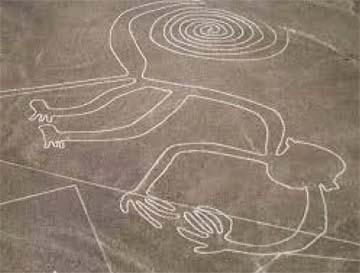
Then, face one of the world’s great mysteries as you fly over the Nazca Lines etched by this pre-Inca civilization on the arid planes of one of the driest deserts in the world.

Nazca Lines

The famous hummingbird (colibri) design, Nazca, Peru.

Later, sail to the Ballestas Islands, home to a large population of sea lions and penguins. Then, back to Lima to enjoy some of the world’s greatest cuisine, “la comida criolla,” and a rich array of folkloric music at La Dama Juana in Lima’s artistic district of Barranco.

POST-TOUR: Andes Pilgrimage.
Lima – Huaraz – Yungay – Chavin de Huantar
August 12 – August 17 (4 days / 5 nights)
Cost: $1575. (Pachacamac excursion, add $175).
Note: Continue from Main Tour (see above) or arrive in Lima night of Aug. 12. First overnight Hotel Estelar, Lima-Miraflores. Land tour begins Aug 13.

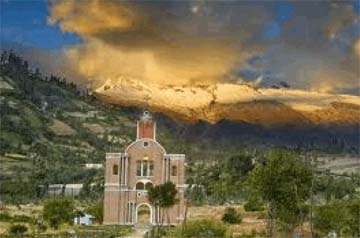
Mt. Huascaran, Peru

Mt. Huascaran, Peru’s highest peak.

Start the Andes Pilgrimage with a short morning flight to find yourself in the central Andes. Beginning in Huaraz, the capital city of Ancash province, you will drive along the breathtaking Callejon de Huaylas watered by the Santa River below Peru’s majestic Mt. Huascaran, the country’s highest snow peak.

On the way through the valley, visit the picturesque towns of Carhuaz, Caraz, Recuay and the national shrine of Yungay, where, it is said, the “Christ Child of the Andes” lived and walked before perishing in the avalanche of 1962. A later avalanche of 1970 sealed the town as a memorial for all time. Spend the day walking and reflecting on the messages of The Child.

Chavin de Huantar

Chavin de Huantar

Then, traverse the Cordillera Blanca to visit Chavin de Huantar (1300 to 1400 BCE), one of South America’s oldest and most advanced cultures. Chavin’s monumental granite pyramids and ceremonial plazas are linked by colossal carved stone staircases and platforms. Chavin de Huantar has been designated a UNESCO World Heritage Site. This Andean Pilgrimage concludes with a journey to Lake Llanguanuco in the heart of the Huascaran Biosphere Reserve. Once back in Lima, enjoy a final day of shopping and an optional visit to the pre-Inca temple of Pachacamac outside the City of Kings before taking your international flight that evening.

Pachacamac

Pachacamac

FULL TOUR – SACRED PLACES OF POWER. – SAVE $200!
15 days / 15 nights (not including int’l. travel days) – All of the above. Cost: Only $6475
(Add on $175 for Pachacamac excursion.)

Peru

Map of Peru

PeruTour2014_Reservfrm_Pg1of2 PeruTour2014_Reservfrm_Pg2of2

NOTES:  Your tour may begin with the Pre-Tour or with the Main Tour. Post-Tour may be added to the  Pre-Tour + Main Tour or to the Main Tour. Prices include domestic airfare and land transportation within Peru.

Prices do not include international air to and from Peru or domestic travel within country of origin. Breakfast is included every day. Several lunches and dinners included, expert guides and additional personalized cultural talks and information by the the Tour Director.

See reservation form for full information and details on cancellation policies.

Tel: (775) 348-1818
Toll Free: (877) 423-3672
Fax: (775) 332-3086

Tel: (775) 348-1818
Toll Free: (877) 423-3672

Email: info@aef.org


“On the Trail of the Nostradamus Code”


PHOTO: drturi.com

PHOTO: drturi.com

 After seeing Dr. Louis Turi on a TV interview, I was impressed enough to subscribe to his Cosmic Code website (drturi.com) to see his predictions for 2014 and to learn more about his type of astrology. He uses the “Cosmic Dragon” (the nodes of the moon) as a central feature in his astrological readings, something I have always considered more meaningful than a simple sun sign if you want to know a person’s path and personality, since in my experience it has often been more “on” than a sun sign.

Turi claims to use the form of astrology that Nostradamus used and that has proved very accurate. Personally, I think he has succumbed somewhat to the 4th dimensional forces that he uses (or that use him), and his ego can be a turnoff, but getting past that, I find his work of interest. I was interested in how to use Nostradamus’s astrology, which is why I subscribed, despite Turi himself. At any rate, he has given a number of predictions for 2014–2016, one of which I found very interesting. It goes: “A new breed of cosmic spiritual leaders made up of highly advanced spiritual human beings will be offered a voice and a national stage, offering clarification and preparing the way for universal brotherhood unification.”

As I have had a sense that 2014 is going to be a watershed year for the ICC, I thought that this prediction gave some confirmation to that. Of course, I understand that once we are in the sun we transcend the “fate” determined by our stars, so I don’t feel “subject” to his readings, and so that would have to be true for the Community itself as well, but remaining detached and “light” (pun intended) about it, I think it will be fun to see what happens.

by Robert Anderson


May 2013 Japan Tour: DAY 7


5/29 Wednesday


Yukinori Matsushita and Gene Savoy Jr. enjoyed a discussion after breakfast. Later in the day, we had a final dinner with Japanese members at the restaurant SHUN.


After the dinner (front row, left to right) Noriko Roy, Shinobu Uwataki; (middle row, left to right) Shoko Oba, Keiko Inoue, Yoko Nishimura, Sabrina Savoy, Robert and Joseph Roy, Kahori Sano; (back row, left to right) Koshu Kawahara, Hiroko Soejima, Gene Savoy, Yukinori Matsushita, Miyuki Okayama, Eriko and Hiroe Ueno PHOTO: Stephan Fuelling

After the dinner (front row, left to right) Noriko Roy, Shinobu Uwataki; (middle row, left to right) Shoko Oba, Keiko Inoue, Yoko Nishimura, Sabrina Savoy, Robert and Joseph Roy, Kahori Sano; (back row, left to right) Koshu Kawahara, Hiroko Soejima, Gene Savoy, Yukinori Matsushita, Miyuki Okayama, Eriko and Hiroe Ueno PHOTO: Stephan Fuelling


References Cited:
Vandaman, James M. Japanese Religion. Japan: IBC Publishing co, 2011.


Travel notes by Noriko Roy


< DAY 6 >


“The Chosen of God”


2013-REP-Harold_Boulette_Solar_Wind


 My grace is precious, and suffereth not itself to be mingled with strange things nor earthly consolations. Wherefore it behoveth thee to cast away impediments to grace, if thou willest to receive the inpouring thereof. Ask for thyself a secret place, love to dwell alone with thee, seek confabulation of none other … put the readiness for God before all other thing, for thou canst not both take heed to Me and delight in things transitory…. This grace is a light supernatural and a special gift of God, and a proper sign of the chosen children of God, and the earnest of everlasting health; for God lifteth up man from earthly things to love heavenly things, and of him that is freshly maketh a spiritual man.” ~Thomas a Kempis


“The old English is difficult to follow, but hopefully most get the point. If it isn’t obvious, Kempis is speaking as God in this quote, so when he starts with “My grace”, he means God’s grace. Several important points are found in this quote, which was actually embedded in a book by Evelyn Underhill.”


< Read the entire article online at Solar Wind. >


< Visit and bookmark Harold Boulette’s blog Solar Wind at: http://blog.spiritsun.net/ >


contributed by Harold Boulette


Synesthesia


2014-REP-synesthesia.kandinsky2

In 1984 there were six reported cases of synesthesia in the United States.  Today this condition is thought to be more widespread. The following is a small excerpt from a book in progress that deals with cognition and the propensity for Visions. Although synesthesia is certainly not a prerequisite for visions, it is an interesting element that may contribute to the mix.


“Soft colors.”
“Dark sounds.”
“When I hear the name Derek it tastes like earwax.”
“Five. That number is hunter green and it is masculine. Very masculine.”
“The two o’clock sun in January is the metal silver—on the inside of my front teeth.”

 What do all these quotes have in common? They are expressions generated from the minds of synesthetes, people with a condition often known as synesthesia. Neuroscientist David Eagleman notes: “There are many different forms of synesthesia, but what they all have in common is that they represent a blending of the senses.”

If I were seated at a piano and hit a high note then a very low note, which one would you say is brighter? Which one is more heavy?  If you are like most people, the high note is brighter and the low note is heavy.  Brighter is an optical measurement and heavy is a spatial or tactile one; there is no reason why an auditory sound should neurologically excite visual or weight sensations—or is there?  Before we answer that question lets get a better sense of what it is, how it feels, to have this condition.

Take a look at the two figures below and decide which one is “kiki” and which one is “bubbu.”

2014-REP-synesthesia.kikibobo

Research shows that 99 percent of people identify the left figure as “kiki” and the right figure as “bubbu.”  This would suggest a kinesthetic value to spoken or written words. Gobbledygook is defined as language that is meaningless or is made unintelligible by excessive use of abstruse technical terms—basically nonsense. When saying gobbledygook out loud, the actual sound of the word phonetically mimics its definition. “Crash, hiss, buzz” also have this quality, which categorizes these words as onomatopoetic.  Some forms of synesthesia bring this ordinal lingual personification sensation to another level; for example, the letter A might be egotistical, while C is brave. Tuesday is sympathetic, whereas Thursday is driven.  In these cases ordinal lists such as the alphabet, numbers, and days of the week have assigned personalities. There is no sensory consensus between synesthetes, each seems to have his or her own association preferences.

Imagine a clock in front of you. Where would you place North and where would you place South? Most of us would place north at the 12 o’clock mark and south at the 6 o’clock mark, but true north and south are not actually where we place them in this instance.

Ok, now imagine a line in front of you running from left to right.  Where would you place “the past” and where would you place “the future”? Most Westerners assign “the past” to the left side and “the future” to the right side of the line. This is a cultural preference and not globally consistent. Ask a monolingual Mandarin-speaker to do this, and he or she most often assigns past, or earlier, events above the line and later, or future, events below the line. There are cultures that do not have words for left or right, past or future. For them these concepts do not have enough strength to exist in their vocabulary. You can ask some synesthetes, Where is February? and they will say, “At my left elbow.” And March? “At my right shoulder; that’s where it belongs.”  These people have an accelerated sense for spatial preference, referred to as spatial-sequence synesthesia. If outside this present conversation you ask any normal person, Where is February? or Where is March? or Where is August? and they will likely respond,  “Yeah. Uh huh. Ok, have you been taking your medications today?” 

 Many synesthetes are intelligent, well balanced, emotionally fit individuals.

A common form of synesthesia is musical-color, in which people view colors when listening to music or musical scales, harmonies, keys, or percussive timbres. Duke Ellington, for example, stated: “I hear a note by one of the fellows in the band and it’s one color. I hear the same note played by someone else and it’s a different color. If Harry Carney is playing, “D” is dark blue. If Johnny Hodges is playing, “G” becomes light blue satin.” Lexical-gustatory synesthesia is experiencing the sensation of taste that is triggered by specific words, such as exuberant, which might taste like spearmint, or keyboard might taste like dark chocolate.

Nicola Tesla: “When I drop little squares of paper in a dish filled with liquid, I always sense a peculiar and awful taste in my mouth.”

We’ve all heard the statement, “I got the blues,” and for us this is a completely understandable, logical, and sane remark. But does the speaker actually display or have a blue skin color? Usually not. Still, we subscribe to this type of thinking or metacognition. What is curious is how or why this phrase first originated.  Who was the person to initially inaugurate such a phrase, and why did it catch on and become so widely accepted?  There is a common type of synesthesia called grapheme-color where letters or numbers take on certain colors: the number 11 might be yellow or the letter A is red and so on. Each particular association is consistent for the synesthete and does not change. “Synesthesia is involuntary. It happens to you. You can’t make it happen, and you can’t make it not happen.”—Dr. Richard E. Cytowic of George Washington University Medical Center, Washington, D.C.

 What is interesting about number/color synesthesia is that number and color recognition occur in two brain areas that are right next to each other. “The number area and color area in the brain are right next to each other in the fusiform gyrus [part of the temporal and occipital lobes of the brain] and we have now done brain imaging experiments—there’s a paper coming out in the journal Neuron—showing that in normal people when you show [them] numbers, only the number area lights up in the fusiform gyrus. In synaesthetes both the number and color area light up, [and] they spill over across activation of the color region, occurring every time this chap sees a ‘black and white’ number or letter.” (V. S. Ramachandran, All in the Mind interview, 5/7/2005. (Full citation below).

These people are not imagining this; they actually get a color visual when shown a number, as the neurons for color in the fusiform gyrus are firing. A black-and-white matrix, similar to the left frame below, is presented for testing this type of synesthesia.  

2014-REP_Synaesthesia numbers

The frame on the right might be what a verified synesthete would see. In the lab, researchers simply test controlled groups for their reaction time in identifying the ‘2’ formation, using a series of frames in black and white. If a person actually sees numbers as color their reaction time is of course much shorter, or faster—suggesting they actually can see numbers as colors, as in the right frame, where the triangular formation of the 2’s stands out clearly.

Jonathan Hsy, an English professor at the GeorgeWashingtonUniversity, is a verified synesthete. He sees the number 5 as cherry red.  Professor Hsy is also multilingual:

“Speaking from my own experience, it’s not so much that I “see” the letter E as bright lime green in “my mind’s eye,” but rather that “lime-green-ness” is inextricably tied to “E-ness” in my perception. In a similar way, five is inherently bright cherry red, no matter whether or not it’s transcribed as five, 5, or in any other language I happen to know: 五 [Chinese], fünf [German], cinq [French], etc.”  For Professor Hsy all letters, numbers, days of the week, and months all have distinctive colors.

Clinically, synesthesia is a perceptual experience in which stimuli presented through one modality will spontaneously evoke sensations in an unrelated modality.

This condition is present in 1 percent of the population, occurring in varying degrees and modalities. There is an estimated 60 different modalities of synesthesia.

One of the neurologically based theories for synesthesia is that there is more crosstalk between sensory modalities in the brain than normally occur.  This may be related to a neurological maturation process called “synaptic pruning.”

In a newborn, as the brain grows and new information is incorporated, the neurons develop synapses, which transmit information from one neuron to another. As these links are used repeatedly, the neurons develop a sheathing, making them stronger and thereby creating preferred pathways for information to travel. As the infant reaches toddler age, synapses between neurons are “pruned” so stronger neural pathways can transmit signals more efficiently. The synapses most activated in this early growth period are preserved. This process is most prevalent in the early years but continues to a lesser degree as life goes on. If this pruning mechanism were less diligent, more crosstalk might occur between different brain areas; this is one theory for the explanation of synesthesia, which brings up another question: Are all toddlers or babies synesthetes?  It probably won’t be long before we have that answer, as synesthesia is being researched and published in fifteen countries at this writing. The Oxford Handbook of Synaesthesia (2013) contains over a thousand pages. Compelling evidence suggests that synesthesia is genetic.

“Loud shirt.” “Sharp cheddar.” “Soft moonlight.” “Cool jazz.” “Use Exxon Gasoline. Put a tiger in your tank!”  Is metaphoric cognition a fragmented form of synesthesia inherent in the human condition?  Are dream formations, synesthetic echos?  Is there an evolutionary cognitive value for synesthesia?  Was this ability at one time more prominent in human beings? The following is taken from the Rig Veda 1.164,  “The Asya Vamasya Hymn”: 

“Speech was divided into four parts that the inspired priest knows.
Three parts hidden in deep secret, humans do not stir into action;
 the fourth part of Speech is what men speak.”
“Let him that really knows proclaim here the hidden place of that beloved bird.
The cows give milk from his head; wearing a cloak, they drank water with their feet.”


by Michael McIntyre


Sources used and for further information:

Richard E. Cytowic: “Wednesday Is Indigo Blue: Discovering the Brain of Synesthesia,” Music and the Brain series, Library of Congress podcast, October 30, 2009. http://loc.gov/podcasts/musicandthebrain/podcast_richardcytowic.html.

V. S. Ramachandran, interview with Natasha Mitchell, “The Marco Polo of Neuroscience: V.S. Ramachandran,” All in the Mind, Australian Broadcasting Corporation, May 7, 2005. http://www.abc.net.au/radionational/programs/allinthemind/the-marco-polo-of-neuroscience-vs-ramachandran/3440754#transcript.

David Eagleman, interview with Natasha Mitchell, “The Afterlife, Synesthesia and Other Tales of the Senses,” All in the Mind, Australian Broadcasting Corporation, June 20, 2009. http://www.abc.net.au/radionational/programs/allinthemind/david-eagleman-the-afterlife-synesthesia-and-other/3141400.

Alison Gopnik, “What Do Babies Think?, TED Talks Radio Hour, July 2011. http://www.ted.com/talks/alison_gopnik_what_do_babies_think.html.

Radiolab Podcasts, “Colors,” Season 10/Episode 13. http://www.radiolab.org/story/211119-colors/.

PubMed.gov also offers a library of clinical research on synesthesia.


© 2014 Michael McIntyre


May 2013 Japan Tour: DAY 6


5/28 Tuesday


Niji Shrine PHOTO: Stephan Fuelling

Niji Shrine PHOTO: Stephan Fuelling


After breakfast, we visited the following sites by chartered bus:
*Niji Shrine
Amanotenagao Shrine
Tsukiyomi Shrine
Ondake Shrine
Mendake Shrine


 * Emperor Saga founded Niji Shrine in 811. The Kochi Stone is on the grounds of the shrine. According to shrine records, when Emperor Jingu sent troops to Korea, the troops were forced to stop at Iki island because there was no tailwind. They enshrined the divine wind to the big stone “Kochi Stone” and prayed for the wind. The Kochi stone broke into two pieces and the wind blew. They were able to travel to Korea and won their battle because of the grace of the wind.

The Kochi stone measures about 3.4 meters wide, about 4 meters high, and 11.5 meters around. It is known as the stone that makes the needle of a compass not work because it has strong magnetic energy.

—excerpt from Japanese Religion by James M. Vardaman and Sawada Gumi


How did Shinto develop?

While Shinto is usually treated as a religion, it is different from most so-called world religions. It does not have a founder. It does not have real scriptures. And it does not have a system of doctrines.

 Basically it evolved out of the ancient worship of unique natural phenomena ancestors and various kind of *kami. This worship did not need to have a name until it was confronted by Buddhism, which was imported from China. Eventually it came to be called Shinto, “the way of the deities,” to distinguish it from the newly introduced Buddhism.

 Shinto existed side by side with Buddhism. Sometimes its kami were said to be manifestations of buddhas. Sometimes the two religions became involved in political conflicts. But as a general rule, Shinto continued to be an integral part of everyday life, especially in farming communities.

—excerpt from Japanese Religion by James M. Vardaman and Sawada Gumi


 What is a kami?

Defining kami is not easy. It is best to think of a kami as something that produceS the emotions of awe or fear. A kami can be positive or negative, but it always possesses a miraculous, mysterious power. A kami is either the power itself or something that possesses such power. Rather than translating kami as “god/gods,” it is safer to translate it as “deity/deities.”

 Japanese tradition refers to yao-yorozu-no-kami, which means “myriads of deities.” But there are two main categories of kami. One kind is the heavenly or earthly kami mentioned in Japanese mythology. The other includes those connected with natural phenomena, those connected with historical people and those who are connected with prosperity, commerce and occupations. Farmers, fishermen, and hunters each have their own deities.

 Natural phenomena that are considered kami are Mt.Fuji, other impressive mountains, waterfalls, peculiar rocks, unique or ancient trees, thunder and lightning. In the animal world, deer, snakes and foxes are considered kami. Among humans, over a period of time, the 9th-century court scholar Sufawara no Michizane became deified as Temman Tenjin, patron saint of scholarship. The first Tokugawa shogun, Tokugawa Ieyasu, was deified as Daigongen at the Toshogu shrine at Nikko.

—excerpt from Japanese Religion by James M. Vardaman and Sawada Gumi


After lunch, we visited Iki City Ikikoku Museum, Haranotsuji Restoration Park, Hakusahachiman Shrine.


Iki City Ikikoku Museum

The Ikishima are the ruins of the 482 well-known places of the Jomon era. From these ruins, and others in Iki, many relics on behalf of Japanese heritage have been excavated.

 The museum provides not only a complete history of Iki. By using the overview of the history of Iki from an East Asian perspective, it is possible to know about the historical background and social situation of East Asia at the time. By focusing on the history of trade exchanges by sea during each era, the museum presents the history of Iki from a new perspective.


View of  Haranotsuji Restoration Park PHOTO: Stephan Fuelling

View of Haranotsuji Restoration Park PHOTO: Stephan Fuelling


Haranotsuji Restoration Park

Haranotsuji Ruins is a moat village of the Yayoi period, and the remains have been identified as the king capital of “Ikikoku”, which was recorded in the “Gishi” Wajin Den (a Chinese history book written about Japan in the 3rd century). It has been designated a special national historic site. There are only two other sites that are specified as special historic sites of Yayoi period:  the Toro Ruins (ShizuokaPrefecture) and the Yoshinogari ruins (Saga).

 The excavations so far include the remains of the oldest pier in Japan, and the dwellings that indicate that “Ikikoku” was flourishing with trade. Various pottery pieces from different areas were brought by trading. Chinese coins, a stone-mask, a whistle made with coconut, and more have been found at the site. 


At Haranotsuji Restoration Park PHOTO: Stephan Fuelling

At Haranotsuji Restoration Park PHOTO: Stephan Fuelling


We departed Iki island at 5:00pm and arrived at the port of Hakata at 6:10pm.


 Travel notes by Noriko Roy


< DAY 5  >

 < DAY 7 >


“Seed Bearers, Light Bearers, and Civilization”


2013-REP-Harold_Boulette_Solar_Wind


 The Seed-bearers who come at the beginning of each life-wave are drawn from the evolution immediately preceding, but as the Rays represent sub-cyclic activities which do not recapitulate but rather manifest forth a special aspect, The Seed-bearers to the rays are drawn from the previous life-wave which has a correspondence with the work to be carried our in that particular Ray-phase of evolution. These Seed-bearers are known to tradition as the culture-gods, and it will be noted that each of the ancient races has a tradition of a divine progenitor, a priest-emperor who gave it its culture.
This priest-emperor, being a perfected soul of a previous evolution, is immeasurably superior to the rudimentary consciousnesses to whom he comes, …he is of the plane of God, and intuition, recognizing this, invariably treats him as a divinity because divinity is made manifest in him.” ~Dion Fortune


“I have not seen the term Seed-bearers being used for these people before, but it seems to be the same as those referred to as Light Bearers, Star seeds, or Light Warriors, and other variations.”


< Read the entire article online at Solar Wind. >


< Visit and bookmark Harold Boulette’s blog Solar Wind at: http://blog.spiritsun.net/ >


contributed by Harold Boulette


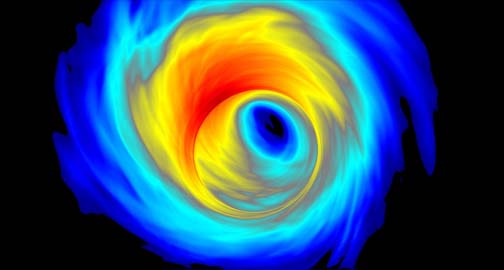
“Earth’s Magnetic Field: Is it a Global Brain?”


 2014-REP-solar_system_pia06890_wide

“The Earth is affected by the planets around the Sun and their positioning, which is also associated with the sunspot formation and changes in the solar wind. Sometimes when a planet is relatively near Earth, and the Moon lines up with it, there is also a magnetic disturbance (Payne, 2008). Even the thoughts and feelings of humans, when synchronized, also affect the solar activity and therefore the GM field, (Payne, 1986).”

Could this be what astrologers have been trying to get across all along?


< Read the entire article online at Dr. Buryl Payne’s web site. >


< For more on Dr. Buryl Payne, the author of the article, click here. >


link submitted by Frieda Nelson


Sonatherapy Web Site is in the Making


2010-ANN-sonatherapy Sonatherapy is a self-healing therapy developed by Dr. Gary Robert Buchanan under the auspices of Cosolargy International and Steamboat Healing Center in Nevada. Research & Development is overseen by Dr. Buchanan and The Music Guild.

SONA: Healing with Wavefront BIOresonance. In 2008 Dr. Gary Robert Buchanan published a monumental book on his research entitled SONA: Healing with Wave Front BIOresonance. The book, along with two CDs, is being distributed to sound healers around the globe and has received exceptional praise from all quarters. The 526-page reference is only the first in a series of planned books and lectures by Dr. Buchanan on the subject of vibrational healing.

Excerpts of the book SONA are available at the international Community Guild web site.

< Visit the SONA page on the International Community Guilds web site. >

Consider “friending” the new < Sonatherapy page on Facebook > so that we can get more people aware of the therapy and the Healing Center at Steambot Springs, Nevada.