May 2013 Japan Tour: DAY 5
5/27 Monday
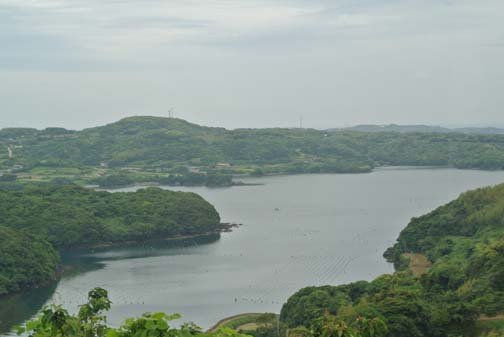
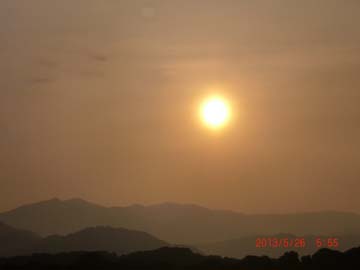
View of Iki island from Iki Byu Hotel PHOTO: Stephan Fuelling
Iki island Background information (excerpted from Guidebook of Iki Island made by Hizen Ogenki SUN group, a SAGA member)
A mythological story about Iki island and the birth of Japan was written in Kojiki (“Record of ancient matters”), the oldest extant chronicle in Japan.
Iki island has another name, which is “Ameno hito bashira.” Hashira (Bashira) means “pillar” in Japanese.
According to Shinto belief, pillars or columns are the home of deities; that is, deities resides in pillars. These pillars are considered to be the connection to the world of heaven. In the worldview, before *Kojiki, people believed that they could go to the world of heaven through those pillars.
According to Nihonshoki, the chronicle of Japan, Iki island is the fifth island of the first eight islands created.
IkiIsland is as beautiful as a jewelry box and its name appears in the Chinese history book Gishiwajinden. In the beginning of the history of Japan, Iki island supported international relations, trading, and defense as the base of pathways of the ocean.
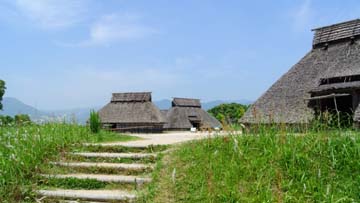
Yakinotoge Remain is considered to be one part of Hiratsukagawazoe Remain, and it is believed that there were interactions between Iki island and Hiratsukagawazoe Remain.
*The Kojiki (Record of Ancient Matters, 712) is the oldest existing chronicle of Japan. It records the mythology ot the creation of heaven and earth and the founding of Japan. It tells how the male deity Izanagi no Mikoto and the female deity Izanami no Mikoto stood on the Floating Bridge of Heaven and struck the Heavenly Jeweled Spear into the ocean below the bridge. The water from that spear formed an island. On the island the two carried out the rites of marriage.
Izanami gave birth to the islands of Japan and their various deities. When she gave birth to the fire deity, she was burned and died. Deeply saddened, Izanagi followed her into the underworld, Yomi no Kuni, and found her in a terrible state. She pleads with him not to look at her. But he does, and out of shame and anger, she pursues him back to the entrance to the underworld. He barely escapes, then pushes a boulder across the entrance, separating the world of the living from the world of he dead. He carries out a puritication rite which produces the Sun Goddess, Amaterasu, and her brother Susanoo no Mikoto. Amaterasu became the principal female deity of Shinto mythology. ]
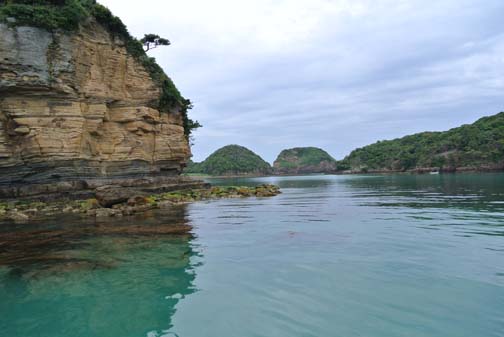
View of Tatsunoshima from the boat PHOTO: Stephan Fuelling
We left the port of Hakata at 10:45 am and arrived at Iki island at 11:50am. After lunch, we took a tour boat around Tatsuno island, an unihabited island beach on Iki island. This Iki island tour was planned and coordinated by Saga Members (Hiroko Soejima, Keiko Inoue, Shinobu Uwataki, Yoko Taniguchi, Chieko Higashi, Yoko Nishimura, Yasuko Nishimura, Terumi Kuroda, Kahori Sano, and Naoko Tokushima.
We boarded a chartered bus and went to Iki Byu Hotel and checked in at 4:00pm. Then we took sightseeing boat around Tatsuno island.
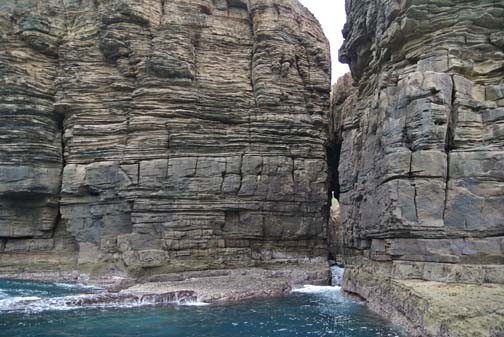
View of Tatsunoshima from the boat PHOTO: Stephan Fuelling
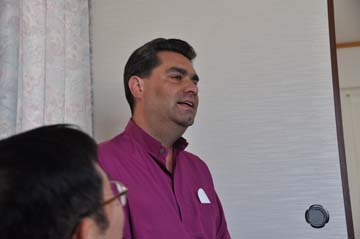
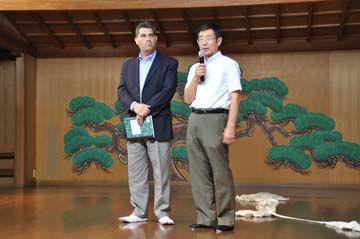
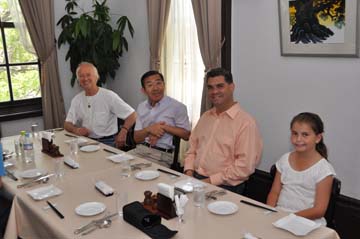
Gene Savoy and Japanese participants held a question and answer session at Iki Byu Hotel restaurant from 5:00-6:00pm.
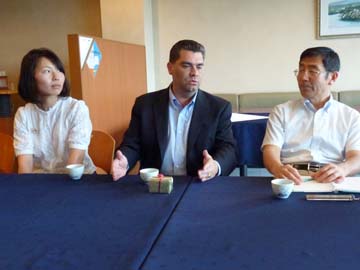
Gene Savoy Jr. responds to question PHOTO: Stephan Fuelling
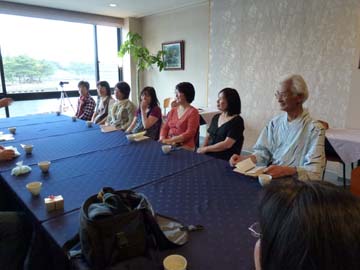
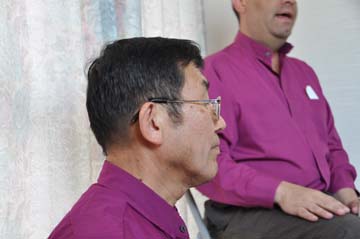
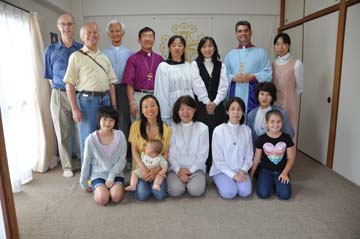
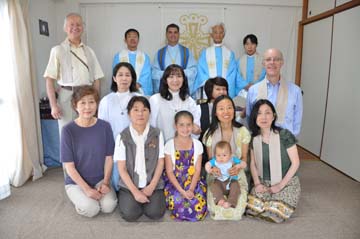
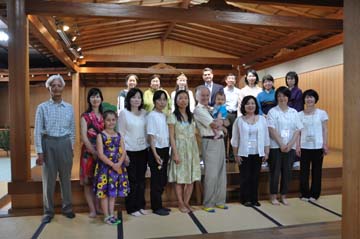
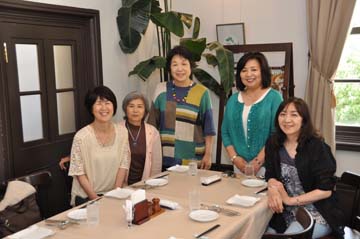
Group gathered for Q & A session PHOTO: Stephan Fuelling
We had dinner at Iki Byu Hotel banquet room at 6:00pm.
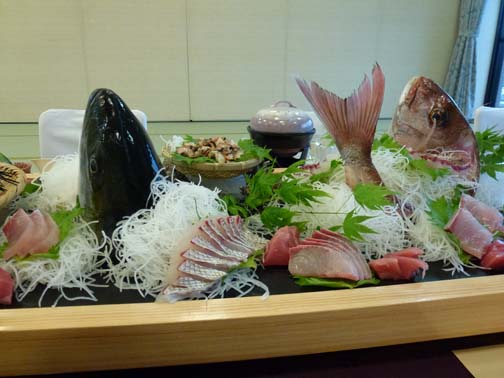
Iki island is renowned for its fresh and delicious seafood PHOTO: Stephan Fuelling
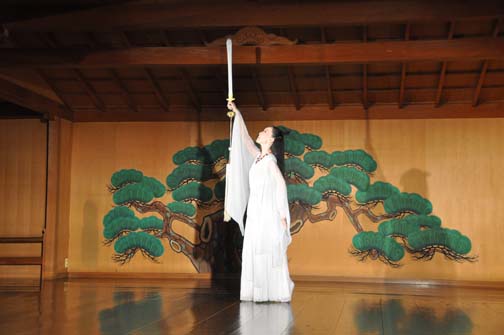
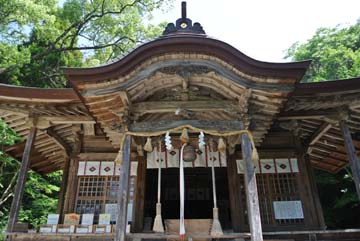
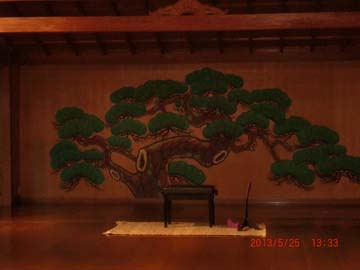
We went to watch Iki Noh Dance (*Kagura) at 8:00pm and went back to the hotel after the performance.
*Kagura, sacred music and masked dance, is performed at major shrines to pacify and entertain the deity. It is also performed as part of local festivals and at rituals at the imperial court. It dates from at least the 9th century. It is now considered part of Japanese folk performing arts (minzoku geino).
—excerpt from Japanese Religion by James M. Vardaman and Sawada Gumi
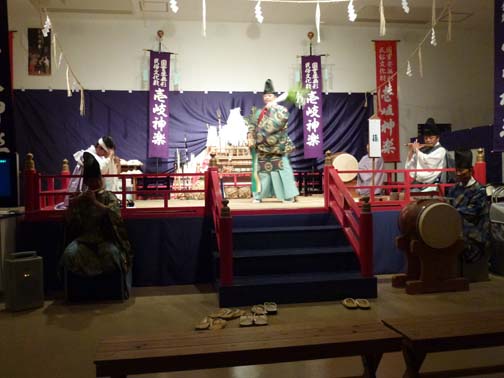
PHOTO Stephan Fuelling
Travel notes by Noriko Roy
< DAY 4 >
< DAY 6>