“Iconic Ring nebula holds a mysterious iron bar, study finds”


The iconic Ring nebula has been thoroughly studied by professional and amateur astronomers alike for centuries. And now, researchers say it’s been holding a secret all this time.

The Ring nebula is a vast ring of gas and dust blown off by a star as it ran out of fuel, leaving behind a tiny white dwarf. And at the center of this ring, the new study has revealed, is a mysterious bar-shaped cloud of iron.

Click here to read the article


“Astronomers spot a hot galaxy cluster that defies existing cosmic theory”


Researchers at the University of British Columbia and Dalhousie University have found a young galaxy cluster that appears far hotter than theory allows. The international team, working with the National Research Council of Canada and using the Atacama Large Millimeter/submillimeter Array, reported the discovery in the journal Nature.

Click here to read the article


“Milky Way’s central black hole erupted surprisingly recently”


The supermassive black hole at the center of our galaxy, Sagittarius A*, is far dimmer and less active than most other supermassive black holes we’ve studied. But new research says this wasn’t always the case.

Scientists say that not only was Sagittarius A* once shockingly explosive, but this violent activity could have been seen from Earth as recently as a few hundred years ago.

Click here to read the article


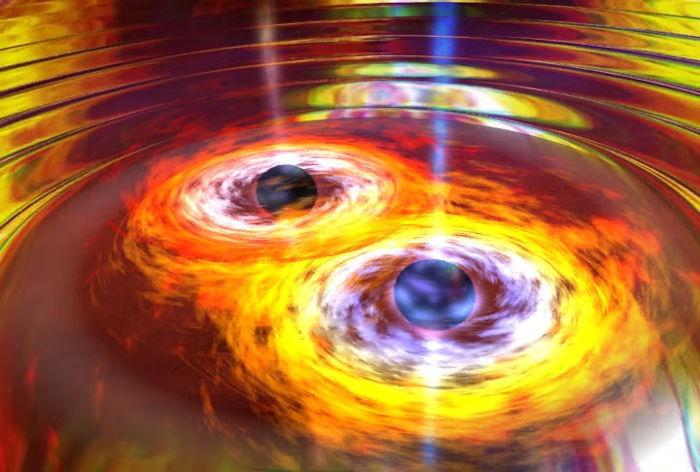
“Astronomers Discover the First Galaxy-Wide Wobbling Black Hole Jet”


Supermassive black holes play a key role in the evolution of galaxies, generating powerful jets that can quench or encourage star formation in their surroundings. Astronomers have found a galaxy with jets that extend up to 20,000 light-years from the center, and seems to be stripping star-forming gas away from the galaxy equivalent to about 20 solar masses a year.

Click here to read the article


“Astronomers watch a supermassive black hole X-ray flare ignite an ultra-fast galactic wind”


A supermassive black hole in the spiral galaxy NGC 3783 just delivered an X-ray surprise that astronomers have never watched unfold so quickly. Using the European Space Agency’s XMM-Newton and the JAXA-led XRISM mission, researchers saw a bright flare rise and fade, and then saw a burst of ultra-fast wind appear within about a day, racing outward at roughly 60,000 kilometers per second, near one-fifth the speed of light.

Click here to read the article


“Blue-white Rigel is Orion’s brightest star”


Rigel is one of several brilliant stars that grace our night sky this time of the year. It’s also the brightest star in one of the most beloved of constellations, Orion the Hunter. Rigel appears blue-white to the eye. It’s a stunning contrast to red Betelgeuse, Orion’s second-brightest star. Classified as a blue supergiant, Rigel is in the latter stages of its stellar lifetime and will someday explode as a supernova. Hidden in Rigel’s brilliance are at least three other fainter companion stars that can only be detected using large telescopes.

Click here to read the article


“Astronomers reveal how the Milky Way’s violent youth forged a calmer spiral giant”


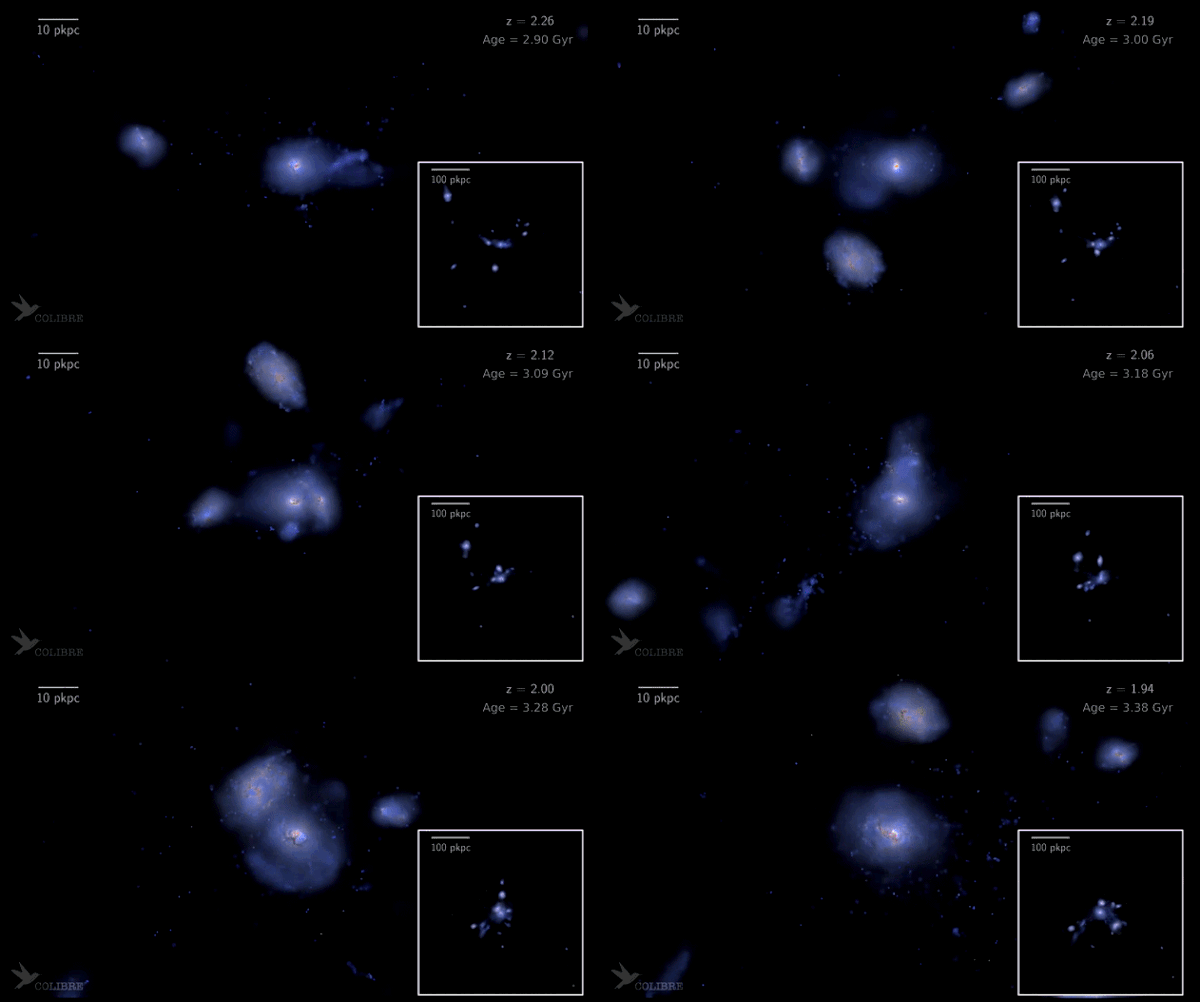
Understanding how the Milky Way formed means looking far beyond the bright spiral you see in the night sky. A new study led by Dr. Vivian Tan, who completed her doctorate at York University under the supervision of Prof. Adam Muzzin, offers the most detailed picture yet of how our galaxy may have grown from a chaotic youth into a stable spiral. Working with an international team, Tan traced the Milky Way’s past by studying hundreds of galaxies that resemble it at earlier stages of cosmic history.

Click here to read the article


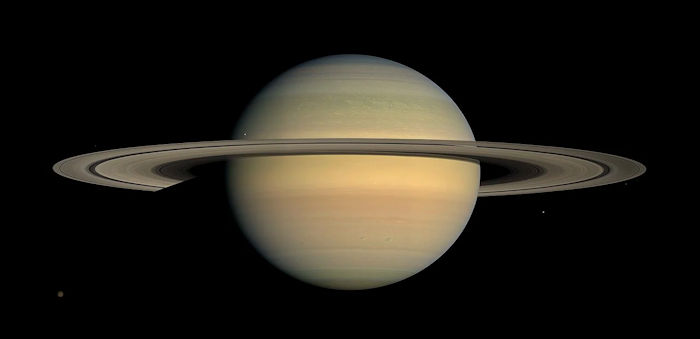
“Saturn-mass rogue planet revealed in unique new observations”


  • Rogue planets, or free-floating planets, are planets that don’t orbit stars. Instead, they drift alone through space.
  • Astronomers have found a new rogue planet, using instruments both on Earth and in space at the same time. This is the first such detection of its kind, and the first confirmed mass of a rogue planet.
  • The planet has a mass similar to Saturn and is located about 9,800 light-years from us, toward the center of our Milky Way galaxy.

Click here to read the article


“Astronomers detect wake of Betelgeuse’s companion star”


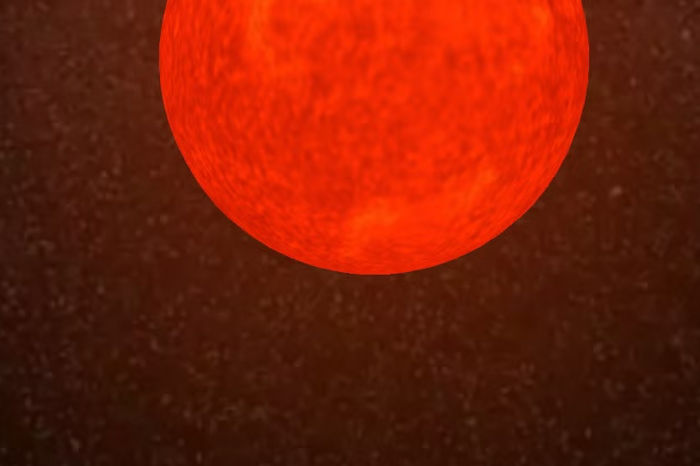
In July 2025, astronomers announced they’d detected a companion star orbiting the red supergiant Betelgeuse. And now, researchers have tracked the influence of this recently discovered star – known as Siwarha – on the gas around Betelgeuse.

By tracking changes in Betelgeuse’s light over nearly 8 years of observations, the scientists have revealed a trail of dense gas left by Siwarha as it plows through Betelgeuse’s vast outer atmosphere.

Click here to read the article


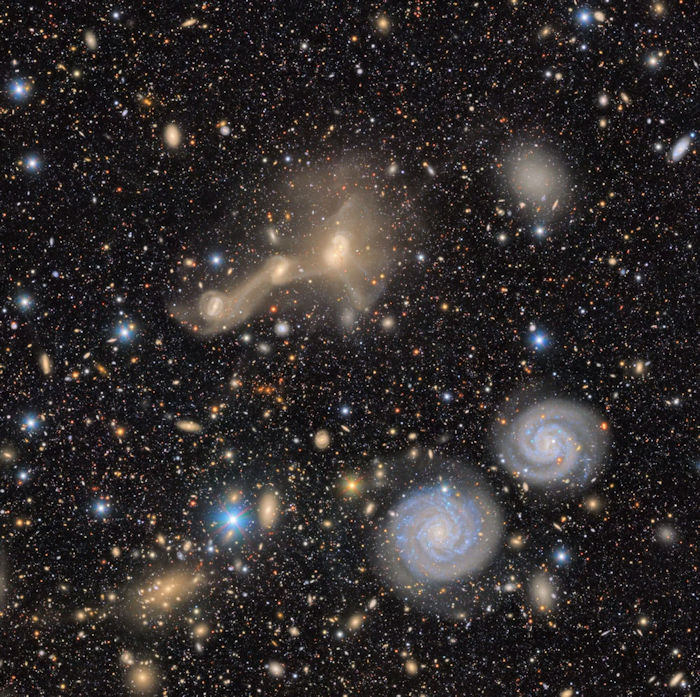
“Colliding galaxies ignite the universe’s most powerful black holes, Euclid data finds”


Understanding how galaxies grow has long stood as one of astronomy’s core challenges. Over time, scientists have gathered evidence that galaxy mergers matter. When two galaxies move close, gravity can pull gas toward their centers. That gas can spark new stars and feed a supermassive black hole, switching it on as an active galactic nucleus, or AGN. Still, researchers have debated how strong this link truly is.

Click here to read the article