“Are Human Beings Robots? | Interview with Dr. Rupert Sheldrake”


PHOTO: thunderbolts.info

PHOTO: thunderbolts.info


“What is a human being? It is the ultimate question, to which institutional science offers surprising answers. The materialistic paradigm, which has dominated institutional science for well over a century, states that the essence of consciousness can be reduced to the physical components of the brain.”

However, an alternative scientific perspective does exist.

One of the most remarkable researchers into human consciousness and the evolution of life is biologist Dr. Rupert Sheldrake. Dr. Sheldrake is the author of more than 80 scientific papers and ten books. He has won international acclaim for his experimental research on his hypothesis of morphic fields and morphic resonance.


< CLICK HERE to watch the interview with Dr. Rupert Sheldrake posted on YouTube October 8, 2014 by B Talbott (22 minutes) >


link submitted by Robert Petrovich
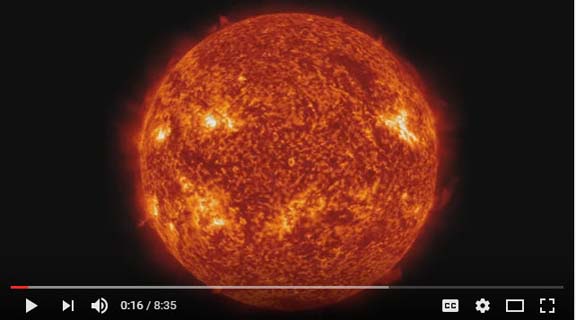


“Executive Producer Jerry Simonson Does It Again”


PHOTO: Thunderbolts Project

PHOTO: Thunderbolts Project


Our Community’s own Jerry Simonson is the executive producer of yet another film piece for the Thunderbolts Project.

The introduction to this newest piece, titled “Discourses on an Alien Sky | When Planets Were the Gods,” is the beginning of a series of video presentations by David Talbott exploring the profound celestial events that he believes shaped early cultures the world over.


< Watch the new 5-minute introduction on YouTube. >

< Watch Part 2, “The Acid Tests of a Reconstruction.” (5 minutes) >


LOOK FOR FURTHER PARTS OF THE SERIES ON YOUTUBE.


submitted by Robert Petrovich


“Does Sun Gazing Cause Eye Damage?”


PHOTO: healthfreedoms.org

PHOTO: healthfreedoms.org


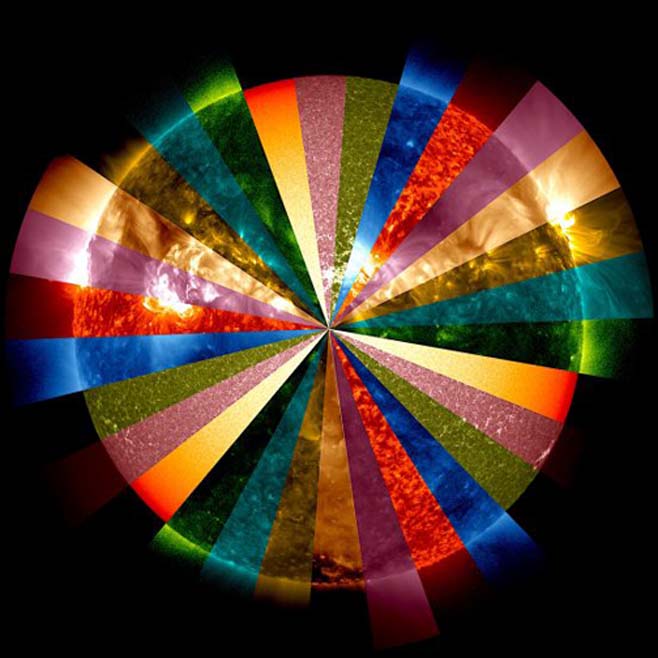
The article below indicates that looking at the sun as a primarily healthy physical process seems to be gaining popularity. Here’s how the article begins:

“Sun Gazing has been followed by numerous people since ages and is prominent practice even today. However, the dispute (between sun gazing practitioners and many who have practiced and seen the damage caused by it) regarding whether the action causes damage to the eyes or not are loudly prevalent.

Several sun gazing testimonials from people are available online who say it is beneficial if done properly, and there are studies that support its benefit as well. However, on the contrary, the western scientific community doesn’t support the validity of sun gazing.”

< Read the entire article online at healthfreedoms.org. >


submitted by Stephan Fuelling


Could the Sun Be Good for the Heart?


PHOTO: ted.com

PHOTO: ted.com


Could the sun be good for the heart?

Our bodies get Vitamin D from the sun, but as dermatologist Richard Weller suggests, sunlight may confer another surprising benefit too. New research by his team shows that nitric oxide, a chemical transmitter stored in huge reserves in the skin, can be released by UV light, to great benefit for blood pressure and the cardiovascular system.

Dermatologist Richard Weller devised several inventive clinical studies which strongly suggest that sunlight may trigger compounds very similar to tri-nitrate, a chemical used to increase blood flow in patients during pectoris angina, or heart attack, episodes. He also has done research correlating latitude and sunlight availability as one of the predictors for population heart disease risk.


< Watch him give a summary of his work in these areas in his March 2012 TED talk (13 minutes). >


link submitted by Michael McIntyre


“Is Consciousness More than the Brain? | Interview with Dr. Gary Schwartz”


PHOTO: thunderbolts.com

PHOTO: thunderbolts.com


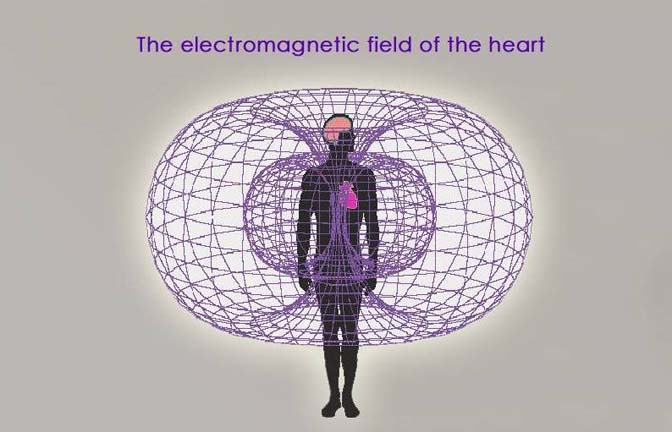
Today perhaps the ultimate unsolved mystery of human life for scientists and philosophers is: How and why does consciousness exist? Although some scientific literature still acknowledges that the question remains open, the overwhelming consensus among neuroscientists today is that the brain alone creates conscious experience.

But what happens when scientific investigation leads directly to officially “unthinkable” conclusions? To get an idea, watch this interview with Gary E. Schwartz, Ph.D., Professor of Psychology, Medicine, Neurology, Psychiatry, and Surgery at the University of Arizona. He is the Director of the university’s Laboratory for Advances in Consciousness and Health. Much of his professional career has been devoted to examining scientific opinion on the nature of consciousness, in particular the often-unspoken “materialistic” assumptions about the mind-body connection.

It seems that science has not been prepared for the uncomfortable revelation now coming increasingly into scientific review: the self-aware mind is not simply an effect of brain activity; it endures when that activity is ended. Of course, any assessment of this finding will require much more than a brief interview, but the emphasis by Dr. Schwartz on an objective protocol, including double-blind and triple-blind studies, could reduce the emotional responses that the subject too easily provokes.

This emerging science could have a great impact for those exploring the electricity of life and mind-body paradoxes.

Watch the interview, then read the “Manifesto for a Post-Materialist Science” at explorejournal.com.


Click Here to watch the interview with Gary Schwartz posted on YouTube October 1, 2014 (14 minutes).


Click Here to read the “Manifesto for a Post-Materialist Science” at explorejournal.com.


link submitted by Robert Anderson


“Burning Questions”


Tonatiuh, the Aztec Sun god, who wavered upon his first rising until bloody sacrifices were made. From the Codex Telleriano-Remensis (16th Century).

Tonatiuh, the Aztec Sun god, who wavered upon his first rising until bloody sacrifices were made. From the Codex Telleriano-Remensis (16th Century).


If folk memory is anything to go by, global warming in its most dreaded form is a thing of the past.

The universality of flood myths is widely known, but fewer people are aware that traditions of unbearable heat, often leading to a devastating Weltbrand, are just as ubiquitous. Although many reports do not identify the cause of the steep rise in temperature or the wildfire associated with the ‘age of myth’, others persistently attribute it to a group of phenomena we may conveniently call ‘anomalous suns’.

Generally, the sources trace the erstwhile emission of relentless heat to four solar properties, singly or combined, all of which seem equally bizarre when applied to the quotidian sun.

< Read the entire article by Rens van der Sluijs online at thunderbolts.info. >


Physicist Stephan Fuelling says: “I think that these are just that, ‘myths.’ If the sun had a strong output burst in human history, then this should have been recorded in the ice records, the activity of the sun relates to the formation of certain isotopes, which would point to such an event. To my knowledge, no such event ever occurred. Extraordinary claims require extraordinary proof. If it can’t be proven, then it is a myth.”

Robert Anderson responds: “I don’t think you can discount mythologies that are so widespread. Science is finding that myths often reflect real events. I know that Stephan rejects the whole electric universe position so his response is not surprising, but I also am aware of the research of Dr. Paul La Violette, an astrophysicist at Portland State who has found ice core evidence of such events, though his theory is that such events were caused by cosmic ray outbursts from the center of the galaxy, all of which coincide with climatic changes on earth. Discussion of his work can be found on youtube and gaiamtv sites.”


Incredible New Discoveries at Stonehenge


PHOTO: University of Birmingham

PHOTO: University of Birmingham


Using powerful ground-penetrating radar, investigators working around Stonehenge have detected a trove of previously unknown burial mounds, chapels, shrines, pits — and most remarkable of all — a massive megalithic monument made up of more than 50 giant stones buried along a 1,082-foot-long c-shaped enclosure.

This news is resetting virtually everything everyone thought they knew about Stonehenge.

Follow these links to learn more:

http://io9.com/archaeologists-have-made-an-incredible-discovery-at-sto-1632927903?utm_campaign=socialflow_io9_facebook&utm_source=io9_facebook&utm_medium=socialflow


http://www.cnet.com/news/digital-mapping-project-reveals-stonehenge-secrets/


http://www.citylab.com/tech/2014/09/scientists-discover-dozens-of-monuments-hidden-below-stonehenge/380002/

links submitted by Frieda Nelson


Thunderbolts Project Posts Videos Online


Symbols of an Alien Sky DVD cover

Symbols of an Alien Sky DVD cover


The Thunderbolts Project (www.thunderbolts.info), an organization advocating the “electric universe” concept, has recently posted on YouTube full-length videos from the three-part documentary series Symbols of an Alien Sky. The first of the series explains the extraordinary figures visible in the sky from Earth some 10,000 years ago; this is, of course, according to the electric universe theory as expounded by David Talbott. The images theorized by Talbott and catalogued from ancient sources worldwide are fascinating.

And the producer of the series is none other than our long-time Consociate Jerry Simonson!
< Watch Part 1 of the series Symbols of an Alien Sky online at YouTube.com. >


“Beyond Energy, Matter, Time and Space”


PHOTO: Image byCarl Weins

PHOTO: Image byCarl Weins


Though he probably didn’t intend anything so jarring, Nicolaus Copernicus, in a 16th-century treatise, gave rise to the idea that human beings do not occupy a special place in the heavens. Nearly 500 years after replacing the Earth with the sun as the center of the cosmic swirl, we’ve come to see ourselves as just another species on a planet orbiting a star in the boondocks of a galaxy in the universe we call home. And this may be just one of many universes — what cosmologists, some more skeptically than others, have named the multiverse.

Despite the long string of demotions, we remain confident, out here on the edge of nowhere, that our band of primates has what it takes to figure out the cosmos — what the writer Timothy Ferris called “the whole shebang.” New particles may yet be discovered, and even new laws. But it is almost taken for granted that everything from physics to biology, including the mind, ultimately comes down to four fundamental concepts: matter and energy interacting in an arena of space and time.

Ron Theriault thinks this is a wonderful little essay, with some interesting references. He says: “It clearly highlights the line between the materialist and non-materialist viewpoints that divide science as well as society at large. The second book mentioned (Our Mathematical Universe: My Quest for the Ultimate Nature of Reality) reminded me of an interesting observation I read recently, which I will paraphrase: “. . . human sciences and philosophies have undergone numerous changes and revolutions since recorded history, but mathematics seems to stand apart in that when something is proven in mathematics it is proven for all time.”

< Read the entire New York Times article by George Johnson online at nytimes.com. >

link submitted by Frieda Nelson


“The mysterious boundary”


PULLED IN The event horizon is framed by the bright ring in this black hole simulation. Color represents the intensity of light emitted by hot gas circling the horizon; red is brightest, blue dimmest. PHOTO: sciencenews.com

PULLED IN The event horizon is framed by the bright ring in this black hole simulation. Color represents the intensity of light emitted by hot gas circling the horizon; red is brightest, blue dimmest. PHOTO: sciencenews.com


The entrance to a black hole could reveal insights into the Big Bang and the formation of galaxies.

 “A black hole’s event horizon is a one-way bridge to nowhere, a gateway to a netherworld cut off from the rest of the cosmos.

“Understanding what happens at that pivotal boundary could reveal the hidden influences that have molded the universe from the instant of the Big Bang.

“Today some of the best minds in physics are fixated on the event horizon, pondering what would happen to hypothetical astronauts and subatomic particles upon reaching the precipice of a black hole. At stake is the nearly 100-year quest to unify the well-tested theories of general relativity and quantum mechanics into a supertheory of quantum gravity.

“But the event horizon is more than just a thought experiment or a tool to merge physics theories. It is a very real feature of the universe, a pivotal piece of cosmic architecture that has shaped the evolution of stars and galaxies. As soon as next year, a telescope the size of Earth may allow us to spot the edge of the shadowy abyss for the first time.

“By studying the event horizon through both theory and observation, scientists could soon figure out how the universe began, how it evolved and even predict its ultimate fate.”


< Read the whole article by Andrew Grant posted on May 16, 2014 at sciencenews.org. >