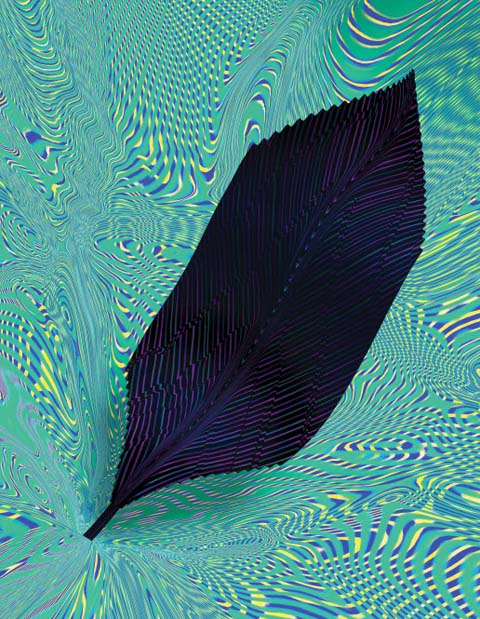
“Turning light upside down”
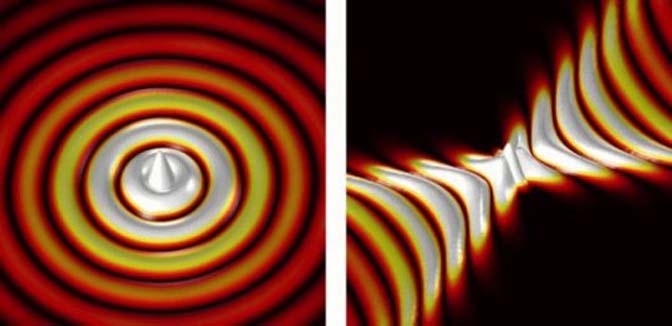
 

This is an illustration of waves propagating away from a point-like source. Left: Regular wave propagation. Right: Wave propagation on a hyperbolic metasurface.
PHOTO: P. Li, CIC nanoGUNE


Researchers have developed a ‘hyperbolic metasurface’ on which light propagates with completely reshaped wavefronts.


“Researchers from CIC nanoGUNE (San Sebastian, Spain), in collaboration with the Donostia International Physics Center (DIPC, San Sebastian, Spain) and Kansas State University (USA), report in Science the development of a so called ‘hyperbolic metasurface’ on which light propagates with completely reshaped wavefronts. This scientific achievement towards a more precise control and monitoring of light is highly interesting for the long run technological challenge of miniaturizing optical devices for sensing and signal processing.

“Optical waves propagating away from a point source typically exhibit circular (convex) wavefronts. ‘Like waves on a water surface when a stone is dropped,’ explains Peining Li, EU Marie Sklodowska-Curie fellow at nanoGUNE and first author of the paper. The reason of this circular propagation is that the medium through which light travels is typically homogenous and isotropic i.e. uniform in all directions.

“Scientists had already theoretically predicted that specifically structured surfaces can turn the wavefronts of light upside down when it propagates along them. ‘On such surfaces, called hyberbolic metasurfaces, the waves emitted from a point source propagate only in certain directions and with open (concave) wavefronts,’ explains Javier Alfaro, PhD student at nanoGUNE and co-author of the paper. These unusual waves are called hyperbolic surface polaritons.”


Read the entire posted February 22, 2018 by Elhuyar Fundazioa at sciencedaily.com.


link submitted by Frieda Nelson



“Rare and unseen pictures of Mahatma Gandhi”


Gandhi when he was practising as an attorney in South Africa. He sits in front of a window bearing his name, accompanied on the left by H.S.L. Polak, his clerk at the time, and a Russian woman Miss Schlesin. Photo credit: Getty Images


A collection of 44 rare black-and-white and color photographs of Mahatma Gandhi with descriptive captions were recently posted online.


View the entire gallery at https://www.msn.com/en-za/news/photos/rare-and-unseen-pictures-of-mahatma-gandhi/ss-BBIxAR4.


link submitted by Gene Savoy Jr.


“Better Data for Modeling the Sun’s Influence on Climate”


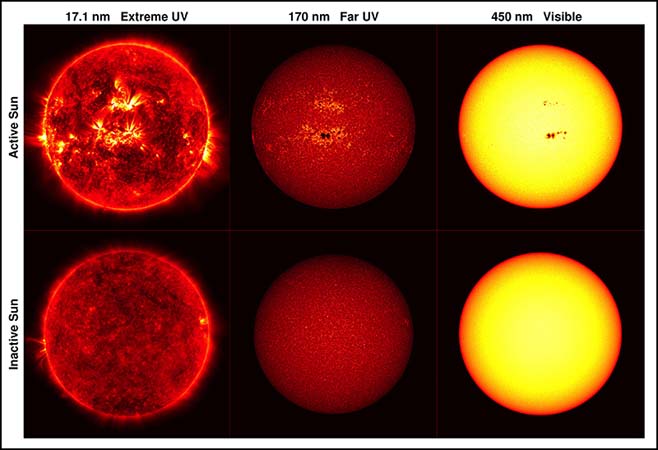
NASA’s Solar Dynamics Observatory satellite took these images of the Sun at three different wavelengths. The top row shows the Sun on 2 February 2014 during an active phase with several sunspots. The bottom row shows the Sun on 3 March 2018 during a period of low solar activity with no sunspots. The left-hand images were taken in the extreme UV wavelength region (17.1 nm), the center images were taken in the far UV region (170 nm), and the right-hand images were taken in the visible region (450 nm). Dark sunspots cause a small decrease in irradiance in the visible band, but they increase irradiance in the ultraviolet bands. Scientists wonder how solar activity across wavelengths influences climate. PHOTO CREDIT: NASA


Several international initiatives are working to stitch together data describing solar forcing of Earth’s climate. Their objective is to improve understanding of climate response to solar variability.

“Compared to other stars, our Sun is a remarkably steady source of light and heat, but its output does vary. Solar light, heat, and particle streams drive weather and atmospheric chemistry, but how (and how much) does the Sun’s variability affect the climate here on Earth? The role of solar variability in recent global warming is not just a bone of contention; it is also a question of overriding importance for the scientific understanding of our Sun and of climate change.

“Scientists simulate historical and future climates by setting up a suite of initial conditions and seeing how these conditions change when various factors, called forcings, are applied. For example, how does Earth’s surface temperature change if it receives more or less heat from the Sun? How do the streams of ionized particles that make up the solar wind affect certain weather patterns on Earth? Data sets compiled from historical records provide the necessary information for model forcing, so ensuring that these data sets provide accurate, relevant information is key to producing realistic climate model scenarios.

“Recently, a series of initiatives brought together scientists working on different aspects of this highly multidisciplinary issue. These efforts shared several common objectives, including better estimates of solar forcing and identifying and quantifying the uncertainties in these estimates.”


Read the entire article by T. Dudok de Wit, B. Funke, M. Haberreiter,
and K. Matthesonline 
posted September 4, 2018 at eos.org. 


link submitted by David Mitchell


“Hidden History Evidence that Proves Recorded History is Wrong”


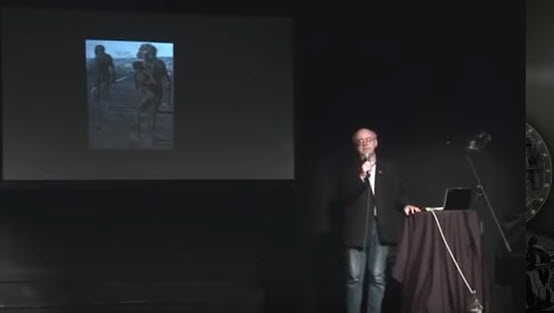
In this lecture, Michael Cremo, the author of Forbidden Archeology (1998) and Human Devolution (2003), presents his argument for the “devolution” of Man from pure Consciousness, using as a starting point the scientific theories of Alfred Russel Wallace and ancient Vedic histories that discuss the origin of humankind, and suggesting that the original and true self can be restored.

Cremo looks at forbidden archeology and human origins, his scientific papers and theories, as well as ancient Sanskrit history and lore. The ancient Sanskrit material describes periodic catastrophes that wipe out life on Earth over broad cycles of time. (According to this material, we are now in the middle of one such 300 million-year cycle, and in about 180 million years, we can expect a huge devastating cataclysm.)

Dealing with archaeological anomalies, and evidence for extreme human antiquity, Cremo says that if humans have been here for millions and millions of years “that means our current scientific understanding of who we are and where we came from is wrong.” There is evidence for very ancient human presence on this planet. Ancient Sanskrit material refers to humans existing for millions of years. Cremo supports this concept with evidence that mankind existed in another form, a higher form, originally.


Watch the entire video of the lecture posted March 3, 2017 on YouTube (1:27:12).


link submitted by Frieda Nelson


“Search for first stars uncovers ‘dark matter’”


Pattern of radio waves on the sky caused by the combination of radiation from the first stars and the effect of dark matter. Blue regions are those where the dark matter cooled down the ordinary matter most strongly. If a similar pattern is detected with new radio telescopes over the next few years, this will confirm that the first stars have revealed the dark matter.
PHOTO: Prof. Rennan Barkana.


“A team of astronomers led by Prof. Judd Bowman of Arizona State University unexpectedly stumbled upon “dark matter,” the most mysterious building block of outer space, while attempting to detect the earliest stars in the universe through radio wave signals, according to a study published this week in Nature.

“The idea that these signals implicate dark matter is based on a second Nature paper published this week, by Prof. Rennan Barkana of Tel Aviv University, which suggests that the signal is proof of interactions between normal matter and dark matter in the early universe. According to “Prof. Barkana, the discovery offers the first direct proof that dark matter exists and that it is composed of low-mass particles.

“The signal, recorded by a novel radio telescope called EDGES, dates to 180 million years after the Big Bang.’


Read the entire article posted online February 28, 2018 by the American Friends of Tel Aviv University at sciencedaily.com.


link submitted by Frieda Nelson


“Exclusive: Massive Ancient Drawings Found in Peruvian Desert”


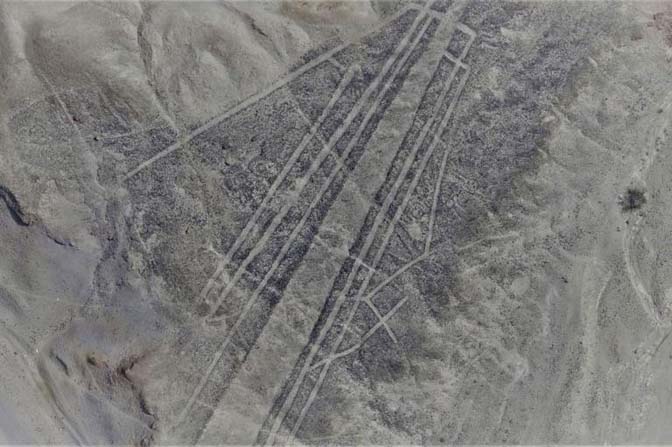
Many of the newly discovered Nasca lines are too faint to be seen by the human eye, yet visible when captured in low altitude by a drone camera.
PHOTO: Luis Jaime Castillo, PALPA NASCA PROJECT


Armed with satellites and drones, archaeologists discover new Nasca lines and dozens of other enigmatic geoglyphs carved into the earth.

“More than a thousand of these geoglyphs (literally, “ground drawings”) sprawl across the sandy soil of the Nasca province.

“Now, Peruvian archaeologists armed with drones have discovered more than 50 new examples of these mysterious desert monuments in adjacent Palpa province, traced onto the earth’s surface in lines almost too fine to see with the human eye. In addition, archaeologists surveyed locally known geoglyphs with drones for the first time—mapping them in never-before-seen detail.”


Watch the video posted online April 5, 2018 at nationalgeographic.com. (1:59)


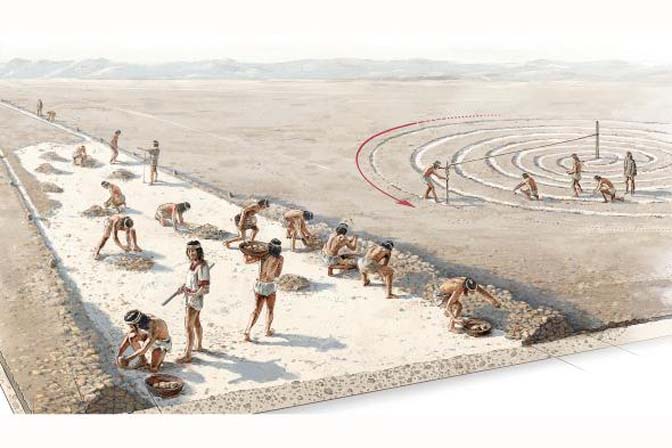
Ancient Peruvians created geoglyphs like the Nasca lines by moving stones to define edges of the lines, and then scraping the top layer of earth between the edges to reveal lighter soil beneath.
ART BY FERNANDO G. BAPTISTA/NGM STAFF
SOURCE: MARKUS REINDEL, GERMAN ARCHAEOLOGICAL INSTITUTE


Read the entire article posted online April 5, 2018 at nationalgrogrpahic.com.


links submitted by Michael McIntyre


“Who Still Denies Electric Currents in Space?”


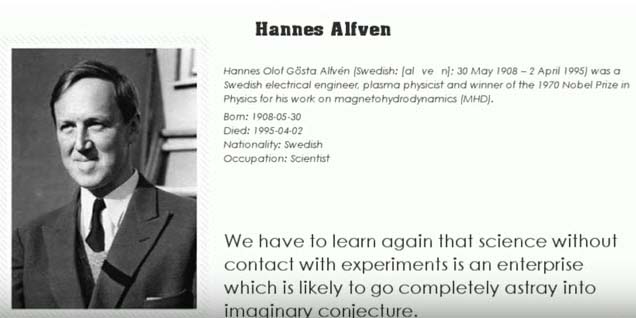
“New papers in peer-reviewed astrophysical journals propose that powerful electric currents flow in extra-galactic jets and that the jets themselves are ‘fundamentally electromagnetic structures.’ However, if you follow science media, it’s likely that you’ve not noticed any attempt to contextualize the development as significant for astrophysics. One person who has noticed this disconnect is Thunderbolts colleague Chris Reeve, who has spent many years documenting online discourse on scientific controversies. Recently, Chris published a commentary exploring why the recognition of vast, cosmic electric currents has apparently yet to register either with science journalists or most online commentators.”


Watch the entire talk posted online April 2, 2018 on YouTube (17:15).


link submitted by Robert Petrovich


The race to invent the artificial leaf


In this excerpt from his new book Taming the Sun, Varun Sivaram follows the research paths of two rival scientists determined to find a way to wring fuel out of thin air.
by Varun Sivaram February 21, 2018

“Since the early 1970s, scientists have been on a quest to develop a technology that could create liquid fuels out of carbon dioxide, water, and sunlight far more efficiently than photosynthesis, the process by which plants harness sunlight to produce carbohydrates and store energy. They call it the artificial leaf.

“A commercially viable artificial leaf would solve several of the trickiest challenges in clean energy. It would create a way to directly and affordably store solar energy while producing a carbon-neutral fuel that could transform the transportation sector, even offering a way to make long-distance air travel environmentally sustainable.

“Scientists have made slow but considerable progress on the two crucial steps in the process: developing catalysts that use solar energy to split water into oxygen and hydrogen, and creating others that can convert hydrogen and carbon dioxide into an energy-dense fuel. The remaining trick is to combine these tasks in an affordable and scalable way, using cheap and abundant materials.”


Read the entire article posted February 21, 2018 online at technologyreview.com


link submitted by Robert Petrovich


Taming the Sun: Innovations to Harness Solar Energy and Power the Planet


Taming the Sun: Innovations to Harness Solar Energy and Power the Planet (MIT Press, 2018) Hardcover by Varun Sivaram (A Council on Foreign Relations Book)

How solar could spark a clean-energy transition through transformative innovation — creative financing, revolutionary technologies, and flexible energy systems.

“Solar energy, once a niche application for a limited market, has become the cheapest and fastest-growing power source on earth. What’s more, its potential is nearly limitless — every hour the sun beams down more energy than the world uses in a year. But in Taming the Sun, energy expert Varun Sivaram warns that the world is not yet equipped to harness erratic sunshine to meet most of its energy needs. And if solar’s current surge peters out, prospects for replacing fossil fuels and averting catastrophic climate change will dim.

“Innovation can brighten those prospects, Sivaram explains, drawing on firsthand experience and original research spanning science, business, and government. Financial innovation is already enticing deep-pocketed investors to fund solar projects around the world, from the sunniest deserts to the poorest villages. Technological innovation could replace today’s solar panels with coatings as cheap as paint and employ artificial photosynthesis to store intermittent sunshine as convenient fuels. And systemic innovation could add flexibility to the world’s power grids and other energy systems so they can dependably channel the sun’s unreliable energy.

“Unleashing all this innovation will require visionary public policy: funding researchers developing next-generation solar technologies, refashioning energy systems and economic markets, and putting together a diverse clean energy portfolio. Although solar can’t power the planet by itself, it can be the centerpiece of a global clean energy revolution.”


Take a look inside the book at amazon.com


link submitted by Robert Petrovich


“Light-based therapy for Alzheimer’s disease”

Alzheimer’s disease, which affects more than 5 million people in the United States, is characterized by beta amyloid plaques that are suspected to be harmful to brain cells and to interfere with normal brain function. Previous studies have hinted that Alzheimer’s patients also have impaired gamma oscillations. These brain waves, which range from 25 to 80 hertz (cycles per second), are believed to contribute to normal brain functions such as attention, perception, and memory.

Using LED lights flickering at a specific frequency, MIT researchers have shown that they can substantially reduce the beta amyloid plaques seen in Alzheimer’s disease, in the visual cortex of mice.This treatment appears to work by inducing brain waves known as gamma oscillations, which the researchers discovered help the brain suppress beta amyloid production and invigorate cells responsible for destroying the plaques.

This four minute video, by the researchers, gives an overview of their work:

https://www.youtube.com/watch?v=O_p4QWkE2Ls


link submitted by Michael McIntyre