“The Galaxy Cluster That Grew Up Too Fast”


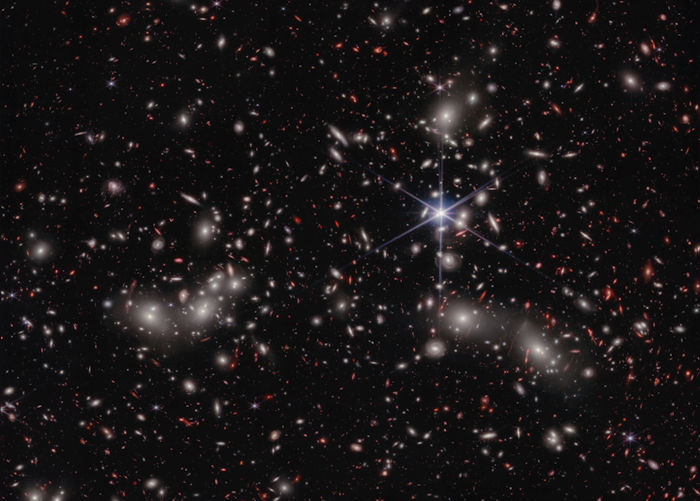
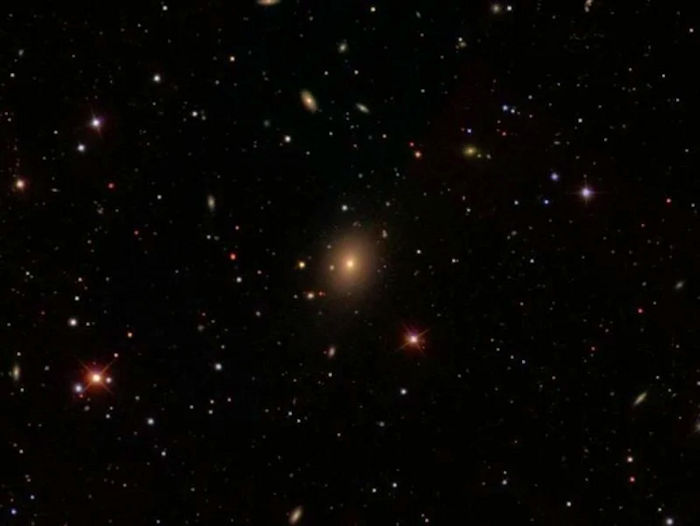
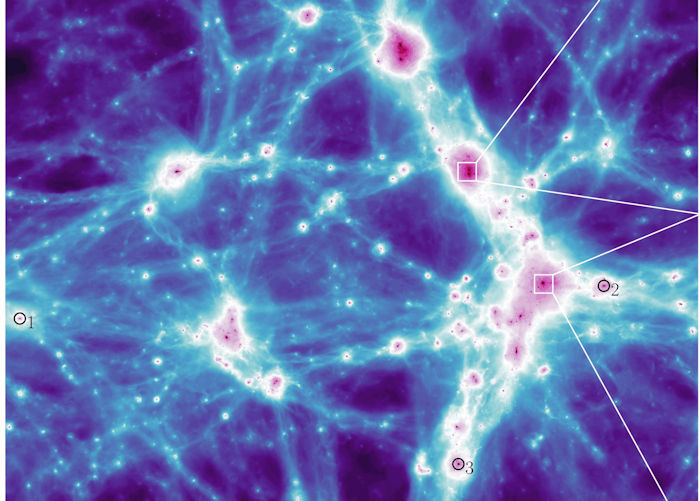
Our current models of the Universe assume that large galaxy clusters were built up slowly over time, piece by piece from individual galaxies bound together by gravity. They should take billions of years to come together, but a new observation from JWST and Chandra found a galaxy cluster that was already assembled just a billion years after the Big Bang. At this relatively young age it had already assembled 20 trillion times the mass of the Sun.

Click here to read the article


“Are there Hidden Dimensions to the Universe? Part 1: Kaluza and Klein”


I always say that one of the things that separates real science from pseudoscience is that while in both you’re allowed to say whatever crazy idea pops into your mind, in real science, you’re obligated to take that idea seriously.

You can imagine a late evening. You’re hanging out with friends. Spitballing some wild ideas. Maybe there are some illicit substances involved. Maybe all you need is a good wine and cheese pairing. And then you get a wild idea, and you feel bold enough to share it with the group: “Hey, everybody, listen. What if the universe had more dimensions?”

Click here to read the article


“Are there Hidden Dimensions to the Universe? Part 2: The Hierarchy Problem”


I always say that one of the things that separates real science from pseudoscience is that while in both you’re allowed to say whatever crazy idea pops into your mind, in real science, you’re obligated to take that idea seriously.

You can imagine a late evening. You’re hanging out with friends. Spitballing some wild ideas. Maybe there are some illicit substances involved. Maybe all you need is a good wine and cheese pairing. And then you get a wild idea, and you feel bold enough to share it with the group: “Hey, everybody, listen. What if the universe had more dimensions?”

Click here to read the article


“Dark matter, not a black hole, could power Milky Way’s heart”


  • The Milky Way’s center might contain a dense core of dark matter and not a supermassive black hole, as astronomers have long believed. That’s the new result of a study released on February 5, 2026.
  • The new model links the orbits of stars near the galaxy’s center with that of stars at the outer edges of the galaxy.
  • The results of the new study are based on the latest data from the European Space Agency’s GAIA DR3 mission. Future studies with the Very Large Telescope will help test this new theory.

Click here to read the article


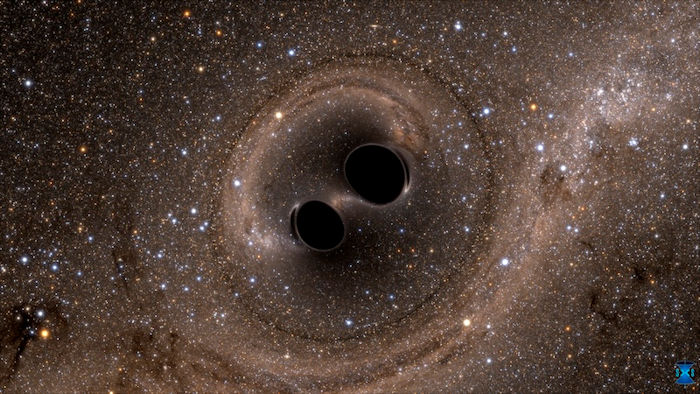
“Did we see a black hole explode? If so, it could explain a lot”


  • An “impossible” ultra-high-energy neutrino – detected in 2023 – might have come from the explosion of a tiny primordial black hole.
  • This led astronomers to a new dark-charge model. This model of primordial black holes could explain why one detector saw the high-energy event while another didn’t.
  • If confirmed, such explosions could reveal new particles, help verify Hawking radiation and potentially explain the nature of dark matter.

Click here to read the article


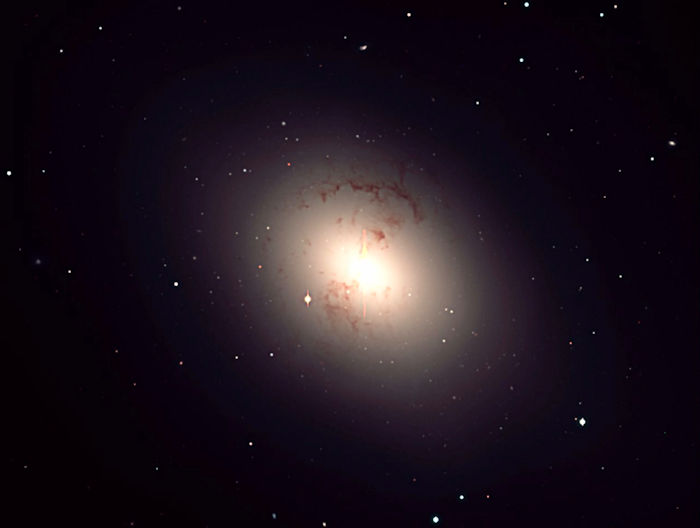
“JWST found a ‘dead’ galaxy that quit making stars billions of years ago”


Three billion years after the Big Bang, a massive galaxy already looked like it had run out of time. It spun in a calm, orderly disc, yet it had largely stopped making new stars. With the help of the James Webb Space Telescope and the Atacama Large Millimeter Array, astronomers now say they have one of the clearest early-universe examples of a “dead” galaxy, and a new clue about how galaxies can fade without a violent crash.

Click here to read the article


“Einstein–Rosen bridges are not wormholes but quantum links between opposite directions of time”


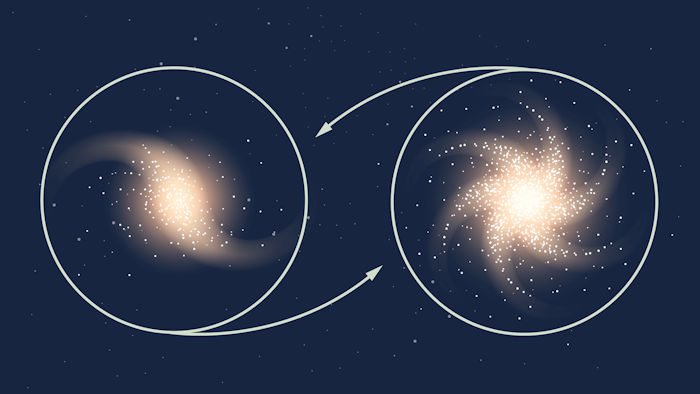
In an effort to bring together the domains of gravity and quantum theory, Albert Einstein and Nathan Rosen proposed a striking concept in a 1935 paper. In that work, they described an abstract mathematical structure they referred to as a “bridge” between two perfectly symmetrical regions of spacetime. Their goal was not to create a mechanism for traveling long distances in space, but rather to analyze the coexistence of matter, gravitational forces, and the extreme gravitational environments associated with such conditions.

Click here to read the article


“Event Horizon Telescope probes source of 3,000-light-year-long black hole jet”


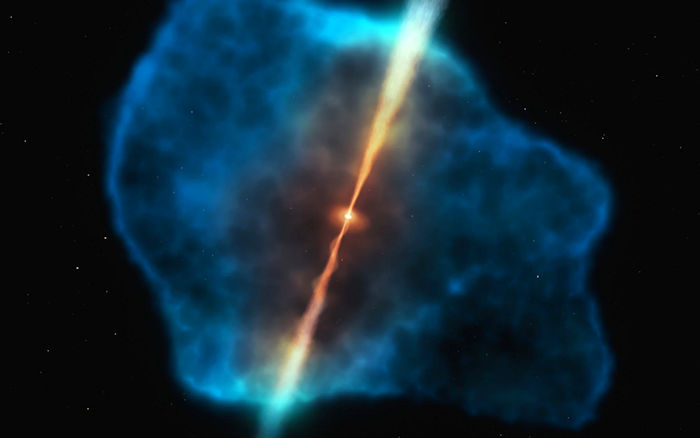
The Event Horizon Telescope (EHT) is a global collaboration of radio observatories famous for capturing the 1st direct visual evidence of a black hole. New EHT observations have now traced the origin of the powerful jet in the galaxy M87 to near the galaxy’s central supermassive black hole.

The work links the famous bright ring seen by the Event Horizon Telescope with a compact region that likely marks the base of the jet.

Expanded telescope baselines – especially including the ALMA telescope in Chile – provided crucial detail.

Click here to read the article


“Astronomers spot an ‘impossible’ shock wave around a dead star system”


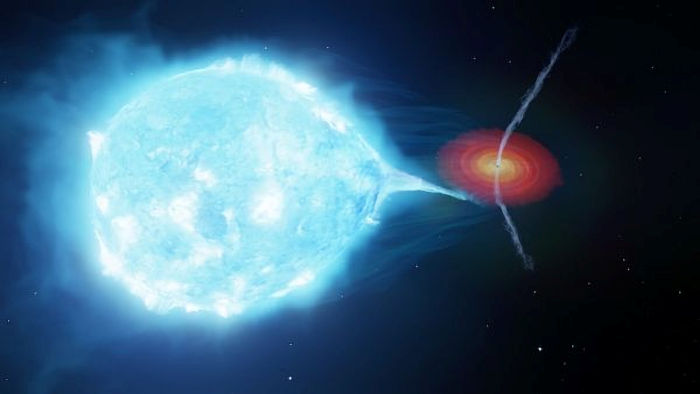
Astronomers at Durham University and collaborators at the University of Warwick used the European Southern Observatory’s Very Large Telescope to spot something that should not exist: a bright bow-shaped shock wave wrapped around a compact dead star system called RXJ0528+2838. The finding suggests this tiny stellar remnant is pushing material into space far more strongly than current models allow.

Click here to read the article


“AI reveals cosmic anomalies in Hubble’s archive”


A team of astronomers has used a new AI tool to comb through archived data from the Hubble Space Telescope, revealing hundreds of strange, previously undocumented objects.

The team analyzed nearly 100 million Hubble cutouts, or cropped Hubble views measuring just a few dozen pixels a side. And within 3 days they had identified some 1,300 unusual objects, over 800 of which had never been documented by scientists.

Click here to read the article