“Hints of the 4th dimension have been detected by physicists”


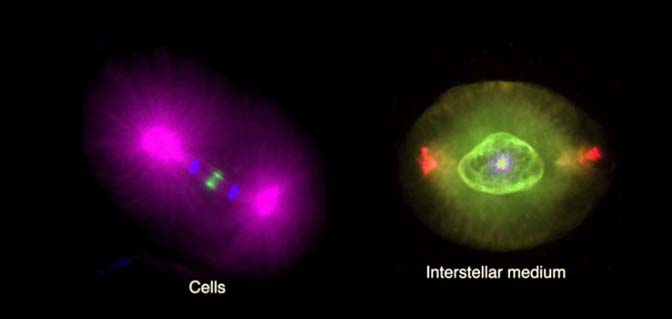
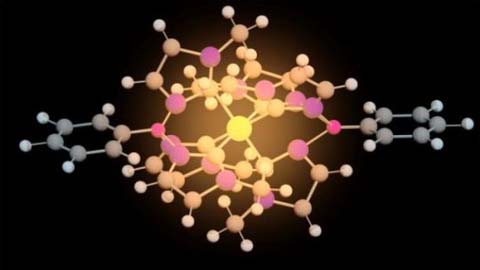
Two different experiments show hints of a 4th spatial dimension. PHOTO: Zilberberg Group / ETH Zürich


“Physicists have understood at least theoretically, that there may be higher dimensions, besides our normal three. The first clue came in 1905 when Einstein developed his theory of special relativity. Of course, by dimensions we’re talking about length, width, and height. Generally speaking, when we talk about a fourth dimension, it’s considered space-time. But here, physicists mean a spatial dimension beyond the normal three, not a parallel universe, as such dimensions are mistaken for in popular sci-fi shows.

“Even if there are other dimensions somewhere out there in our universe or in others, should we travel to a place which includes them, scientists aren’t so sure we could even experience them. Our brains may be incapable. Mathematically, we can describe the 4th dimension. . . .

“We ourselves as 3D objects cast a 2D shadow. A 4D object should then cast a 3D shadow. We can learn something about a 3D object by studying its shadow. So it stands to reason that we could also gain knowledge about a 4D object from its 3D shadow. Both teams in these experiments did something of that kind. They used lasers to catch a glimpse of the 4th dimension. . . .”


Read the entire article posted online January 14, 2018 by Philip Perry at bigthink.com.


link submitted by Robert Petrovich


“The Ancient Peruvian Mystery Solved from Space”


Aerial photo showing the ventilation holes of the Cantalloc Aqueduct in Nazca, Peru, some 435 kms south of Lima on December 12, 2014. These aqueducts are among the most original hydraulic engineering projects dating from Peruvian history’s pre-Hispanic period.
PHOTO: MARTIN BERNETTI/AFP/Getty Images


Puzzling holes in the arid valleys of southern Peru tell us there was once a flourishing, sophisticated society here.

“In one of the most arid regions in the world a series of carefully constructed, spiralling holes form lines across the landscape. Known as puquios, their origin has been a puzzle – one that could only be solved from space.

“The holes are from the Nasca region of Peru – an area famous for the Nasca lines, several enormous geometric images carved into the landscape; immaculate archaeological evidence of ceremonial burials; and the rapid decline of this once flourishing society.

“What adds to the intrigue in the native ancient people of Nasca is how they were able to survive in an area where droughts can last for years at a time.

“The puquios were a ‘sophisticated hydraulic system constructed to retrieve water from underground aquifers,’ says Rosa Lasaponara of the Institute of Methodologies for Environmental Analysis, in Italy. And they transformed this inhospitable region.”


Read the entire article online at bbc.com.


link submitted by Gene Savoy Jr.


“Optics in a Non-linear World: When UV Light Changed Earth”


“Most modern technology works electronically by making electrons do the things we want them to do on semiconductors.  All electronic semiconductor circuits work on the basic idea that any given electrons can influence the control of other electrons and holes adjacent to those electrons.  This implies that we can use one current to control another in a specific way we want to engineer.  That is what a transistor gave mankind in the technology revolution.

“What happened 600 million years ago was biology’s Big bang and lead to a technology revolution by changing a bacteria into a mitochondria that could reverse the photosynthetic process.  What was the stimulus to this change?  I believe incident light was the stimulus that lead to this change.  I think this new release of UV light from the sun was slowed down by parts of the cell that led to structural change of things with mass inside the cytoplasm. Our class star is expected to undergo this frequency change in midlife.  600 million years ago the sun was in this mid life time span.  UV light spiked and made the surface skin of the planet more transparent to sunlight.  This had a massive impact on the planet’s life forms.  At the time solar power was raised some other things occured on the surface of Earth.  More UV light penetration meant more oxygen would be liberated in the atmosphere from ozone and in the seas photosynthesis was super charged to make both DHA and oxygen at the same time in the seas.”


Read the full article posted online MAY 3, 2017 by Jack Kruse at jackkruse.com.


link submitted by Roger Davis


“Physicists create new form of light”


Newly observed optical state could enable quantum computing with photons

Date: February 15, 2018
Source: Massachusetts Institute of Technology
Summary: Physicists have created a new form of light that could enable quantum computing with photons


Scientists at MIT, Harvard University, and elsewhere have now demonstrated that photons can be made to interact — an accomplishment that could open a path toward using photons in quantum computing, if not in light sabers.
PHOTO: Christine Daniloff/MIT


“Try a quick experiment: Take two flashlights into a dark room and shine them so that their light beams cross. Notice anything peculiar? The rather anticlimactic answer is, probably not. That’s because the individual photons that make up light do not interact. Instead, they simply pass each other by, like indifferent spirits in the night.

“But what if light particles could be made to interact, attracting and repelling each other like atoms in ordinary matter? One tantalizing, albeit sci-fi possibility: light sabers — beams of light that can pull and push on each other, making for dazzling, epic confrontations. Or, in a more likely scenario, two beams of light could meet and merge into one single, luminous stream.

“It may seem like such optical behavior would require bending the rules of physics, but in fact, scientists at MIT, Harvard University, and elsewhere have now demonstrated that photons can indeed be made to interact — an accomplishment that could open a path toward using photons in quantum computing, if not in light sabers.”


Read the entire article online at sciencedaily.com.


link submitted by Frieda Nelson


“Does dim light make us dumber?”

Date: February 5, 2018
Source: Michigan State University
Summary: Spending too much time in dimly lit rooms and offices may actually change the brain’s structure and hurt one’s ability to remember and learn, indicates groundbreaking research by neuroscientists.


Nile grass rats exposed to dim lights (DLD) for four weeks experienced, on average, a 30 percent decrease in the number of ‘dendritic spine’ connections in their brains, which are the tiny protrusions near the solid green line, a dendrite. These rats performed poorly on a maze-like task. Rats exposed to bright light (BLD), on the other hand, had many more of the dendritic connections and showed superior performance on the task.
Credit: Michigan State University


“Spending too much time in dimly lit rooms and offices may actually change the brain’s structure and hurt one’s ability to remember and learn, indicates groundbreaking research by Michigan State University neuroscientists.”


Read the entire article online at sciencedaily.com.


Link submitted by Frieda Nelson


“The Therapeutic Power of Vocal Sound”


How vocal sound positively affects every cell in our body and the cells of people in close proximity

“The human voice has the power to fill a concert hall, without a microphone; the power to promote healing in ourselves and others; the power to transform thoughts and feelings into words and sounds to inspire others. The human voice also has the power to leave this Earthly realm and travel to the stars, as you will soon read.”


Read the full article by John Stuart Reid posted online February 8, 2018 at greenmedinfo.com


link submitted by Ted Staver


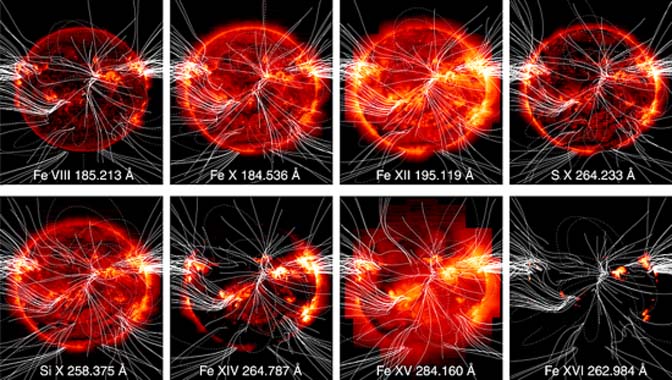
“Seeing Inside the Sun”


“Dr. Robert Stein, professor of Physics and Astronomy at Michigan State Universe has long envisioned a day when he could use supercomputer programs to ‘see’ through the roiling surface of the sun and glimpse its dynamic interior. He describes his quest and offers ideas about what drives the violent outbursts known as coronal mass ejections, or CMEs, known to disrupt the electrical systems that power our civilization.”


< Watch the entire talk posted February 5, 2018 on YouTube (9:54) >


Link submitted by Stephan Fuelling


“Stellar corpse sheds light on origin of cosmic rays”


This composite image of the Crab Nebula was assembled with arbitrary color scaling by combining data from five telescopes spanning nearly the entire electromagnetic spectrum: the radio emission representing the wind of charged particles from the central neutron star in red (from the Karl G. Jansky Very Large Array), the infrared including the glow of dust particles absorbing ultraviolet and visible light in yellow (from the Spitzer Space Telescope), the visible-light image featuring the hot filamentary structures in green (from the Hubble Space Telescope), the ultraviolet image in blue and the X-ray image in purple showing the effect of an energetic cloud of electrons (from the XMM-Newton Observatory and the Chandra X-ray Observatory).
Credit: NASA / ESA / NRAO / AUI / NSF and G. Dubner (University of Buenos Aires)


The origin of cosmic rays, high-energy particles from outer space constantly impacting on Earth, is among the most challenging open questions in astrophysics. Now new research published in the journal Monthly Notices of the Royal Astronomical Society sheds new light on the origin of those energetic particles.

“Discovered more than 100 years ago and considered a potential health risk to airplane crews and astronauts, cosmic rays are believed to be produced by shock waves — for example, those resulting from supernova explosions. The most energetic cosmic rays streaking across the universe carry 10 to 100 million times the energy generated by particle colliders such as the Large Hadron Collider at CERN.

“The Crab Nebula, the remnant of a supernova explosion that was observed almost 1,000 years ago in A.D. 1054, is one of the best-studied objects in the history of astronomy and a known source of cosmic rays. It emits radiation across the entire electromagnetic spectrum, from gamma rays, ultraviolet and visible light, to infrared and radio waves. Most of what we see comes from very energetic particles (electrons), and astrophysicists can construct detailed models to try to reproduce the radiation that these particles emit.

“The new study, by Federico Fraschetti at the University of Arizona, USA, and Martin Pohl at the University of Potsdam, Germany, reveals that the electromagnetic radiation streaming from the Crab Nebula may originate in a different way than scientists have traditionally thought: The entire zoo of radiation can potentially be unified and arise from a single population of electrons, a hypothesis previously deemed impossible.”


Read the entire article posted September 4, 2017 at sciencedaily.com


link submitted by Frieda Nelson


“’Megalopolis’ of 60,000 Ancient Mayan Structures Found”


“Archaeologists in Guatemala have uncovered an unprecedented network of 60,000 ancient Mayan features such as palaces and elevated highways, according to an exclusive report by National Geographic. The discovery is being called a ‘megalopolis,’ and suggests that we’ve been vastly underestimating the sophistication of the Mayan civilization at the height of its power 1,200 years ago.

“Researchers owe the breakthrough to the cutting-edge remote sensing method Light Detection and Ranging, better known as LiDAR. Usually taken aerially, LiDAR recordings channel light into laser pulses that measure the distance from the air down to a given point on the surface of the Earth, according to the National Oceanic and Atmospheric Administration.”

Read the entire article online at msn.com.


Read a second article on the discovery and go through a gallery of the actual LiDAR images with captions at nationalgeographic.com. >


link submitted by Gene Savoy Jr.


“Study provides evidence for externally powered Sun”


“A new study published in the International Journal of Current Research provides evidence for an externally powered Sun, challenging the concepts of the Standard Solar Model (SSM). The study suggests our star is not an isolated celestial body, but rather it is linked permanently to the Universe, not only to our galaxy.”


Read the entire article posted by Jamal S. Shrair on August 01, 2017 on watchers.news


link submitted by Robert Petrovich