“Dr. Mercola and Dr. Wunsch on Photobiology”


Dr. Alexander Wunsch

Alexander Wunsch is physician, researcher and teacher in light medicine and photobiology with particular interest in light effects and the beneficial and adverse health impacts of solar radiation and artificial light sources on endocrine and cellular levels in humans. In his medical office in Heidelberg he develops and applies therapeutic light spectra in combination with other biophysically based treatments. He lectures at the Wismar University of Applied Sciences and mentors students in their master theses in light & health-associated topics. Alexander Wunsch presents at international conferences and acts as a consultant for federal authorities and the lighting industry.


Follow this link to watch “Dr. Mercola and Dr. Wunsch on Photobiology,” posted February 1, 2017 on YouTube (1 hr 15min).


link submitted by Robert Petrovich


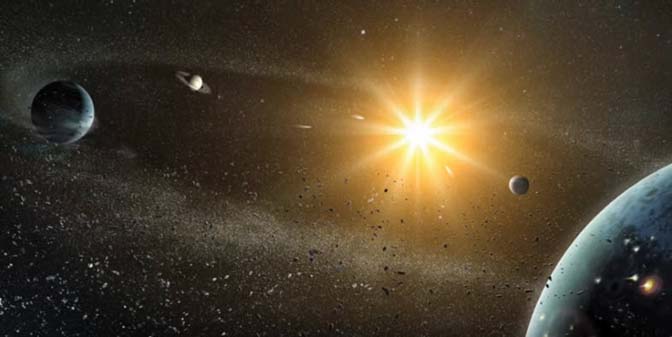
“Plate tectonics may have been active on Earth since the very beginning”


Earth (stock image) Photo credit robert / Fotolia


“A new study suggests that plate tectonics — a scientific theory that divides Earth into large chunks of crust that move slowly over hot viscous mantle rock — could have been active from the planet’s very beginning. The new findings defy previous beliefs that tectonic plates were developed over the course of billions of years.

“The paper, published in Earth and Planetary Science Letters, has important implications in the fields of geochemistry and geophysics. For example, a better understanding of plate tectonics could help predict whether planets beyond our solar system could be hospitable to life.

“‘Plate tectonics set up the conditions for life,’ said Nick Dygert, assistant professor of petrology and geochemistry in UT’s Department of Earth and Planetary Sciences and coauthor of the study. ‘The more we know about ancient plate tectonics, the better we can understand how Earth got to be the way it is now.'”


Read the entire article posted online September 26, 2018 by University of Tennessee at Knoxville at sciencedaily.com


link submitted by Frieda Nelson


“Jerry Tennant: Healing is Voltage — The Physics of Emotions | EU2017”


“Most people have heard of the ‘mind/body connection’ and are aware that emotions affect the way people act. However, few can describe how that works. What is relatively new is our understanding that emotions are stored in and around the body as magnetic fields. Not only do these magnetic fields cause the biochemical effects noted above, but they also block the flow of voltage in the associated muscle battery packs that provide the voltage necessary for organs to function and repair themselves. He will discuss the human body’s battery packs, wiring system, and the physics of how our electronic systems are affected by these emotions. In addition, he will discuss how other magnetic fields and scalar energy can be used to erase these emotions, leaving behind only memories that do not disrupt our health and physiology.

“Dr. Jerry Tennant is board certified in ophthalmology and ophthalmic plastic surgery (residency, Harvard Medical School and Southwestern Medical School.) He was the director of ophthalmic plastic surgery clinic at Parkland Hospital in Dallas and practiced from 1965 to 1995. He did much of the FDA study for the VISX Excimer laser and performed approximately 1000 surgeries in the United States and Europe. In addition, Dr. Tennant was the founder/director of the Dallas Eye Institute and one of the first surgeons in the US to place intraocular lenses in eyes after cataract surgery and taught these techniques around the world. He holds patents for medical devices including intraocular lenses and several surgical instruments. While licensed in Arizona by the Board of Homeopathic and Alternative Medicine, Dr. Tennant is currently the Director of the Tennant Institute for Integrative Medicine.”


Watch the entire lecture posted online September 29, 2018 on YouTube


link submitted by Frieda Nelson


Can’t Stop the Shining


Solar power is the world’s most promising clean energy solution, but governments must abandon outdated policies for it to succeed.
BY VARUN SIVARAM

MARCH 1, 2018

“Solar power is in the middle of a breathtaking global surge. In 2017, countries around the world installed nearly 100 gigawatts — fifty Hoover Dams — worth of solar capacity. Investors poured over $160 billion into solar projects, more than any other electricity source, clean or dirty. And the price of solar power plunged to once-unthinkable lows around the world. In Mexico, Chile, and Saudi Arabia, the price of solar electricity fell to around 2 cents per kilowatt-hour, less than half that of power from coal or natural gas plants.

“Supportive government policies have helped encourage the boom in solar energy. Developed countries such as Germany footed the bill for the early scale-up of the solar industry in the 2000s. Then China lavished billions on its domestic solar producers, creating an unrivaled manufacturing industry, and set sky-high mandates for the deployment of solar panels, making it the world’s largest solar market today. It is tempting to continue with more of the same.

“That would be a grave mistake. Solar power is no longer a cottage industry, and the public policies that it will need to thrive over the coming decades are very different from those that kick-started its growth.”


Read the entire article posted March 1, 2018 online at foreignpolicy.com


link submitted by Robert Petrovich



“Turning light upside down”


This is an illustration of waves propagating away from a point-like source. Left: Regular wave propagation. Right: Wave propagation on a hyperbolic metasurface.
PHOTO: P. Li, CIC nanoGUNE


Researchers have developed a ‘hyperbolic metasurface’ on which light propagates with completely reshaped wavefronts.


“Researchers from CIC nanoGUNE (San Sebastian, Spain), in collaboration with the Donostia International Physics Center (DIPC, San Sebastian, Spain) and Kansas State University (USA), report in Science the development of a so called ‘hyperbolic metasurface’ on which light propagates with completely reshaped wavefronts. This scientific achievement towards a more precise control and monitoring of light is highly interesting for the long run technological challenge of miniaturizing optical devices for sensing and signal processing.

“Optical waves propagating away from a point source typically exhibit circular (convex) wavefronts. ‘Like waves on a water surface when a stone is dropped,’ explains Peining Li, EU Marie Sklodowska-Curie fellow at nanoGUNE and first author of the paper. The reason of this circular propagation is that the medium through which light travels is typically homogenous and isotropic i.e. uniform in all directions.

“Scientists had already theoretically predicted that specifically structured surfaces can turn the wavefronts of light upside down when it propagates along them. ‘On such surfaces, called hyberbolic metasurfaces, the waves emitted from a point source propagate only in certain directions and with open (concave) wavefronts,’ explains Javier Alfaro, PhD student at nanoGUNE and co-author of the paper. These unusual waves are called hyperbolic surface polaritons.”


Read the entire posted February 22, 2018 by Elhuyar Fundazioa at sciencedaily.com.


link submitted by Frieda Nelson


“Rare and unseen pictures of Mahatma Gandhi”


Gandhi when he was practising as an attorney in South Africa. He sits in front of a window bearing his name, accompanied on the left by H.S.L. Polak, his clerk at the time, and a Russian woman Miss Schlesin. Photo credit: Getty Images


A collection of 44 rare black-and-white and color photographs of Mahatma Gandhi with descriptive captions were recently posted online.


View the entire gallery at https://www.msn.com/en-za/news/photos/rare-and-unseen-pictures-of-mahatma-gandhi/ss-BBIxAR4.


link submitted by Gene Savoy Jr.


“Better Data for Modeling the Sun’s Influence on Climate”


NASA’s Solar Dynamics Observatory satellite took these images of the Sun at three different wavelengths. The top row shows the Sun on 2 February 2014 during an active phase with several sunspots. The bottom row shows the Sun on 3 March 2018 during a period of low solar activity with no sunspots. The left-hand images were taken in the extreme UV wavelength region (17.1 nm), the center images were taken in the far UV region (170 nm), and the right-hand images were taken in the visible region (450 nm). Dark sunspots cause a small decrease in irradiance in the visible band, but they increase irradiance in the ultraviolet bands. Scientists wonder how solar activity across wavelengths influences climate. PHOTO CREDIT: NASA


Several international initiatives are working to stitch together data describing solar forcing of Earth’s climate. Their objective is to improve understanding of climate response to solar variability.

“Compared to other stars, our Sun is a remarkably steady source of light and heat, but its output does vary. Solar light, heat, and particle streams drive weather and atmospheric chemistry, but how (and how much) does the Sun’s variability affect the climate here on Earth? The role of solar variability in recent global warming is not just a bone of contention; it is also a question of overriding importance for the scientific understanding of our Sun and of climate change.

“Scientists simulate historical and future climates by setting up a suite of initial conditions and seeing how these conditions change when various factors, called forcings, are applied. For example, how does Earth’s surface temperature change if it receives more or less heat from the Sun? How do the streams of ionized particles that make up the solar wind affect certain weather patterns on Earth? Data sets compiled from historical records provide the necessary information for model forcing, so ensuring that these data sets provide accurate, relevant information is key to producing realistic climate model scenarios.

“Recently, a series of initiatives brought together scientists working on different aspects of this highly multidisciplinary issue. These efforts shared several common objectives, including better estimates of solar forcing and identifying and quantifying the uncertainties in these estimates.”


Read the entire article by T. Dudok de Wit, B. Funke, M. Haberreiter,
and K. Matthesonline 
posted September 4, 2018 at eos.org. 


link submitted by David Mitchell


“Hidden History Evidence that Proves Recorded History is Wrong”


In this lecture, Michael Cremo, the author of Forbidden Archeology (1998) and Human Devolution (2003), presents his argument for the “devolution” of Man from pure Consciousness, using as a starting point the scientific theories of Alfred Russel Wallace and ancient Vedic histories that discuss the origin of humankind, and suggesting that the original and true self can be restored.

Cremo looks at forbidden archeology and human origins, his scientific papers and theories, as well as ancient Sanskrit history and lore. The ancient Sanskrit material describes periodic catastrophes that wipe out life on Earth over broad cycles of time. (According to this material, we are now in the middle of one such 300 million-year cycle, and in about 180 million years, we can expect a huge devastating cataclysm.)

Dealing with archaeological anomalies, and evidence for extreme human antiquity, Cremo says that if humans have been here for millions and millions of years “that means our current scientific understanding of who we are and where we came from is wrong.” There is evidence for very ancient human presence on this planet. Ancient Sanskrit material refers to humans existing for millions of years. Cremo supports this concept with evidence that mankind existed in another form, a higher form, originally.


Watch the entire video of the lecture posted March 3, 2017 on YouTube (1:27:12).


link submitted by Frieda Nelson


“Search for first stars uncovers ‘dark matter’”


Pattern of radio waves on the sky caused by the combination of radiation from the first stars and the effect of dark matter. Blue regions are those where the dark matter cooled down the ordinary matter most strongly. If a similar pattern is detected with new radio telescopes over the next few years, this will confirm that the first stars have revealed the dark matter.
PHOTO: Prof. Rennan Barkana.


“A team of astronomers led by Prof. Judd Bowman of Arizona State University unexpectedly stumbled upon “dark matter,” the most mysterious building block of outer space, while attempting to detect the earliest stars in the universe through radio wave signals, according to a study published this week in Nature.

“The idea that these signals implicate dark matter is based on a second Nature paper published this week, by Prof. Rennan Barkana of Tel Aviv University, which suggests that the signal is proof of interactions between normal matter and dark matter in the early universe. According to “Prof. Barkana, the discovery offers the first direct proof that dark matter exists and that it is composed of low-mass particles.

“The signal, recorded by a novel radio telescope called EDGES, dates to 180 million years after the Big Bang.’


Read the entire article posted online February 28, 2018 by the American Friends of Tel Aviv University at sciencedaily.com.


link submitted by Frieda Nelson


“Exclusive: Massive Ancient Drawings Found in Peruvian Desert”


Many of the newly discovered Nasca lines are too faint to be seen by the human eye, yet visible when captured in low altitude by a drone camera.
PHOTO: Luis Jaime Castillo, PALPA NASCA PROJECT


Armed with satellites and drones, archaeologists discover new Nasca lines and dozens of other enigmatic geoglyphs carved into the earth.

“More than a thousand of these geoglyphs (literally, “ground drawings”) sprawl across the sandy soil of the Nasca province.

“Now, Peruvian archaeologists armed with drones have discovered more than 50 new examples of these mysterious desert monuments in adjacent Palpa province, traced onto the earth’s surface in lines almost too fine to see with the human eye. In addition, archaeologists surveyed locally known geoglyphs with drones for the first time—mapping them in never-before-seen detail.”


Watch the video posted online April 5, 2018 at nationalgeographic.com. (1:59)


Ancient Peruvians created geoglyphs like the Nasca lines by moving stones to define edges of the lines, and then scraping the top layer of earth between the edges to reveal lighter soil beneath.
ART BY FERNANDO G. BAPTISTA/NGM STAFF
SOURCE: MARKUS REINDEL, GERMAN ARCHAEOLOGICAL INSTITUTE


Read the entire article posted online April 5, 2018 at nationalgrogrpahic.com.


links submitted by Michael McIntyre