“Native Americans Voyaged to Polynesia in Prehistoric Times, Genetics Suggests”


The birth and development of civilization on the Polynesian islands continues to be a source of fascination for historians, and new evidence shows that Native American visitors may well have been established in the area hundreds of years before European settlers.

After a detailed DNA analysis of the genomes of more than 800 Polynesians and Native Americans, both modern and prehistoric, researchers have found evidence of contact between the two groups as far back as 1200 CE.


Read the entire article posted July 8, 2020 at sciencealert.com.


link submitted by Paul Young


“Sunlight destroys coronavirus quickly, say US scientists”


The new coronavirus is quickly destroyed by sunlight, according to new research announced by a senior US official on Thursday, though the study has not yet been made public and awaits external evaluation.

William Bryan, science and technology advisor to the Department of Homeland Security secretary, told reporters at the White House that government scientists had found ultraviolet rays had a potent impact on the pathogen, offering hope that its spread may ease over the summer.


Read the entire article posted April 24, 2020 online at medicalxpress.com.


link submitted by Paul Young


“Double Down”


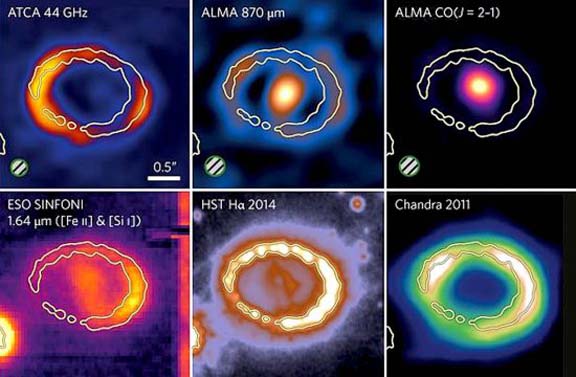
Supernova 1987a from various instruments. Photo Credit: Alec Ray


Nov 11, 2019

Stars explode. But how?

A recent press release asks, “What happens when a star explodes?” The answer, not surprisingly, is, “…the same thing that happens when gas explodes here on Earth.”

The Electric Universe agrees with modern physics: a supernova is an exploding star. However, there is much more to the story that involves plasma. Electricity flowing through plasma creates regions of charge separation isolated by double layers. Could charge separation be the foundation for supernovae?

Plasma should be thought of as a condition of matter and not a “substance”. It is an emergent phenomenon out of complex electrical activity. “Emergent” means: “arising as an effect of complex causes and not analyzable simply as the sum of their effects.” As previously written, properties like filamentation, long-range attraction and short-range repulsion, cell-like differentiation, and characteristic instabilities indicate a system of interaction.

Plasma stars are powered by external electric charge flowing through vast circuits in space. Rather than “core rebound”, supernovae are the result of a stored electromagnetic energy release, something like a capacitor when its dielectric medium is overcome. Electrical energy in the circuit is suddenly concentrated at one point, initiating a double layer detonation.


Read the rest of the article posted online November 11, 2019 at thunderbolts.info.


submitted by Robert Petrovich


“Ev Cochrane: The Flowering of Creation | Space News”


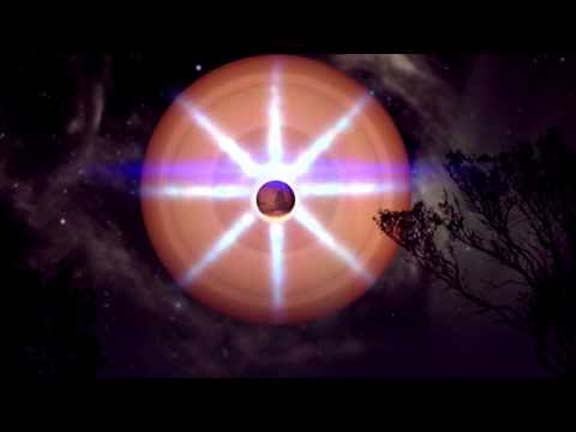
Over the past couple of decades, the comparative mythologists David Talbott and Ev Cochrane have worked to reconstruct an epoch of celestial catastrophe on Earth. To date, their forensic reconstruction is the only scholarly effort that has successfully explained the global mythical archetypes.

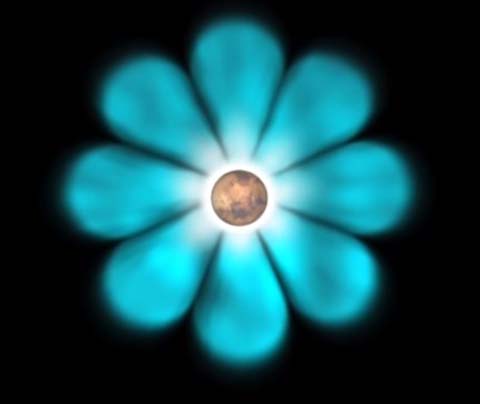
In previous interviews posted on YouTube, Ev has outlined the evidence that the planet Mars was globally remembered as the archetypal warrior-hero, while the “feminine” Venus was remembered in her various phases as the mother goddess, or a fiery serpent, among other identities.

In this episode, Ev expands on his presentation to explore the role of the respective planets in the extraordinary events which are described globally in the images and stories of Creation.

This presentation was co-produced by Consociate Jerry Simonson.


Watch the talk posted March 19, 2020 on YouTube (7:44)


link submitted by Robert Petrovich


“Starshine”


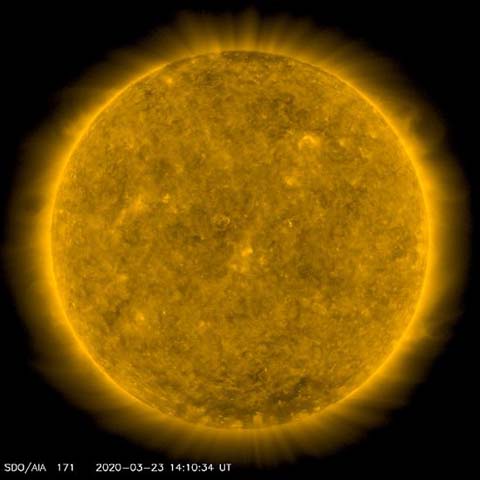
The quiet Sun at 171 Angstroms wavelength. Credit: SDO/NASA.


March 23, 2020

The Sun does not power itself.

“Yeah we all shine on, like the moon, and the stars, and the Sun.”
— John Lennon

The Solar Dynamics Observatory was launched from Cape Canaveral on February 11, 2010. SDO’s mission is to observe the Sun in a variety of wavelengths, from visible to ultraviolet and infrared. The Sun is conventionally thought to be a ball of hydrogen fusion, so aspects of its behavior should not directly contradict that theory.

In the thermonuclear model of the Sun, temperatures in its core are said to exceed 15 million Celsius, with compressive strain that exceeds 340 billion times Earth’s atmospheric pressure. 700 million tons of hydrogen are said to be converted into helium every second in the core. Radiation from those particle interactions is said to require more than a million years to escape from the core of the Sun, since the photons collide over and over again with the dense matter inside.

The surface of the Sun is the photosphere, followed by the chromosphere, and then the corona, the outermost part of the Sun’s visible atmosphere. One of the Sun’s greater mysteries is why temperatures rise to approximately 20,000 Celsius at the top of the chromosphere. However, the greatest mystery of all is why the corona can be as much as two million Celsius!


Read the entire articled posted online March 23, 2020 at thunderbolts.info


link submitted by Robert Petrovich


“Special Feature: ORIGIN OF THE SAFIRE SUN”


It was in 2013 that The SAFIRE Project began. Watch as Ben Ged Low presents the path of this historical experiment of the Electric Sun model from its origins to the present. After years of research, SAFIRE has emerged as a “Transformative Technology” which doesn’t produce toxic waste, isn’t antithetical to life, and does not bankrupt an existing system or put humans out of work.

For more information please visit…
https://www.aureon.ca

Prior to becoming a commercial venture of Aureon Energy, Ltd., THE SAFIRE PROJECT was under Aurtas International Inc., contracted by The International Science Foundation to empirically test the Electric Sun Model. Aureon Energy, Ltd. is an independent body which has no affiliation with The Electric Universe, The Electric Sun, or The Thunderbolts Project.

Watch the video posted April 3, 2020 online at youtube.com. (13:49)


link submitted by Robert Petrovich


“God and the Sun: The Writing at Göbekli Tepe”


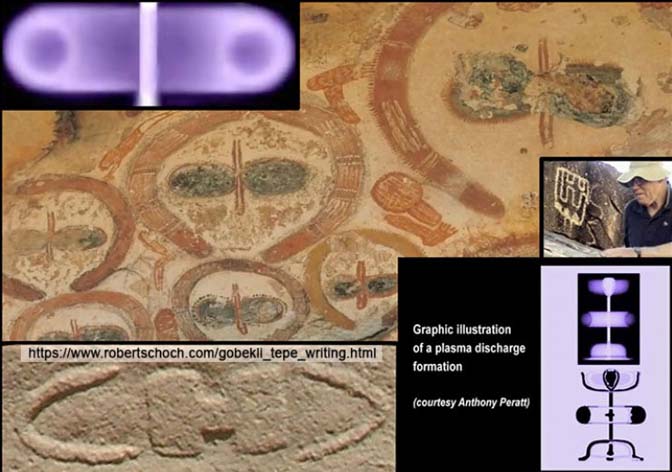
Painted motifs on a rock outcropping from the Kimberly region, Western Australia, compared to plasma configurations that would have been seen in the ancient skies during a major solar outburst (upper left and lower right insets, including a photo of the plasma physicist Dr. Anthony Peratt, who has pioneered this line of research), and the C, H, reversed C on Pillar 18 of Göbekli Tepe. Various rock art from the Kimberly region has been dated to approximately 12,000 years ago, corresponding to the end of the last ice age (D. Finch et al., 12,000-Year-old Aboriginal rock art from the Kimberley region, Western Australia, 5 February 2020, Science Advances, AAAS, 9 pages). (Image of Australia rock art from a screen capture of a video posting, courtesy of Ben Davidson of Suspicious0bservers [https://www.youtube.com/user/Suspicious0bservers; see also the photograph posted on https://www.australiasnorthwest.com/page/kimberley-rock-art]; plasma discharge conceptual images and image of Dr. Peratt, courtesy of Dr. Anthony Peratt; image from Göbekli Tepe, courtesy of and copyright by Robert Schoch and Catherine Ulissey.)


“Traditional historians and archaeologists have often pointed to three major distinguishing characteristics by which one can identify true civilization: 1) Monumental stone architecture, 2) Settled urban (city) life, and 3) Writing. Prehistoric is often equated with a society being pre-literate; if they do not have any written inscriptions or records, then they do not have a true recorded history and are both pre-historic and pre-civilized.

“Furthermore, according to conventional status quo thinking, writing was first invented just prior to around 3000 BCE in Sumer and Egypt; therefore, we can date the onset of true civilization to this time. However, over 6000 years earlier in Northern Mesopotamia we find the incredibly sophisticated site of Göbekli Tepe. Many mainstream historians are hesitant to apply the label of true civilization to the builders of Göbekli Tepe, but why?”


Read the entire article by Robert M. Schoch and Catherine Ulissey posted April 6, 2020 at robertschoch.com.


Paul Young has pointed out a few sentences of particular interest at about midpoint in the article:

“Thus this series of symbols, this word (C, H, reversed C) not only names God, but equates God with the Sun and/or solar activity. Furthermore, the Sun was from the point of view of these ancient people acting as a conscious entity, which I believe is not far off of the mark.(…) And I hold that there is now strong evidence that simple particles (for instance, protons and electrons that make up hydrogen) can encode information – ultimately the stuff of consciousness…”


link submitted by Paul Young


“Covid-19 & the Sun: a lesson from the 1918 Influenza Pandemic”


Fresh air, sunlight and improvised face masks seemed to work a century ago; and they might help us now.

When new, virulent diseases emerge, such SARS and Covid-19, the race begins to find new vaccines and treatments for those affected. As the current crisis unfolds, governments are enforcing quarantine and isolation, and public gatherings are being discouraged. Health officials took the same approach 100 years ago, when influenza was spreading around the world. The results were mixed. But records from the 1918 pandemic suggest one technique for dealing with influenza — little-known today — was effective. Some hard-won experience from the greatest pandemic in recorded history could help us in the weeks and months ahead.

Read the entire article by Richard Hobday, author of the book The Healing Sun, posted online on the NexusNewsFeed.com


link submitted by Paul Young


“Did Ancient Man See a Different Sun?”


“The parent star of planet Earth holds a strange and special place in countless ancient traditions around the world. The celestial body identified as the Sun in myth, religion, ancient astronomies and rock art routinely bears no resemblance at all to our familiar Sun. For decades, comparative mythologist Ev Cochrane, as well as his colleague Dave Talbott have worked to reconstruct the natural events that produced extraordinary mythical patterns. It is their conclusion that in the relatively recent past, in the era of pre-history, a period of instability in the inner solar system brought planets within close proximity to planet Earth. In this episode, Ev begins the investigation of the question, Did ancient man observe a different Sun than our Sun today?”


Read the entire article posted online November 1, 2019 on YouTube. (10:00)


link submitted by Robert Petrovich


“Sweeping gene survey reveals new facets of evolution”


For the planet’s 7.6 billion people, 500 million house sparrows, or 100,000 sandpipers, genetic diversity “is about the same,” Mark Stoeckle from the Rockefeller University in New York told AFP


Published findings overturn settled ideas about how evolution unfolds

Who would have suspected that a handheld genetic test used to unmask sushi bars pawning off tilapia for tuna could deliver deep insights into evolution, including how new species emerge?

And who would have thought to trawl through five million of these gene snapshots—called “DNA barcodes”—collected from 100,000 animal species by hundreds of researchers around the world and deposited in the US government-run GenBank database?

That would be Mark Stoeckle from The Rockefeller University in New York and David Thaler at the University of Basel in Switzerland, who together published findings last week sure to jostle, if not overturn, more than one settled idea about how evolution unfolds.


Read the entire article posted online May 28, 2018 at phys.org.


When these scientists published the results of their sweeping study of 5 million “DNA barcodes” from about 100,000 different animal species early in May 2018, in addition to a shocking absence of genetic diversity, the authors were stunned to conclude that about 9 out of every 10 species on Earth appear to have come into being at about the same time, apparently sometime between 100,000 and 200,000 years ago. Study co-author David Thaler said of the findings, “This conclusion is very surprising, and I fought against it as hard as I could.” One unavoidable possibility these results raise was articulated in the phys.org report, which asks, “Was there some catastrophic event 200,000 years ago that nearly wiped the slate clean?”

In part one of a two-part presentation, Thunderbolts colleague Peter Mungo Jupp begins a comprehensive and radical re-assessment of the questions: How old is the Earth? And how has life unfolded upon it?


Watch the presentation by Thunderbolts colleague Peter Mungo Jupp on Youtube. (22:35)


link submitted by Robert Petrovich