“The solar discs that could power Earth”
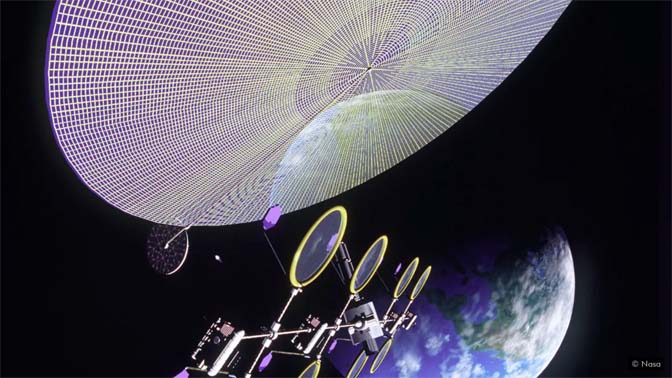
 

PHOTO CREDIT: NASA


Space-based power stations are turning from an idle dream into a serious engineering prospect, as scientists hope they can take renewable energy into orbit.

It sounds like science fiction: giant solar power stations floating in space that beam down enormous amounts of energy to Earth. And for a long time, the concept – first developed by the Russian scientist, Konstantin Tsiolkovsky, in the 1920s – was mainly an inspiration for writers.

A century later, however, scientists are making huge strides in turning the concept into reality. The European Space Agency has realised the potential of these efforts and is now looking to fund such projects, predicting that the first industrial resource we will get from space is “beamed power”.

Climate change is the greatest challenge of our time, so there’s a lot at stake. From rising global temperatures to shifting weather patterns, the impacts of climate change are already being felt around the globe. Overcoming this challenge will require radical changes to how we generate and consume energy.

The aim is that solar power stations in space will become a reality in the coming decades. Renewable energy technologies have developed drastically in recent years, with improved efficiency and lower cost. But one major barrier to their uptake is the fact that they don’t provide a constant supply of energy. Wind and solar farms only produce energy when the wind is blowing or the sun is shining – but we need electricity around the clock, every day. Ultimately, we need a way to store energy on a large scale before we can make the switch to renewable sources.


Read the entire article by Amanda Jane Hughes and Stefania Soldini posted online November 26, 2020 at bbc.com.


link submitted by Gene Savoy Jr.
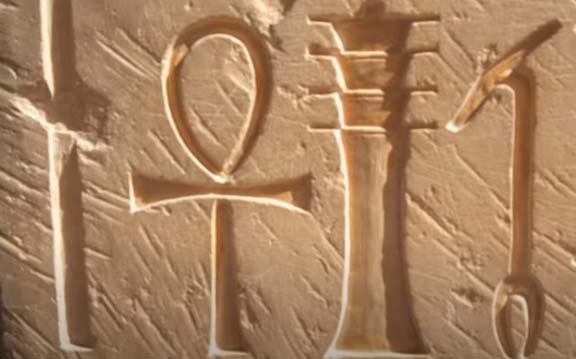


“These Materials Could Make Science Fiction a Reality”


Metamaterials, which could improve smartphones and change how we use other technology, allow scientists to control light waves in new ways.

Imagine operating a computer by moving your hands in the air as Tony Stark does in “Iron Man.” Or using a smartphone to magnify an object as does the device that Harrison Ford’s character uses in “Blade Runner.” Or a next-generation video meeting where augmented reality glasses make it possible to view 3-D avatars. Or a generation of autonomous vehicles capable of driving safely in city traffic.

These advances and a host of others on the horizon could happen because of metamaterials, making it possible to control beams of light with the same ease that computer chips control electricity.

The term metamaterials refers to a broad class of manufactured materials composed of structures that are finer than the wavelength of visible light, radio waves and other types of electromagnetic radiation. Together, they are now giving engineers extraordinary control in designing new types of ultracheap sensors that range from a telescope lens to an infrared thermometer.


Read the entire article by John Markoff posted April 27, 2021 at nytimes.com.


link submitted by Robert Petrovich


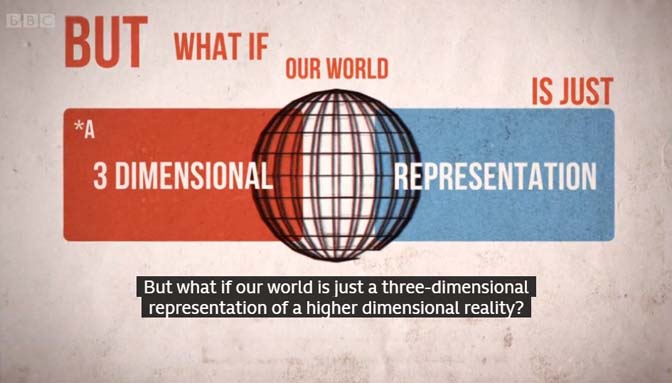
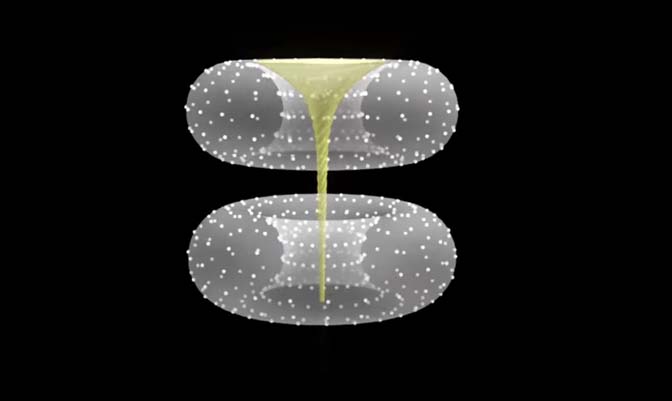
“Why physics suggests other dimensions exist”


24 NOVEMBER 2020|PHYSICS

Theoretical physicists point to the idea that there are other dimensions out there, beyond what we can see. And there could be loads of them, as Melissa Hogenboom explains.

A film by Melissa Hogenboom and Pierangelo Pirak


Watch the film online at bbc.com (4:09).


link submitted by Gene Savoy Jr.


“See Spot Play”


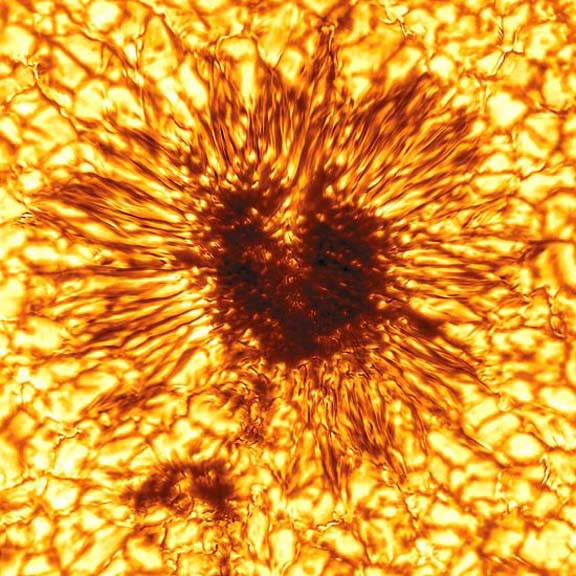
First sunspot image by the NSF’s Inouye Solar Telescope’s Wave Front Correction context viewer at 530 nanometers — in the greenish-yellow part of the visible spectrum. Credit: NSO/AURA/NSF.


December 9, 2020

A recent press release from Rice University states: “Orbiting instrument hints at how stored magnetic energy heats solar atmosphere.”

The solar corona exceeds 2 million Kelvin. Many explanations for why this is so are offered by consensus heliophysicists, but they admit that they are not certain. Why they are not certain has to do with the foundation upon which they build theories. As written many times in these pages, the simplest theory that best fits observations is that high velocity positive ions are colliding with relatively static ions and neutral atoms in that location. The photosphere, the chromosphere and the lower corona region of the Sun’s atmosphere are dominated by an electrical double layer.

The “surface” of the Sun is the photosphere, followed by the chromosphere, and then the corona. The chromosphere is about 2000 kilometers above the photosphere and is a very thin layer compared to the Sun’s diameter of 1.4 million kilometers. Plasma density in the chromosphere is low, more than a million times less dense than Earth’s atmosphere. Temperatures vary from 6000 Celsius near the photosphere to less than 4000 Celsius in its middle regions.

One of the Sun’s great mysteries is why its temperature rises to 20,000 Celsius at the top of the chromosphere. However, the greatest mystery of all is why the corona is two million Celsius! Why does the hottest region of the Sun begin at an altitude of 4000 kilometers and then extend over a million kilometers from its surface?


Read the entire article by Stephen Smith posted online December 9, 2020 at thunderbolts.info.


link submitted by Robert Petrovich


“In pictures: Peru’s most catastrophic natural disaster”


On 31 May 1970, a huge earthquake struck off the coast of Peru.

The quake and the massive landslides it triggered killed approximately 70,000 people.

A wall of ice came loose from Peru’s highest mountain, Mount Huascarán, careered down the mountain at incredible speed and buried the town of Yungay.

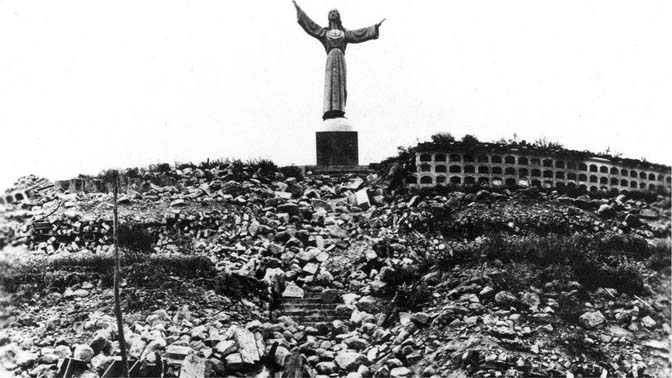
A statue of Christ in the town’s cemetery and four palm trees were all that remained of Yungay.


Read the entire article online at bbc.com.


link submitted by Gene Savoy Jr


“Fragments of the Dead Sea Scrolls long thought to be blank contain text that’s invisible to the naked eye”


(CNN) — For decades, fragments from the ancient Dead Sea Scrolls were stowed away at the University of Manchester, deemed largely worthless.

Yes, they were still significant as authentic fragments of the coveted scrolls have been hard to come by, but they were blank, and therefore, just scraps of paper.

Until now.

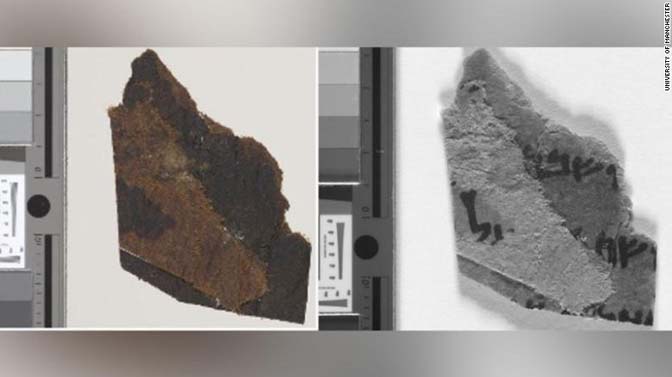
Researchers have found that four of the 51 fragments believed to have been blank do, in fact, contain readable Hebrew/Aramaic text. They just needed a special camera to see it.


Read the entire article by Alicia Lee posted May 20, 2020 online at cnn.com.


link submitted by Gene Savoy Jr


“How the Ancients Cut Stone with Sound – Lost High Technology Explained | Ancient Architects”


How did the ancient civilizations cut and shape such intricate stonework like we see in ancient Egypt? How were holes seemingly drilled through solid granite? How did the Incas create walls with perfectly connecting blocks of stone? Did they use traditional tools? Did they harness the power of the sun as I explained in a previous video? Or did they know the secrets of sound and this was a form of ancient high technology?

A comment on the video from 2018 by Gary Buchanan, developer of Sonatherapy and Church music director:

“This, to me, is quite true, and in many areas. Acoustics were far better understood in pre-dynastic Egypt (going back to 10,500 B.C. – Kemitic civilization after the last Ice Age) and the sciences and technologies were spread around the world. For example, the best cut stones are at Puma Punka in Bolivia, and there really is no other way to explain how the ancients did this.

“And, yes, tuning forks have been around and used in all kinds of ways since those ancient and prehistoric times.”

Watch the video on the Ancient Architects Channel on YouTube (11:00)


link submitted by Robert Petrovich


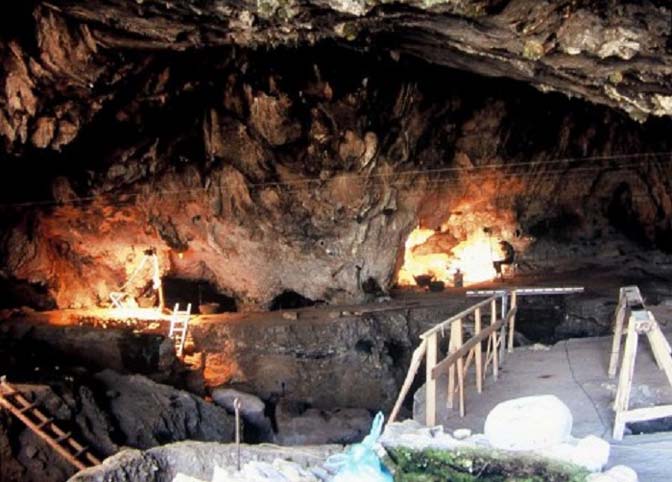
“Theopetra Cave in Central Greece: The Oldest Human Construction on Earth”


Theopetra Cave, located in the Meteora limestone rock formations of Thessaly, Central Greece, is likely to be the place of the oldest human construction on earth, as findings indicate that the cave was inhabited as early as 130,000 years ago.

According to archaeologists, evidence of human habitation in the cave can be traced without interruption from the Middle Palaeolithic to the end of the Neolithic period.

Dr. Aikaterini Kyparissi-Apostolika, head of the Ephorate of Palaeoanthroplogy and Speleaography of Greece’s Ministry of Culture and Sports, specializing in prehistoric archaeology and spelaeology, was the head of the team which began excavations in Theopetra Cave in 1987.

Her team’s research at the cave continued through 2007.


Read the entire article posted online Sept. 20, 2019 at greece.greekreporter.com.


link submitted by Jim Elliott


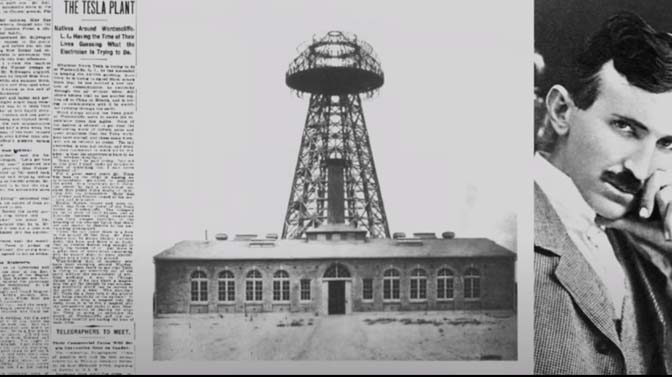
“The quest for Nikola Tesla’s wireless power technology”


Nikola Tesla’s biggest dream was a worldwide network of wireless power transmission. He built a lab and a massive prototype transmission tower…that never worked. But, a century later, engineers are chasing the same dreams of wireless power and making some tantalizing headway. So was Tesla onto something?


Watch the video by Verge Science posted December 10, 2020 on YouTube. (10:20)


Thanks to the Tesla Science Center for working  on this video. Learn more here: https://teslasciencecenter.org/


link submitted by Robert Petrovich


“Holy Grail Found”


This video shows how a team of geobiologists began to unravel some secrets and ancient mysteries by investigating ancient straight tracks and their link with ultra-low frequency sounds that seemed to be coming from the center of the Earth.

The team’s strategy was to look for a major intersection of these tracks and sounds and this resulted in them coming across a new archaeological investigation, the largest Bronze Age city in Europe. The location of this Bronze age site had the scientists puzzled as it was not where they would have expected to find a city, until the team was investigating tracks further afield and came across a Templar connection.


Watch the video by Rory Duff posted May 31, 2018 on YouTube (43:00).


The following is an exchange between the editor and Sonatherapist Gary Buchanan on this video in 2019.

Editor: It seemed to me this video may be of interest to you because the grail image and the ley lines connecting holy sites are all related to a harmonic grid and sound waves in this story.

Gary: The earth does make infrasonic signals. The surface does organize as geodesic triangulations, etc. John Reid in England, for example, has been recording these sounds found at the standing stones for decades. The ley lines correspond to these geodesics all over the planet. This is one of the ways in Chachapoyas we could align between and around ruins and figure out where the other ruins should be. Most of the ancients knew about this and followed those lines. They are the basis of layouts of most civilizations.

The vortexial (grail) shape they discuss is also found in all the Cymatics we do, as well. And, it is the low, infrasonic, signals that give the best shapes — and also the best healing in Sonatherapy. This is exactly what we have been saying and talking about for a long time. As for this being THE “Holy Grail” of the Templars? Well, a bit far fetched, in my humble opinion. There are surely a great many places where this pattern could be found in common, and of great strength — and, yes, seasonal — linked with “high holy days” and others.

Editor: Do you know of any other videos that discuss these infrasonic signals and figures that may be better or more informative than this video?

Gary: I do not know of any other videos about this. Most of the research I have done on infrasound goes back decades. It is discussed in my books, and those of others, but is generally not talked about so much.


link submitted by Frieda Nelson