“God and the Sun: The Writing at Göbekli Tepe”


Painted motifs on a rock outcropping from the Kimberly region, Western Australia, compared to plasma configurations that would have been seen in the ancient skies during a major solar outburst (upper left and lower right insets, including a photo of the plasma physicist Dr. Anthony Peratt, who has pioneered this line of research), and the C, H, reversed C on Pillar 18 of Göbekli Tepe. Various rock art from the Kimberly region has been dated to approximately 12,000 years ago, corresponding to the end of the last ice age (D. Finch et al., 12,000-Year-old Aboriginal rock art from the Kimberley region, Western Australia, 5 February 2020, Science Advances, AAAS, 9 pages). (Image of Australia rock art from a screen capture of a video posting, courtesy of Ben Davidson of Suspicious0bservers [https://www.youtube.com/user/Suspicious0bservers; see also the photograph posted on https://www.australiasnorthwest.com/page/kimberley-rock-art]; plasma discharge conceptual images and image of Dr. Peratt, courtesy of Dr. Anthony Peratt; image from Göbekli Tepe, courtesy of and copyright by Robert Schoch and Catherine Ulissey.)


“Traditional historians and archaeologists have often pointed to three major distinguishing characteristics by which one can identify true civilization: 1) Monumental stone architecture, 2) Settled urban (city) life, and 3) Writing. Prehistoric is often equated with a society being pre-literate; if they do not have any written inscriptions or records, then they do not have a true recorded history and are both pre-historic and pre-civilized.

“Furthermore, according to conventional status quo thinking, writing was first invented just prior to around 3000 BCE in Sumer and Egypt; therefore, we can date the onset of true civilization to this time. However, over 6000 years earlier in Northern Mesopotamia we find the incredibly sophisticated site of Göbekli Tepe. Many mainstream historians are hesitant to apply the label of true civilization to the builders of Göbekli Tepe, but why?”


Read the entire article by Robert M. Schoch and Catherine Ulissey posted April 6, 2020 at robertschoch.com.


Paul Young has pointed out a few sentences of particular interest at about midpoint in the article:

“Thus this series of symbols, this word (C, H, reversed C) not only names God, but equates God with the Sun and/or solar activity. Furthermore, the Sun was from the point of view of these ancient people acting as a conscious entity, which I believe is not far off of the mark.(…) And I hold that there is now strong evidence that simple particles (for instance, protons and electrons that make up hydrogen) can encode information – ultimately the stuff of consciousness…”


link submitted by Paul Young


“Covid-19 & the Sun: a lesson from the 1918 Influenza Pandemic”


Fresh air, sunlight and improvised face masks seemed to work a century ago; and they might help us now.

When new, virulent diseases emerge, such SARS and Covid-19, the race begins to find new vaccines and treatments for those affected. As the current crisis unfolds, governments are enforcing quarantine and isolation, and public gatherings are being discouraged. Health officials took the same approach 100 years ago, when influenza was spreading around the world. The results were mixed. But records from the 1918 pandemic suggest one technique for dealing with influenza — little-known today — was effective. Some hard-won experience from the greatest pandemic in recorded history could help us in the weeks and months ahead.

Read the entire article by Richard Hobday, author of the book The Healing Sun, posted online on the NexusNewsFeed.com


link submitted by Paul Young


“Did Ancient Man See a Different Sun?”


“The parent star of planet Earth holds a strange and special place in countless ancient traditions around the world. The celestial body identified as the Sun in myth, religion, ancient astronomies and rock art routinely bears no resemblance at all to our familiar Sun. For decades, comparative mythologist Ev Cochrane, as well as his colleague Dave Talbott have worked to reconstruct the natural events that produced extraordinary mythical patterns. It is their conclusion that in the relatively recent past, in the era of pre-history, a period of instability in the inner solar system brought planets within close proximity to planet Earth. In this episode, Ev begins the investigation of the question, Did ancient man observe a different Sun than our Sun today?”


Read the entire article posted online November 1, 2019 on YouTube. (10:00)


link submitted by Robert Petrovich


“Sweeping gene survey reveals new facets of evolution”


For the planet’s 7.6 billion people, 500 million house sparrows, or 100,000 sandpipers, genetic diversity “is about the same,” Mark Stoeckle from the Rockefeller University in New York told AFP


Published findings overturn settled ideas about how evolution unfolds

Who would have suspected that a handheld genetic test used to unmask sushi bars pawning off tilapia for tuna could deliver deep insights into evolution, including how new species emerge?

And who would have thought to trawl through five million of these gene snapshots—called “DNA barcodes”—collected from 100,000 animal species by hundreds of researchers around the world and deposited in the US government-run GenBank database?

That would be Mark Stoeckle from The Rockefeller University in New York and David Thaler at the University of Basel in Switzerland, who together published findings last week sure to jostle, if not overturn, more than one settled idea about how evolution unfolds.


Read the entire article posted online May 28, 2018 at phys.org.


When these scientists published the results of their sweeping study of 5 million “DNA barcodes” from about 100,000 different animal species early in May 2018, in addition to a shocking absence of genetic diversity, the authors were stunned to conclude that about 9 out of every 10 species on Earth appear to have come into being at about the same time, apparently sometime between 100,000 and 200,000 years ago. Study co-author David Thaler said of the findings, “This conclusion is very surprising, and I fought against it as hard as I could.” One unavoidable possibility these results raise was articulated in the phys.org report, which asks, “Was there some catastrophic event 200,000 years ago that nearly wiped the slate clean?”

In part one of a two-part presentation, Thunderbolts colleague Peter Mungo Jupp begins a comprehensive and radical re-assessment of the questions: How old is the Earth? And how has life unfolded upon it?


Watch the presentation by Thunderbolts colleague Peter Mungo Jupp on Youtube. (22:35)


link submitted by Robert Petrovich


“For whom should I vote? | Mitchell”


Reno Consociate David Mitchell wrote an opinion piece for the local Reno newspaper, the Reno Gazette Journal, published February 18, 2020. Here is how it opens:


Through personal revelation or otherwise, many people have had some sort of personal experience with a spiritual “higher power.” In many instances, this Divine relationship has played the most powerful role in shaping their lives. If you feel this is the most important dimension of your life, then perhaps you should consider using this part of yourself when it comes time to vote.

This means more than asking which candidate supports your religious beliefs; this means asking what feelings each candidate promotes within you, and whether those feelings support or diminish your spiritual convictions. For example, consider all the candidates running for a particular office, and then ask yourself which candidate you would prefer to invite to dinner for an evening of shared wisdom and perspectives. The answer might surprise you; it did when I tried this.


Read the entire article online at rgj.com.


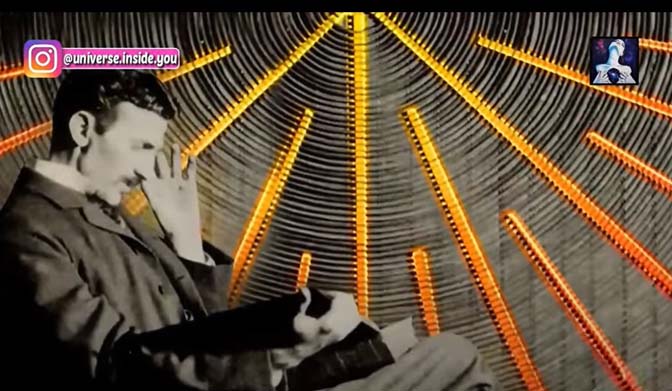
“Nikola Tesla through a different perspective”


Watch the video (0:27)


link submitted by Michael McIntyre


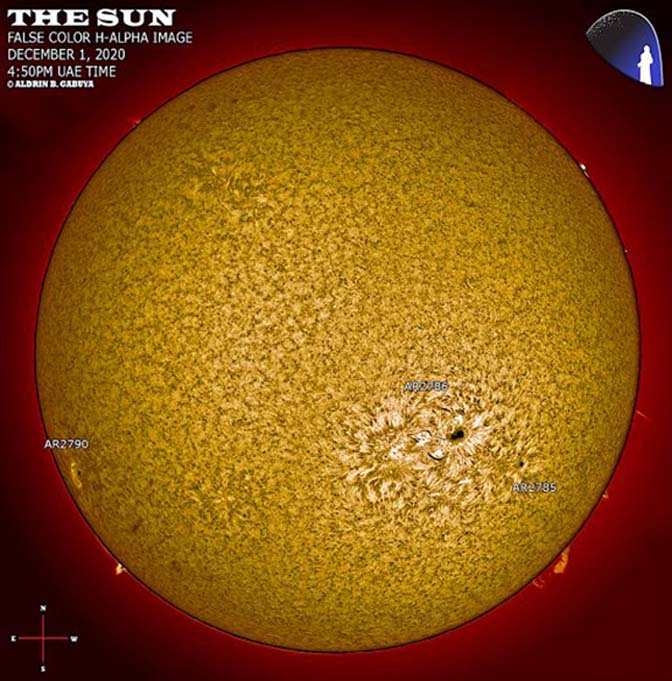
“NASA’s Parker Solar Probe Sheds New Light on the Sun”


“The Sun has fascinated humanity for our entire existence,” said Nour E. Raouafi, project scientist for Parker Solar Probe at the Johns Hopkins Applied Physics Laboratory in Laurel, Maryland, which built and manages the mission for NASA. “We’ve learned a great deal about our star in the past several decades, but we really needed a mission like Parker Solar Probe to go into the Sun’s atmosphere. It’s only there that we can really learn the details of these complex solar processes. And what we’ve learned in just these three solar orbits alone has changed a lot of what we know about the Sun.”


In August 2018, NASA’s Parker Solar Probe launched to space, soon becoming the closest-ever spacecraft to the Sun. With cutting-edge scientific instruments to measure the environment around the spacecraft, Parker Solar Probe has completed three of 24 planned passes through never-before-explored parts of the Sun’s atmosphere, the corona. On Dec. 4, 2019, four new papers in the journal Nature describe what scientists have learned from this unprecedented exploration of our star — and what they look forward to learning next.

These findings reveal new information about the behavior of the material and particles that speed away from the Sun, bringing scientists closer to answering fundamental questions about the physics of our star. In the quest to protect astronauts and technology in space, the information Parker has uncovered about how the Sun constantly ejects material and energy will help scientists re-write the models we use to understand and predict the space weather around our planet and understand the process by which stars are created and evolve.


Read the entire article posted online December 4, 2019 at nasa.gov.


From this link, you will also be able to view and download multimedia for the Dec. 4, 2019, media teleconference associated with this story.


link submitted by Robert Petrovich


“VILCABAMBA: Last Stronghold of the Inca”


The Peruvian jungle holds the ancient city of Vilcabamba, the secret center of Inca resistance, which held out for 40 years against Spanish invaders.

The print edition of the January/February 2020 issue of National Geogrpahic History magazine holds an article on the lost city of the Inca, the secret refuge of Vilcabamba: “VILCABAMBA: Last Stronghold of the Inca” by Maria del Carmen Martin Rubio. An insert to the article (pp. 70-71) presents Gene Savoy’s convictions about the location of Vilcabamba.  Images of the insert appears below.

Click on the images to magnify:


“Wal Thornhill: Velikovsky’s Astrophysics | EU2017”


In 1950 Immanuel Velikovsky threw down a gauntlet to astronomers in his sensational best-selling book, Worlds in Collision, where he proposed, on the basis of documentary evidence, that gravitation is an electromagnetic phenomenon. Leading American astronomers were enraged and behaved like medieval priests whose sanctified gravitational cosmology was being violated. They pressured Macmillan, the textbook publisher, to burn the best-selling book. The fact neither Newton nor Einstein explained gravity seemed to go unnoticed.

In 1979, Velikovsky gave Wal a monograph titled Cosmos Without Gravitation, which he had published in 1946. He noted that in the charged oil drop experiment, “one and the same action is ascribed to two fundamentally different principles,” where the drop is balanced between the gravitational force and the electrical attraction of a charged plate above. This was a return to natural philosophy, which provided the scientific advances that led to the modern age and is essential for progress once more. Velikovsky’s genius was to provide the keys to the solar system’s recent catastrophic history and the astrophysics needed to understand it.


Read the entire article posted online November 7, 2019 on YouTube.


link submitted by Frieda Nelson


“Why is Sunrise Important you ask?”


Here’s one reason…

Your #circadianrhythm is set hardest when you see morning light earliest. When you start missing strong early morning light, your body clocks run late which means you can’t fall asleep as well or wake up as easy. Essentially your sleep quality and/or time declines.

What happens next?

Cancer

This study shows the cancer rates between people who live on the EAST side of a time zone compared to cancer rates of people who live on the WEST side of a time zone. Realize that on the east side, the sun RISES much earlier for the same social time. The west may not be the best. Here’s what they found…

When the sun rises later (or I suspect when you miss that bright early morning light) cancer rates rise.

Women get 3.7{1fa2ef75e2e78439128d99df03acfe1d8ee3047374abe3d4676fe3470ff8b909} more breast cancer, 16{1fa2ef75e2e78439128d99df03acfe1d8ee3047374abe3d4676fe3470ff8b909} more esophageal cancer, 4.5{1fa2ef75e2e78439128d99df03acfe1d8ee3047374abe3d4676fe3470ff8b909} more colorectal cancer, 4.6{1fa2ef75e2e78439128d99df03acfe1d8ee3047374abe3d4676fe3470ff8b909} more lung cancer, and 10{1fa2ef75e2e78439128d99df03acfe1d8ee3047374abe3d4676fe3470ff8b909} more uterine cancer.

Men get 9{1fa2ef75e2e78439128d99df03acfe1d8ee3047374abe3d4676fe3470ff8b909} more stomach cancer, 11{1fa2ef75e2e78439128d99df03acfe1d8ee3047374abe3d4676fe3470ff8b909} more liver cancer, 4{1fa2ef75e2e78439128d99df03acfe1d8ee3047374abe3d4676fe3470ff8b909} more prostate cancer, and 13{1fa2ef75e2e78439128d99df03acfe1d8ee3047374abe3d4676fe3470ff8b909} more leukemia.

If you want good health, start with setting that strong sun signal every day.


Read this post on Facebook.


Read an article on Longitude Position in a Time Zone and Cancer Risk in the United States.


Read more on the Blue Light Diet on Facebook.


links submitted by Dr. Stephan Fuelling