“The sustainable cities made from mud”

 

PHOTO CREDIT: Alamy


Mud buildings are remarkably good at keeping us cool in summer and warm in winter, and withstanding extreme weather. In the search for more sustainable buildings, architects are returning to this overlooked, age-old construction material.

In Yemen’s ancient walled city of Sana’a mud skyscrapers soar high into the sky. The towering structures are built entirely out of rammed earth and decorated with striking geometric patterns. The earthen buildings blend into the nearby ochre-coloured mountains.

Sana’a’s mud architecture is so unique that the city has been recognised as a Unesco World Heritage site.

“As an outstanding example of a homogeneous architectural ensemble reflecting the spatial characteristics of the early years of Islam, the city in its landscape has an extraordinary artistic and pictorial quality,” Unesco writes in its description of Sana’a. “The buildings demonstrate exceptional craftsmanship in the use of local materials and techniques.”

Even though the buildings in Sana’a are thousands of years old, they remain “terribly contemporary”, says Salma Samar Damluji, co-founder of the Daw’an Mud Brick Architecture Foundation in Yemen and author of The Architecture of Yemen and its Reconstruction. The ancient structures are still inhabited today and most remain private residences.


Read the entire article posted July 5, 2022 at bbc.com.


link submitted by Gene Savoy Jr.


“Buddy James: Magnetohydrodynamics”


Magnetohydrodynamics is the branch of physics that studies behavior of electrically conducting fluids in the presence of magnetic fields.

Examples of such magneto fluids include plasmas, liquid metals, salt water, and electrolytes.

To understand the predictive analytics of the Dougherty set and how it applies to the Electric Universe Model of Cosmology, Interdisciplinary Geometer Buddy James illustrates ten real-world validations of magnetohydrodynamic currents, flows and patterns.


Watch the entire video posted July 9, 2022 at youtube.com (13:22)


link submitted by Robert Petrovich


“Ghada Chehade: Criteria for a New Model of Cosmology”


Given the current crisis in the Standard Model of Cosmology—plagued by mounting anomalies and contradictions this model cannot resolve—many scientists find it is no longer a reliable guide to problem-solving.

These scientists believe the Standard Model will eventually will be replaced by a different model speaking a fundamentally different language—making the old and new models irreconcilable and incompatible—which means that they cannot coexist.

Ghada Chehade, PhD, an accredited discourse analyst, establishes the criteria—using Thomas Kuhn’s paradigm shift cycle—for a new model of cosmology, and explores some alternatives to see if they meet this criteria.


Watch the video online at youtube.com. (12:53) 


link submitted by Robert Petrovich


“Gareth Samuel: Electrically Stressed Stars”


Conventional science says the largest stars are near the end of their life—and will expel vast amounts of material to form a planetary nebula. In an Electric Universe, these stars are deprived of electrons which forces their outer plasma sheath to expand. A planetary nebula is not the remnants of a dying star but is connected and lit up in glow mode due to a pinching event around the star itself.

Gareth Samuel, EU advocate and creator of “See the Pattern,” examines the rings and jets of V Hydrae—a carbon red supergiant 2,000 light-years from Earth—and why it’s launching balls of plasma into space.


Watch the video posted June 4, 2022 online at youtube.com. (10:04)


link submitted by Robert Petrovich


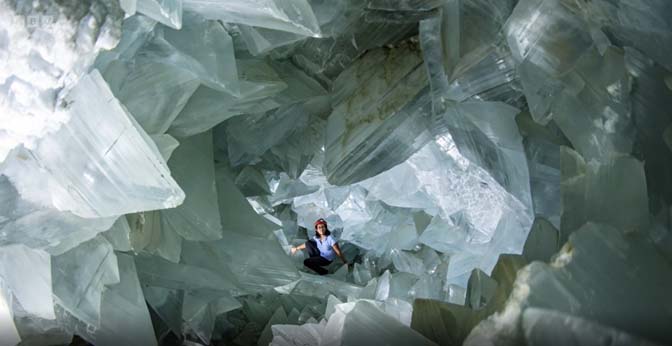
“Inside the world’s largest crystal ‘cave’”


Discovered in 1999 inside an abandoned mine in Southern Spain, Pulpí Geode is the largest crystal ‘cave’ of its kind in the world.

But what exactly is a geode and how do crystals form inside them?

Discover and be amazed by this wonder of nature.

A film by Next Stop Stories


Watch the entire film posted online April 13, 2022 at bbc.com. (5:52)


link submitted by Gene Savoy Jr.


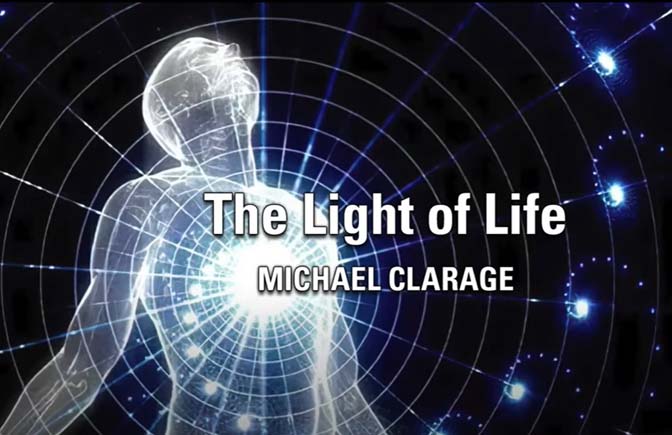
“Michael Clarage: The Light of Life | Thunderbolts”


Life emits light. There is even proof our eyes emit light. To a physicist this is possible since all receivers are also transmitters—a radio antenna can send or receive the same signal. The rhodopsin molecules in the retinal cells absorb and emit the same visible light.

Michael Clarage, PhD, Astrophysicist and Lead Scientist of SAFIRE, explains how we could not have organic life without cells, chemicals, light, electricity, or the ecosystems of the Earth and Sun—all levels of the hierarchy communicate and exchange energy.


Watch the video on youtube. (20:45)


link submitted by Robert Petrovich


“Listen to Eerie Sounds from Echoing Black Holes”


How black holes can swallow stars


Millions of elusive black holes hide in plain sight across the Milky Way galaxy, only giving away their presence occasionally through bursts of X-ray light when they feed on stars.

Astronomers have been able to pin down the locations of eight rare pairings of black holes and the stars orbiting them, thanks to the X-ray echoes they release. Previously, there were only two known pairs emitting X-ray echoes in our galaxy.

Black hole binaries occur when these celestial phenomena are orbited by a star, which they sometimes use to siphon gas and dust as a snack.

The echoes have been converted into sound waves that just may keep you awake at night.


Read the entire article and watch a couple amazing videos at cnn.com.


link submitted by Gene Savoy Jr.


“The Sunshine Makers”


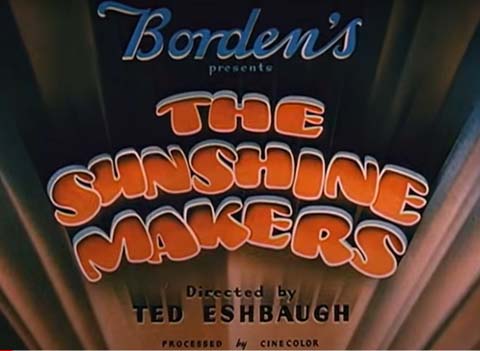
“In 1935, Ted Eshbaugh directed The Sunshine Makers, one of the most popular cartoons ever created. It was played in theaters across the country. Audiences loved it because it lifted them out of the emotional depression of the Great Depression. In the early days of television, it was standard fare on Saturday mornings. I remember, as a child of four, watching it for the first time. It left a deep impression of optimism in me, a conviction that evil people were afraid and sad, and, that if they could be infused with the light, they could be transformed.”
– Excerpt of a review of the cartoon by Wayne Purdin from The Sun Gazette, newsletter of The International Sun Imbibers’ Society, Winter, 2007 (Vol. 1, Issue 5)


Link to Wayne Purdin’s full review of the cartoon online

OR

 read the PDF here


Rainbow Parade was a series of 26 animated shorts produced by Van Beuren Studios and distributed to theaters by RKO between 1934 and 1936. This was the all-color and final series produced by Van Beuren. “The Sunshine Makers” was the third cartoon in the Rainbow Parade Series.


Watch the cartoon at youtube.com (7:48)


links submitted by Robert Petrovich


“Nalanda: India’s ancient university rising from the ashes”


Founded in the 5th Century, India’s Nalanda University is believed to be the world’s first residential university. Established more than 500 years before Oxford University, at its peak Nalanda hosted over 10,000 students from around the world and was considered one of the greatest centres of learning in the ancient world.

The university was destroyed around the end of the 12th Century, its legendary library burnt to the ground and much of its ancient knowledge lost. It wasn’t until the 19th Century that the ruins of Nalanda were rediscovered, and now, around 800 years after it was lost, the university is being relaunched for the modern age.

Video by Mithun Pramanik
Commissioned by Dan John


Watch the video posted online June 9, 2022 at bbc.com. (7:39)


link submitted by Gene Savoy Jr.


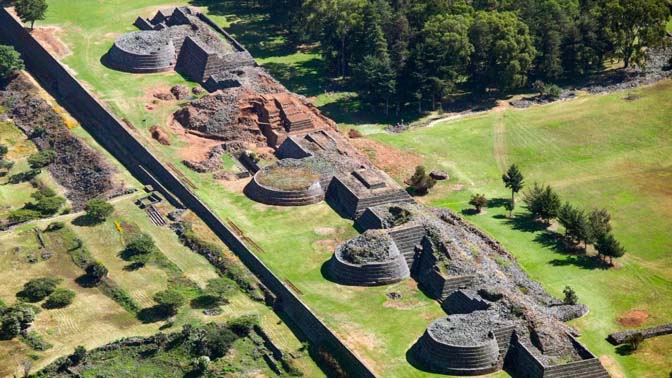
“The empire the Aztecs couldn’t conquer”


Image credit: Brian Overcast / Alamy Stock Photo


The P’urhépechas were one of the only indigenous groups in Mexico the Aztecs failed to conquer – but despite that feat, they were nearly lost to history.

“This is the legacy of our people,” my uncle said as we gazed at the pyramids. We were not in Egypt, but rather in the town of Tzintzuntzan, in Mexico’s south-western state of Michoacán. The pyramids, or yácatas, looming in front of us were uniquely round and made of volcanic stone – perhaps the most intact relics of the P’urhépechas, a pre-Hispanic indigenous group that once reigned here, but that most people have never heard of. In fact, I’d never heard of them either until a few months ago, when I found out that I was a direct descendant.


Read the entire article online at bbc.com.


link submitted by Gene Savoy Jr.