“A surge of discoveries of gravitational waves”


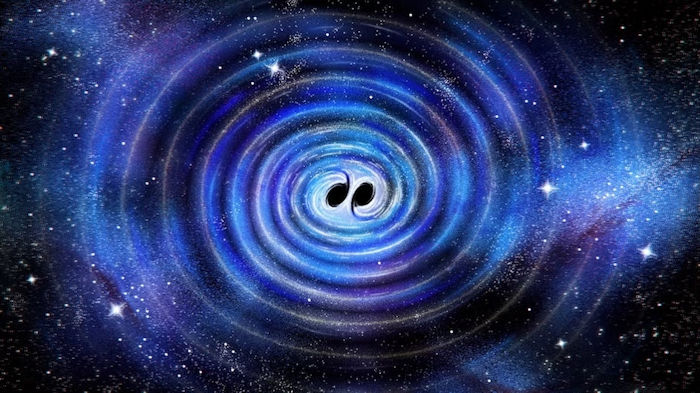
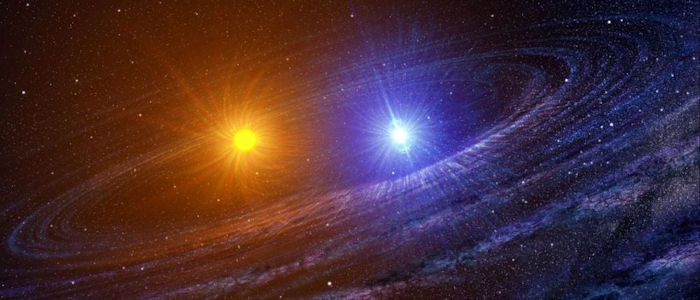
Black holes are the densest objects in the universe. When they collide, they unleash ripples in spacetime known to scientists as gravitational waves. These waves travel across millions to billions of light-years of space. But they’re barely perceptible when they reach us here on Earth. Scientists are trying to catalog these signatures of black hole mergers. Now they say they’ve detected 128 new signatures over a 9-month period. Why so many? Image via SXS.

Click here to read the article


“An International Team Uncovers What Powers Auroras”


The Aurora Borealis and Australis have dazzled and inspired all those who have beheld them since time immemorial. Much like the Moon, stars, constellations, and planets, they are considered a permanent part of our shared cultural heritage. These awe-inspiring displays of light are the result of charged particles from our Sun interacting with Earth’s magnetic field. However, there remain unanswered questions about the mechanisms that power aurorae that scientists have been hoping to resolve for decades. For example, there’s the question of what powers the electrical fields that accelerate these particles.

Click here to read the article


“Gravitational waves finally reveal what’s inside neutron stars”


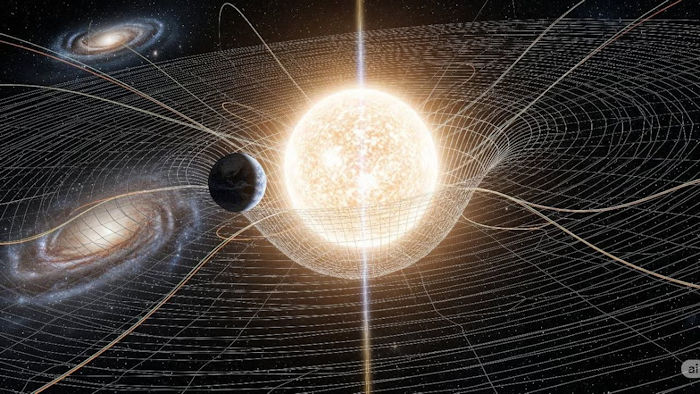
Some of the universe’s densest objects can twist, stretch, and resonate in ways that challenge even the most seasoned physicists. Neutron stars, the remnants of massive stars that have exploded as supernovae, cram more mass than the Sun into a sphere barely 20 kilometers wide. Their gravity is billions of times stronger than Earth’s, and their internal matter behaves unlike anything we can directly observe on our planet.

Click here to read the article


“A giant star’s sudden shift signals it might be ready to supernova”


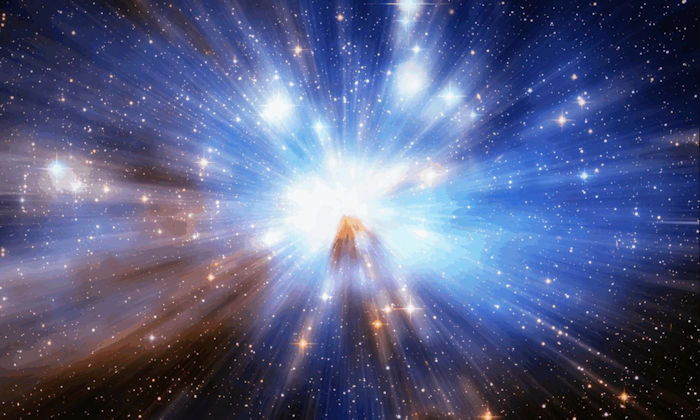
WOH G64 has always been an oddball. It sits in the Large Magellanic Cloud, a small galaxy that orbits the Milky Way, and it ranks among the most extreme red supergiants known. Earlier estimates put it at roughly 1,540 times the Sun’s radius. It also sheds mass at an unusually high rate and sits inside a thick, dusty environment that partly hides what is going on.

Click here to read the article


“How giant galaxies could form just 1.4 billion years after the Big Bang”


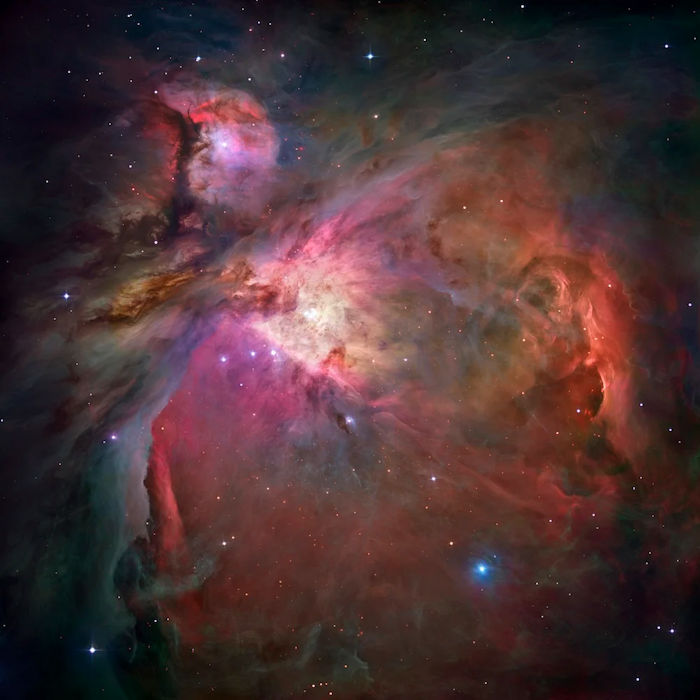
When the Hubble Space Telescope did its deep field surveys of the Universe, it discovered that galaxy formation was surprisingly mature, even within the first few billion years after the Big Bang. Webb and powerful radio telescopes have confirmed this mystery, with fully-formed galaxies appearing even earlier. How could they exist so soon after the Big Bang? Researchers discovered that early galaxies have insane rates of star formation: 1 every 40 minutes or so, compared to the Milky Way’s rate of one new star a year or so.
Click here to read the article


“This Supernova Progenitor Hid Behind a Surprisingly Thick Veil of Carbon Dust”


Supernovae are bright. So bright that they can outshine all the other stars in their galaxy for months. But sometimes their precursor objects are hard to spot, hidden behind thick shrouds of gas and dust. Astronomers used Webb to observe a Type II supernova in the galaxy NGC 1637, located about 30 million light-years away. They looked at archival data and found a red supergiant star in the exact same location as the supernova. So now Webb has shown the before and after, the final moments of a star before it explodes as a supernova.

Click here to read the article


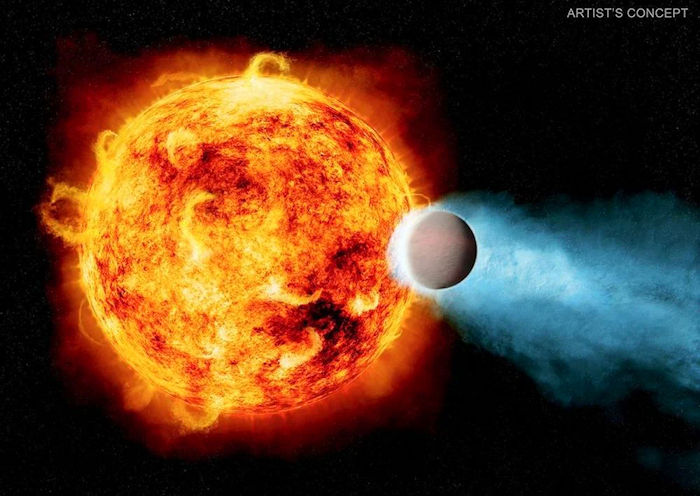
“NASA Telescope Spots a Young Sun-Like Star Inflating Its Astrosphere”


Stars are constantly emitting radiation and stellar winds which can shape their surroundings. If those winds are powerful enough, they can even prevent other stars from forming. Astronomers have observed a young star blowing out a bubble around it, filled with hot gas. Our Sun’s bubble is called the heliosphere, so this would be called an “astrosphere.” The star’s wind is about three times faster than the solar wind, 25 times more dense, and might be a good example of what the Sun looked like early on.

Click here to read the article


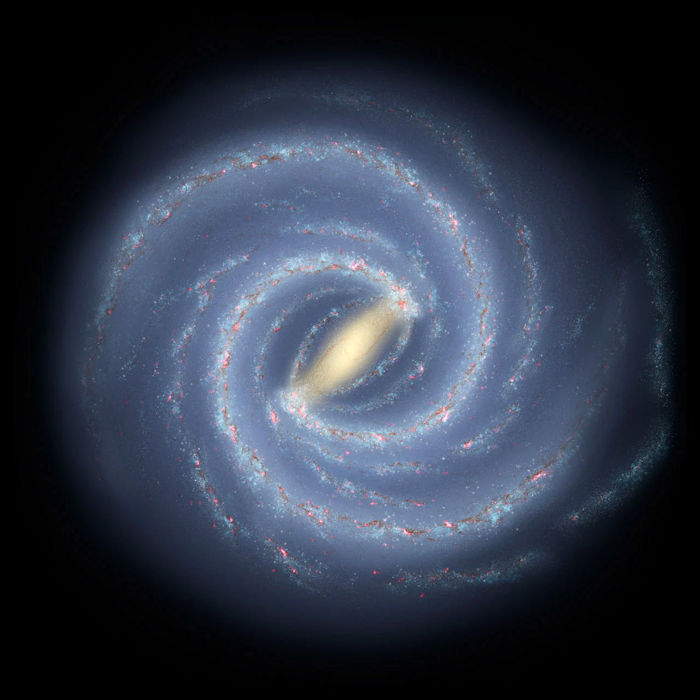
“Milky Way and Andromeda held in dark matter sheet”


It’s well known that the Andromeda Galaxy is moving toward us. But most other large, nearby galaxies are moving away, despite the gravitational pull of the Local Group (the Milky Way, Andromeda and a host of smaller galaxies). Why? Astronomers now think they have the answer.

New simulations suggest the Local Group is trapped inside a 32 million light-year-long sheet of dark matter.

Click here to read the article


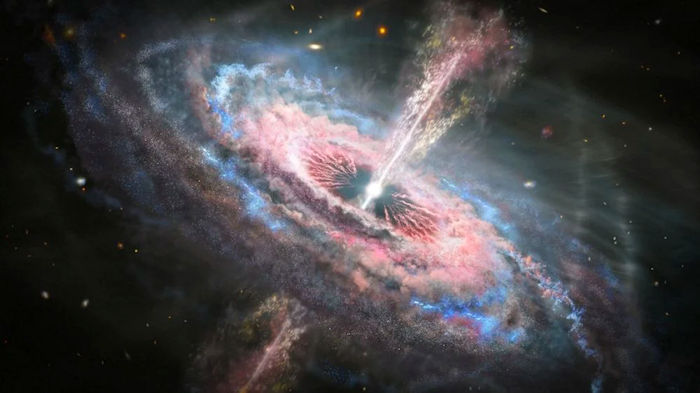
“How Supermassive Black Holes Stifle Star Formation In Neighbouring Galaxies”


Astronomers know that supermassive black holes (SMBH) can inhibit star formation. These behemoths, which seem to be present in the center of large galaxies like ours, inject energy into their surroundings, heating up star-forming gas. Gas needs to be cool to collapse and form stars, so active SMBH put a damper on the process.

Click here to read the article


“Ancient Massive Stars Enriched Early Clusters and Birthed First Black Holes”


The early Universe was a dramatically different environment than what we have today. The first stars formed from the primordial hydrogen and helium left over from the Big Bang and could have grown to immense sizes, living short lives and detonating as supernovae. In a new paper, researchers looked at what could have happened when stars with more than 1,000 times the mass of the Sun could form, and the impact they’d have had on their surroundings.

Click here to read the article