“The US’ lost, ancient megacity”


Monk’s Mound, the largest Pre-Columbian earthwork in the Americas, was built by Native Americans living at Cahokia. PHOTO CREDIT: MattGush/Shutterstock


In the ancient Mississippian settlement of Cahokia, vast social events – not trade or the economy – were the founding principle.


Pity the event planners tasked with managing Cahokia’s wildest parties. A thousand years ago, the Mississippian settlement – on a site near the modern US city of St Louis, Missouri – was renowned for bashes that went on for days.

A cosmopolitan whir of language, art and spiritual ferment

Throngs jostled for space on massive plazas. Buzzy, caffeinated drinks passed from hand to hand. Crowds shouted bets as athletes hurled spears and stones. And Cahokians feasted with abandon: burrowing into their ancient waste pits, archaeologists have counted 2,000 deer carcasses from a single, blowout event. The logistics must have been staggering.

Things are quieter these days at Cahokia, now a placid Unesco site. But towering, earthen mounds there hint at the legacy of the largest pre-Columbian city north of Mexico. A cosmopolitan whir of language, art and spiritual ferment, Cahokia’s population may have swelled to 30,000 people at its 1050 AD peak, making it larger, at the time, than Paris.


Read the entire article online at bbc.com.


link submitted by Gene Savoy Jr.


“Music–color associations are mediated by emotion”


The display of 37 colors that was presented during the music–color association task.


Abstract
Experimental evidence demonstrates robust cross-modal matches between music and colors that are mediated by emotional associations. US and Mexican participants chose colors that were most/least consistent with 18 selections of classical orchestral music by Bach, Mozart, and Brahms. In both cultures, faster music in the major mode produced color choices that were more saturated, lighter, and yellower whereas slower, minor music produced the opposite pattern (choices that were desaturated, darker, and bluer). There were strong correlations (0.89 < r < 0.99) between the emotional associations of the music and those of the colors chosen to go with the music, supporting an emotional mediation hypothesis in both cultures. Additional experiments showed similarly robust cross-modal matches from emotionally expressive faces to colors and from music to emotionally expressive faces. These results provide further support that music-to-color associations are mediated by common emotional associations.


Read the entire article online at pnas.org.


link submitted by Michael McIntyre


“Pope Francis launches consultation on Church reform”


Pope Francis officially launched the process at a Mass in the Vatican PHOTO CREDIT: Getty Images


Pope Francis has launched what some describe as the most ambitious attempt at Catholic reform for 60 years.

A two-year process to consult every Catholic parish around the world on the future direction of the Church began at the Vatican this weekend.

Some Catholics hope it will lead to change on issues such as women’s ordination, married priests and same-sex relationships.

Others fear it will undermine the principles of the Church.

They say a focus on reform could also distract from issues facing the Church, such as corruption and dwindling attendance levels.

Pope Francis urged Catholics not to “remain barricaded in our certainties” but to “listen to one another” as he launched the process at Mass in St Peter’s Basilica.


Read the entire article at bbc.com.


link submitted by Gene Savoy Jr.


“Ev Cochrane: Polar Configuration – As Above, So Below | Thunderbolts”


First of a special four-episode arc to explore certain unique aspects of the Polar Configuration. Beginning with ‘As Above, So Below’—the well-known phrase of legend and myth—this episode analyzes the planetary origins of the king and the bizarre rituals of kingship.

To achieve a fact-based history of our solar system, comparative mythologist Ev Cochrane finds it necessary to forsake the scriptures of modern science, while paying careful heed to the testimony of the ancients.


Watch the entire video at youtube.com. (10:47)


link submitted by Robert Petrovich


“Michael Clarage: Electrical Shaping of Biology | Thunderbolts”


Astrophysicist and Lead Scientist of The SAFIRE Project Michael Clarage, PhD, highlights some of the evidence for the role of electricity in how plant and animal shapes come to be, and the role of electric fields in how inorganic objects obtain their shapes.

In this first episode of a two-part presentation, Dr. Michael Clarage begins with an open question in biology—how do the shapes of creatures come about? How does a certain frog species obtain its particular shape and not some other? How do its legs and toes and claws always get their particular shape and not some other?

The conventional view states the 70 year-old idea that DNA alone somehow determines everything, though there is surprisingly little evidence. “The story of DNA that we grew up with—and still teach our children—is not only wrong, it’s harmful to our spirit because it gives us a false understanding of ourselves and our relationship to the universe,” says Dr. Clarage.

Watch the video at yoube.com (14:55)


link submitted by Robert Petrovich


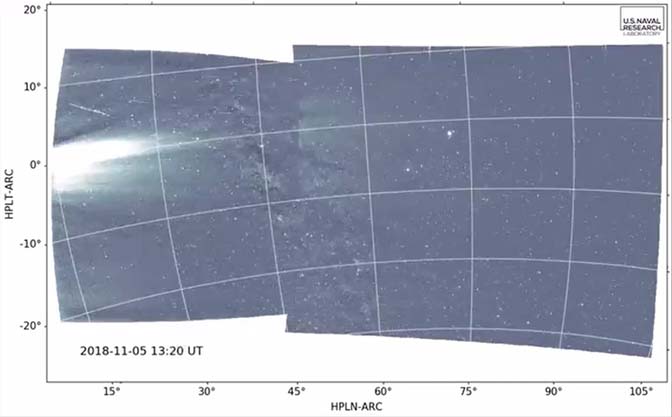
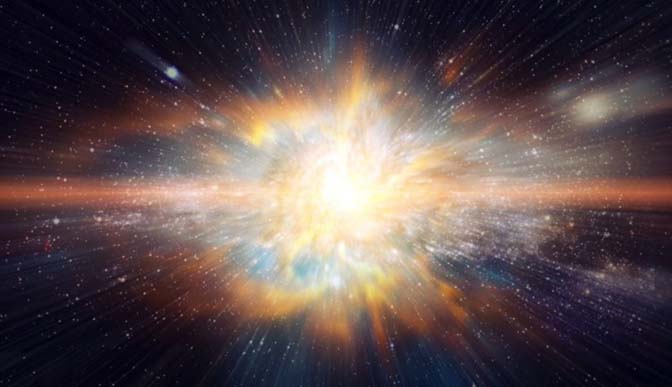
“Michael Clarage: Supernova”


A supernova begins as a star then undergoes a very rapid transformation which, for an instant, puts out as much energy as the entire galaxy where it lives. This brief, all-encompassing flash is called “supernova”.

The star is gone and we see something very different. The center pulses hundreds, even thousands of times a second. Every supernova remnant has a unique pulse shape, unique like your fingerprint or voice, and around its pulsing center is a rapidly expanding larger electric and magnetic body.

Astrophysicist Michael Clarage, PhD, and Lead Scientist of The SAFIRE Project, bounces back and forth between the world of supernova and the world of people, in hopes of understanding both better.


Watch the entire video posted online May 15, 2021 at youtube.com. (15:28)


link submitted by Robert Petrovich


“Cosmology of the Electric Universe, Part 2 – Body of the Galaxy”


Cosmology of the Electric Universe, Part 2 – Body of the Galaxy.

Previously we looked at how the electrical systems of the Earth and planets exist in the larger electrical body of the Sun. Now we shift up in scale to describe the relationship of each star to the larger Galactic body of which it is a part, like our own Sun which lives inside the Milky Way Galaxy.

In this second of a two-part presentation, Michael Clarage, PhD, Lead Scientist of The SAFIRE Project, proposes that galaxies transform the great currents and fluxes that course through our universe as a whole.

Dr. Clarage also proposes that human beings can transform to emit greater amounts of energy and work with higher frequencies.


Watch Part 2 of the Cosmology of the Electric Universe by Michael Clarage


link submitted by Robert Petrovich


“Mega-Tsunamis, Chinese Junks and Port Phillip Bay”


Original Post February 10, 2012

The Australian Bunurong tribe recorded the catastrophic formation of Melbourne’s Port Phillip Bay in their mythology.


“Plenty long ago, you could walk dry foot from our side of the bay to Corio. Then, in a night of destruction, great tornadoes uprooted all the trees and giant seas rushed in through the headlands. The land sunk under shattering earthquakes and the seas became void and deep, just as they are today.” Georgiana McCrae

When did these events occur? In 1450 AD, the catastrophic comet Mahuika descended upon the coast of New Zealand. Reputed to be twenty-six times as bright as the Sun, it discharged electrically and shattered Admiral Zhou Man’s Chinese fleet of some sixty ships. The fleet supported a thriving Chinese colony of Han, Tang and Song, mining gold, jade and antimony in New Zealand. The comet’s screaming noise blew out the sailors’ eardrums; they received horrific burns.

Earthquakes and gigantic waves that could have been more than 200 metres high tossed the ships upside down like matchsticks, whilst the intense heat caused the masts and rigging to catch fire. Zhou Man’s wrecked hulks hurtled across the seas to New Zealand and southeast Australia fanned by 600 kilometre per hour winds. Junks were flung ashore at Bairnsdale, Warrnambool, King Island, Kangaroo Island and even the tip of West Australia. Sound incredible?


Read the entire article online at thunderbolts.info.


link submitted by Robert Petrovich


“What Doomed a Sprawling City Near St. Louis 1,000 Years Ago?”


A mural at the Cahokia Mounds Museum and Interpretive Center shows the city during its heyday, circa 1100.Credit…L.K. Townsend/Cahokia Mounds State Historic Site


Excavations at Cahokia, famous for its pre-Columbian mounds, challenge the idea that residents destroyed the city through wood clearing.

A thousand years ago, a city rose on the banks of the Mississippi River, near what eventually became the city of St. Louis. Sprawling over miles of rich farms, public plazas and earthen mounds, the city — known today as Cahokia — was a thriving hub of immigrants, lavish feasting and religious ceremony. At its peak in the 1100s, Cahokia housed 20,000 people, greater than contemporaneous Paris.

By 1350, Cahokia had largely been abandoned, and why people left the city is one of the greatest mysteries of North American archaeology.


Read the entire article by Asher Elbein published April 24, 2021 at nytimes.com.


link submitted by Robert Petrovich


“Andrew Hall: Reverse Engineering the Earth | Space News”


In this penultimate episode of the Thunderbolts “Eye of the Storm” series, author and Thunderbolts colleague Andrew Hall describes his approach to reverse engineer the Earth, starting with outside layers and peeling inward, always following the patterns of electrical scarring.

Abstract theories for cause and effect aren’t needed when the patterns of Nature are laid bare for us to see, repeating at every scale in every structure in the universe. In the case of geology, it’s not just gravity, the mists of time, or coincidence. It’s the diffusion of charge in an environment of extreme electrical stress. The question is: What makes the patterns?


Watch the video presentation on Youtube.(13:47)


link submitted by Robert Petrovich