“Earth’s inner core may have stopped turning and could go into reverse, study suggests: CNN”
 

Earth core


The rotation of Earth’s inner core may have paused and it could even go into reverse, new research suggests.

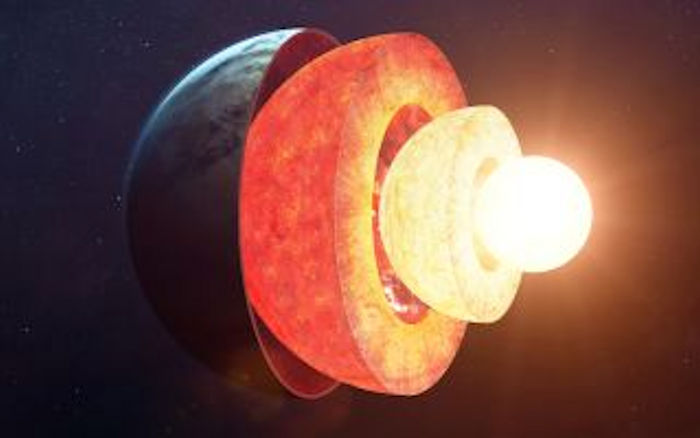
The Earth is formed of the crust, the mantle and the inner and outer cores. The solid inner core is situated about 3,200 miles below the Earth’s crust and is separated from the semi-solid mantle by the liquid outer core, which allows the inner core to rotate at a different speed from the rotation of the Earth itself.

With a radius of almost 2,200 miles, Earth’s core is about the size of Mars. It consists mostly of iron and nickel, and contains about about one-third of Earth’s mass.

Read the full article here.


Not everyone agrees with what this article says. Here are some comments and links from Cosolargy member, Dr. Stephan Fuelling (physicist).

Very interesting! I also read that the Earth’s spin slowed down but very, very little. It could be that these two events are coupled together. If that happened 70 years ago, we didn’t have the technology back then to notice it.
I hope the following will never happen with Earth:
https://m.youtube.com/watch?v=1VPfZ_XzisU
I think that the mass distribution of the Earth is not uniform enough for this to happen. But here is someone who modeled it with an Earth model with exaggerated difference in the mass distribution. And it flips maybe every 100 days. So obviously this doesn’t happen. I am not sure if our Moon stabilizes the Earth so that this doesn’t happen.
https://m.youtube.com/watch?v=J-l-SbCFhL0
Here is an answer that I found on Quora:
“ No, the conditions for this effect simply don’t apply. Rotations around the first and third principal axis are stable. Now, I am not sure whether Earth’s axis of rotation will count as the “first” or “third” principal axis; I’ll leave it for you to investigate the details. But the point is, rotation around one of them results in the largest moment of inertia, and rotation around the other one results in the smallest moment of inertia – and both of these are stable.

Since Earth is squashed at the poles, its actual rotation is such that the moment of inertia is largest.”

And on Research Gate I found this (see attached). The are some ancient references to the sun rising in the west!


“Unusually brightening star captures attention as a stellar oddity | CNN”


Double star


Astronomers might have solved the mystery behind an unusually brightening star.

University of Washington doctoral student Anastasios Tzanidakis and research assistant professor of astronomy James Davenport were searching for “stars behaving strangely” when they received an alert about a potential stellar oddity from the Gaia spacecraft.

The space observatory, launched by the European Space Agency in 2013, is on a mission to create the most precise 3D map of the Milky Way galaxy to date. The astronomers focused on Gaia17bpp, a star that had gradually increased in luminosity over a 2.5-year period.

Read the full article here.

Link submitted by Gene Savoy Jr.


“Astronomers Accidentally Discover Black Hole So Big You Can Spot It With A Backyard Telescope”


giant black hole


Black holes are the cosmic gluttons, consuming anything that approaches too closely, even light.  Now, a team of worldwide researchers has identified a supermassive black hole that devours the mass of one Earth every second.

By observing other light objects billions of years old, the scientists determined that the newly found behemoth was the brightest and fastest-growing supermassive black hole of the previous nine billion years (that we know of).

Read the full article here.


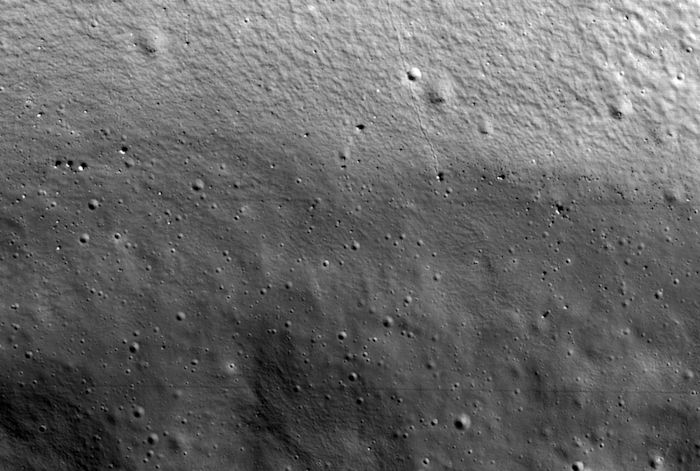
“ Permanently shadowed crater captured by ShadowCam”


Shadowcam photo of a moon crater


Some regions near the moon’s poles never see sunlight. They are permanently in shadow. It’s been difficult – so far – to glimpse anything inside them. But they’re known to contain water ice, and so might be valuable for our human exploration of the moon and beyond. And now NASA’s ShadowCam instrument, on South Korea’s Danuri lunar orbiter, has sent back its 1st image of one of these permanently shadowed regions on the moon.

Read the full article here.


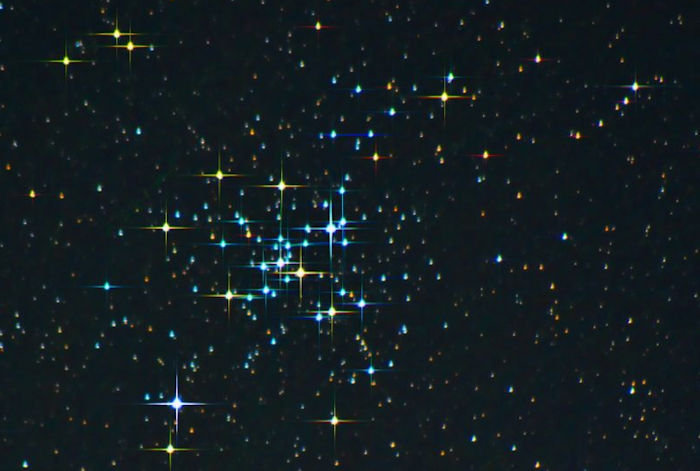
“M41: A faint star cluster near bright Sirius”


M41 star cluster


Do you want to see a star cluster? Then just look for nighttime’s brightest star, Sirius, in the constellation Canis Major the Greater Dog. A lovely star cluster – called Messier 41 or M41 – lies near Sirius. If you can’t see the star cluster, it’s probably because your sky isn’t dark enough. So try aiming your binoculars at bright Sirius. You might glimpse the little star cluster in the same binocular field.

Sirius is easy to spot. It’s bright, brighter than any other star you’ll see in the evening sky now. You can be sure you’re looking at Sirius if Orion’s Belt – three stars in a short, straight row in the constellation Orion the Hunter – are pointing to it.

Read the full article here.


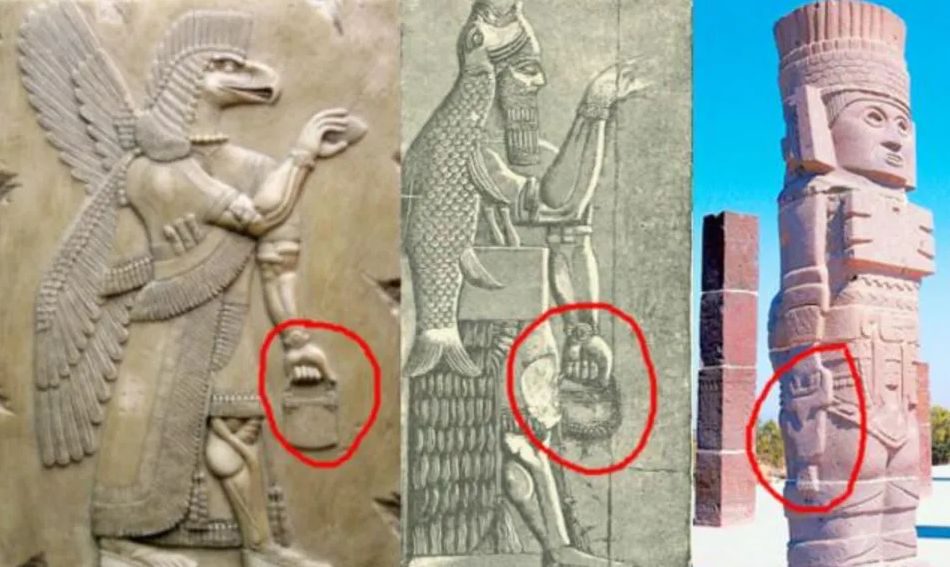
“Mysterious Handbag of the Gods Depicted All Around the Planet”


How is it that depictions of the Anunnaki from thousands of years ago show the gods holding a perplexing bag? In contrast, depictions from ancient Mesoamerican cultures halfway around the planet reveal the same thing. The enigmatic “handbag” of the Gods, as depicted by the prehistoric Sumerian images of the Anunnaki, is visible in a number of ancient American civilizations and even at the world’s oldest megalithic structure – Göbekli Tepe. Can this be a coincidence?


Read the entire article here.


link submitted by Harold Boulette


“What’s the real reason you can’t go faster than the speed of light?”


speed of light


  • The answer commonly given to the question, “Why can’t we travel faster than the speed of light?” involves the mass of objects becoming infinitely large. That answer is fine, but there’s a better one.
  • Space and time are unified into a single entity known as spacetime. And every object travels through spacetime at the speed of light.
  • Even a stationary object is moving at the speed of light, but it is moving only through time and not space.

Albert Einstein is frequently regarded as one of the most influential scientists of all times, with brilliant insights about the laws of nature. However, his work has one very disappointing consequence, especially for science buffs who hope one day to travel to distant stars. His theory demonstrated that there is a fastest speed in the Universe: the speed of light. That means the shortest possible round-trip to the nearest star will take nearly a decade.

But just how does that work? Even the most informed science enthusiasts often have a wrong, or at least incomplete, understanding of why you can’t go faster than light.


Click here to read the entire article.


link submitted by Harold Boulette


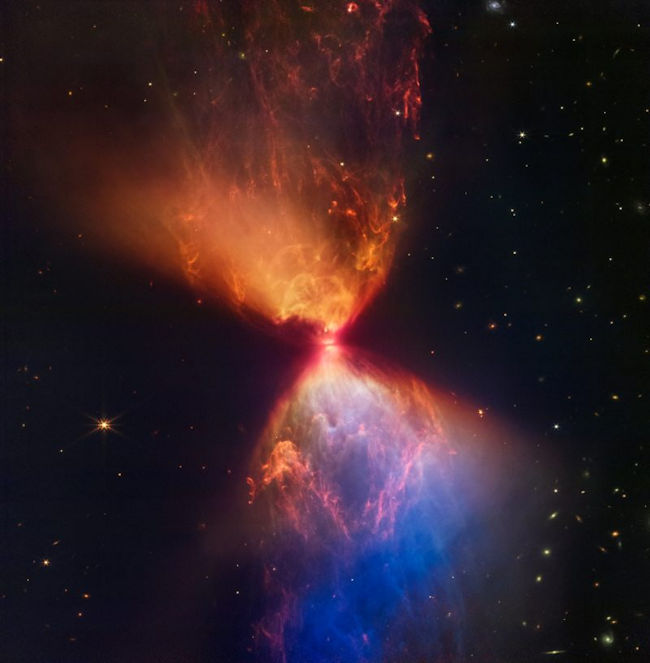
“ Fiery hourglass star seen by Webb”


Astronomers have used the Webb space telescope to catch a newly forming star in the shape of an hourglass. They said the star itself is hidden from view within the neck of this hourglass shape. But, if you look closely at the image above, you can see a thin dark line, right in the middle of the neck. It’s a protoplanetary disk, in which new planets are forming. It probably looks much as our sun did from afar, 4 1/2 billion years ago.

ESA said this dark disk in the neck of the hourglass is about the size of our solar system. Within it, clumps of gas and dust particles are sticking together, making the beginnings of planets.

Read the full article here.


“New sun-hugging asteroids: ‘Biggest in 8 years’”


asteroid near the sun


New sun-hugging asteroids

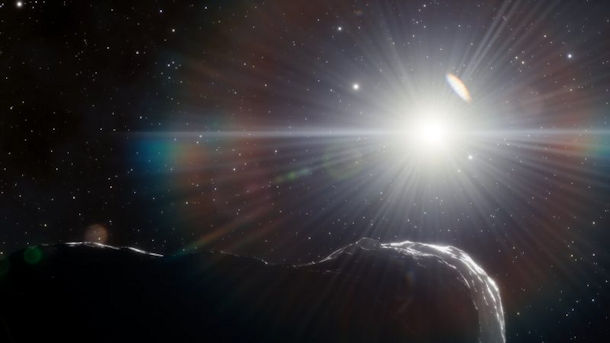
NSF’s NOIRLab, based in Tucson, Arizona, said on Monday (October 31, 2022) that astronomers used a special camera on a telescope in Chile to discover three new near-Earth asteroids hiding in the inner solar system. Why hiding? It’s because they’re talking about the part of the solar system closer to the sun than Earth or Venus. And that’s a realm of space where asteroids are tough to spot. Because – when astronomers look that way – they’re also looking into our sun’s glare.

These astronomers said they took advantage of the “brief yet favorable observing conditions during twilight” – when the sun was just below the horizon, blocked from view – to find the sun-hugging asteroid trio. So their special camera was capable of picking faint objects out of the bright twilight.


Read the entire article here.


link submitted by Harold Boulette


“Cosmic Wonders on display in New Hubble video”

cosmic wonder
The Space Telescope Science Institute (STScI) released a new video of Hubble images this week (October 25, 2022). The video is titled Cosmic Wonders. It is, in essence, a tour through some bewitching phenomena in our universe. And with this in mind, it includes 18 visualizations of everything from nearby nebulae to deep and distant galaxies.
Learn more about the gorgeous objects that the video focuses on. For example, in the first half of the video you’ll see the following:

The Bubble Nebula. See winds and radiation from a massive star.

Ultra Deep Survey Field. This dense cluster of galaxies 6 billion light-years away has satellite galaxies at more than twice that distance.

Arp 273. The two galaxies interact to form a shape like a long-stemmed rose.

The Lagoon Nebula. This star-forming region in the constellation Sagittarius lies toward the center of our Milky Way.

Click here to see the video and complete article on EarthSky News.