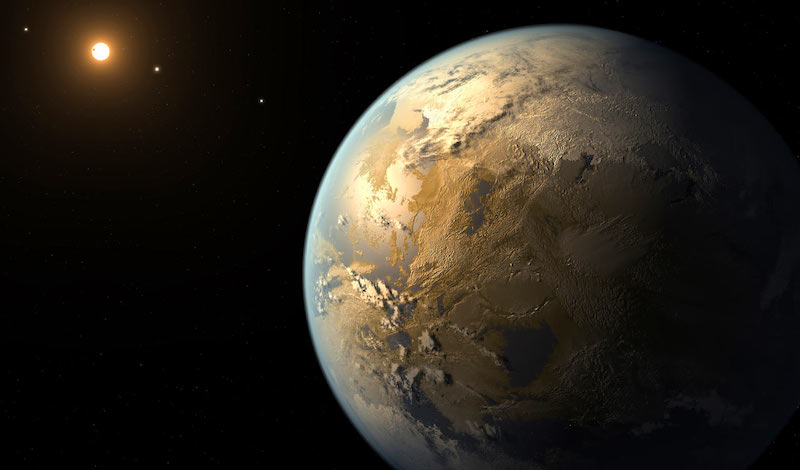
“Dwardu Cardona: Earth’s Primordial Stellar Host”


At our third conference, EU2014: All About Evidence, Dwardu Cardona presented a reconstruction of Earth’s cosmic history distilled from the universal mytho-historical record. He describes how the strongest scientific validation comes from space itself, as new instruments display extraordinary electromagnetic detail across the cosmos, confirming that this is indeed an Electric Universe.

Dwardu Edward Cardona (1937–2016) was born, raised, and educated in Malta. In 1959, he emigrated to Canada and soon began to study catastrophism and the Solar System’s cosmic history. Dwardu was the Senior Editor for Kronos, Editor of Aeon, co-founded the Canadian Society for Interdisciplinary Studies, and consultant for the UK-based Chronology and Catastrophism Review.

As an author, Dwardu published well over a hundred articles, notably on the Saturn theory. His legacy lives on through his five esteemed books—God Star (2006), Flare Star (2007), Primordial Star (2009), Metamorphic Star (2011), and his final opus, Newborn Star (2016).


Watch the entire video online at youtube.com. (26:22)


link submitted by Robert Petrovich


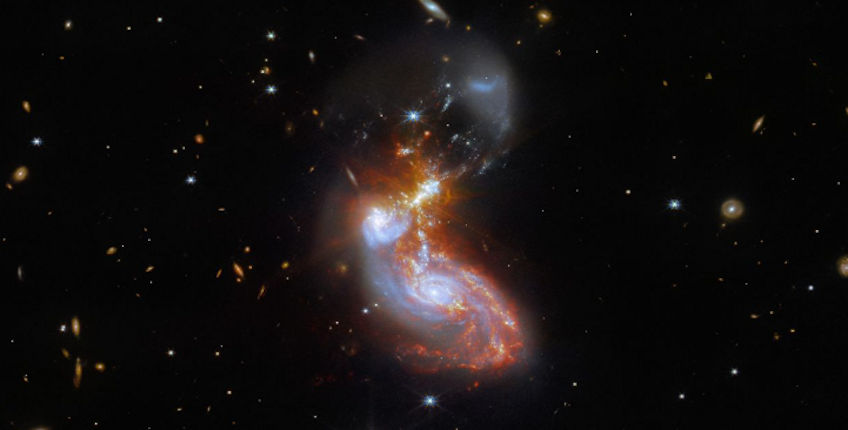
“Webb telescope’s sharp views of the universe will change astronomy”


Compare the sharpess and level of detail captured by the Spitzer Space Telescope (left) and the James Webb Space Telescope (right).


The James Webb Space telescope has the sharpest perspective on otherwise invisible light in the universe.

The highly anticipated first science images by the world’s premier space observatory aren’t expected until this summer. But recent test images captured by the telescope during its final commissioning phase are providing a glimpse of what’s to come.

“These are the sharpest infrared images ever taken by a space telescope,” said Michael McElwain, Webb observatory project scientist at NASA’s Goddard Space Flight Center in Greenbelt, Maryland, during a news conference Monday.

Webb will be able to peer inside the atmospheres of exoplanets and observe some of the first galaxies created after the universe began by observing them through infrared light, which is invisible to the human eye. The images were taken after the successful alignment of the telescope’s massive golden mirror segments. The test images show the clear, well-focused images that the observatory’s four instruments are capable of capturing.


Read the entire article posted May 9, 2022 online at cnn.com.


link submitted by Gene Savoy Jr.


“9,000-year-old face sculptures uncovered in Jordan desert”


In a major new archaeological discovery, a Neolithic complex of 9,000-year-old stone carvings has been uncovered in Jordan’s southeastern desert.
The find was recorded by a team of Jordanian and French archaeologists and announced on Tuesday at a press conference held by the Jordanian Ministry of Tourism and Antiquities.
The site is believed to be a unique ritualistic installation dedicated to the hunting of gazelles, and features gigantic stone traps known as “desert kites,” which the researchers say are the world’s oldest large-scale human-built sculptures.


Read the entire article posted February 24, 2022 online at cnn.com.


link submitted by Gene Savoy Jr.


“The ancient mummies older than Egypt’s”


The Egyptians may have the most famous mummies, but they’re not the oldest. The Chinchorro people of Chile’s Atacama Desert were the first to mummify their dead – 7,000 years ago.

In Chile’s Atacama Desert, the driest place on Earth, mummies have been found that pre-date the Egyptians’ by 2,000 years. So while the Egyptians may be the most famous culture to mummify their dead, it turns out they weren’t the first to do so.

“The Chinchorro are the very first people that inhabited the north of Chile and the south of Peru,” said Bernardo Arriaza, a physical anthropologist with the University of Tarapacá. “They are the pioneers of the Atacama Desert.” And, he added, they are also the first known culture in the world to mummify their dead, starting around 5,000 BCE.


Read the entire article online at bbc.com.


link submitted by Gene Savoy Jr.


“The sustainable cities made from mud”


PHOTO CREDIT: Alamy


Mud buildings are remarkably good at keeping us cool in summer and warm in winter, and withstanding extreme weather. In the search for more sustainable buildings, architects are returning to this overlooked, age-old construction material.

In Yemen’s ancient walled city of Sana’a mud skyscrapers soar high into the sky. The towering structures are built entirely out of rammed earth and decorated with striking geometric patterns. The earthen buildings blend into the nearby ochre-coloured mountains.

Sana’a’s mud architecture is so unique that the city has been recognised as a Unesco World Heritage site.

“As an outstanding example of a homogeneous architectural ensemble reflecting the spatial characteristics of the early years of Islam, the city in its landscape has an extraordinary artistic and pictorial quality,” Unesco writes in its description of Sana’a. “The buildings demonstrate exceptional craftsmanship in the use of local materials and techniques.”

Even though the buildings in Sana’a are thousands of years old, they remain “terribly contemporary”, says Salma Samar Damluji, co-founder of the Daw’an Mud Brick Architecture Foundation in Yemen and author of The Architecture of Yemen and its Reconstruction. The ancient structures are still inhabited today and most remain private residences.


Read the entire article posted July 5, 2022 at bbc.com.


link submitted by Gene Savoy Jr.


“Buddy James: Magnetohydrodynamics”


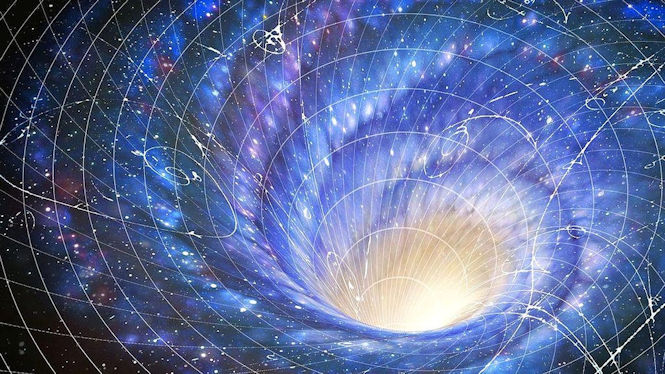
Magnetohydrodynamics is the branch of physics that studies behavior of electrically conducting fluids in the presence of magnetic fields.

Examples of such magneto fluids include plasmas, liquid metals, salt water, and electrolytes.

To understand the predictive analytics of the Dougherty set and how it applies to the Electric Universe Model of Cosmology, Interdisciplinary Geometer Buddy James illustrates ten real-world validations of magnetohydrodynamic currents, flows and patterns.


Watch the entire video posted July 9, 2022 at youtube.com (13:22)


link submitted by Robert Petrovich


“Ghada Chehade: Criteria for a New Model of Cosmology”


Given the current crisis in the Standard Model of Cosmology—plagued by mounting anomalies and contradictions this model cannot resolve—many scientists find it is no longer a reliable guide to problem-solving.

These scientists believe the Standard Model will eventually will be replaced by a different model speaking a fundamentally different language—making the old and new models irreconcilable and incompatible—which means that they cannot coexist.

Ghada Chehade, PhD, an accredited discourse analyst, establishes the criteria—using Thomas Kuhn’s paradigm shift cycle—for a new model of cosmology, and explores some alternatives to see if they meet this criteria.


Watch the video online at youtube.com. (12:53) 


link submitted by Robert Petrovich


“Gareth Samuel: Electrically Stressed Stars”


Conventional science says the largest stars are near the end of their life—and will expel vast amounts of material to form a planetary nebula. In an Electric Universe, these stars are deprived of electrons which forces their outer plasma sheath to expand. A planetary nebula is not the remnants of a dying star but is connected and lit up in glow mode due to a pinching event around the star itself.

Gareth Samuel, EU advocate and creator of “See the Pattern,” examines the rings and jets of V Hydrae—a carbon red supergiant 2,000 light-years from Earth—and why it’s launching balls of plasma into space.


Watch the video posted June 4, 2022 online at youtube.com. (10:04)


link submitted by Robert Petrovich


“Inside the world’s largest crystal ‘cave’”


Discovered in 1999 inside an abandoned mine in Southern Spain, Pulpí Geode is the largest crystal ‘cave’ of its kind in the world.

But what exactly is a geode and how do crystals form inside them?

Discover and be amazed by this wonder of nature.

A film by Next Stop Stories


Watch the entire film posted online April 13, 2022 at bbc.com. (5:52)


link submitted by Gene Savoy Jr.


“Michael Clarage: The Light of Life | Thunderbolts”


Life emits light. There is even proof our eyes emit light. To a physicist this is possible since all receivers are also transmitters—a radio antenna can send or receive the same signal. The rhodopsin molecules in the retinal cells absorb and emit the same visible light.

Michael Clarage, PhD, Astrophysicist and Lead Scientist of SAFIRE, explains how we could not have organic life without cells, chemicals, light, electricity, or the ecosystems of the Earth and Sun—all levels of the hierarchy communicate and exchange energy.


Watch the video on youtube. (20:45)


link submitted by Robert Petrovich