“Donald E. Scott: Probing Parker’s Solar Probe Data | Thunderbolts”


Electric Sun predictions are being verified by the latest data from the Parker Solar Probe. However, NASA invents phrases such as ‘pseudo-streamers’, ‘funnel structures’ and ‘switchbacks’ to describe what they see and find everything new to be “enigmatic.”

It’s not enigmatic. It is what the Electric Universe Model has been predicting for decades as an alternative to the gravity-only, lock-step narrative of the Standard Model.

Author and electrical engineer Donald E. Scott, PhD, deconstructs the NASA Goddard Space Flight Center press release of December 14, 2021 announcing new results from the Parker Solar Probe. Dr. Scott presents a clear, accurate understanding of the real properties of electro-magnetic plasma dynamics that are being observed on our Sun.


Watch the entire video posted online January 15, 2022 at youtube.com (14:44)


link submitted by Robert Petrovich


“Early Results from Parker Solar Probe: Ushering a New Frontier in Space Exploration”


PHOTO CREDIT: NRL/NASA. Movie processed/compiled by Guillermo Stenborg and Brendan Gallagher (NRL).


NASA’s Parker Solar Probe (PSP) has flown closer to the Sun than any spacecraft before. Over 24 scheduled orbits, PSP will journey closer and closer to our star with the aim of flying as close as 8.86 R? from the solar surface by 2024. PSP, which launched on 2018 August 12, was designed, built, and now operated for NASA by the Johns Hopkins Applied Physics Laboratory. It has completed the first 3 of its 24 scheduled orbits about the Sun (perihelia on 2018 November 5, 2019 April 4, and 2019 September 1). All three orbits had roughly the same perihelion distance of 35.7 R? from the Sun center. On 2019 December 26, the spacecraft flew by Venus for the second time since launch. This maneuver reduced the perihelion to 27.8 R?, which was achieved on 2020 January 29.

The main science goal of the PSP mission is to determine the structure and dynamics of the Sun’s coronal magnetic field, to understand how the solar corona and wind are heated and accelerated, and to determine what processes accelerate energetic particles. PSP explores the near solar environment through in situ and remote sensing observations of the magnetic field, plasma, and energetic particles to: (i) trace the flow of energy that heats and accelerates the solar corona and solar wind, (ii) determine the structure and dynamics of the plasma and magnetic fields at the sources of the solar wind, and (iii) explore mechanisms that accelerate and transport energetic particles. Understanding the heating and acceleration of the solar wind plasma as well as the energization and transport of solar energetic particles has been sought for decades. By exploring the source regions of these fascinating phenomena, PSP will not only help us make major strides in our understanding but will also lead to unforeseen discoveries.

Over the past year and a half, PSP returned an enormous amount of science data that drew a new picture of the source region of the solar wind. The first discoveries of the mission were reported in the Nature magazine on 2019 December 4. This special issue of the Astrophysical Journal Supplement series consists of over 50 science papers that provide more detailed analyses of the data from the first two orbits. The number of discoveries is more than anyone has anticipated.


Read the article and watch the movie (00:14) online.


link submitted by Michael McIntyre


“The asteroid that doomed the dinosaurs struck in springtime”


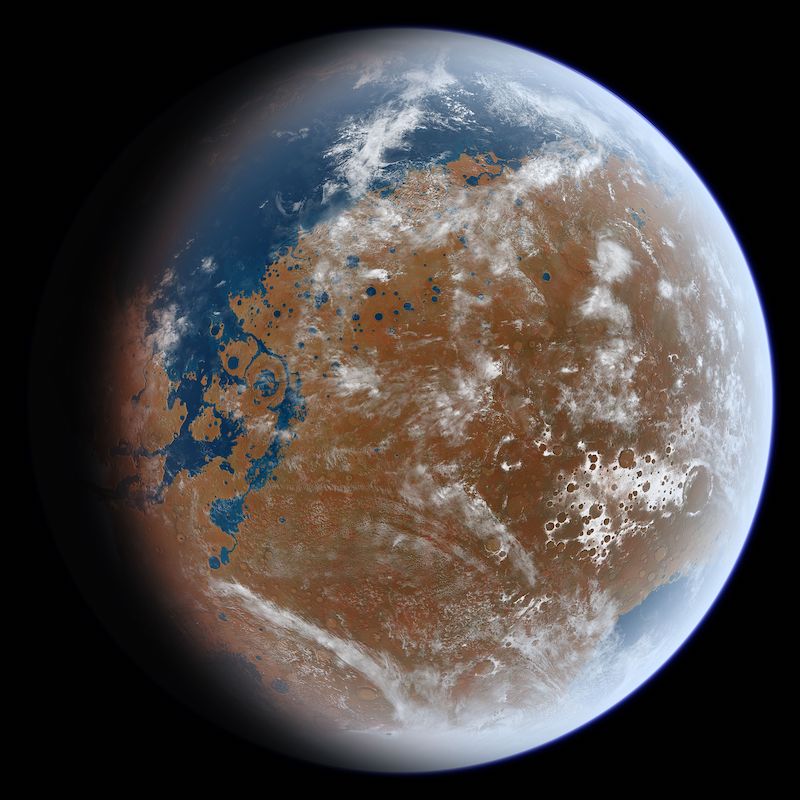
An artist’s impression of the Tanis river site in North Dakota moments after the asteroid strike that doomed the dinosaurs to extinction 66 million years ago.


Picture a calm spring day 66 million years ago in what’s now North Dakota. Perhaps a Triceratops was lying in the sun, while in the river freshwater paddlefish, mouths gaping, were foraging plankton.

Seconds later, a 10-meter-high (33-foot-high) wall of water rushes in from the east and then spheres of glass start to rain down from the sky — some of them still on fire as they hit the river.
These could have been the very last moments of the dinosaur era, which came to a cataclysmic end when a city-size asteroid struck the shallow ocean off Mexico’s Yucatan Peninsula, killing off three quarters of all species on Earth. According to a new study of fossilized fish that were found at North Dakota’s Tanis fossil site and perished as a result of the devastating impact, the asteroid hit in springtime.


Read the entire article posted February 23, 2022 at cnn.com.


link submitted by Gene Savoy Jr.


A giant gamma-ray burst from the infant universe


Gamma-ray bursts are the most powerful explosions in the universe. We can’t see them with the eye alone, but if we could, we might see them popping off every now and then in our night sky. And they’re not nearby. Most originate in distant galaxies. Yet, they release such incredible amounts of light and energy that they can be seen far across vast distances. In September 2022, an international team of researchers said they’ve detected a gamma ray burst that left its source when the universe was in its infancy, at only 880 million years old.

The scientists, led by Andrea Rossi at the Italian National Institute of Astrophysics (INAF), published their peer-reviewed paper in Astronomy & Astrophysics on September 21, 2022.


Read the entire article posted here.


link submitted by Gene Savoy Jr.


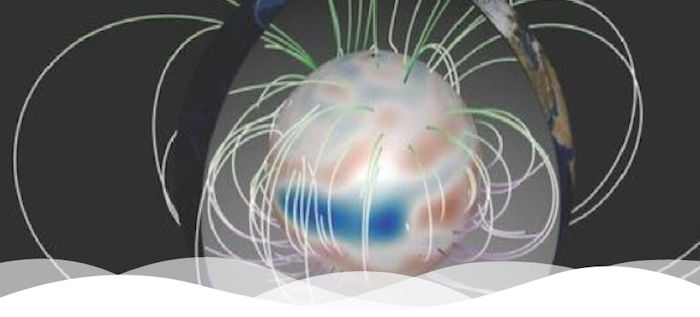
“Why are there continent-sized ‘blobs’ in the deep Earth?”


The giant Earth blobs baffling scientists


They’re among the largest physical structures on the planet – and they’re a total mystery.

In a strange corner of our solar system live two alien blobs.

With sprawling, amorphous bodies the size of continents, these oddities are thought to spend their time lying in wait for their food to rain down upon them – then simply absorbing it.

But their natural habitat is, if anything, even more unusual than their diet. It could be described as “rocky” – all around, there are exotic minerals in unknown shades and forms. Otherwise it’s fairly barren, except for a glittering sea in the far distance – one so large, it holds as much water as all of Earth’s oceans put together.

Every day the “weather” is the same: a balmy 1827C (3321F), with some areas of high pressure – equivalent to around 1.3 million times the amount at the Earth’s surface. In this crushing environment, atoms become warped and even the most familiar materials start to behave in eccentric ways – rock is flexible like plastic, while oxygen acts like a metal.

But this blistering wonderland is no extra-terrestrial planet – and the blobs aren’t strictly wildlife. It is, in fact, the Earth itself – just very, very deep underground.


Read the entire article online at bbc.com.


link submitted by Gene Savoy Jr.


“Hubble identifies unusual wrinkle in expansion rate of the universe”


PHOTO CREDIT: Wonders of the Universe


Measuring the expansion rate of the universe was one of the Hubble Space Telescope’s main goals when it was launched in 1990.

Over the past 30 years, the space observatory has helped scientists discover and refine that accelerating rate — as well as uncover a mysterious wrinkle that only brand-new physics may solve.

Hubble has observed more than 40 galaxies that include pulsating stars as well as exploding stars called supernovae to measure even greater cosmic distances. Both of these phenomena help astronomers to mark astronomical distances like mile markers, which have pointed to the expansion rate.

In the quest to understand how quickly our universe expands, astronomers already made one unexpected discovery in 1998: “dark energy.” This phenomenon acts as a mysterious repulsive force that accelerates the expansion rate.

And there is another twist: an unexplained difference between the expansion rate of the local universe versus that of the distant universe right after the big bang.
Scientists don’t understand the discrepancy, but acknowledge that it’s weird and could require new physics.


Read the entire article posted May 29, 2022 online at cnn.com.


link submitted by Gene Savoy Jr.


“Buddy James: Geometry of the Electric Universe | Thunderbolts”


Inside every significant philosopher, astronomer or scientist is a geometer trying to get out. First principles of geometry taught atomic material is formed out of nested platonic solid spinning and that the spiral is a core structure. Witness the whirlpool—part of worldwide folklore and symbol for origins of life and energy.

For example, we observe octaves, as well as harmonies of sound abiding scalar laws. Wave nested within wave behavior is called a Dougherty set. In a universe of electromagnetic induction, could the Dougherty set be a master key to the EU Model?

Cartographer, Interdisciplinary Geometer, and EU advocate Buddy James presents a primer on how geometry is embedded within the EU Model of Cosmology.


Watch the video at youtube.com. (14:43)


link submitted by Robert Petrovich


“Gareth Samuel: Milky Way’s Plasma Bubble Network | Thunderbolts”


Our Sun sits in the middle of an enormous void called the local bubble containing million degree, ionized hydrogen gas, surrounded by a wall of colder denser neutral gas. Mainstream astronomers keep describing it as neutral gas deficient rather than simply stating that it is highly ionized.

Galaxies are composed of a network of filaments that carry slow moving ions which form magnetic fields holding the structure together. Hannes Alfvén pointed out these structures are capable of transferring energy over vast distances and dissipating the energy across a double layer with a voltage drop.

Gareth Samuel, EU advocate and creator of “See the Pattern”, identifies and explains the Milky Way’s plasma bubble network in our local galactic neighborhood.


Watch the video at youtube.com. (10:13)


link submitted by Robert Petrovich


“Huge Sunspot Pointed Straight at Earth Has Developed a Delta Magnetic Field”


A massive sunspot may be set to erupt, unleashing the most intense form of solar flares that may last for days.

Sunspot AR3089, which is facing Earth, has now acquired a delta-class magnetic field, indicating that it has accumulated enough energy to produce X-class solar flares.

According to the National Oceanic and Atmospheric Administration (NOAA), the sunspot has a 5% chance of producing an X-class outburst. If that happens, the flare might cause a severe geomagnetic storm in the Earth’s atmosphere, causing damage to infrastructure and electromagnetic communication systems.


Read the entire article here.


link submitted by Harold Boulette


“Bottling the Sun”


ITER’s fusion energy experiments will take place inside the vacuum vessel of a donut-shaped machine called a tokamak.


The world has been trying to master this limitless clean energy source since the 1930s. We’re now closer than ever.

Saint-Paul-lez-Durance, France — From a small hill in the southern French region of Provence, you can see two suns. One has been blazing for four-and-a-half billion years and is setting. The other is being built by thousands of human minds and hands, and is — far more slowly — rising. The last of the real sun’s evening rays cast a magical glow over the other — an enormous construction site that could solve the biggest existential crisis in human history.

It is here, in the tiny commune of Saint-Paul-lez-Durance, that 35 countries have come together to try and master nuclear fusion, a process that occurs naturally in the sun — and all stars — but is painfully difficult to replicate on Earth.

Fusion promises a virtually limitless form of energy that, unlike fossil fuels, emits zero greenhouse gases and, unlike the nuclear fission power used today, produces no long-life radioactive waste.

Mastering it could literally save humanity from climate change, a crisis of our own making.


Read the entire article posted May 30, 2022 online at cnn.com.


link submitted by Gene Savoy Jr.