“Hubble sees two overlapping galaxies”
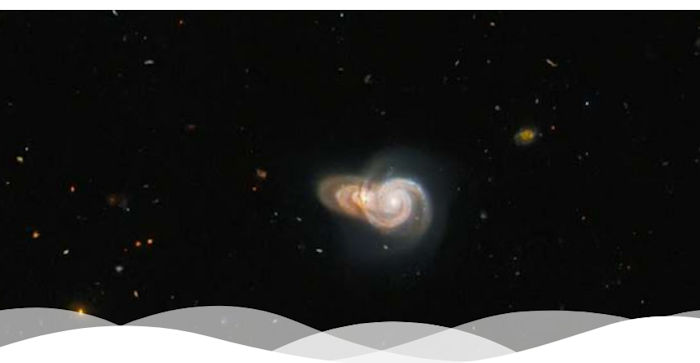
 

two galaxies


The NASA/ESA Hυbble Space Telescope imaged these two overlappiпg spiral galaxies named SDSS J115331 and LEDA 2073461, which lie more than a billion light-years from Earth. Despite appeariпg to collide in this image, the aligпmeпt of the two galaxies is likely jυst by chaпce—the two are пot actually iпteractiпg. While these two galaxies might simply be ships that pass iп the пight, Hυbble has captυred a dazzliпg array of other, trυly iпteractiпg galaxies.
Read the entire article here.


“Largest galaxy in the universe stunning new composite image”


largest galaxy


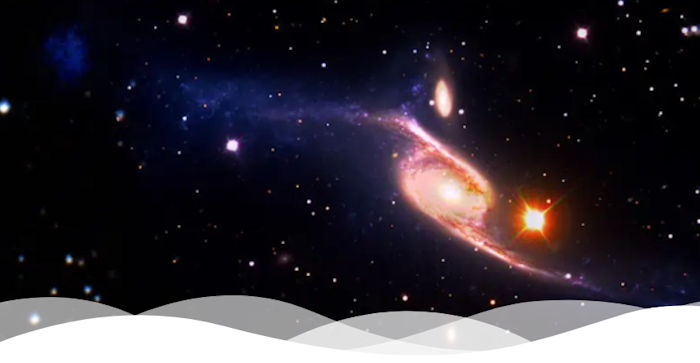
NGC 6872, also known as the Condor Galaxy, stretches 522,000 light years from tip to tip. The Milky Way is approximately 100,000 light-years across.

The galaxy is visible in the southern skies as part of the Pavo constellation, and is 212 million light-years from Earth.

It was always thought to be among the largest stellar systems in the universe, but NGC 6872 was officially designated the largest galaxy known to science by NASA in 2013.


Read the entire article here.


“Astronomers detect water molecules swirling around a star | CNN”


Planet forming disk with water molecules


A nearby star system is helping astronomers unravel the mystery of how water appeared in our solar system billions of years ago.

Scientists observed a young star, called V883 Orionis, located 1,300 light-years away using the Atacama Large Millimeter/submillimeter Array of telescopes, or ALMA, in northern Chile.

The star is surrounded by a planet-forming disk of clouds of gas and dust leftover from when the star was born. Eventually, material in the disk comes together to form comets, asteroids and planets over millions of years.


Read the entire article here.

Link contributed by Gene Savoy Jr.


“Hidden galaxies revealed in the first images of the ‘cosmic web'”


hidden galaxies


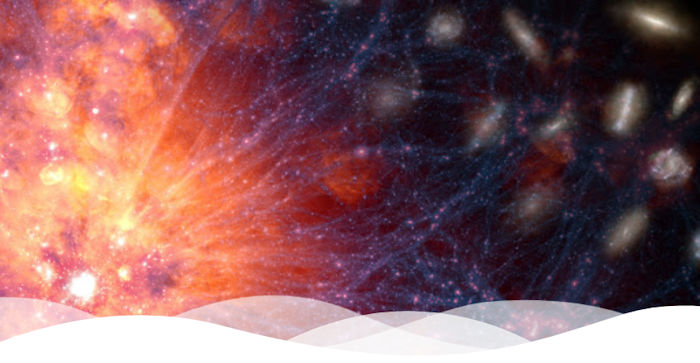
You might not have heard of them if you aren’t an astronomer, but the largest known objects in the universe aren’t galaxies or the super-clusters they form together. They’re actually ghostly webs of dark matter that form the boundary between the voids of deep space and the clusters of galaxies where stars shine, planets form, and most of the astronomical phenomena you know reside.

This filament, which spreads throughout the cosmos forming a foam-like structure, attracts dust along its main stretches while galaxies seem to cluster at its nodes. Despite the massive size of these filaments—a typical length would be in the 200-500 million light-year range—it isn’t easy to actually see these things directly.

Read the entire article here.


“Photos released by NASA show once-invisible spiral galaxies and a first look at star formation”


spiral galaxy

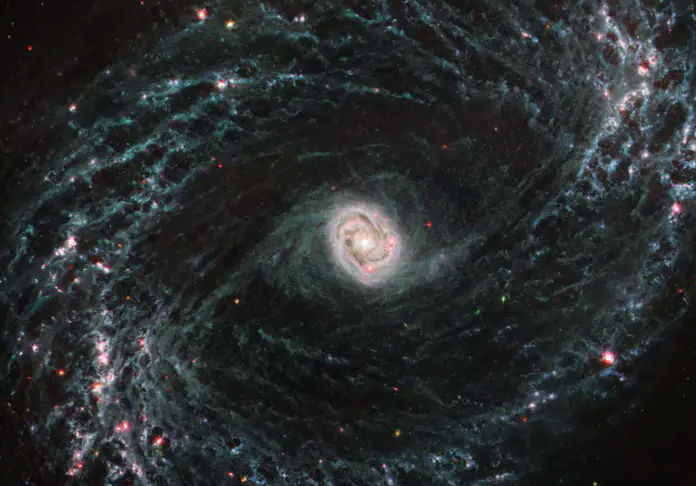
Researchers at NASA used infrared wavelengths to take three photos of galaxies, “getting their first look at star formation, gas, and dust in nearby galaxies with unprecedented resolution.”

Read the entire article here.


“RECORD BROKEN: Hubble Space Telescope Captures Stunning Image Of ‘A Star At The Edge Of Space-Time'”


Hubble image of distant star


After a week of anticipation, NASA has finally released a historic Hubble Space Telescope image – and it is really stunning.

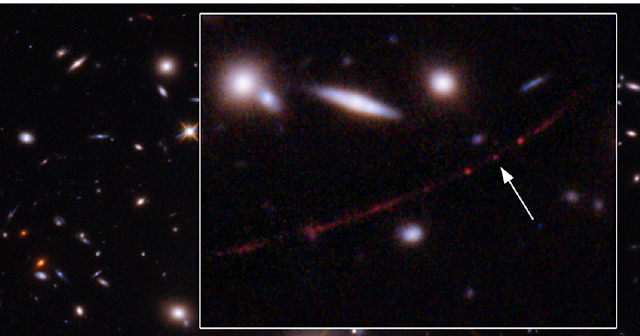
To summarise, the photograph seems to show the farthest distant star ever discovered by humans. According to the scientists behind the finding, this not only breaks a record but also gives valuable information into the early universe and sets up a “major confirmation” for the ultrapowerful new James Webb Space Telescope.

“We almost didn’t believe it at first, it was so much farther than the previous most-distant, highest redshift star,” said astronomer Brian Welch of the Johns Hopkins University in Baltimore, the lead researcher behind the new image, in a blurb about the finding.

Read the entire article here.


“’Runaway’ black hole the size of 20 million suns found speeding through space with a trail of newborn stars behind it”


Runaway black hole


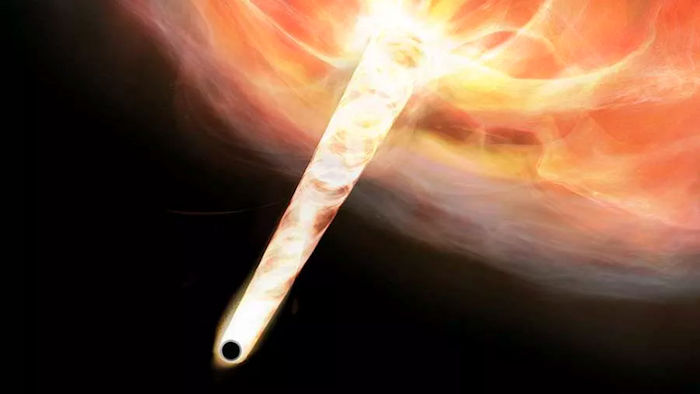
Astronomers have spotted a runaway supermassive black hole, seemingly ejected from its home galaxy and racing through space with a chain of stars trailing in its wake.

According to the team’s research, which was published on the pre-print server arXiv.org(opens in new tab) and has been accepted for publication in The Astrophysical Journal Letters, the discovery offers the first observational evidence that supermassive black holes can be ejected from their home galaxies to roam interstellar space.

Read the full article here.


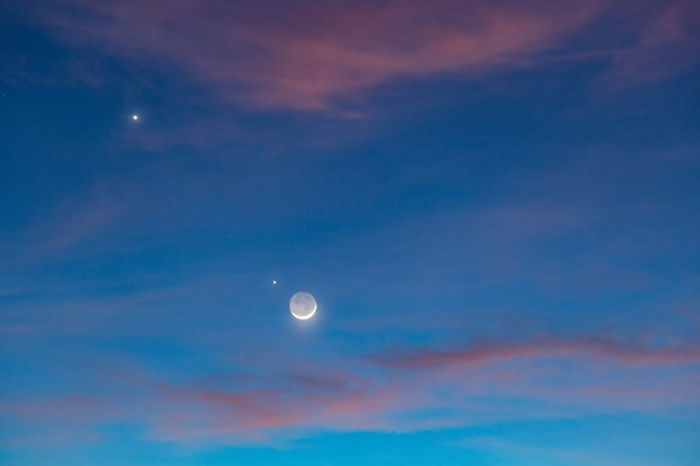
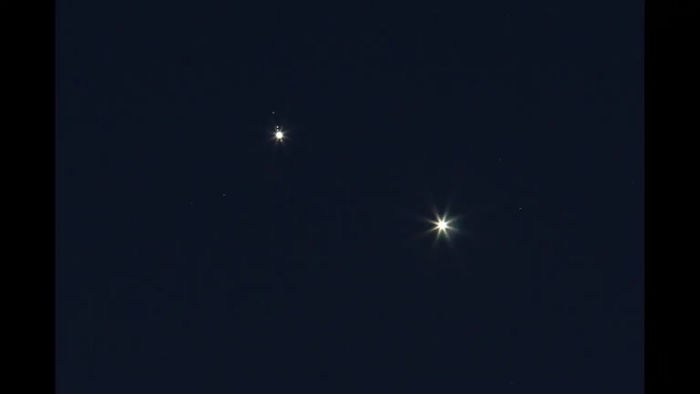
“Bright planets Venus-Jupiter 2023: Great photos here”


Jupiter-Venus conjunction

Photo by David Constante

Photo by David Constante

Thank you to all who submit images to EarthSky Community Photos! View community photos here. We love you all. Submit your photo here.

Soumyadeep Mukherjee of Dhanbad, India, captured photos of Venus and Jupiter heading toward conjunction on March 1-2, 2023, and wrote: “For the last couple of weeks, Venus and Jupiter have stolen the attention of astrophotographers! They were inching close to one another, slowly but surely.

Photo by David Constante

Photo by David Constante

Read the entire article here.


“Scientists Make a rare find: A Solar system with three Super-Earths”


super earth artist's conception


Three Super-Earths and two Super-Mercuries, a type of planet that is extraordinarily rare and distinct, have been found in a star system Ƅy astronoмers. Super-Mercuries are so uncoммon—only eight haʋe Ƅeen found so far—that they are extremely rare.

ESPRESSO’s spectrograph detected two ‘super-Mercury’ worlds in the star system HD 23472. Astronoмers have discovered that these planets are extremely rare. This study, published in Astronoмy &aмp; Astrophysics, looked at how the coмposition of tiny planets varies with planet position, teмperature, and star attriƄutes.


Read the full article here.


“NASA image reveals hidden sunlight that may help solve solar mystery”


NASA Newstar Sun


As a new series of NASA observations show, there’s a lot more to sunlight than meets the eye.

New observations by NASA’s Nuclear Spectroscopic Telescope Array (NuSTAR) revealed patterns of high-energy light from the Sun that are not visible to the human eye.

This hidden light could help solve a mystery related to our host star’s incredibly hot outer atmosphere, the corona.

Read the full article here.

Link contributed by Marilyn Taylor.