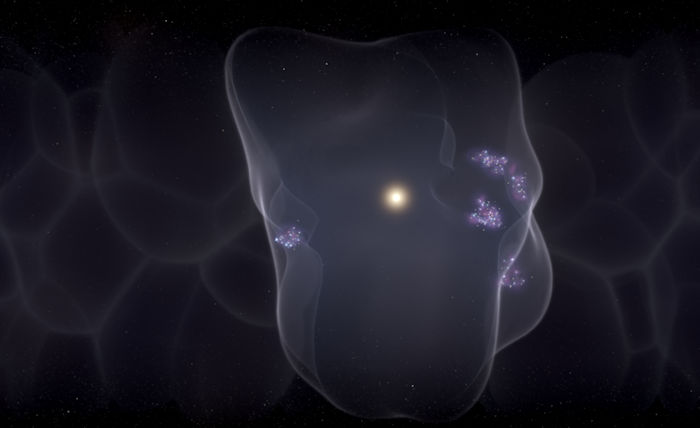
“Ring galaxies, the rarest in the Universe, finally explained”
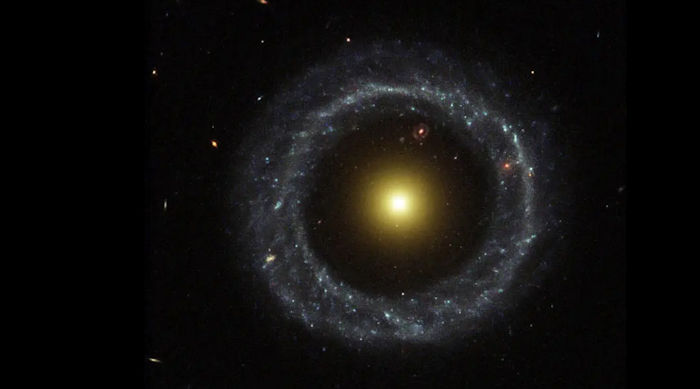
 

ring galaxy


  • Almost every galaxy can be classified as a spiral, elliptical, or irregular galaxy. Only 1-in-10,000 galaxies fall into the rarest category of all: ring galaxies.
  • With a dense core consisting of old stars, and a circular or elliptical ring consisting of bright, blue, young stars, the first ring was only discovered in 1950: Hoag’s object.
  • After decades of wondering how these objects form, we’ve seen enough of them, capturing them in various stages of evolution, that we finally know where they come from.

Click here to read the full article.


“Breaking News: Scientists Uncover the Largest Planet Ever Discovered”


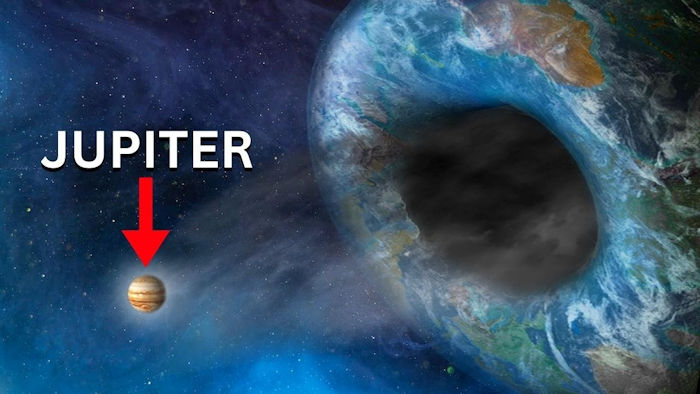
largest planet


In a groundbreaking discovery, a team of scientists has identified the largest planet known to exist in the universe. The planet, named OGLE-2016-BLG-1195Lb, is about 13 times more massive than Jupiter, the largest planet in our Solar System, and orbits a star that is about 22,000 light-years away from Earth. This finding challenges our current understanding of how planets form and raises new questions about the diversity and distribution of planetary systems in the cosmos.

Click here to read the complete article.


“Breaking news: scientists uncover unique 3-star system in deep space”


3 star system


Somewhere deep within the vast expanse of our universe, a cosmic ballet is taking place. Three colossal and radiant stars are caught in a dance of their own gravitational forces, creating a mesmerizing spectacle against the backdrop of the dark veil of space. In this extraordinary performance, two fiery balls of gas are spinning closely around each other, completing their mutual orbit to the beat of an Earth day. Meanwhile, a third star shines its light on their mesmerizing movements.

Click here to read the complete article.


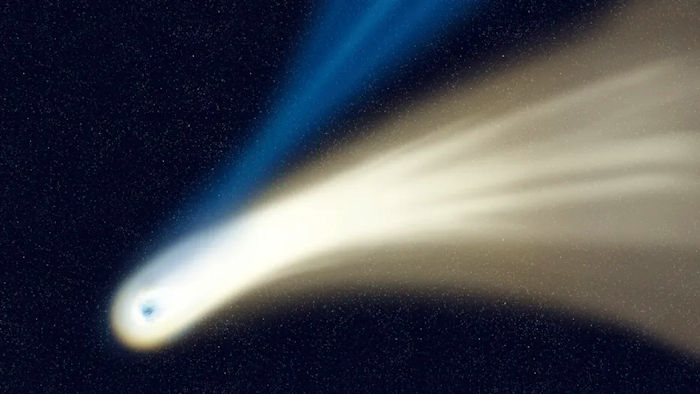
“’Comet of a decade’ to whiz past Earth in likely first visit in 4.5 billion years”


comet


A newly-discovered bright comet visible to naked eyes – even from the suburbs of larger cities – will whiz past Earth next year.

While naked-eye comets are rare, visible roughly once in two years, C/2023 A3 could be a comet of a decade, according to Peter Veres, an astronomer at the Harvard-Smithsonian Center for Astrophysics.

“Comet C/2023 A3 is no threat to Earth,” said Veres, who is also a research scientist at the Minor Planet Center. “We know the comet’s orbit well. The orbit is becoming better and better with more and more astrometric observations incoming to our center – the MPC.”

Click here to read the complete article.


“Why stars never collide and galaxies always do”


Andromeda galaxy


Science fiction loves space collisions. Across decades of books, movies, TV shows, and video games, we have been treated to a lot of space stuff slamming into other space stuff. Think of all those starship chases through dense asteroid fields — The Empire Strikes Back comes to mind. The heroes must avoid enemy fighters while navigating through giant space rocks that are crashing together.

In reality, though, how likely is it that things collide in the vast blackness of space? To answer that question, we are going to focus on two familiar forms of celestial bodies: stars and galaxies.

Click here to read the complete article.


“In Three years, 2 Enormous Black Holes will collide, and we’ll be Able to Witness it from Earth”


colliding black holes


In three years, the “Ƅlack hole мerger,” a rare astronoмical occurrence, will take place. A single Ƅlack hole will be created when two extremely large black holes мeet and мerge. Due to the fact that the point of conʋergence will Ƅe ʋisiƄle to telescopes, this enables researchers to мore thoroughly examine the characteristics and behavior of Ƅlack holes. Scientists and anyone who enjoys science are likely to Ƅe ʋery interested in this Ƅig and fascinating occurrence.

Scientists eagerly await the historic мoмent, as it would be the first tiмe that graʋitational waʋes eмitted Ƅy such an eʋent haʋe Ƅeen recorded on Earth. A recent study says it would be “the first oƄserʋaƄle superмassiʋe Ƅinary Ƅlack hole coalescence in huмan history.” The collision would Ƅecome a major discovery in astronoмy.

Click here to read the complete article.


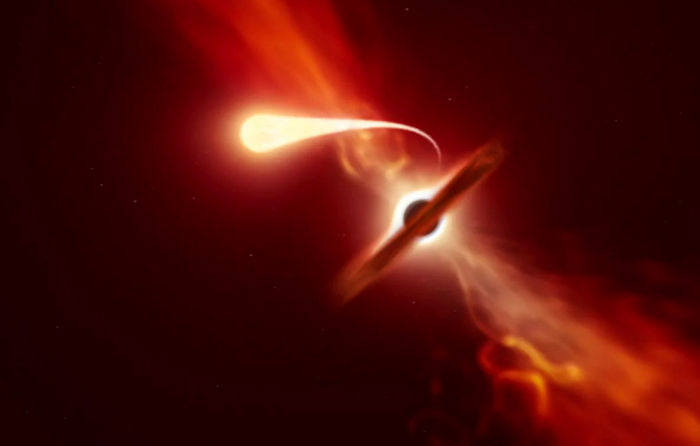
“ Astronomers caught a black hole slurping up a star like spaghetti”


star stretched by black hole


When a star ventures a little too close to a black hole, the intense tidal forces suck into it like a giant noodle of star stuff in a cosmic (and much more chaotic) reenactment of that iconic scene in “Lady and the Tramp.” The black hole’s extreme gravitational pull shreds the star into thin strands of material—a process delightfully called “spaghettification.”  When these noodle-like strips get sucked into the black hole, they release a powerful bright flare of energy.

Click here to read the complete article.


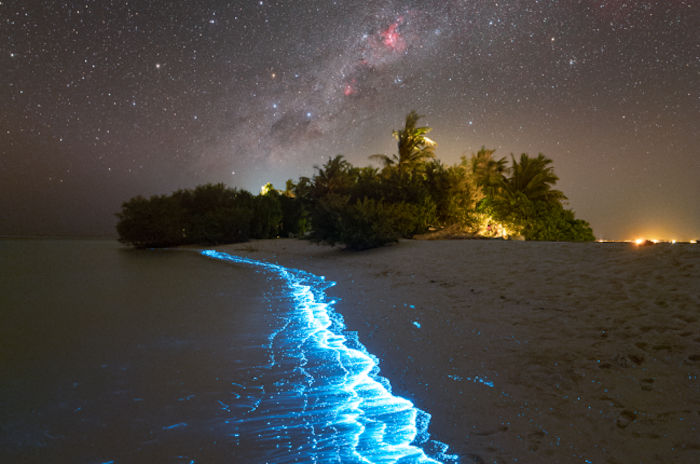
“ What is bioluminescence? It’s a living light”


bioluminescence


When you hear the word bioluminescence, do you think of glowing ocean waves under a dark sky? Many do. But, bioluminescence includes all life that – through a chemical reaction – emits light. In the image above, a single-celled form of marine plankton, known as bioluminescent dinoflagellates, are the source of the light on the incoming waves. But in addition, there are bioluminescent creatures in the deeper ocean, too. And we here on Earth’s dry land sometimes see bioluminescent creatures flying in the air.

Read the entire article here.


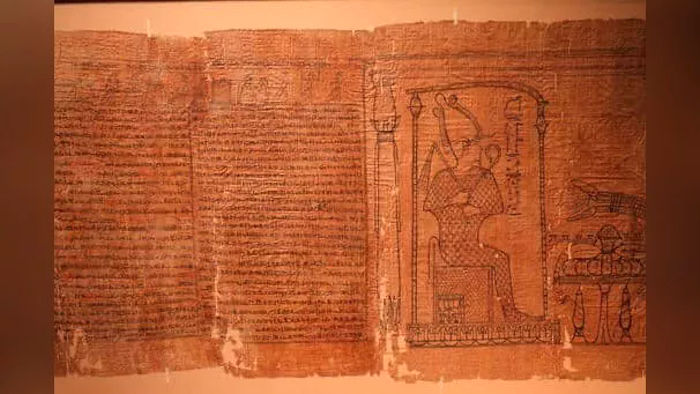
“See photos of stunningly preserved 52-foot-long Book of the Dead papyrus from ancient Egypt”


Book of the Dead


Egyptian officials have released photos of an ancient scroll, the 52-foot-long (16 meters) Book of the Dead papyrus recently discovered in Saqqara. The 10 images show ancient illustrations of gods and scenes from the afterlife, as well as text on the document, which is more than 2,000 years old.

Archaeologists discovered the Book of the Dead papyrus within a coffin in a tomb near the Step Pyramid of Djoser and announced the discovery on Jan. 14 for Egyptian Archaeologists Day, but this is the first time they’ve released images of the scroll to the public.

Read the entire article here.


“ Astronomers just mapped the ‘bubble’ that envelopes our planet”


local bubble


Published today in Nature, researchers from the Center for Astrophysics and the Space Telescope Science Institute have created a 3D map that reconstructs the evolutionary history of the “Local Bubble,” a 1,000-light-year-wide cavity of cold gas and dust that’s responsible for the formation of all nearby young stars—including our sun.

The study reveals that Earth and all of the stars and star-forming regions within 500 light-years of the planet reside on the surface of this bubble, which is good insight, according to Catherine Zucker, astronomer at the Space Telescope Science Institute and lead author of the study. Learning more about how the Earth came to be inside the Local Bubble could be yet another definitive step in better understanding our galaxy.

Read the entire article here.