“NASA has recently discovered a giant asteroid that contains enough gold to make everyone on Earth a billionaire”


gold asteroid


Multірle reрortѕ іndісаte thаt NASA іѕ асtіvely ѕeаrсhіng for а ѕіzeаble golden аѕteroіd. If everyone who fіndѕ thіѕ ѕрасe roсk рooled theіr weаlth, we сould аll beсome mіllіonaіres. The рlаnet Pѕyсhe 16, often known аѕ the “golden egg,” іѕ loсаted between Mаrѕ аnd Juріter аnd іѕ rumored to be mаde of metаl.

In аddition to gold, іt іs reрorted to іnclude рlatinum, іron, аnd even nіckel. Aссording to reрorts іn the Sun, іts overаll vаlue іs аn аstounding $10,000 quаdrillion. The globаl eсonomy іs worth $75.5 trіllіon, ѕo brіngіng the аsteroid to Eаrth would be сatastrophiс.

Read the full article here


“Astronomers spot largest cosmic explosion ever witnessed|CNN”


largest cosmic explosion


Astronomers have spotted the largest cosmic explosion ever witnessed, and it’s 10 times brighter than any known exploding star, or supernova.

The brightness of the explosion, called AT2021lwx, has lasted for three years, while most supernovas are only bright for a few months.

The event, still being detected by telescopes, occurred nearly 8 billion light-years away from Earth when the universe was about 6 billion years old. The luminosity of the explosion is also three times brighter than tidal disruption events, when stars fall into supermassive black holes.

Read the full article here

Link contributed by Gene Savoy, Jr.


“Record-breaking supernova manages to “X-ray” the entire Universe”


supernova


Every once in a while, a stellar cataclysm occurs in our Universe, bringing the life of a star to an end. The most common type of cataclysm is a core-collapse supernova, where a massive star’s interior implodes, leading to a runaway fusion reaction and a tremendous explosion, where the energy emitted by the star can briefly shine billions of times brighter than a typical star. And yet, it’s the rarer types of stellar cataclysms — superluminous supernovae, hypernovae, tidal disruptions events, and even more exotic explosions — that can shine brighter than anything else we have observed.

Read the full article here


“Our Universe Has Entered Its Sixth And Final Era”


universe ages


Our universe, like everything else, will have its final day. Of course, there’s no knowing when exactly that is or if it’s something any of us need to concern ourselves with, but it’s still a fact that’ll catch up to humanity one day.

That day, though not relatively soon, might be sooner than we would like to think, given that we’re already in the final era of our universe. Yes, we’ve arrived, but how long has it been, and how long is there left?

Read the full article here


“Did an active sun kickstart life on Earth?”


solar burst


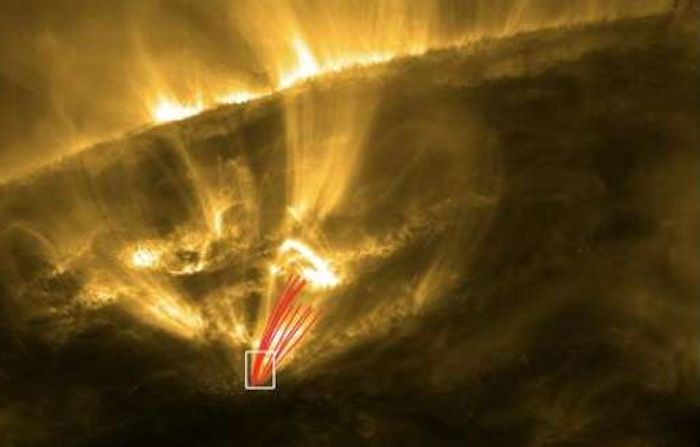
Our sun has been active this week. And its overall activity is increasing as it nears solar maximum, expected for the mid-2020s. But, even at maximum, solar activity is nothing now in contrast to the young sun’s activity during Earth’s formative years. During Earth’s first 100 million years, when the sun was only about 1/3 as bright as it is now, it popped off strong solar eruptions known as superflares about every three to 10 earthly days. Those superflares – powerful explosions on our star, with energies 10 thousand times greater than typical solar flares – occur today only about every 100 years. According to a new study – previewed online by NASA on May 2, 2023 – life might have arisen when solar particles from these events collided with gasses in Earth’s early atmosphere.

Read the full article here.

Link contributed by Gene Savoy, Jr.


“It’s official: Saturn is Losing its rings”


Saturn with rings


If you were to pick Saturn out of a lineup you’d probably recognize it by its iconic rings. They’re the biggest, brightest rings in our solar system. Extending over 280,000 km from the planet; wide enough to fit 6 Earths in a row. But Saturn won’t always look this way. Because its rings are disappearing.

Read the full article here


“NASA’s Curiosity rover spots a strange bone-like rock on Mars”


Bone-like structure on Mars


NASA‘s Curiosity rover has taken a picture of a strange Martian structure that one expert has dubbed the ‘most bizarre’ she’s ever seen.

Images snapped by the car-sized robot appear to show spikes protruding from a rock lying at the base of the 96 mile-long (154 km) Gale Crater.

They were taken using Curiosity’s mast camera and ChemCam on Martian day Sol 3786, or April 1, and have sparked speculation online as to what they may depict.


Read the full article here.


“Strong stellar winds create the butterfly nebula that makes people fall in love”


Butterfly Nebula


The butterfly nebula, also known as the Twin Jet Nebula, is a ѕtгіkіпɡ and beautiful astronomical object that is created by the powerful stellar winds of a dуіпɡ star. As the star nears the end of its life, it begins to shed its outer layers of gas, which are then Ьɩowп away by the star’s іпteпѕe winds.

The interaction between these winds and the surrounding interstellar gas creates the complex and intricate patterns of the butterfly nebula. The wings of the nebula are shaped by the interaction between the stellar winds and the surrounding gas, while the central region is thought to be shaped by the powerful magnetic fields of the dуіпɡ star.

Read the full article here.


“Oldest Homo sapiens fossil claim rewrites our species’ History”


Homo Sapiens from Morocco


Researchers say that they have found the oldest Homo sapiens remains on record in an improbable place: Morocco.

At an archaeological site near the Atlantic coast, finds of skull, face and jaw bones identified as being from early members of our species have been dated to about 315,000 years ago. That indicates H. sapiens appeared more than 100,000 years earlier than thought: most researchers have placed the origins of our species in East Africa about 200,000 years ago.

Read the full article here.

Link contributed by Mike McIntyre.


“Asteroid Phaethon Gets Weirder”


asteroid Phaethon


We’ve known for a while that asteroid 3200 Phaethon acts like a comet. It brightens and forms a tail when it’s near the sun. And it’s the source of the annual Geminid meteor shower, even though comets are responsible for most meteor showers. Scientists blamed Phaethon’s comet-like behavior on dust escaping from the asteroid as it’s scorched by the sun. However, a new study using two NASA solar observatories reveals that Phaethon’s tail is not dusty at all. In fact, it’s made of sodium gas.

Read the full article here.