“Webb telescope captures image of most distant star ever seen | CNN”


Earendal most distant star


Astronomers have used the James Webb Space Telescope to observe Earendel, the most distant star ever detected.

Earendel is so distant that the starlight glimpsed by the Webb telescope was emitted within the first billion years of the universe. The universe is estimated to be about 13.8 billion years old.

Previous estimates suggest the star is 12.9 billion light-years away from Earth, but given the expansion of the universe and how long the light has traveled to reach us, astronomers believe Earendel is currently 28 billion light-years away.

Read the complete story here.

Link contributed by Gene Savoy, Jr.


“NASA telescope spots cosmic question mark in deep space | CNN”


cosmic question mark


A cosmic object in the shape of a glowing question mark has photobombed one of the latest images captured by NASA’s James Webb Space Telescope — and scientists think they know what it might be.

The original near-infrared image, released July 26, depicted a pair of young stars named Herbig-Haro 46/47. Found 1,470 light-years away in the Vela constellation within the Milky Way galaxy, the stars are still actively forming and closely orbiting each other.

Read the complete story here.

Link contributed by Gene Savoy, Jr.


“Where Did It All Come From?”


big bang

Why are we here? Where did it all come from ― the laws of nature, the stars, the universe? Humans have been asking these questions forever, but science hasn’t succeeded in providing many answers — until now.

As a young boy I found myself playing on the center of God’s stage; from some hidden celestial vantage point, so I thought, I was being scrutinized and watched by the Supreme Creator, perhaps almost as narrowly as I, as a medical student with a microscope, would one day scrutinize the cells growing in a petri dish. If, indeed, God had made the world, then who made God?

Click here to read the full article.


“Mysterious waves of magnetism may explain why the sun’s atmosphere is hotter than physicists thought possible”


magnetic sun


High-frequency magnetic waves surging through the sun may explain why the temperature of our star’s atmosphere is 200 times hotter than its surface.

The temperature of the upper atmosphere of the sun, called the corona, can soar to over 2 million degrees Fahrenheit (1.1 million degrees Celsius), while 1,000 miles (1,600 kilometers) closer to the core, the photosphere  —  the sun’s visible surface  —  simmers at a relatively chilled 10,000 F (5,500 C).

Read the complete story here.


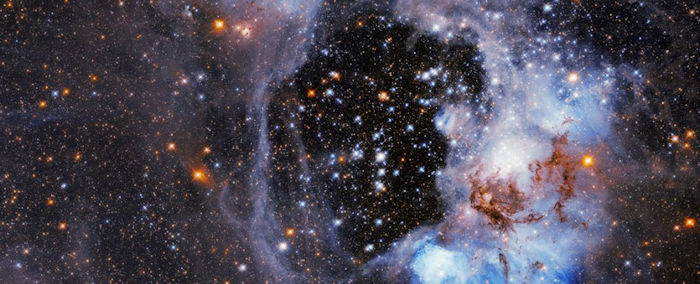
“Webb telescope captures iconic Ring Nebula in unprecedented detail | CNN”


ring nebula

Astronomers have used the James Webb Space Telescope for a fresh perspective of an iconic celestial favorite called the Ring Nebula.

The new image captures never-before-seen details within the colorful nebula, located in the Lyra constellation about 2,600 light-years from Earth.

The structure of the Ring Nebula can be glimpsed through amateur telescopes and has been observed and studied for years.

Click here to read the full article.

Link contributed by Gene Savoy, Jr.


“Scientists Detect Highest-Energy Light Ever Seen From The Sun”


Strongest sun light energy

The most energetic light ever seen emanating from the Sun has just been detected, creating a new puzzle for solar physicists to solve.

A 6-year observing campaign by more than 30 institutions across North America, Europe, and Asia has resulted in the first ever detection of solar gamma radiation in the teraelectronvolt (TeV) range.

Click here to read the full article.


“New Clues on the Source of the Universe’s Magnetic Fields”


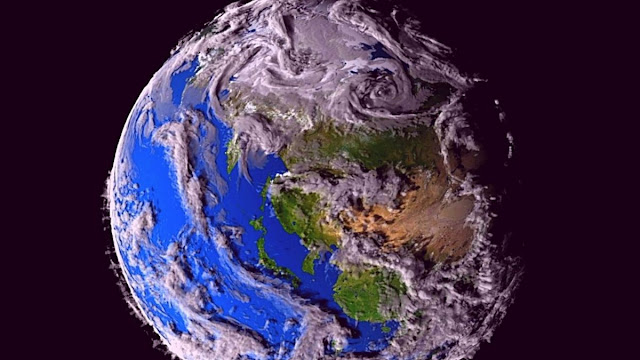
magnetic field of a galaxy

It isn’t just your refrigerator that has magnets on it. The earth, the stars, galaxies, and the space between galaxies are all magnetized, too. The more places scientists have looked for magnetic fields across the universe, the more they’ve found them. But the question of why that is the case and where those magnetic fields originate from has remained a mystery and a subject of ongoing scientific inquiry.

Click here to read the full article.


“Uncovering a lost Maya city in the jungle”


Lidar mapping

The first time I watched “Raiders of the Lost Ark” as a kid, it inspired me to explore the little forest behind my house.

Armed with a walking stick and a shovel in my best impersonation of Indiana Jones, I maneuvered through thick clusters of trees, my feet slipping on the waxy leaves from a massive magnolia.

I scanned the ground, thinking any minute I would spy some rock sticking up that had been used to build a long-forgotten city that held buried treasure.

When no discovery emerged, I remember thinking there must be a more efficient way to investigate the past.

Click here to read the full article.

Link contributed by Gene Savoy, Jr.


“Hubble telescope sees an angry star and an evaporating planet”


star consuming planet

Just about 32 light-years from our solar system (which is incredibly close, cosmically speaking) an angry red dwarf star named AU Microscopii is absolutely tormenting one of its very own planets, AU Microscopii b. Piece by piece, the stellar beast seems to be eviscerating the world’s atmosphere with its high-energy radiation. It’s quite chaotic over there, to say the least.

Click here to read the full article.


“Dust clumps around a young star could one day form planets”


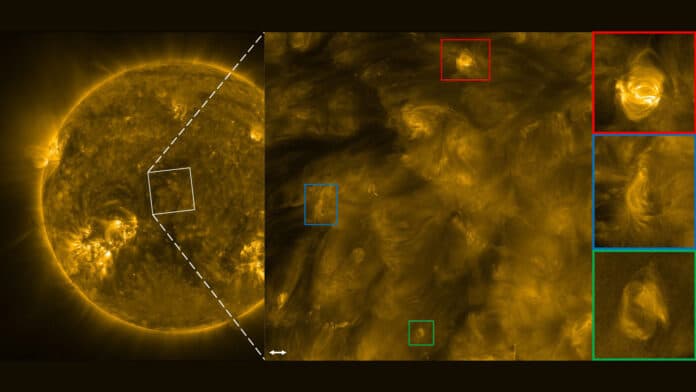
young star in dust cloud

A stellar new image from the European Southern Observatory (ESO) is offering up some clues about how planets as enormous as the gas giant Jupiter could form. Researchers used the ESO’s Very Large Telescope (VLT) and an international astronomy facility called Atacama Large Millimeter/submillimeter Array (ALMA) to detect large dusty clumps located close to a young star. The clumps may collapse and one day create planets. The findings were published July 25 in the The Astrophysical Journal Letters.

Click here to read the full article.