“The Running Chicken Nebula shimmers in new ESO image”


running chicken nebula


A nebula can look like a lot of different animals—a crab, tarantula, seagull, a cat’s eye, and even a chicken on the run. The European Southern Observatory’s VLT Survey Telescope in Chile took a new 1.5-billion-pixel image of IC 2944 aka the Running Chicken Nebula. It is located roughly 6,500 light-years away from Earth in the constellation Centaurus and this new image shows the nebula in new detail.

Click here to read the full article.


“James Webb telescope reveals ‘nursery’ of 500,000 stars in the chaotic heart of the Milky Way”


A dazzling new James Webb telescope image of the region near the Milky Way’s central black hole reveals thousands of newborn stars among the “most extreme cosmic environment” in the galaxy.

The subject, Sagittarius C, is an active star-forming region about 300 light-years from our galaxy’s central supermassive black hole, known as Sagittarius A*. The reddish-orange area of the image is a cluster of protostars, while the cyan area is a previously unseen region of ionized hydrogen gas containing needle-like structures that astronomers don’t fully understand.

Click here to read the full article.


“Distant stars spotted for the first time in the vast Magellanic Stream”


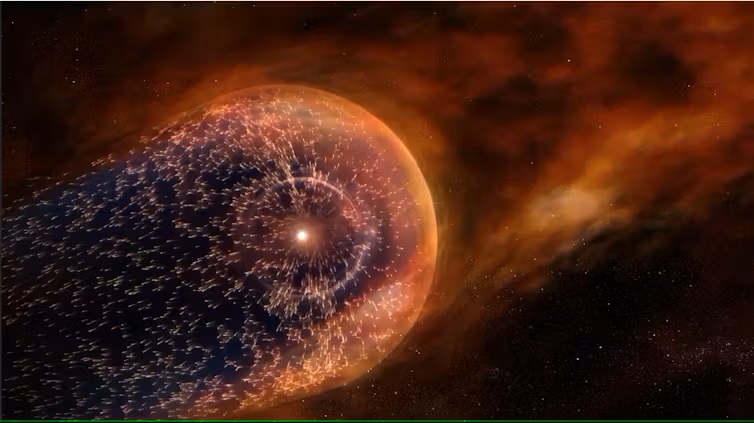
For nearly fifty years, astronomers have come up empty-handed in their search for stars within the sprawling structure known as the Magellanic Stream. A colossal ribbon of gas, the Magellanic Stream spans nearly 300 moon diameters across the Southern Hemisphere’s sky, trailing behind the Magellanic Cloud galaxies, two of our Milky Way galaxy’s closest cosmic neighbors.

Now, the star search is finally over.

Click here to read the full article.
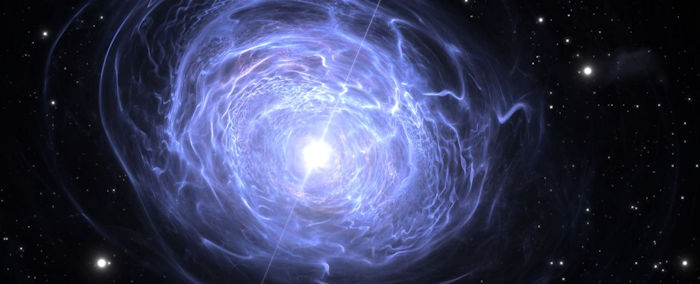


“Scientists detect a cosmic ray that’s almost as powerful as the ‘Oh-My-God’ particle | CNN”


cosmic rays


Space scientists seeking to understand the enigmatic origins of powerful cosmic rays have detected an extremely rare, ultra-high-energy particle that they believe traveled to Earth from beyond the Milky Way galaxy.

The energy of this subatomic particle, invisible to the naked eye, is equivalent to dropping a brick on your toe from waist height, according to the authors of new research published Thursday in the journal Science. It rivals the single most energetic cosmic ray ever observed, the “Oh-My-God” particle that was detected in 1991, the study found.

Click here to read the full article.
Link contributed by Gene Savoy, Jr.


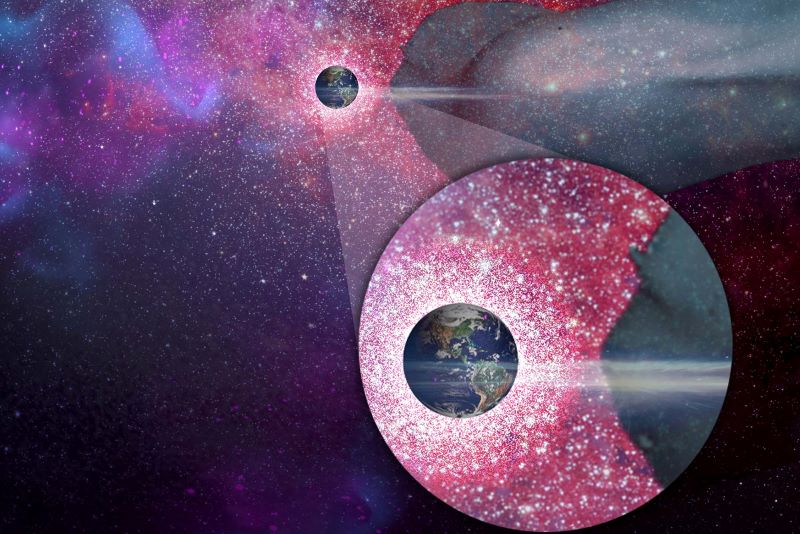
“Our galaxy’s black hole spins fast and drags space-time with it, scientists say | CNN”


black hole


The supermassive black hole at the center of our galaxy, Sagittarius A*, is spinning rapidly and altering space-time around it, a new study has found.

Space-time is the four-dimensional continuum that describes how we see space, fusing one-dimensional time and three-dimensional space together to represent the space fabric that curves in response to massive celestial bodies.

A team of physicists observed the black hole, which is located 26,000 light-years from Earth, with NASA’s Chandra X-ray Observatory, a telescope designed to detect the X-ray emissions from hot regions of the universe.

Click here to read the full article.
Link contributed by Gene Savoy, Jr.


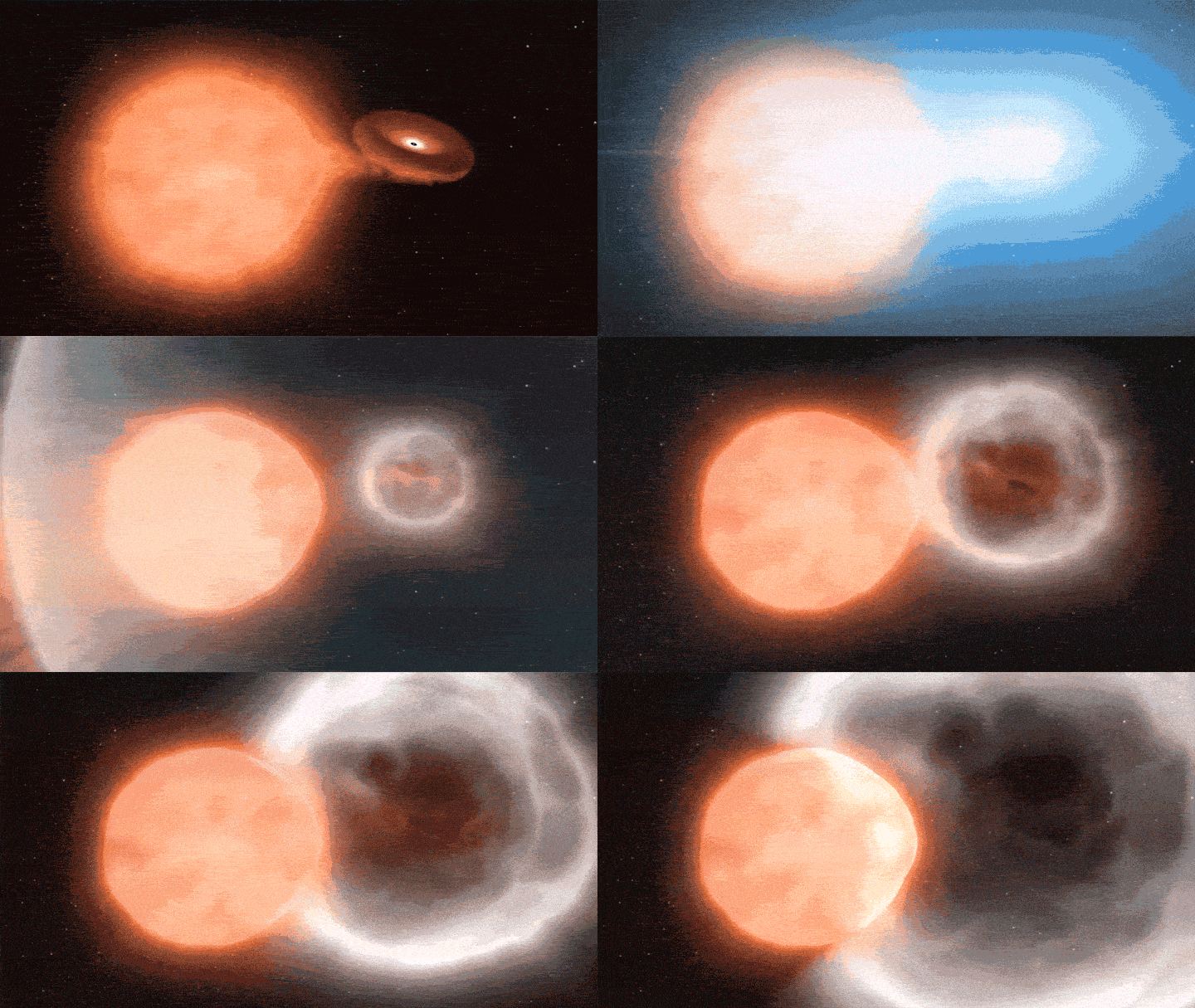
“ ‘Peculiar’ aurora-like radio signal from sunspot discovered for the 1st time”


sunspot radio emissions


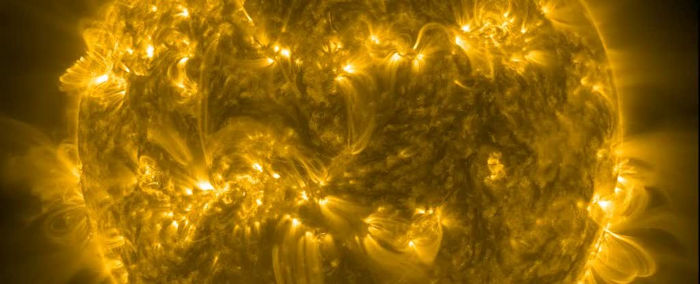
Solar scientists have observed a stunning display of radio waves over a sunspot, and these emissions strikingly resemble auroral displays on Earth known as the Northern Lights.

Happening around 25,000 miles (40,000 kilometers) over a dark, relatively cool patch of the sun, these “auroral” radio emissions could not only shine a light on the dynamics of intense solar radio bursts, but also on large starspots beyond our solar system.

Click here to read the full article.
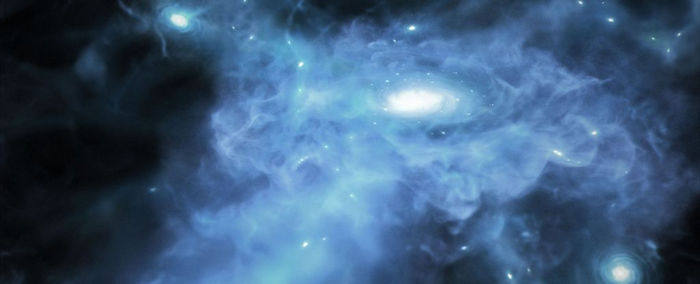


“1st science images from Euclid! Dr. Becky explains why we love them”


Perseus cluster of galaxies


The Euclid – launched this past July – is a cosmology survey mission, optimized to determine the properties of dark energy and dark matter on universal scales. And Dr. Becky – above – does a great job explaining what’s cool about Euclid’s first images, released this week. Plus, if you want more, the European Space Agency published the original article below on November 7, 2023. Edits by EarthSky.

On November 7, 2023, ESA’s Euclid space mission revealed its first full-color images of the cosmos. Never before has a telescope been able to create such razor-sharp astronomical images across such a large patch of the sky, and looking so far into the distant universe. These five images illustrate Euclid’s full potential.

Click here to read the full article.


“The universe is expanding faster than theory predicts”


Astronomers have known for decades that the universe is expanding. When they use telescopes to observe faraway galaxies, they see that these galaxies are moving away from Earth.

To astronomers, the wavelength of light a galaxy emits is longer the faster the galaxy is moving away from us. The farther away the galaxy is, the more its light has shifted toward the longer wavelengths on the red side of the spectrum. Thus, the higher the redshift.

Click here to read the full article.


“Milky Way’s hidden supernova revealed by JWST”


Supernova


  • Although the last time a human saw a star in the Milky Way go supernova with their own eyes was 1604, that wasn’t the most recent one at all. It was simply the last one whose light wasn’t blocked.
  • In 1667, a core-collapse supernova occurred in the constellation of Cassiopeia, but no one knew about it for hundreds of years, until its remnant was discovered with much more modern technology.
  • Now, for the first time, JWST has viewed the remnant of this supernova, known as Cassiopeia A. Not only are the images breathtaking, but there’s a tremendous amount of new science inside them.

Click here to read the full article.


“Astronomers have directly detected a massive exoplanet — and the method could transform the search for life”


massive exoplanet


Finding life on other planets might well be the holy grail of astronomy, but the hunt for suitable host planets that can sustain life is a resource-intensive task.

The search for exoplanets (planets outside our solar system) involves competing for time on Earth’s biggest telescopes — yet the hit rate of this search can be disappointingly low.

Click here to read the full article.