“The Large Magellanic Cloud may be tearing its smaller neighbor apart”
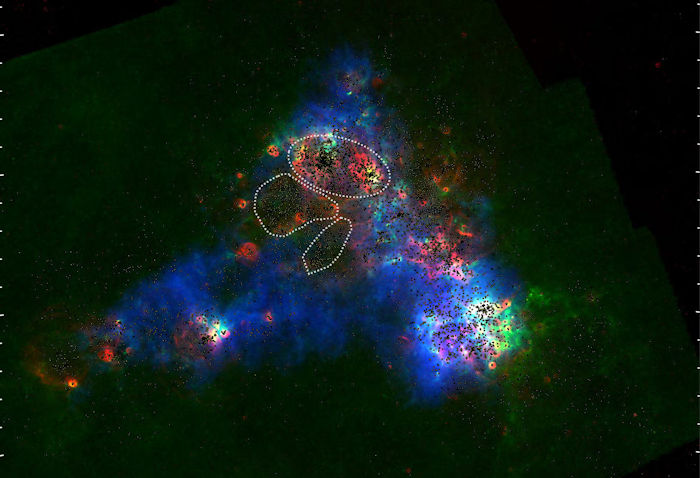


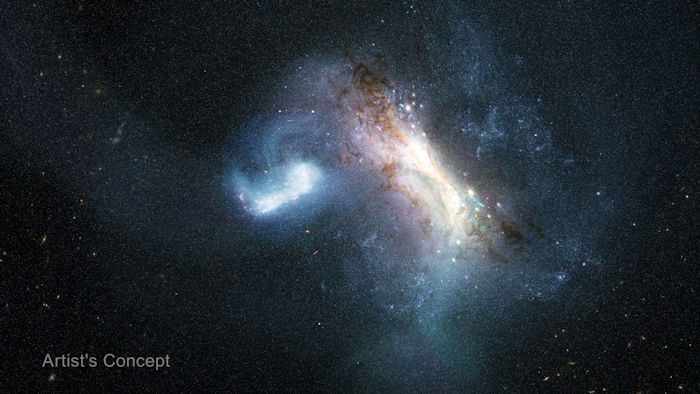
  • Gaia measurements of 7,426 massive stars in the Small Magellanic Cloud reveal opposing motions across the galaxy, with eastern regions generally moving southeast toward the Large Magellanic Cloud while western regions move northwest.
  • The pattern does not resemble ordinary galactic rotation and instead supports the idea that tidal forces, possibly combined with ram pressure, are stretching and disrupting the smaller galaxy.
“Did the sun swallow a planet early in its history?”


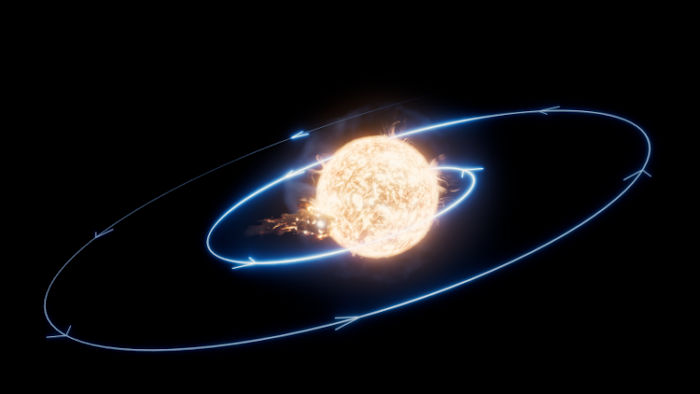
The early days of solar system formation were chaotic! Planetesimals – ranging from a few hundred meters to hundreds of kilometers across – smashed into each other and clumped together to form planets, or flew apart.  A planet-sized body apparently hit Earth to become our moon.  And some of those early, turbulent motions likely involved material spiraling into our sun as well.


“‘Cosmic Glitch’ could explain why gravity acts differently across the Universe”


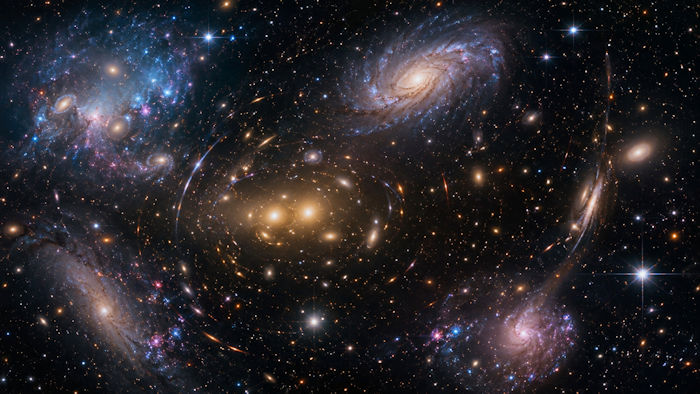
  • Einstein’s theory of gravity may behave slightly differently across distances of billions of light-years, with gravity appearing about 1 percent weaker on cosmic scales.
  •                   The proposed “cosmic glitch” modestly improves some cosmological measurements and eases the disagreement over how fast the universe is expanding, although it does not resolve the problem.
  • Current evidence remains tentative, and future observations from projects such as DESI and Euclid could reveal whether the effect is real or disappears with better data.


“Black hole star: New type of object discovered?”


“Astronomers discover a lost galaxy buried in the Milky Way’s ancient star clusters”


The Milky Way absorbed a large dwarf galaxy about 12 billion years ago, pushing the known history of major galactic mergers much farther back in time.

Hubble observations of ancient star clusters revealed a distinct population that could not have formed in either the early Milky Way or the later Gaia-Sausage-Enceladus merger.

The discovery gives astronomers a new way to reconstruct the Milky Way’s earliest growth and may help separate stars born here from those brought in by vanished galaxies.


“JWST finds three feeding black holes packed into one early galaxy”


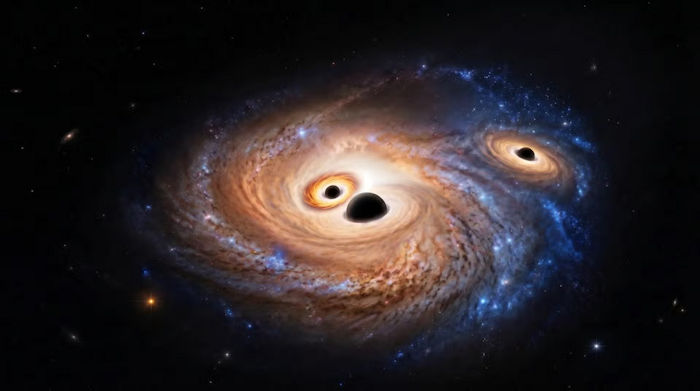
  • Three actively feeding supermassive black holes appear to share one galaxy seen as it existed about 1.2 billion years after the Big Bang.
  • JWST detected their fast-moving hydrogen gas, including two central black holes separated by only about 190 light-years in projection.
  • The system could help explain how early black holes grew so quickly and may represent an ancestor of mergers detectable by future gravitational-wave observatories.


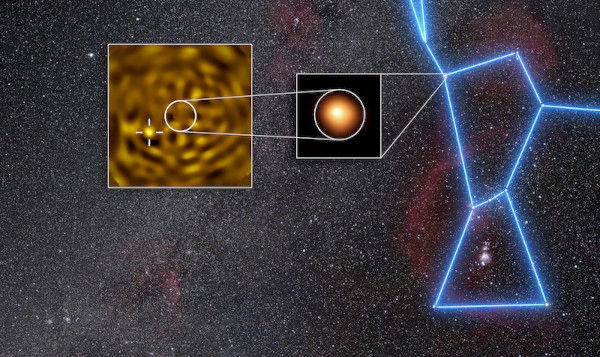
“Companion for Betelgeuse update! A new image”


  • ESO’s Very Large Telescope has captured an image of the recently discovered companion to the famous red supergiant Betelgeuse at its expected location.
  • To confirm the object is Betelgeuse B astronomers will need to observe it in one year on the other side of the star.
  • The likely companion star is around 2 to 3 times the mass of our sun.


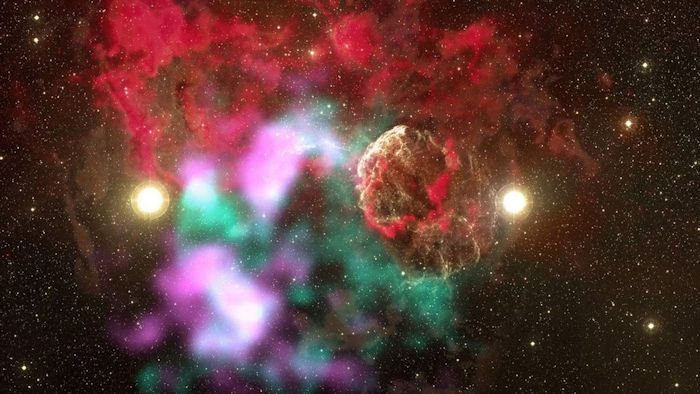
“Scientists find evidence of a rare double supernova in the Jellyfish Nebula”


  • Astronomers found evidence that the Jellyfish Nebula, or IC 443, and the fainter remnant G189.6+3.3 may have formed from two massive stars that once belonged to the same binary system.
  • Data from NASA’s Fermi telescope, eROSITA and other observatories show that both remnants lie about 6,000 light-years away, overlap in the sky and appear to interact with the same interstellar cloud system.


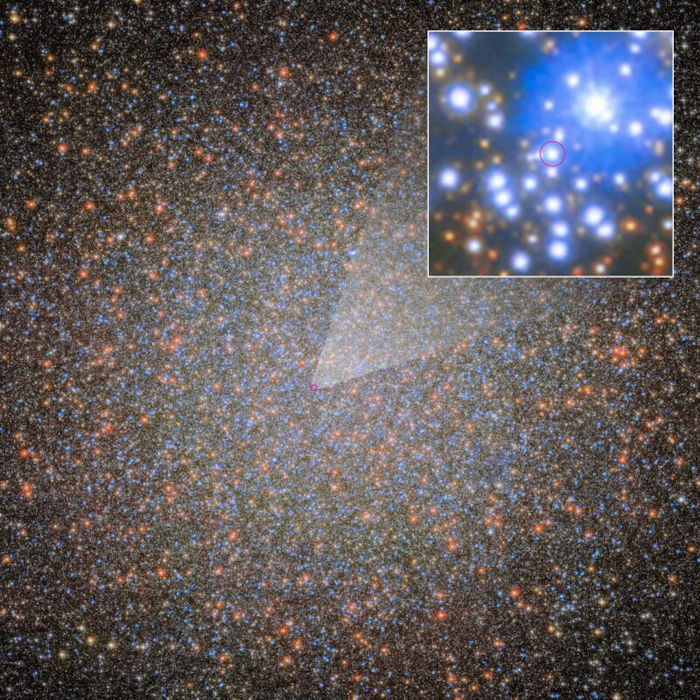
“10,000 black holes missing from this star cluster … and we’ve finally found 1″


Astronomers know of three different categories of black holes. There are the supermassive black holes, which are the beasts that lurk at the centers of galaxies. There are stellar-mass black holes, which form after huge stars die. And then there are intermediate-mass black holes that fill the gap between those two.


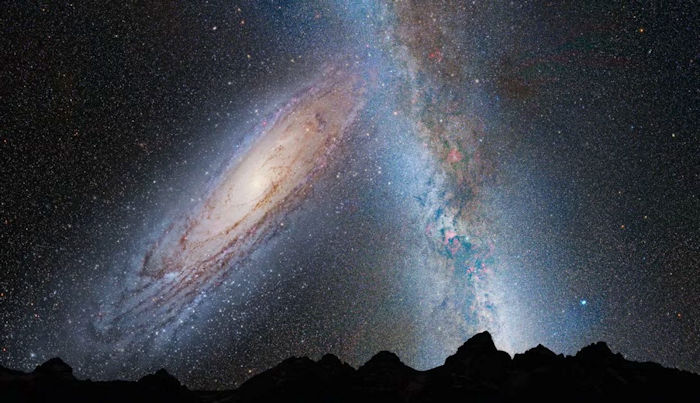
“New findings revise the Milky Way-Andromeda collision odds into a cosmic coin toss”


The Milky Way and Andromeda have appeared locked on a destructive course for decades. Now, thousands of simulations suggest their collision is not destiny, but a contest between gravity, uncertain measurements and two smaller neighboring galaxies