“Why won’t the Blaze Star explode?”


Have you ever heard of the Blaze Star? It’s a star in the constellation Corona Borealis, the Northern Crown, that was supposed to go nova last year. Well, we’re still waiting. But when it finally does erupt, it’ll be a once-in-a-lifetime show in our night sky.

The eagerly awaited Blaze Star nova is a real opportunity for keen night sky observers to witness a “new star” in the sky … but only for a few days before it fades away again.

Click here to read the full article.


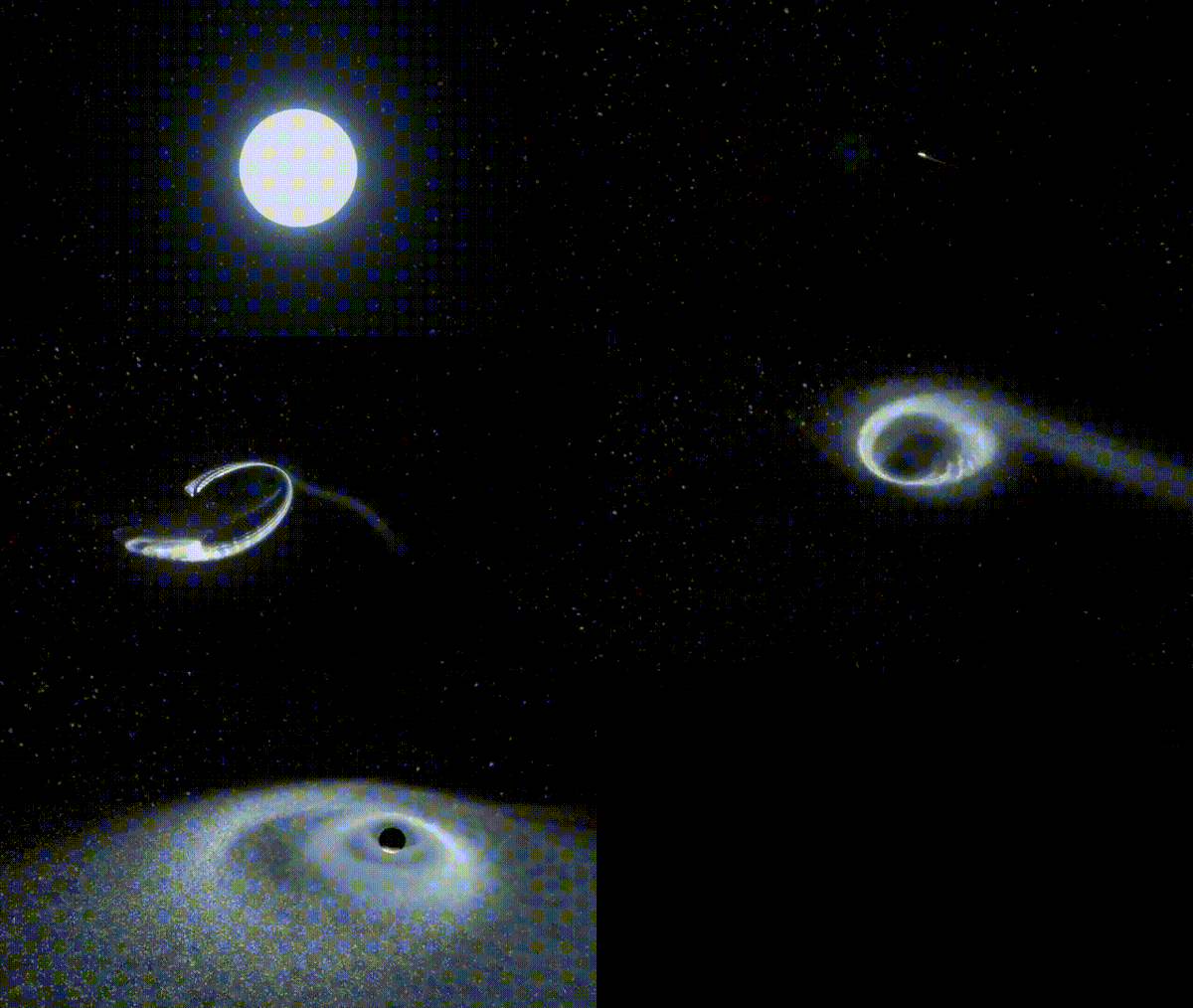
“A Supermassive Black Hole Is on a Collision Course With The Milky Way”


A Milky Way collision with a supermassive black hole might be closer than we thought.

Hidden deep in the Large Magellanic Cloud dwarf galaxy that orbits the Milky Way on an ever-closing loop, signs of a massive invisible object clocking in at around 600,000 times the mass of the Sun have been detected.

Since the Large Magellanic Cloud will one day collide with our own galaxy, that means the black hole is also destined to come crashing in.

Click here to read the full article.


“‘It’s almost science fiction’: Scientists say the shape of Earth’s inner core is changing”


Scientists who just months ago confirmed that Earth’s inner core recently reversed its spin have a new revelation about our planet’s deepest secrets — they identified changes to the inner core’s shape.

Earth’s innermost layer is a hot, solid ball of metal surrounded by a liquid metal outer core. For decades, planetary scientists suspected that the solid inner core deformed over time as it spun. Now, researchers have found the first evidence of changes taking place over the past 20 years in the shape of the inner core.

Link contributed by Gene Savoy, Jr.

Click here to read the full article.


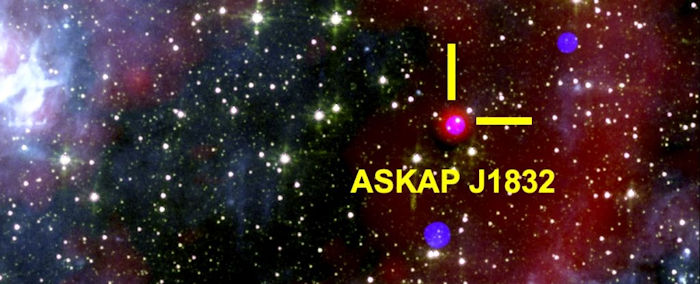
“A Strange New Cosmic Explosion May Have Just Been Discovered”


A bizarre cosmic explosion has puzzled astronomers. It’s either a very rare case of the stars aligning just right (literally) – or something powerful never seen before.

The event is designated EP240408a, as it was first detected by the Einstein Probe, an X-ray space telescope, on 8 April 2024. At a glance, it appeared to be a run-of-the-mill gamma ray burst, which typically emits bright X-rays too.

Click here to read the full article.


“An Amazing JWST Image of a Protostar”


The James Webb Space Telescope (JWST) has been giving us a fabulous new view on the universe since its launch. This new image of the protostar HH30 is in amazing new detail thanks to the JWST. It was first discovered using the Hubble Space Telescope but this Herbig-Haro object, which is a dark molecular cloud, is a perfect object for JWST. The image shows the protoplanetary disk seen edge on with a conical outflow of gas and dust with a narrow jet blasting out into space.

Click here to read the full article.


“Our Best Look at the Cosmic Web”


At first glance the large scale structure of the Universe may seem to be a swarming mass of unconnected galaxies. Yet somehow, they are! The ‘cosmic web’ is the largest scale structure of the Universe and consists of vast networks of interconnected filamentary structures that surround empty voids. A team of astronomers have used hundreds of hours of telescope time to capture the highest resolution image ever taken of a single cosmic filament that connects to forming galaxies. It’s so far away from us that we see it as it was when the Universe was just 2 billion years old!

Click here to read the full article.


“Why We Think Theia Existed”


The giant-impact hypothesis posits that billions of years ago a Mars-sized body named Theia collided with the early Earth.

The immense energy from this impact not only significantly altered Earth’s rotational dynamics but also resulted in debris being ejected into space. Over time, this debris coalesced to form the Moon.

We do not know for sure if Theia existed and if it collided with the young proto-Earth, but the evidence is compelling.

Click here to read the full article.


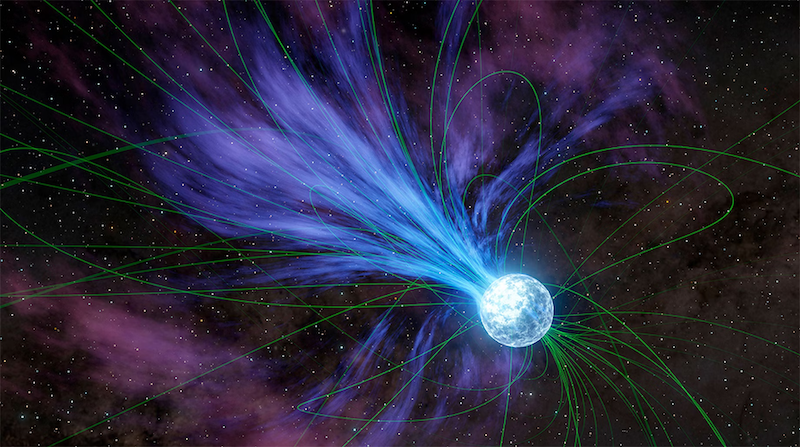
“Even Microquasars are Powerful Particle Accelerators”


The Earth is bathed in high-energy particles. Known as cosmic rays, most of them are protons striking us at nearly the speed of light. Fortunately, the atmosphere protects us from any significant harm, though the particles can strike with so much energy that they create a shower of lower energy particles that do reach Earth’s surface. That’s actually how we can detect most cosmic rays.

We aren’t entirely sure what accelerates these particles so tremendously. There are phenomena that can do it. Nearby supernovae can generate lower energy cosmic rays, but the origin of the highest-energy cosmic rays is less understood.

Click here to read the full article.


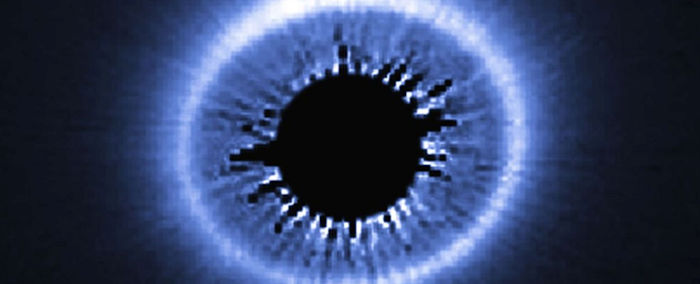
“White Dwarfs Pause Their Cooling, Giving Planets a Second Chance for Habitability”


When we first began searching for planets around other stars, one of the surprising discoveries was that there are planets orbiting white dwarfs. The first exoplanets we ever discovered were white dwarf planets. Of course, these planets were barren and stripped of any atmosphere, so we had to look at main sequence stars to find potentially habitable worlds. Or so we thought.

As we discovered more white dwarf planets, it became clear that some of them might retain atmospheres and water. Perhaps they were an outer planet with a thick atmosphere before their star swelled to a red giant, or perhaps some of the gas ejected by the star to become a white dwarf was captured by the world.

Click here to read the full article.


“Meet Quipu, largest known structure in the universe”


A team of astronomers have mapped the nearby universe, from about 425 million to 800 million light-years (which translates to some 130 to 250 megaparsecs), and discovered the largest-known structure residing there. They’ve named this massive collection of galaxies Quipu. And they said it stretches some 1.3 billion light-years (400+ megaparsecs) long, containing the mass of some 200 quadrillion stars.

Click here to read the full article.