“Whoa! Astronomers Found 128 New Moons Orbiting Saturn”


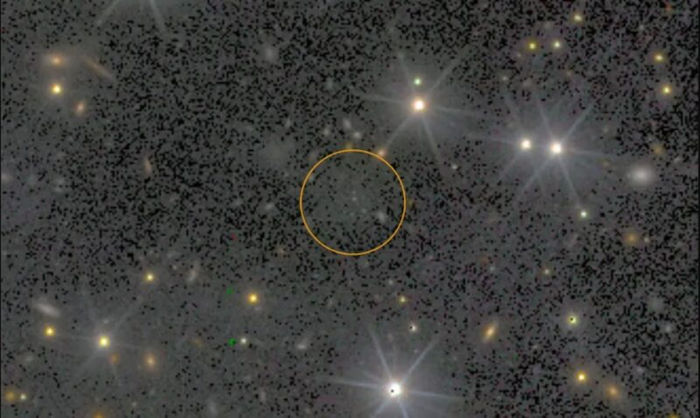
An international team of astronomers working with the Canada France Hawaii Telescope have discovered a whopping 128 more moons orbiting Saturn. The Minor Planet Center confirmed the discoveries on March 11th. The team observed Saturn repeatedly between 2019 and 2021 and combined multiple images, reducing noise and strengthening the signal from the moons. Initially, they found 64 new moons and many more objects that couldn’t be confirmed at the time.

Click here to read the full article.


“Radical Theory Says Black Holes May Spew Matter And Time as White Holes”


There just might be a way for white holes to form in the Universe.

According to a new, highly theoretical paper, the hypothetical objects may result from a kind of quantum ‘bounce’ at the heart of a black hole, spewing not just matter but time itself from the depths.

Time is really the essence of the problem with black holes. At some point the stream stops, and with it any information being carried in its current. This breaks a pretty fundamental rule in quantum physics, prompting researchers behind this new study to reconsider what we might mean by time in the first place.

Click here to read the full article.


“Incredible Image Reveals a Cosmic Hourglass Shimmering in Space”


Young stars are like young kids. Their energy is often unruly and can express itself chaotically.

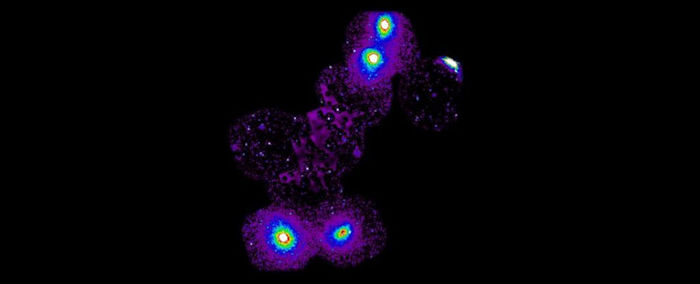
In this incredible image, we can see the unrestrained energy of two young stars about 650 light-years away as their energetic jets create a distinct hourglass shape with clumps and swirls of gas and dust.

Click here to read the full article.


“Black Hole The Size of 36 Billion Suns Could Lie at The Heart of Cosmic Horseshoe”


In 2007, astronomers discovered the Cosmic Horseshoe, a gravitationally lensed system of galaxies about five-and-a-half billion light-years away.

The foreground galaxy’s mass magnifies and distorts the image of a distant background galaxy whose light has travelled for billions of years before reaching us. The foreground and background galaxies are in such perfect alignment that they create an Einstein Ring.

New research into the Cosmic Horseshoe reveals the presence of an Ultra-Massive Black Hole (UMBH) in the foreground galaxy with a staggering 36 billion solar masses.

Click here to read the full article.


“Surprise Spiral Shape Revealed in The Darkness Surrounding The Solar System”


The edge of the Solar System is a strange place, full of oddities we’ve only just begun to probe. But perhaps the oddest of all is the Oort Cloud, a vast field of icy debris extending out to 100,000 times the distance between Earth and the Sun.

We have a rough idea of the size and shape of this field, but the fine particulars elude our understanding. Now, a new computational study has revealed a surprising structure – a spiral generated by the tidal forces exerted by the Milky Way galaxy itself.

Click here to read the full article.


“A massive cotton candy-like exoplanet stumps astronomers”


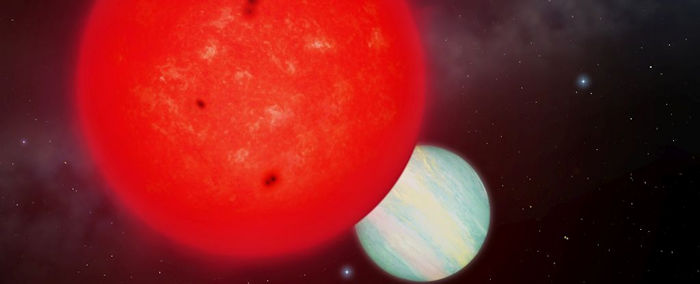
Low-density “cotton candy planets” continue to be a cosmic puzzle for astronomers. Despite being 50 percent bigger than the gas giant Jupiter, exoplanet WASP-193b is seven times less dense. This extremely low density is comparable to that of light and fluffy cotton candy, according to a study published May 14 in the Nature Astronomy.

Click here to read the full article.


“Webb Space Telescope Tracks Fireworks Around Our Galaxy’s Black Hole”


The supermassive black hole at the center of our Milky Way galaxy may not be as voracious as the gas-gobbling monsters that astronomers have seen farther out in the universe, but new findings from NASA’s James Webb Space Telescope reveal that its surroundings are flaring with fireworks.

JWST’s readings in two near-infrared wavelengths have documented cosmic flares that vary in brightness and duration.

Click here to read the full article.


“An Unfinished Detector has Already Spotted the Highest-Energy Neutrino Ever Seen”


When it comes to particles, only photons are more abundant than neutrinos, yet detecting neutrinos is extremely difficult. Scientists have gone to extreme lengths to detect them, including building neutrino observatories in deep, underground mines and in the deep, clear ice of Antarctica.

One of their latest efforts to detect neutrinos is KM3NeT, which is still under construction at the bottom of the Mediterranean Sea. Though the neutrino telescope isn’t yet complete, it has already detected the most energetic neutrino ever detected.

Click here to read the full article.


“Radiation From an Exploding Star May Have Altered Evolution on Earth”


If a star explodes in space and no one is around to see it, does it wreak a change on terrestrial evolution?

Yes, maybe – if you’re a microbe quietly minding your own business in Lake Tanganyika in the highlands of eastern Africa.

A new study has found that an explosion in virus diversity 2.5 million years ago in Lake Tanganyika occurred at the same time radiation from an ancient supernova bathed Earth in cosmic rays.

Click here to read the full article.


“NASA May Have Found The Fastest Planetary System We’ve Ever Seen”


In the Milky Way’s central bulge, about 24,000 light-years from Earth, a peculiar pair of objects appears to be hurtling through space at breakneck speed.

Evidence suggests these objects are a high-velocity star and its accompanying exoplanet, a new study reports. If that’s confirmed, it would set a new record as the fastest-moving exoplanet system known to science.

Click here to read the full article.