“Stars Get Earworms Too, And The ‘Songs’ Could Tell Us Their History”


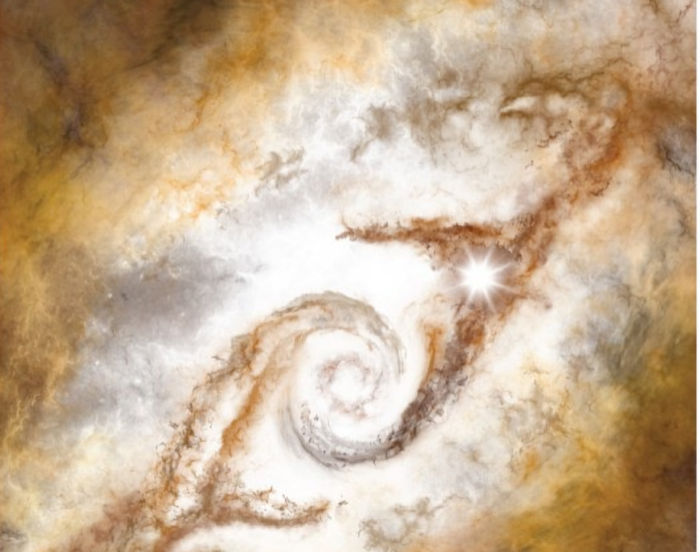
Earworm Starquake


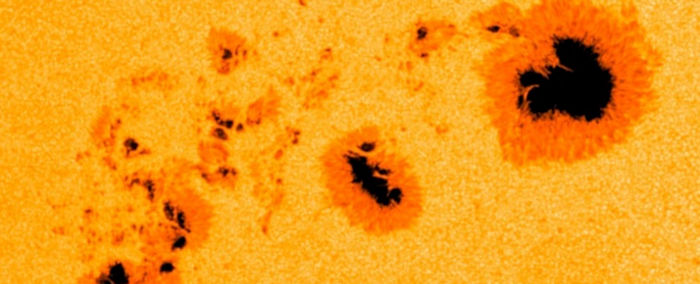
The “music” of starquakes – enormous vibrations caused by bursting bubbles of gas that ripple throughout the bodies of many stars – can reveal far more information about the stars’ histories and inner workings than scientists thought.

In new research published in Nature, we analysed the frequency signatures of starquakes across a broad range of giant stars in the M67 star cluster, almost 3,000 light years from Earth.

Click here to read the full article.


“Matter vs. Antimatter: LHC Discovery Could Explain How Universe Avoided Obliteration”


Matter and antimatter should have completely wiped each other out eons ago, leaving the Universe a very empty place.

Obviously that didn’t happen. Experiments at the Large Hadron Collider (LHC) may have uncovered new clues as to how we avoided this apocalypse, hinting at a surprising difference in the decays of particles called baryons and their antimatter twin.

Click here to read the full article.


“Massive collision created Mercury, study suggests”


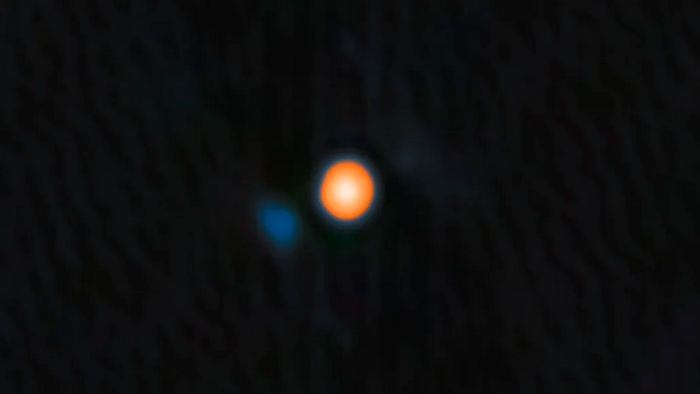
planet collision


  • How did planet Mercury form? Scientists have been pondering this question for a long time.
  • According to new research, Mercury originated from the massive grazing collision of 2 similarly-sized bodies.
  • Collisions like this one were common in the early solar system billions of years ago. In fact, they likely accounted for about 1/3 of all impacts.

Click here to read the complete article.


“Stuart Talbott: Planet Formation Is Electromagnetic | Thunderbolts”


Planets formed by gravitational processes is falsified. Attempts to re-create the accretion disk theory break down in computer models. Planets are now being discovered around Young Stellar Objects only thousands—not millions—of years old. Planets, like stars, are born in a Z-pinch.

Click here to view the video.


“Galaxy Caught Turning on Lights at Cosmic Dawn, Stunning Astronomers”


galaxy


A galaxy spotted just 330 million years after the Big Bang has been implicated in bringing light to the choking dark of the early Universe.

It’s called JADES-GS-z13-1, and an analysis of the very faint light it has sent from more than 13.4 billion years ago reveals that it played a role in the Epoch of Reionization – the billion-year process that cleared the opaque fog that filled the early Universe, allowing light to stream freely.

Click here to read the full article.


“Giant ‘Space Tornadoes’ Discovered Raging in Milky Way’s Turbulent Heart”


In the absolute omnishambles of the Milky Way galactic center, we’ve just found a new kind of turbulent structure.

Peering into the Central Molecular Zone (CMZ) that surrounds the galactic supermassive black hole, astronomers have identified long, thin filaments of gas, near outflows of material. Filaments have been identified around the galactic center previously, but these new ones are unlike any other filaments ever seen

Click here to read the full article.


“A ‘Star Grinder’ Swarm of Black Holes Could Lurk in Our Galaxy’s Dusty Core”


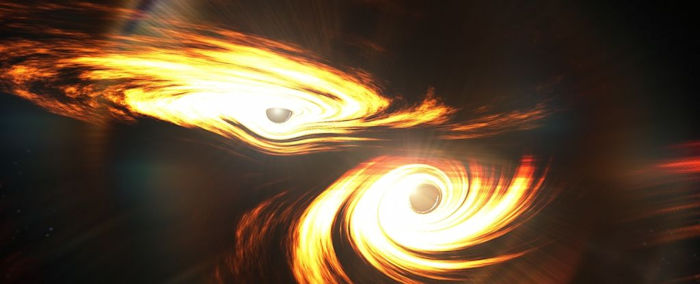
black holes merging


There is a supermassive black hole at the center of our galaxy. There is also a lot of other stuff there as well. Young stars, gas, dust, and stellar-mass black holes. It’s a happening place.

It is also surrounded by a veil of interstellar gas and dust, which means we can’t observe the region in visible light. We can observe stars in the region through infrared and radio, and some of the gas there emits radio light, but the stellar-mass black holes remain mostly a mystery.

Click here to read the full article.


“’Little Red Dots’ in Early Universe Might Be Black Holes Running at Maximum”


red dots


The James Webb Space Telescope has given us a view of the earliest moments of galaxy formation in the Universe.

It also revealed a few surprises. One of these is the appearance of small, highly redshifted objects nicknamed “little red dots (LRDs).”

We aren’t entirely sure what they are, but a new study points to an answer.

Click here to read the full article.


“A terrifying fate may lurk inside the Milky Way”


All good things come to an end—even the Milky Way. Our home galaxy’s demise isn’t estimated to occur for at least another 4 or 5 billion years, when astronomers believe it will start colliding with its neighbor Andromeda. However, a new analysis of a more distant galaxy is hinting at another dramatic outcome. Instead of being annihilated from without, the Milky Way’s cosmic destruction could begin from within.

Click here to read the full article.


“A new data release hints dark energy may be weakening”


On March 19, 2025, scientists announced the results of a new analysis using the Dark Energy Spectroscopic Instrument (DESI), mounted on the Nicholas U. Mayall 4-meter Telescope at Kitt Peak National Observatory in Arizona. With the first three years of data involving some 15 million galaxies and quasars, they’ve found hints that dark energy changes over time. Dark energy, which makes up some 70% of the universe, is a mysterious force that drives the accelerating expansion of our universe.

Click here to read the full article.