“The Milky Way Might Not Crash Into The Andromeda Galaxy After All”


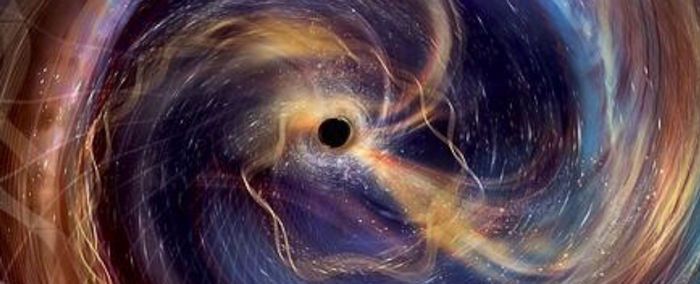
“As it stands, proclamations of the impending demise of our Galaxy seem greatly exaggerated.”

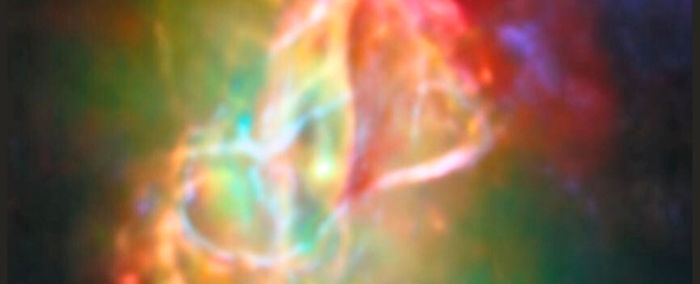
That’s the conclusion scientists have reached after revisiting the possibility of what we thought was a foregone conclusion: the eventual clash of giants, a collision between the Milky Way and the Andromeda galaxies.

Click here to read the full article.


“Astronomers spy biggest explosions since Big Bang”


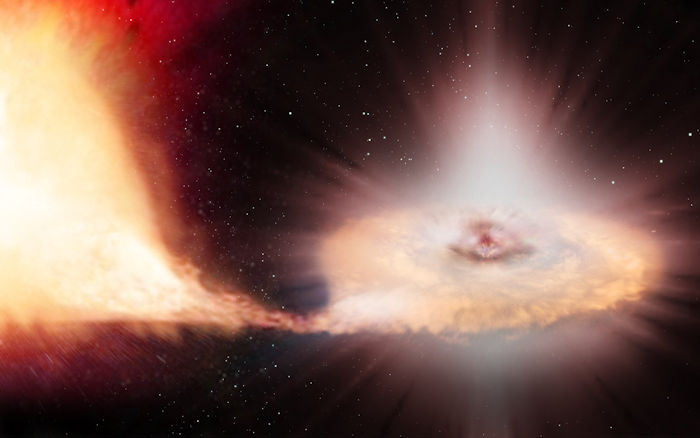
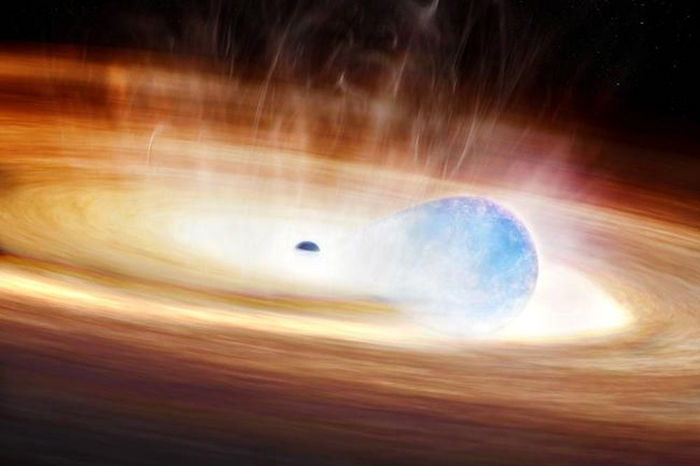
Astronomers in Hawaii said this week that they’ve detected 3 different stars being devoured by supermassive black holes. In the process, the holes released more energy than 100 supernovas! These are the largest explosions since the Big Bang, the astronomers say. They’re calling the events extreme nuclear transients.

The stars responsible for these powerhouse explosions are from 3 to 10 times more massive than our sun. And these brightening events aren’t just brilliant, but brief, flashes. They last for months to years, helping astronomers see an otherwise hidden part of the cosmos.

Click here to read the full article.


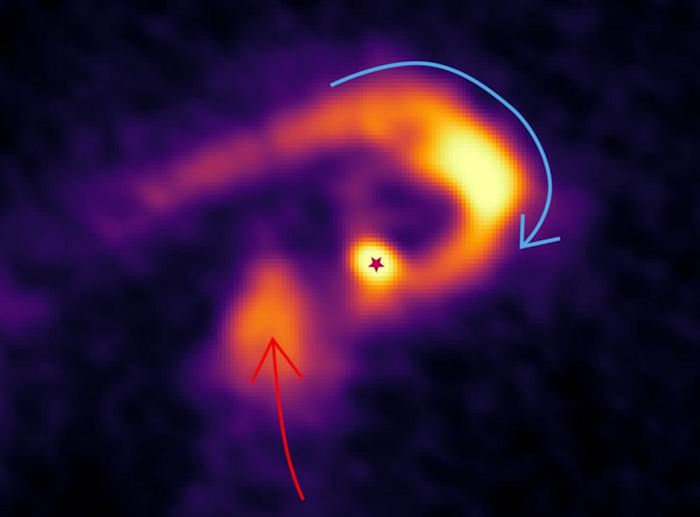
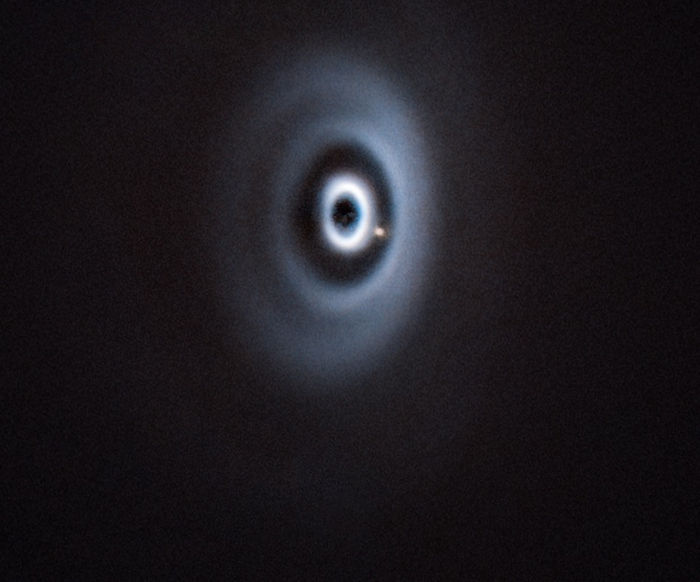
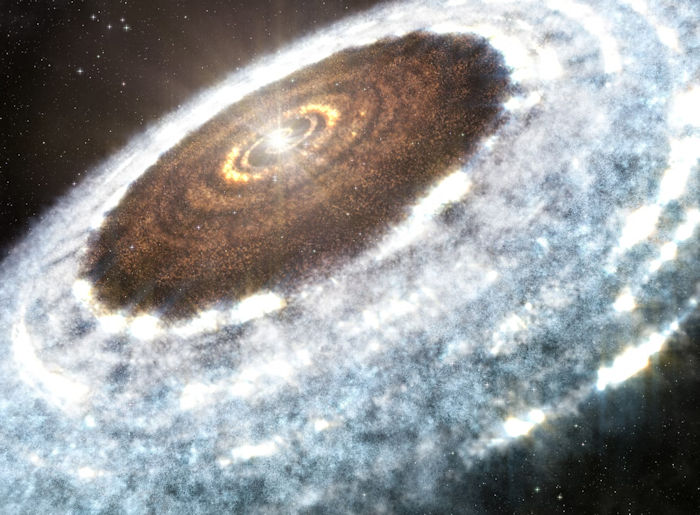
“Water Discovered Around a Young, Sun-Like Star For First Time”


For decades it was thought that water was prevalent in the outer reaches of the Solar System early in its history, with comets and asteroids delivering moisture to Earth and the inner planets during the Late Heavy Bombardment period around 4 billion years ago.

An abundance of ice in places like the Kuiper Belt – the ring of ‘iceteroids’ in the outer Solar System – supports the idea. However, the hypothesis could not be tested until it became possible to study extrasolar systems in the early stages of formation.

Click here to read the full article.


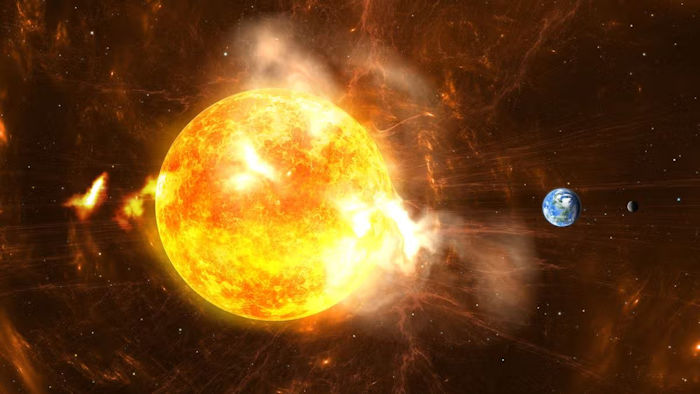
“Clearest view of the sun’s corona: See the stunning details”


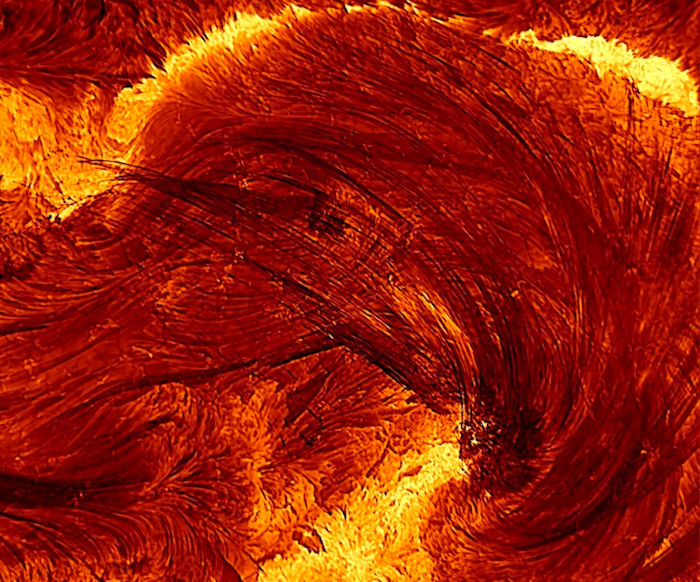
  • These are the clearest images to date of the sun’s corona. Scientists developed a new optical system that removes the blur from fine structures.
  • The new system is called ‘coronal adaptive optics.’ It removes the blur that results from looking up through Earth’s turbulent atmosphere.
  • This advancement paves the way for deeper insight into coronal heating, solar eruptions and space weather. It also opens an opportunity for new discoveries in the sun’s atmosphere.

Click here to read the full article.


“Chance X-Ray Discovery Reveals Mystery Object 15,000 Light Years Away”


The mystery of strangely blinking objects scattered throughout the Milky Way just deepened.

Something 15,000 light-years away from the Sun isn’t just slowly, methodically beaming out radio waves – each pulse is also blasting emissions in X-ray wavelengths, serendipitous observations have revealed.

This behavior is completely new and scientists are at a loss to explain it.

Click here to read the full article.


“Light Travels Across The Universe Without Losing Energy. But How?”


My telescope, set up for astrophotography in my light-polluted San Diego backyard, was pointed at a galaxy unfathomably far from Earth. My wife, Cristina, walked up just as the first space photo streamed to my tablet. It sparkled on the screen in front of us.

“That’s the Pinwheel galaxy,” I said. The name is derived from its shape – albeit this pinwheel contains about a trillion stars.

The light from the Pinwheel traveled for 25 million years across the universe – about 150 quintillion miles – to get to my telescope.

Click here to read the full article.


“The Universe Is ‘Suspiciously’ Like a Computer Simulation, Physicist Says”


We have long taken it for granted that gravity is one of the basic forces of nature – one of the invisible threads that keeps the universe stitched together. But suppose that this is not true. Suppose the law of gravity is simply an echo of something more fundamental: a byproduct of the universe operating under a computer-like code.

That is the premise of my latest research, published in the journal AIP Advances. It suggests that gravity is not a mysterious force that attracts objects towards one another, but the product of an informational law of nature that I call the second law of infodynamics.

Click here to read the full article.


“Mysteriously Perfect Sphere Spotted in Space by Astronomers”


Our Milky Way galaxy is home to some extremely weird things, but a new discovery has astronomers truly baffled.

In data collected by a powerful radio telescope, astronomers have found what appears to be a perfectly spherical bubble. We know more or less what it is – it’s the ball of expanding material ejected by an exploding star, a supernova remnant – but how it came to be is more of a puzzle.

Click here to read the full article.


“Survey of More Than 1,300 Stars Uncovers Unexplained Pulses of Light”


More than sixty years ago, the Search for Extraterrestrial Intelligence (SETI) officially began with Project Ozma at the Greenbank Observatory in West Bank, Virginia.

Led by famed astronomer Frank Drake (who coined the Drake Equation), this survey used the observatory’s 25-meter (82-foot) dish to monitor Epsilon Eridani and Tau Ceti – two nearby Sun-like stars – between April and July of 1960.

Since then, multiple surveys have been conducted at different wavelengths to search for indications of technological activity (aka. ‘technosignatures’) around other stars.

Click here to read the full article.


“Colossal magnetar flares forge gold”


  • Powerful flares from magnetars – compact, dead stars with intense magnetic fields – can create heavy elements such as gold and platinum.
  • A single flare from magnetar SGR 1806–20 in 2004 is thought to have produced a huge mass of heavy elements, possibly equal to 1/3 of Earth’s mass.
  • This discovery adds magnetar flares as a 3rd major source of heavy elements in the universe, alongside neutron star mergers and supernovas.

Click here to read the full article.