“Mystery of fastest white dwarfs solved?”


Wh


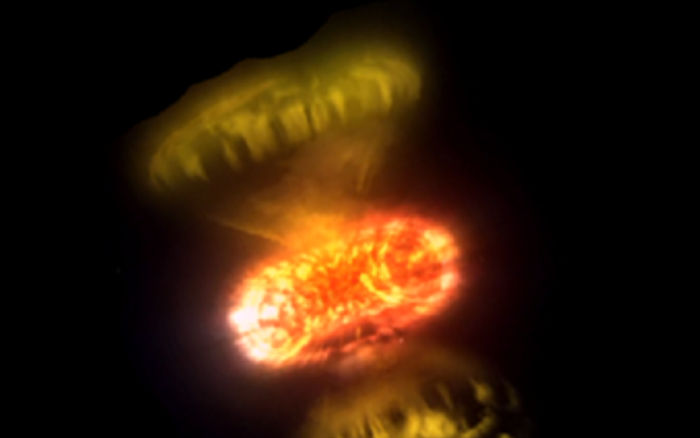
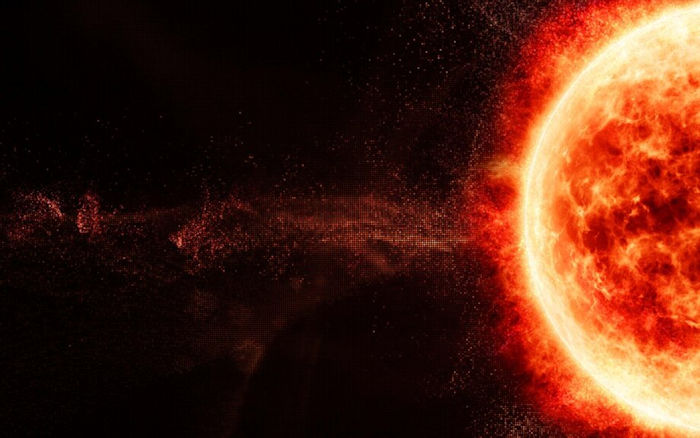
  • White dwarfs are the remaining small, dense cores of dead stars. Some white dwarfs move through the Milky Way at incredibly high speeds.
  • A new study reveals their origins. The study suggests that, when two rare types of white dwarfs collide, the resulting supernova explosion slingshots a remnant of the least dense white dwarf out into deep space.
  • The white dwarfs’ unusual temperatures and brightness can also be explained in this scenario.

Click here to read the article.


“Hawking’s Bold Theory Confirmed by Loudest-Ever Black Hole Collision”


Wh


Ten years ago, scientists heard the universe rumble for the first time. That first discovery of gravitational waves proved a key prediction from Albert Einstein’s theory of general relativity and began a new era of astronomy.

Now, a new gravitational-wave discovery marks the anniversary of this major breakthrough. Published today in Physical Review Letters, it puts to the test a theory from another giant of science, Stephen Hawking.

Click here to read the article.


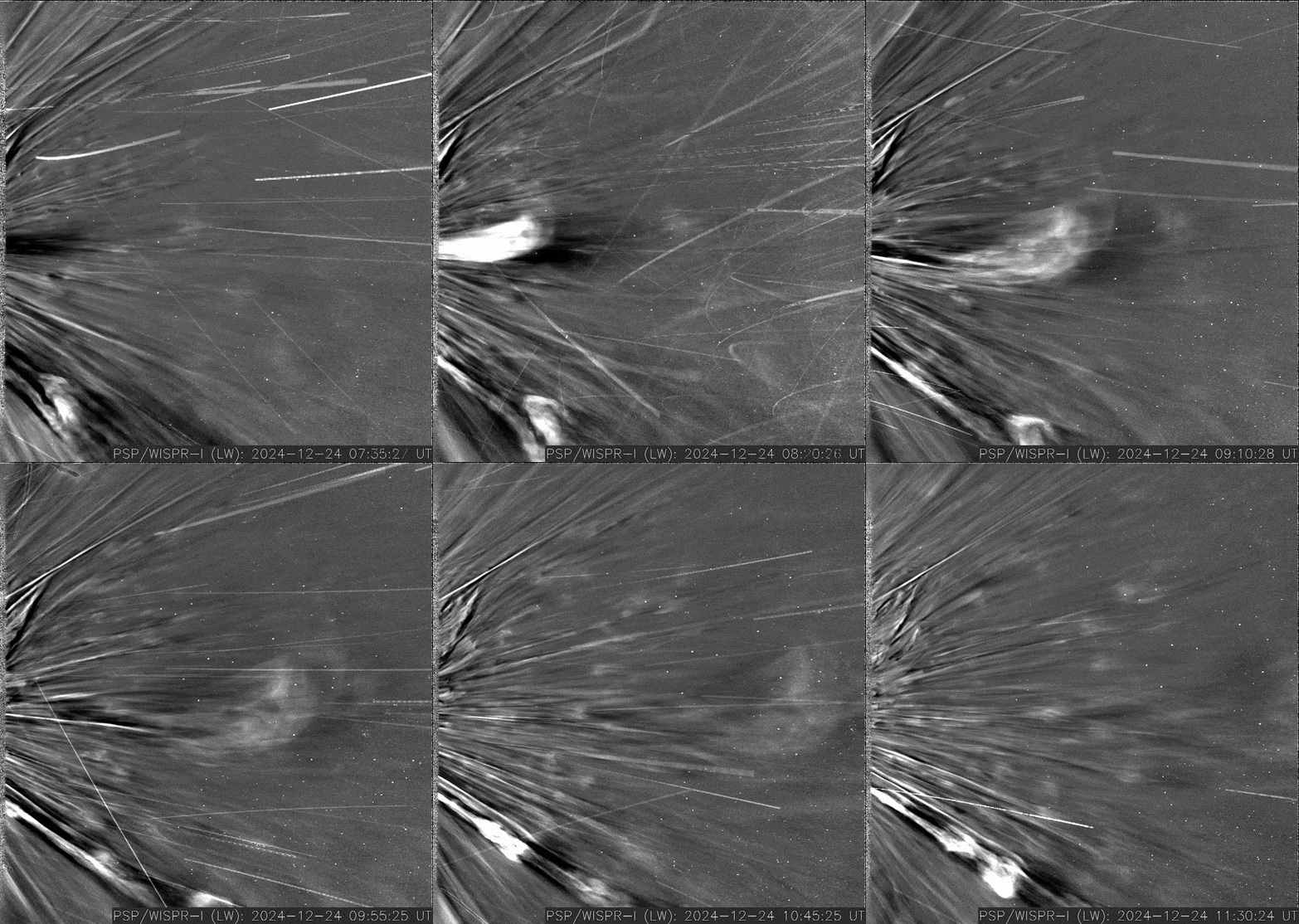
“Stunning new solar flare images show unprecedented detail”


  • Solar flares are intense bursts of radiation and light on the sun. Coronal loops, which often precede flares, are huge loops of plasma that arch over the sun’s surface.
  • The Daniel K. Inouye Solar Telescope has taken new high-resolution images of a solar flare and coronal loops. They show the smallest loops ever seen, in unprecedented detail.
  • The coronal loops look like thin, dark threads and might be the fundamental building blocks of solar flares.

Click here to read the article.


“High-Mass Stars Are Fed By Elongated Streamers Of Gas”


High-mass stars with eight or more solar masses are mysterious. Despite the fact that they’re more easily observed than their lower-mass counterparts, astrophysicists have struggled to explain how they become so massive. The problem is that while they accrete material and become more massive, they’re also shedding mass.

Click here to read the article.


“A Promising New Method for Detecting Supernovae at Record Speed”


Supernovae are among the most energetic phenomena in the Universe, and definitely one of the most spectacular! These events take place when a star has reached the end of its life cycle and undergoes gravitational collapse at its center, exploding and shedding its outer layers in the process. For astronomers, supernovae are not only a fascinating field of study, shedding light on the evolution of stars, but are also a means of measuring distance and the rate at which the Universe is expanding.

Click here to read the article.


“Baby planet carving a path around its star”


What appears to be a ripple in space actually depicts a newborn planet eating its way through its dusty cradle as it orbits its host star. This image, taken with ESO’s Very Large Telescope (VLT) in Chile, is the first clear detection of a baby planet in a disk with multiple rings.

These so-called protoplanetary disks surround young stars and appear as disk-shaped structures of gas and dust.

Click here to read the article.


“Cool Gemstones And Fiery Grime: Blazing Rainbow in Space Hints at Earth’s Origins”


The glorious guts of a dying star are the means by which astronomers are hoping to discover the very earliest origins of how our planet was born.

In the midst of the Butterfly Nebula NGC 6302, located some 3,400 light-years from Earth in the southern constellation of Scorpius, astronomers have found compelling evidence of dust crystallizing as it cools from hot gas.

Click here to read the article.


“New X-ray scans track violent solar winds threatening Earth’s satellites”


High above Earth, where space and the planet’s magnetic field meet, powerful forces collide. Streams of charged particles known as the solar wind constantly flow from the Sun toward Earth. Most of the time, these particles are deflected by a protective magnetic bubble called the magnetosphere. This invisible shield keeps our atmosphere safe and protects satellites, GPS systems, and astronauts from dangerous solar radiation.

Click here to read the article.


“Scientists detect the building blocks of life surrounding star V883 Orionis”


In a star system far, far away—well, about 1,300 light-years from here—a young star just spilled the chemical tea on the origins of life. V883 Orionis, a fiery infant star surrounded by a swirling disc of dust and gas, has become the latest cosmic celebrity for revealing a hidden stash of complex organic molecules—some of the very building blocks that may have kick-started life on Earth.

Click here to read the article.


“All of the first stars might not have been massive”


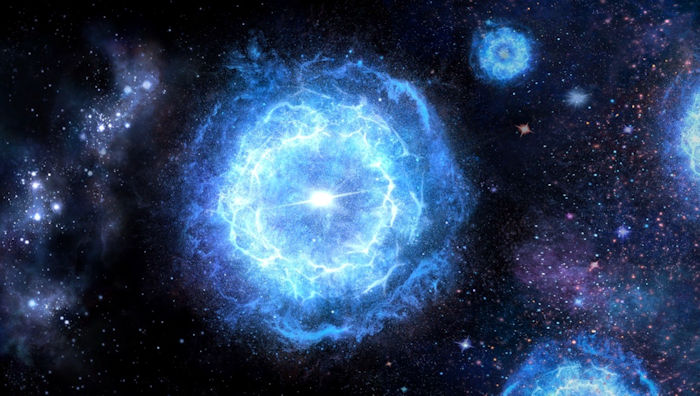
  • The first stars were thought to be massive, short-lived, and composed of only hydrogen and helium.
  • New studies suggest that in the early universe conditions may have also allowed the formation of lower-mass stars, which could still exist today.
  • Cooling by molecules like H2 and helium hydride may have enabled smaller gas clouds to collapse, forming lower-mass stars that still exist today.

Click here to read the article.