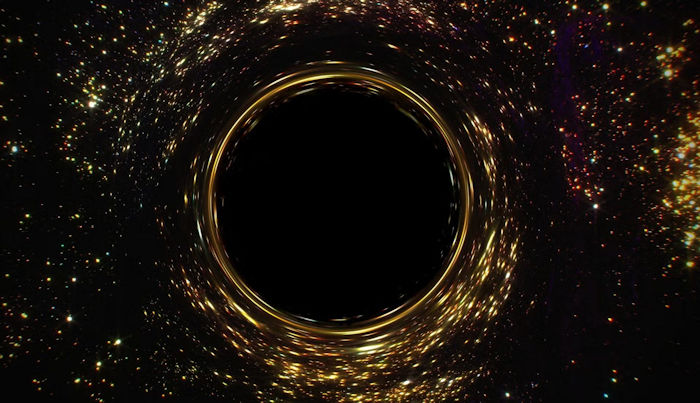
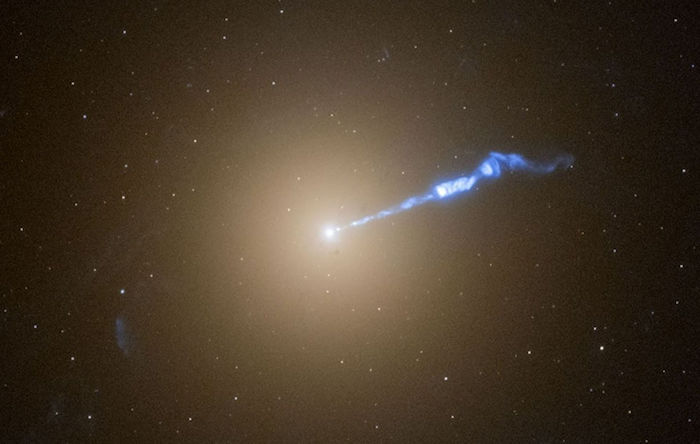
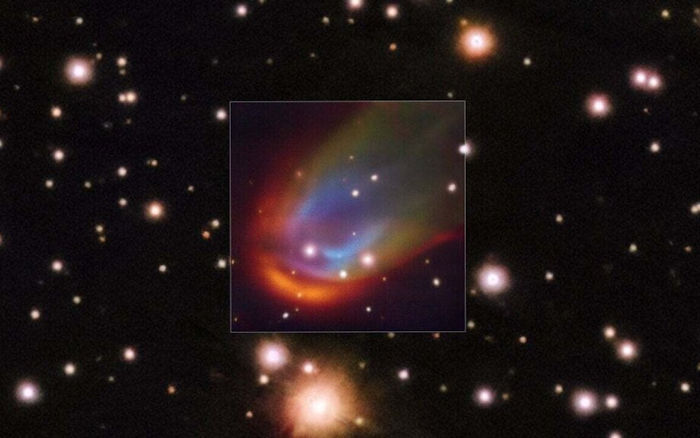
“Citizen scientists help spot massive ring-shaped radio galaxies”


Three enormous and peculiar radio light rings were discovered far, far outside our own galaxy, shedding more light on one of the enigmas that have long perplexed astronomers.

The find was reported by the RAD@home Astronomy Collaboratory — a citizens science community that combines professional astronomers with amateur citizen volunteers who sift through vast radio sky surveys.

Click here to read the article
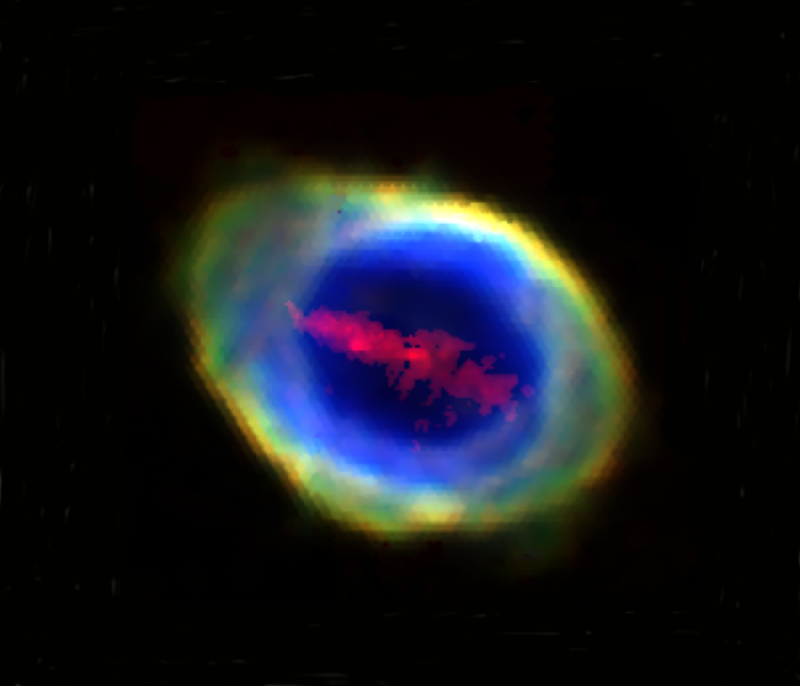


“A Red Dwarf Star with a Brown Dwarf Companion is Changing our Perception of How Stars and Planets Form”


Brown dwarfs are a growing area of focus for astronomers, thanks to improved instruments that have the necessary resolution to visualize them. The term describes substellar objects that are about 13 to 80 Jupiter masses, making them too small to become stars, but massive enough to experience some nuclear fusion in their cores and produce heat. Initially theorized in the 1960s, it was not until the mid-1990s that this class of stellar object was confirmed through direct observation. And thanks to next-generation telescopes and improved data-sharing techniques, there are growing opportunities to study these objects.

Click here to read the article


“Astronomers Spot a White Dwarf That’s Still Consuming its Planets”


When the Sun reaches the end of its main sequence, approximately 5 billion years from now, it will enter what is known as its Red Giant Branch (RGB) phase, during which it will expand and potentially consume Mercury, Venus, and possibly Earth. Not long after, it will undergo gravitational collapse and blow off its outer layers, leaving behind a dense remnant known as a white dwarf.

Click here to read the article


“Magnetic Forces Funnel Gas And Dust Into Young Stars”


Star formation has a lot of complex physics that feed into it. Classical models used something equivalent to a “collapse” of a cloud of gas by gravity, with a star being birthed in the middle. More modern understandings show a feature called a “streamer”, which funnels gas and dust to proto-stars from the surrounding disc of material. But our understanding of those streamers is still in its early stages, like the stars they are forming.

Click here to read the article


“Universe’s expansion is slowing down, says astonishing new study”


  • The universe’s expansion has already begun to slow, says a new study from Yonsei University. This challenges the long-held belief that the universe is rapidly accelerating due to dark energy.
  • Researchers found that Type Ia supernovas – used to measure cosmic expansion – are affected by the age of their progenitor stars. So previous evidence for acceleration may be faulty.

Click here to read the article


“This Radio Color Image Is A New Way To Explore The Milky Way”


Nature’s like a photographer’s canvas backdrop, lit up by the different types of electromagnetic radiation. Gamma radiation is the most powerful, strong enough to rip your double helix in two. Radio waves are at the low end. They’re generally safe, and are almost omnipresent; we live in a sea of radio waves.

While much of the radio waves we’re exposed to here on the surface of the Earth come from our own technology—AM/FM radios, WiFi, GPS signals and the like—there are also natural sources.

Click here to read the article


“Dark Matter Could Color Our View of the Universe”


Dark matter has two central properties: it has mass like regular matter, and unlike regular matter, it reacts weakly or not at all with light. Neutrinos satisify these two criteria, but neutrinos move through space at nearly the speed of light, making them a form of hot dark matter. The observations we have suggest that dark matter is cold. There also aren’t enough neutrinos to account for all of dark matter, so we know dark matter isn’t made of neutrinos. No other known particle meets the criteria, so we have no idea what dark matter might be made of. Cue the theoretical physicists.

Click here to read the article.


“Xrism catches a Pulsars Cosmic Wind and sees a Surprising Result”


The Universe is a strange place. The X-ray Imaging and Spectroscopy Mission (XRISM) orbiting observatory recently highlighted this fact, when it was turned on a pulsar to document its powerful cosmic winds.

The XRISM observatory is a joint mission for NASA, the European Space Agency (ESA), and the Japan Aerospace Exploration Agency (JAXA). The mission was also a replacement for the ill-fated Hitomi X-ray observatory, which failed shortly after launch in 2016.

Click here to read the complete article.


“A wormhole from another universe? Scientists revisit the puzzling black hole GW190521″


In May 2019, astronomers picked up something strange in the fabric of spacetime. The LIGO and Virgo detectors recorded a gravitational wave that lasted just one-tenth of a second. The signal, known as GW190521, was unusual straight away because it didn’t look like the normal “chirps” usually produced when two black holes orbit one another before colliding. Instead, it sounded like a cosmic crack.

Click here to read the article.


“New details about Betelgeuse’s companion star”


Betelgeuse is a famous bright red star in the constellation Orion the Hunter. It’s famous in part because it will one day explode. Late last year, scientists announced Betelgeuse likely has a companion, which has since been confirmed and nicknamed Betelbuddy.

On Wednesday, researchers from Carnegie Mellon University said their observations show the companion star is not what they expected.

Click here to read the article.