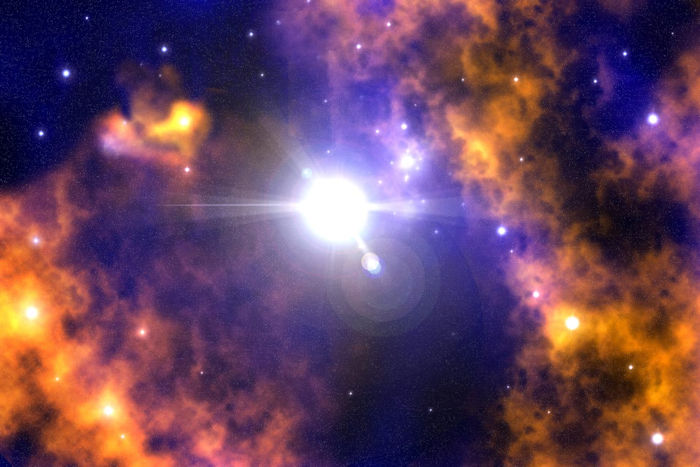
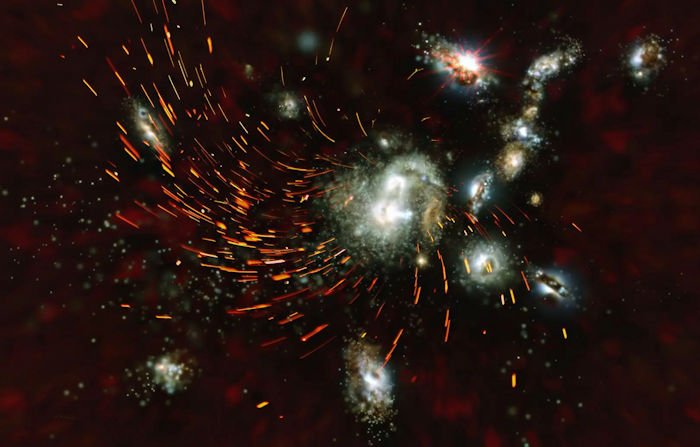
“New model reveals how supermassive stars shaped the early universe”


For decades, we have been taught that the universe is expanding faster and faster. That belief has influenced our view of distant galaxies, how cosmologists have built their theories, and how researchers have described a mysterious, repulsive force we reference as dark energy. This idea even won scientists the Nobel Prize in Physics. Recently, however, new evidence suggests that this narrative could be more complex and much more personal than we may have once thought.

Click here to read the article


“Universal expansion may be slowing down rather than speeding up”


For decades, we have been taught that the universe is expanding faster and faster. That belief has influenced our view of distant galaxies, how cosmologists have built their theories, and how researchers have described a mysterious, repulsive force we reference as dark energy. This idea even won scientists the Nobel Prize in Physics. Recently, however, new evidence suggests that this narrative could be more complex and much more personal than we may have once thought.

Click here to read the article


“A Natural Laboratory Of Spiralling Dust Shells”


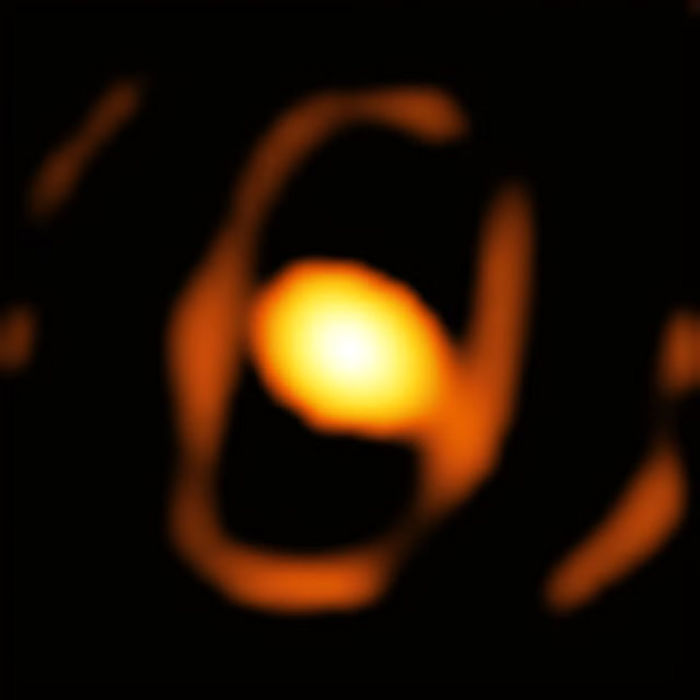
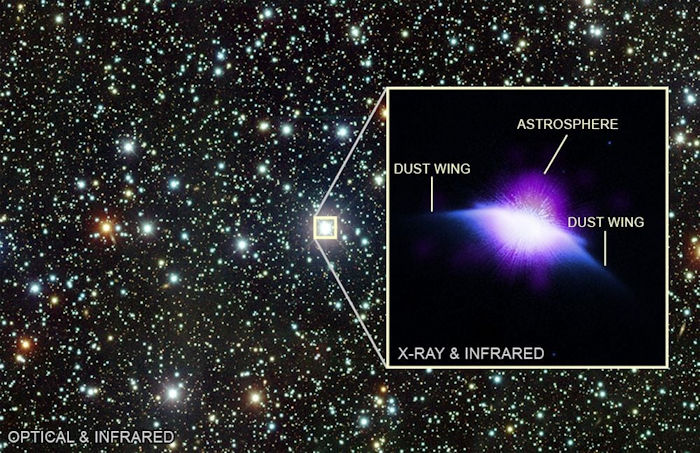
In multiple ways, the JWST is opening our eyes to the Universe. It’s enriching our understanding of the cosmos by showing us things we didn’t think were possible, and by uncovering more details in things that have been observed many times by lesser telescopes.

One of these subjects is called Apep, a triple star system about 15,000 light years away.

Click here to read the article


“Devastating Stellar Storm Seen on Red Dwarf Star”


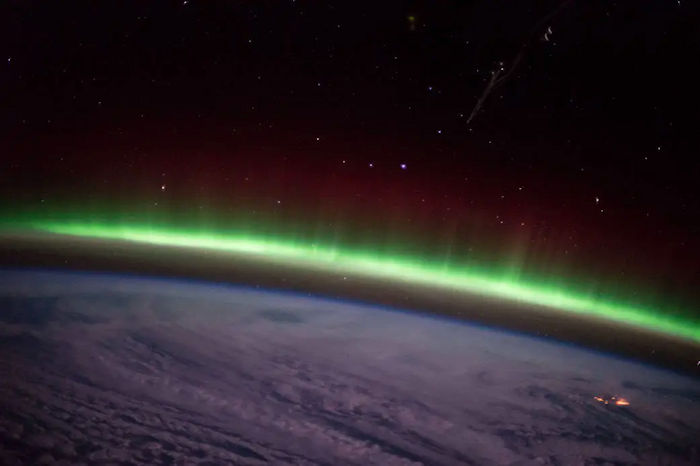
On Earth, Coronal Mass Ejections (CMEs) like the one we experienced earlier this month are aesthetic, even disruptive events, sending aurora southward and interrupting radio signals. But around other stars, they could prove lethal to life.

This point was driven home by a recent CME detection from an M-class red dwarf star.

Click here to read the article


“The Ultraviolet Mystery Inside Newborn Stars”


Star formation should be a relatively straightforward process. Dense clouds of molecular hydrogen collapse under gravity, fragmenting into cores that grow into protostars. These infant stars are cold, deeply embedded in their parent clouds, and shouldn’t produce ultraviolet radiation. They’re not hot enough. Yet when astronomers used the James Webb Space Telescope’s MIRI instrument to observe five young stars in the Ophiuchus molecular cloud, 450 light years away, they found clear evidence of UV radiation affecting molecular hydrogen in outflows around these protostars.

Click here to read the article


“Scientists finally explain why the Sun’s corona burns millions of degrees hotter than its surface”


For decades, scientists have wondered how the Sun’s outer atmosphere — the corona — burns millions of degrees hotter than its surface. A new study led by Northumbria University physicist Richard Morton offers a major clue: the Sun’s heat may come from tiny magnetic waves that twist and ripple through its outer layers like an invisible dance.

Click here to read the article
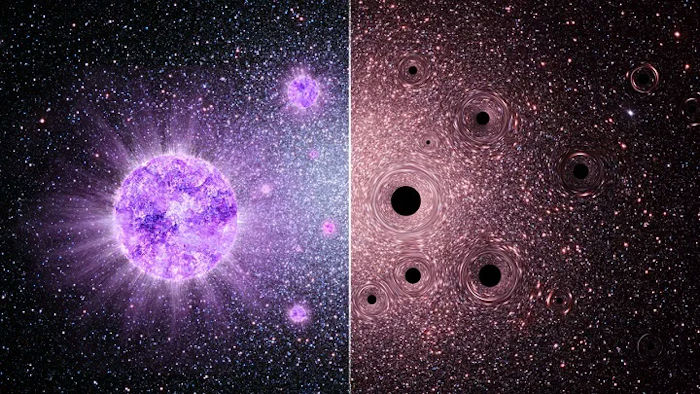


“Are there different types of black holes? New method puts Einstein to the test”


Black holes are considered cosmic gluttons, from which not even light can escape. That is also why the images of black holes at the center of the galaxy M87 and our Milky Way, published a few years ago by the Event Horizon Telescope (EHT) collaboration, broke new ground.

Click here to read the article
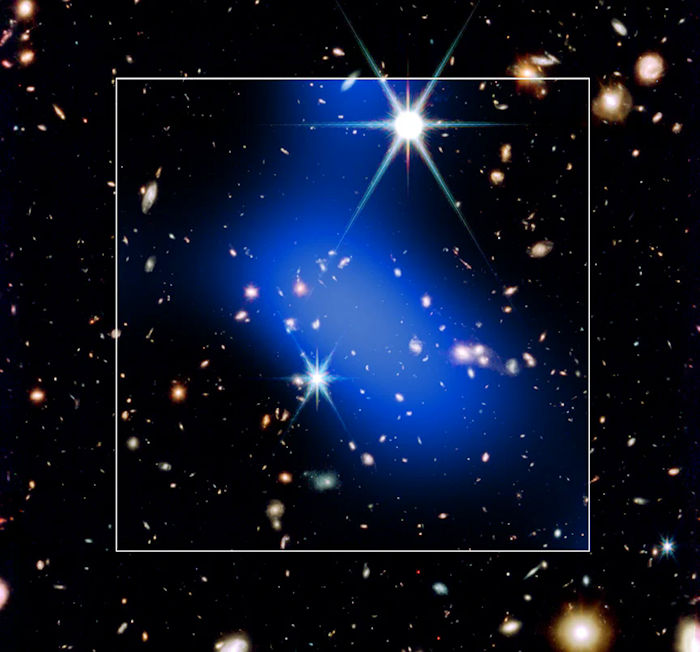


“Machine Learning Discovers Quasars Acting as Lenses”


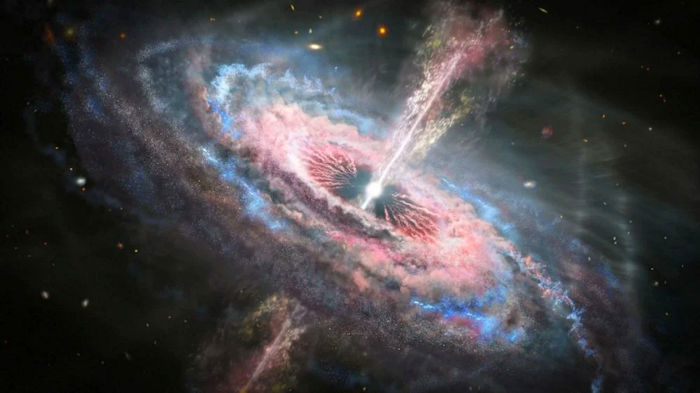
Quasars acting as strong gravitational lenses are among the rarest finds in astronomy. Out of nearly 300,000 quasars catalogued in the Sloan Digital Sky Survey, only twelve candidates were identified, and just three confirmed. These systems are exceptionally valuable because they allow astronomers to precisely measure the mass of a quasar’s host galaxy, something that is normally impossible given that the overwhelming brightness of the quasar itself drowns out its surroundings.

Click here to read the article


“Our solar system is moving 3 times faster than expected”


Our solar system was thought to be moving at about 515,000 mph (828,000 kph) through space as it orbits the center of our Milky Way galaxy. But a new study from researchers in Germany suggests the solar system is moving more than 3 times faster than that.

Lead author Lukas Böhme said: “Our analysis shows that the solar system is moving more than 3 times faster than current models predict. 

Click here to read the article


“Could black hole shadows reveal new theories of gravity?”


black hole is a region of space where gravity is so strong that not even light can escape. And, as bizarre as these objects may seem, they are predicted by Einstein’s theory of relativity. But black holes also feature in other competing theories of gravity, too.

And now, an intriguing new study says black holes could one day help us test – and likely disprove – these alternative theories.

The study focuses on a part of a black hole known as its shadow. This is a region around twice the size of the event horizon – the point of no return – where the black hole’s gravity pulls light in, making it appear dark to us.

Click here to read the article