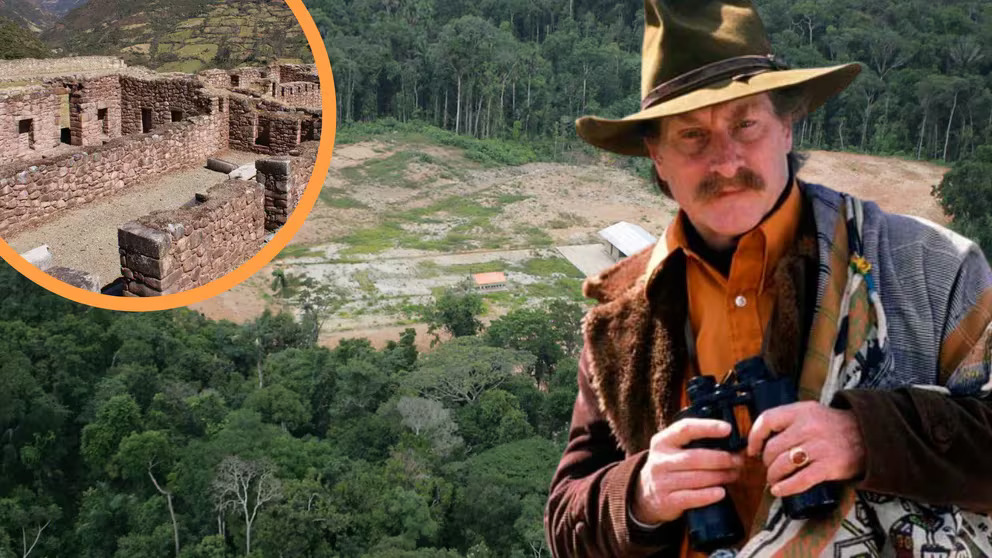
“Explorer Eugene Savoy, known as ‘Indiana Jones’, discovered more than 40 lost cities in Peru”


By Rafael Montoro

The American carried out several expeditions in the Peruvian jungle and the Andes, obtaining good results. Among his most notable discoveries are Vilcabamba, the last Inca refuge from the Spanish invasion, and Gran Pajatén.

In 1957, the American received an invitation to join an archaeological excavation in Peru, but the project did not materialize.

In the vast lands of Peru, a man whose figure evoked that of ancient heroes, launched himself into adventure with immeasurable determination. His name remained in the shadows for a time, but his exploits expanded with the strength of someone who challenges the unexplored. From 1957 to 1984, this explorer crossed mountains, jungles and rivers with an almost supernatural energy, as if nature itself had chosen him to reveal its best kept secrets.

With his imposing appearance and a fame that extended beyond the borders, this adventurer could well have been the personification of ‘Indiana Jones’, the iconic character of Hollywood cinematography. Like the famous archaeologist, he combined an insatiable curiosity with indescribable courage, facing the dangers of Peru with audacity. His figure rose like a fictional hero made real.

Douglas Eugene Savoy (1927-2007) is the name of the explorer described in the previous paragraphs. The man who first saw the light in Bellingham, Washington, was never destined for an ordinary existence. From the vastness of the north, something greater than himself led him to distant lands, where adventure awaited him with open arms, as if his essence was predestined to conquer the unknown.

His restless spirit led him to transcend the borders of his native country, becoming an explorer of legendary proportions, a man who, far from being contained by the known world, set out to discover the hidden mysteries in the vast lands of Peru and beyond.

Eugene Savoy began his academic training at the Jesuit University of Portland, initially attracted by a religious vocation. However, his passion for ancient cultures and indigenous peoples soon led him to abandon these studies to devote himself to folklore, archaeology, mythology, religion and the ethnography of American civilizations.

In 1957, the American received an invitation to join an archaeological dig in Peru , but the project did not materialize. Despite this, his visit to the Andean country became a turning point. He decided to settle in Peru and embark on an exploration mission that would last until 1984. During this extensive period, he discovered more than 40 lost cities of various pre-Columbian cultures . His work offered Peruvians a new understanding of their historical heritage.

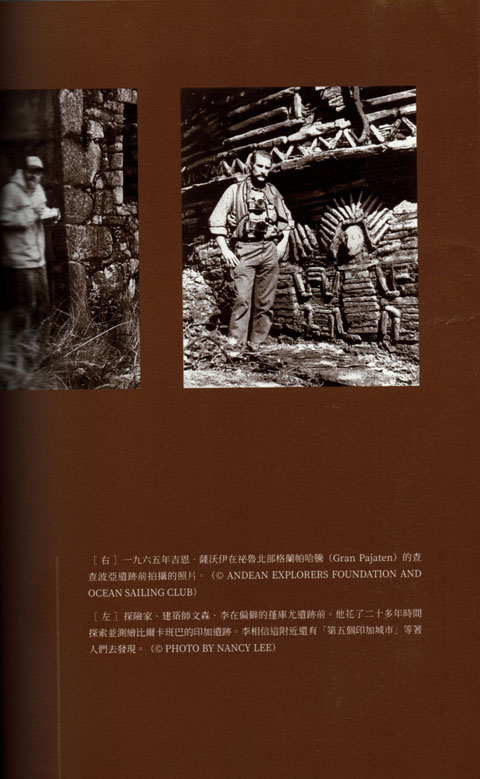
In 1965, upon arriving at Gran Pajatén, Savoy discovered sculptures depicting condors and figures adorned with halos. (El País)In 1965, upon arriving at Gran Pajatén, Savoy discovered sculptures depicting condors and figures adorned with halos. (El País)

Eugene Savoy, the explorer who discovered more than 40 lost cities in Peru

In the 1960s, Douglas Eugene Savoy carried out several expeditions in the Peruvian jungle, the Andes and the Amazon, obtaining good results. Among his most notable discoveries were Vilcabamba , the last Inca refuge from the Spanish invasion, and Gran Pajatén . For the explorer, these sites were tangible proof of his theory on the origin of Andean cultures.

In his view, the roots of these civilizations were not in the Andean valleys, but in the jungle regions. With these discoveries, he challenged traditional conceptions about the origin of Andean cultures

The adventurer shared his experiences about the places he explored in a conversation with Discovery Networks , whose channel broadcast his statements through a documentary. “I explored all of Ecuador, Colombia, Venezuela, (as well as) all the tributaries of the Amazon (…) I found nothing. Honestly, if there were ruins there, I would have found them. They are not there, they are in Peru ,” he said.

For decades, Savoy devoted himself to exploring the most remote regions of Peru. His search for pre-Columbian ruins took him through the vast Peruvian jungle and valleys, discovering ancient cities and villages that had remained hidden. His tireless and meticulous work allowed him to document more than 40 collections of ruins, which are located throughout the country.

Regarding his findings, the explorer said the following: “We found about 40 sites located in 40 different places. (They were) linked by stone paths and each one included between 400 and 500 buildings,” he said in the documentary by the international media.

In 1965, upon arriving at Gran Pajatén, Savoy discovered sculptures depicting condors and figures adorned with halos. Throughout his life full of adventures and explorations, he followed his dreams with determination and managed to obtain these remarkable discoveries.

Historian Santiago Tácunan Bonifacio, in his article “An explorer passionate about Peru,” pointed out the other places that the American discovered. “His history is little known among Peruvians, despite being the discoverer of important archaeological remains such as Vilcabamba (the last refuge of the Incas, in Cusco), the Gran Pajatén (an ancient pre-Incan stone city in the San Martín region), the Gran Vilaya (an intricate stone structure that covers more than 250 square kilometers of dense jungle, in Chachapoyas), among other architectural evidence located in eastern Peru,” he said.

Ultimately, the explorer was not only dedicated to adventure , but also to an intense work of dissemination. Over the years, he produced a wide range of books, articles and essays that shared his discoveries and knowledge with the world. In addition, he contributed to television documentaries that brought his findings and his passion for ancient cultures to a global audience.


THE GENE SAVOY ROUTE – Photo Album


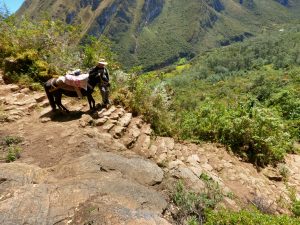
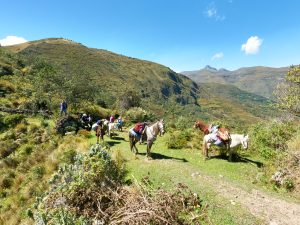
Cabalgada

We recently reported on a planned trip in Peru sponsored by Gene Savoy Xplorations (GSX). Here is an after-report on the trip from its organizer:

Update to Gene Savoy Jr. from Martin Chumbe

Seven people participated in this event.  We had talks and conversations with the populations involved in this event, about the person, and the work of your father Dr. Gene Sovoy. The objective of this CABALGATA was and will always be TO CLAIM the name of GENE SAVOY, for all that its exploration and discoveries contributed and continue to contribute to the growth of tourism and the clarification of the CHACHAPOYA culture.

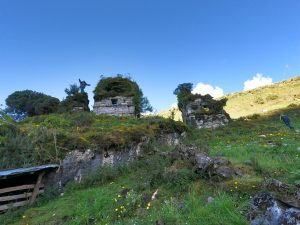
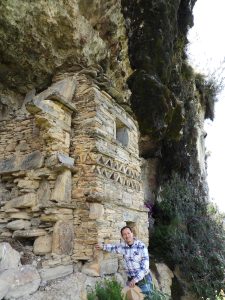
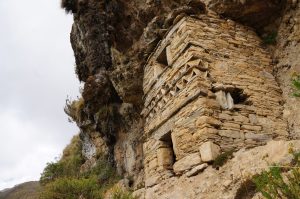
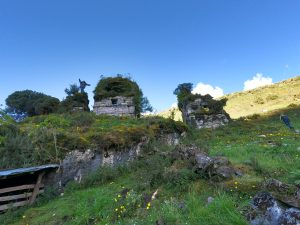
The organization of this ride called THROUGH THE ROUTES OF GENE SAVOY, was organized by me to remember that in the 1960s Gene Savoy walked for the first time and discovered numerous archaeological remains such as Pirka Pirka, Gran Chivani (today called Vira Vira ), and La Capilla that are part of the Chachapoya road. We have had meetings in each place we arrived. And we explained who arrived first, who discovered it and who Gene Savoy was during his life, which caused a lot of surprise because nobody knew. Only two or three people remembered your father in the town of Chivani. We had a meeting with the schoolchildren and left copies of the films THE LOST CITY OF THE ANDES and ROYAL ROADS TO DISCOVERY, So that the children would know the greatness of the Chachapoyas and the great work that GENE SAVOY did.

Leymebamba was a bastion of hatred towards Gene Savoy [when he first arrived], but today people have changed a lot. And after this parade, they have a vision of the work that Gene Savoy did. And many of the participants were people from Leymebamba. Today it is no longer a taboo to talk about Savoy; on the contrary, it is a reference to his great discoveries.

Our final OBJECTIVE was to open and create new alternative routes with great visual and cultural impact that have enormous potential for tourism, since today our main icon Kuelap is closed due to its daily deterioration — and disappearance if corrective actions are not taken on time.

As an agency that we project into the future, it was a TOTAL SUCCESS, because now many people ask me, they write to me that they want to do this parade again. Now the name of Savoy is heard more in Chachapoyas and on all the routes we followed. The places we visited were the following:
– Uchumarca, Pirka Pirka, Los Estribos, Michimal, Llamactambo, La Capilla and Las quinuas, all in the La Libertad region.
– Huaybamba Lagoon, Vivi Vira, in the San Martin region.
– Ulia 4100 masl, limit between Amazonas and La Libertad.
– Mishacocha Lagoon, Sierprecocha Lagoon, Inka baths, Chuquibamba, Cochamba, all this in the Amazon Region.

As you can see, it has been a great trip. Now people who knew little about him are talking about the Gene Savoy routes. The most important thing about all this is that now more is known about your father’s work. The myths of what was said in the past are already being broken.

Below are some of the photos Martin sent:


THE GENE SAVOY ROUTE – PERU TO HOST FIRST CAVALCADE


Cabalgada


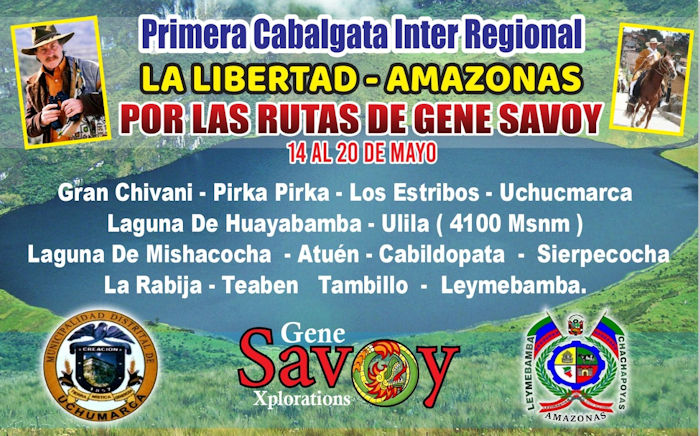
The Tourism Association of Leymebamba, Amazonas, Peru is organizing a cavalcade (horse ride) from May 14 through May 20, 2023. They have asked to use some of the proposed Gene Savoy Route for their event. The route, proposed by Gene Savoy Xplorations (GSX), seeks to publicize the finds that the legendary American explorer Gene Savoy, Sr., discovered in the 1960s and later from the 1980s through the early 2000s. His great discoveries include the fabled last stronghold of the Incas, Vilcabamba, and the mighty citadels of the Chachapoya civilization in the northeastern part of Peru Gran Vilaya and Gran Saposoa.

Martin Chumbe, GSX’s agent in Chachapoyas, Peru, has been asked to be part of the organizing committee. He said, “Because of the great contribution of Gene Savoy, the ancient Chachapya culture is known throughout the world.” The cavalcade will begin in Leymebamba and then visit sites discovered by Savoy, including Gran Chivani, Vira Vira, and Atuen. Discovery of these sites is recorded in Savoy’s acclaimed book, Antisuyo: The Search for the Lost Cities of the Amazon.

Gene Savoy Xplorations is a major sponsor of the event and has granted permission for the cavalcade to use the name of Gene Savoy. Gene Savoy Xplorations, through its representative in Lima, Ismael Seoane, is working with the Peruvian government to acknowledge the Gene Savoy Route in northeastern Peru just as it recognizes and promotes the Inca Trail, which has become famous for its connection to Machu Picchu.

Click Here to view a video of Gocta Falls near Chachapoyas in Amazonas, Peru.


“VILCABAMBA: Last Stronghold of the Inca”


The Peruvian jungle holds the ancient city of Vilcabamba, the secret center of Inca resistance, which held out for 40 years against Spanish invaders.

The print edition of the January/February 2020 issue of National Geogrpahic History magazine holds an article on the lost city of the Inca, the secret refuge of Vilcabamba: “VILCABAMBA: Last Stronghold of the Inca” by Maria del Carmen Martin Rubio. An insert to the article (pp. 70-71) presents Gene Savoy’s convictions about the location of Vilcabamba.  Images of the insert appears below.

Click on the images to magnify:


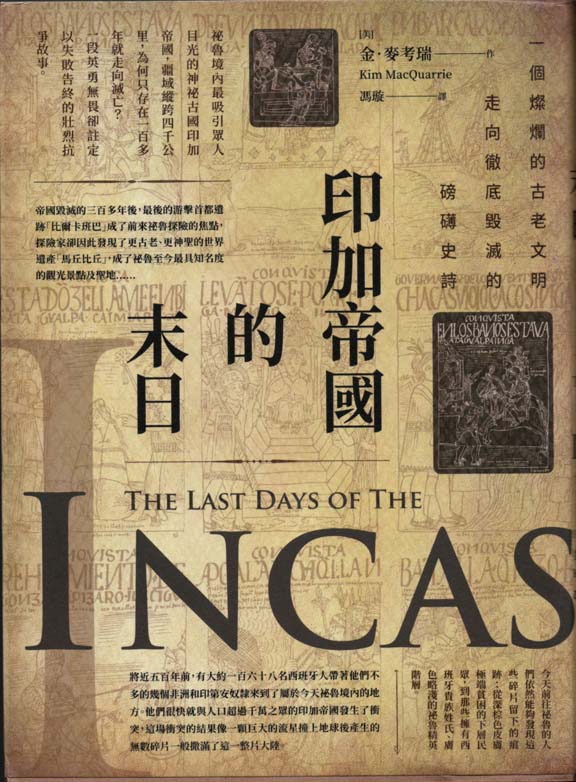
Peru Expeditions Promoted in Taiwan


Freedom Hill Creatives publishing house in Taiwan is publishing a Chinese language edition of Kim MacQuarrie’s book The Last Days of the Incas, in which Gene Savoy’s discovery of Gran Pajaten is featured.


Explorer Gene Savoy Appears in Catholic Textbook

Elizabeth Reece, a member of the administrative staff at the Chancellery offices of the International Community of Christ, occasionally checks the internet for new references to Gene Savoy’s explorations and his other works since people will often use him as example in books they are writing about Peru or Amazonas.

In November 2014 she found a reference to “Gene Savoy” being scheduled as a topic of a high school Catholicism class at St Joseph’s High School in Metuchen, NJ, and she contacted the class instructor, Thomas Cunningham:

Dear Mr.Cunningham,

I stumbled across your teachers outline for the 2014-2015 Religious Studies class at St Joseph High School. On the day of 11/25/14 you listed Gene Savoy as a topic for discussion during Catholism. Since, I have studied and worked with Gene Savoy, (the explorer, religious scholar and teacher who established the International Community of Christ) from 1978 up to his passing in 2007 I wanted to asked if this was the same individual discussed in your class. If so would you be willing to share some details of the reactions received from your students during the discussion, or what source material they used. If it is the same person, the idea that you would offer your freshman class an opportunity to comment about him is very intriguing to me. Thank you very much, I hope this letter is not too intrusive.
Respectfully,
Elizabeth Reece


This was his response:


Hello,
The section on Gene Savoy was covered in our textbook in Chapter 4. There is a short story about Gene Savoy getting lost in the Jungle. He finds himself getting very anxious about the situation, but after settling down… He begins to pray for guidance from God. He eventually is able to find his way out of the jungle , and credits that “quiet time with God” with his trek out of the forest. My students were very interested with the incident. The textbook contains many short stories like this one….

Take Care,
Tom Cunningham


This led Elizabeth to a rather interesting discovery: In Catholic high school classes across the country who use the textbook Path Through Catholicism (Mark Link, 1991), there is a story told by Gene Savoy being used as an example that “God is present in all.”

Here is the article that appears on page 49 of the textbook:


2016-SPM-AEF-Gene Savoy story


Meet Another Side of Reverend Canon Gary Buchanan


2016-SPM-Gary_Buchanan_web_site


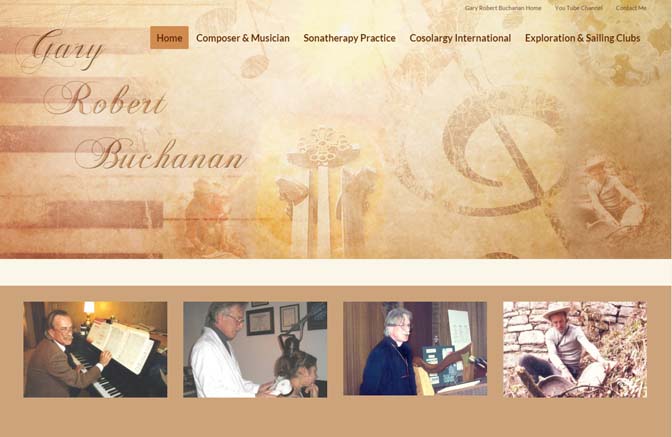
Meet a few sides of minister, composer and musician, explorer, sonatherapy researcher and therapist Gary Buchanan on his new web site.

There you will be able to

  • link to online videos of compositions and performances, watch Sonatherapy videos online,
  • read his biography as minister and Community member and find links to some of his spiritual writings,
  • and read his biography as an explorer and learn more about the Andean Explorers expeditions he took part in and about the Andean Explorer videos he composed music for.

Visit Gary Buchanan’s web site: garyrobertbuchanan.com.


You’re Invited: Andean Explorers “Spirit of Exploration” Cruise


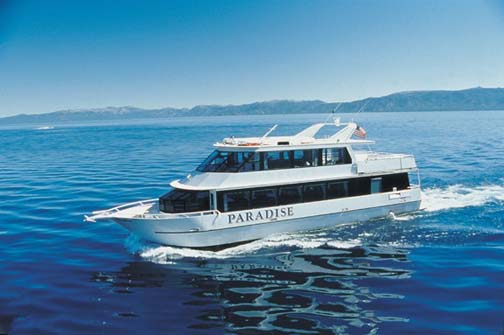
Tahoe Paradise aerial view

Tahoe Paradise aerial view


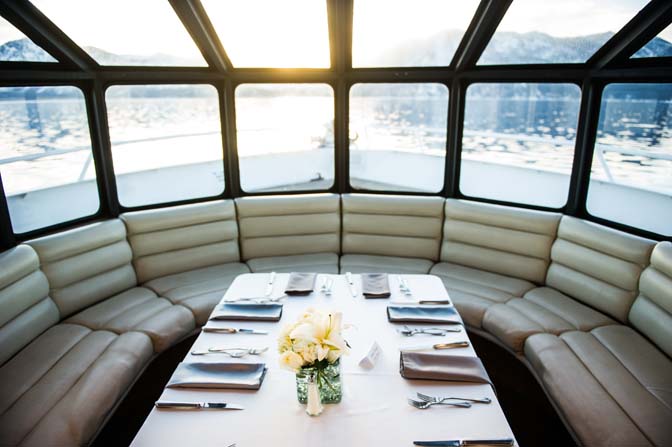
The Andean Explorers Foundation & Ocean Sailing Club will host its annual meeting and awards program for club members and guests during a fun adventure cruise on the privately chartered Tahoe Paradise Yacht at beautiful Lake Tahoe. The cost of the two-hour lake cruise, light refreshments, and wine is $75 for non-club members or $50 for active club members.There is a small parking fee at the marina. Non-member donations of $75 will activate your club membership. Proceeds after event cost will benefit the club’s exploration initiatives. This will be a fun time to spend with colleagues, network and make new friends, and learn about the club’s upcoming adventure trips… and see one of the most beautiful natural wonders of the world — Lake Tahoe — at one of the most ideal times of year! For complete information see Andean Explorers on Facebook and the Facebook Events page www.facebook.com/events/915247708547480/.

RSVP asap to sean@xpeditions.org.

Make your donation securely by PayPal at www.aefosc.org/wordpress

or

Send checks to Andean Andean Explorers
PO Box 201, Reno, NV 89504


Tahoe Paradise dining area stern

Tahoe Paradise dining area stern


Sean Savoy interviewed by New Dawn on Andean expeditions


STOCK-REP-AEF-flagsDouglas Eugene “Gene” Savoy (1927-2007) was an American explorer, author, religious leader, and theologian. He undertook a series of daring expeditions to the Andes and the Amazon jungle in search of the ancient mysteries of the Incas, Aztecs and Mayans. He is perhaps best known for bringing to light a number of Peru’s most important archaeological sites, including Vilcabamba, the last refuge of the Incas during the Spanish Conquest.

Today Gene Savoy’s work is continued by the religious community and the educational institution he founded. New Dawn recently spoke to Gene Savoy’s son Sean about his father’s remarkable discoveries and insights based on the lore of lost civilizations.


< Download a PDF of an abridged version of the New Dawn interview HERE. >


The Yungay Pilgrimage Experience 2014


2009-PUL-Sean-SFuellingDuring Convocation week, on Saturday, October 11, 2014, Bishop Sean Savoy delivered a brief review of the experiences the pilgrimage group had during their time in Yungay on the 2014 Peru Tour, which Rev. Sean headed.

The city of Yungay will be familiar in name to all readers of Jamil: Child of Light as the one-time home in Peru of the Child Jamil and his father, the Most Right Reverend Gene Savoy.

The pilgrimage portion of the tour was undertaken by more than a dozen Community members and friends of the Community.


< Click here to listen to Sean’s report on the Yungay pilgrimage experience (14 minutes) >