Presented at the 2016 Cosolargy Forum
September 9, 2016
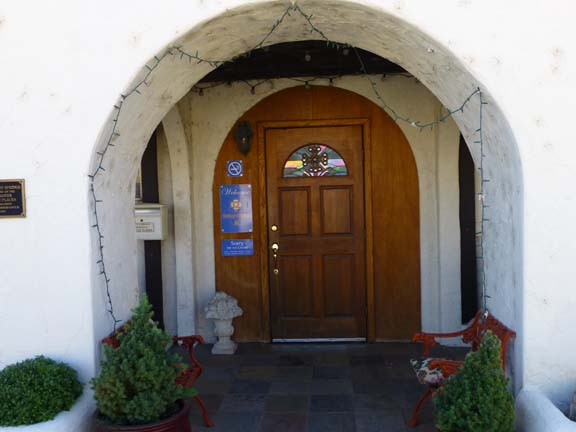
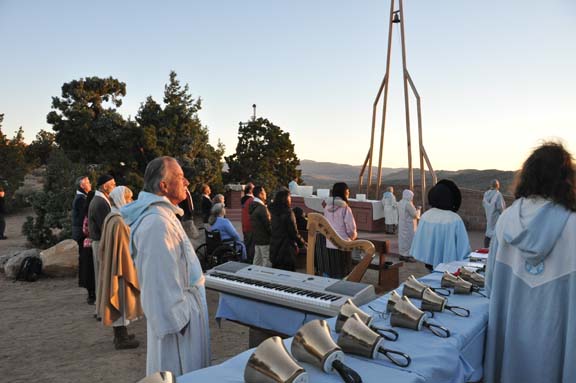
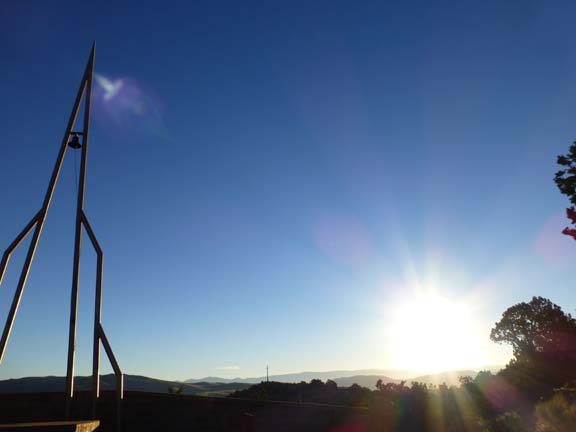
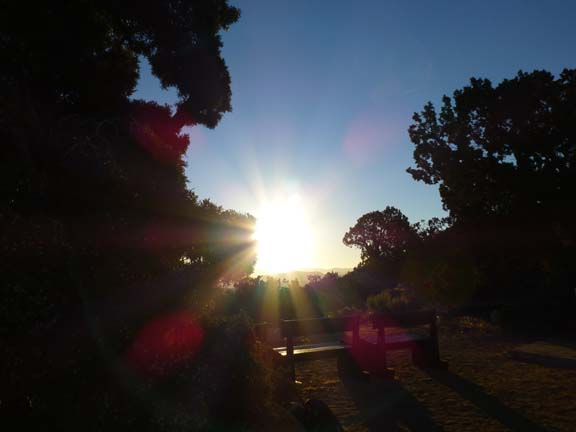
Monastery Gardens
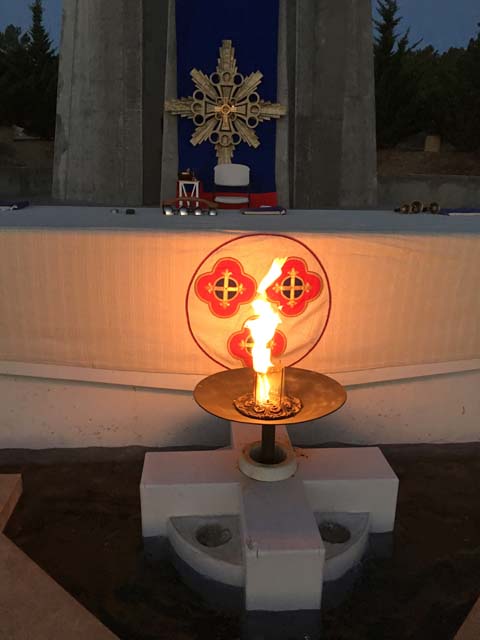
Red Rock Consecrated Sanctuary
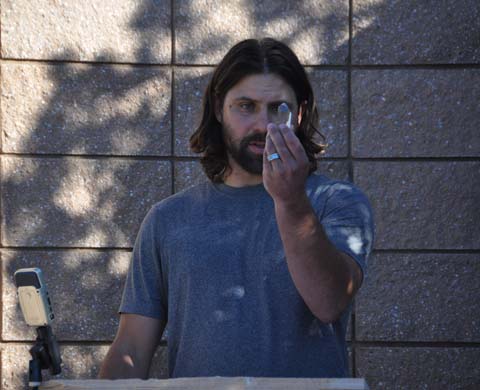
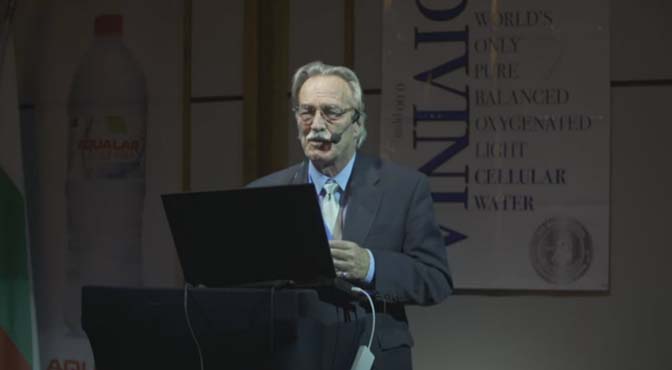
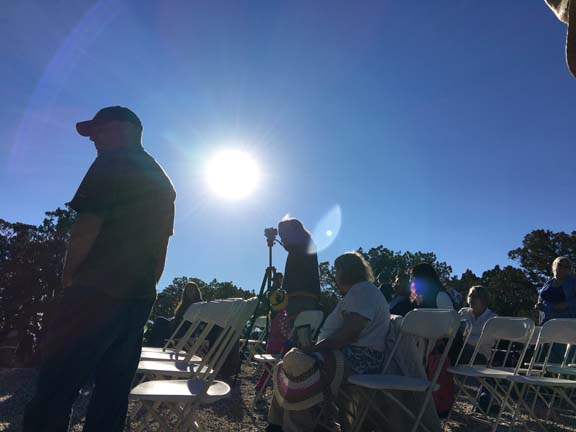
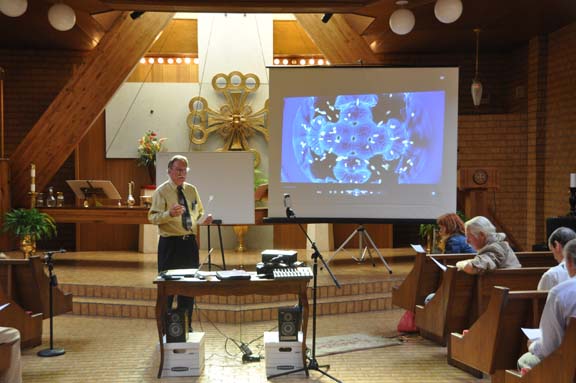
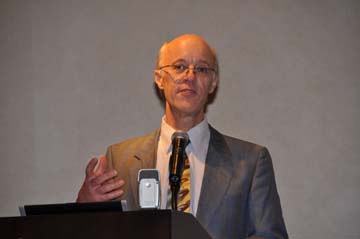
Ryan Anderson presenting “Crystals: Tools for the Modern Cosolargist”
Hello everyone, my name is Ryan Anderson.
I am a student of Cosolargy, and have been coming out to Red Rock since 2009. Today, we are going to dive into the fascinating world of crystals.
The word crystal is derived from the Greek word krystallos, which means, “frozen light.”
How many of you have experience with crystals?
I see a lot of you raised your hands.
For those of you that did not raise your hands, you may have a closer relationship with crystals than you think.
Whether we are aware of it or not, humans who are integrated into the modern world of technology utilize crystals in some sense every day.
The chips in our cellular telephones are comprised of the element Silicon, which is the same element that makes up a quartz crystal.
Same goes for solar cells or solar panels, laptop computers, lasers, even the chips in our vehicles, are made up of laboratory grown crystals from the element Silicon.
Silicon is the 14th element on the Periodic Table, and is one of the fundamental constituents of the universe. It is one proton heavier than aluminum, one proton lighter than phosphorus.
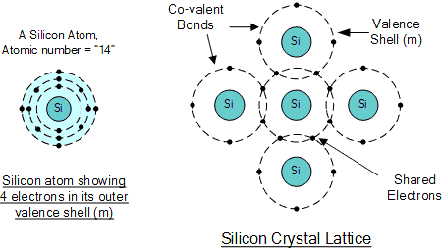
Silicon
Silicon is readily available, all over the world.
It is one of the most abundant elements comprised within the earth’s crust.
Scientists have come up with simple and reliable ways of growing silicon into perfectly structured crystals, which is one of the primary technologies in modern computer chip manufacturing.
Recently, scientists at England’s University of Southampton, have successfully demonstrated the ability to record and retrieve optical data from crystals, using what they call… get this… Five dimensional laser technology.
They are calling their project the ‘Superman’ memory crystal:
http://physicsworld.com/cws/article/news/2013/jul/17/5d-superman-memory-crystal-heralds-unlimited-lifetime-data-storage
The five dimensions I am referring to aren’t exactly the dimensions that come up in Cosolargy, science fiction films, and some physics.
Let me see if I can explain this to you:
The first 3 dimensions referred to in this technology are the x-axis, the y-axis, and the z-axis.
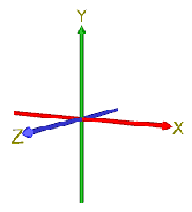
X-axis, Y-axis and Z-axis
The 4th dimension in this technology is axis orientation, which is the plane or planes in which the crystals can be rotated or moved.
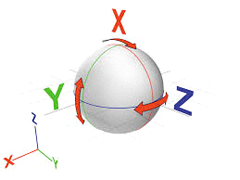
X, Y and Z rotation
The 5th dimension in this technology is the amount of the intensity of Light that the laser can deliver to the crystal.
This technology stands to provide a way for humans to store data in massive quantities, for a practically unlimited lifetime.
Using this technology, the scientists were able to record 360 terabytes of information onto fused quartz discs using ultra-rapid pulses from lasers.
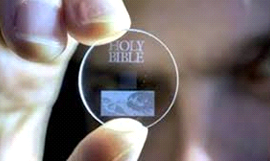
Scientists are able to record 360 terabytes of information onto fused quartz discs using ultra-rapid pulses from lasers.
The data recorded using the laser produces short and intense pulses of light — on the order of one quadrillionth of a second each — and it writes the file in fused quartz. Reading the data back requires pulsing the laser again, and recording the polarization of the waves with an optical microscope and polarizer.
So, to break this down into the simplest of terms, light is being used to store and retrieve information from crystals.
This is not really surprising, based on some of the things we have learned in the system of Cosolargy.
I see some striking similarities between these scientific techniques, and some of the techniques that we as Cosolargists use to absorb and reflect sunlight.
For example, I mentioned that scientists are recording data onto crystals using short and intense pulses of light. This technique, is quite similar the blinking technique.
It is also similar to the thatch technique.
It is similar to the technique we use for looking at the sun through the leaves of a tree being gently blown by the wind, or by looking at the reflection of the sun in the ripples of a water source, like a lake or pond.
It is the same basic concept: pulses of light being used to send and receive information.
So, let’s take this a step further.
We understand that crystals have the capability to store massive amounts of information. Many of the crystals that we see in rock shops, or have in our homes, were formed tens of millions of years ago, deep within the earth, by immense amounts of heat and pressure. These crystals, being formed deep within the ground, have been exposed to subtle vibrations from moving tectonic plates and low frequency sound waves from the pulse of the earth. So one could conclude, based on our understanding of their ability to store information, that crystals, in a sense, contain the vibrational memories of the Earth.
So, how do we access that information that is stored within crystals?
Perhaps, in a fashion similar to modern day scientists, we access can access the information using pulses of Light from the Sun, only using our eyes, and our brains, as the computer processor, and receiver of information.
Crystals can be used as an intermediary between yourself and the Sun for many of the techniques you have learned throughout your studies of Cosolargy.
It is quite simple to place a crystal on a stand or a table, and position yourself in a place where the sun is reflecting off of one of the faces into your eyes.
It is also possible to simply hold the crystal in your hand and position it to reflect into your eyes. While these methods are basic, and do not really require a demonstration, there is another way to optimize the polarized light of the sun reflecting off of, or through, a crystal.
What I really want to familiarize you with today is how to use crystals to produce saturated colors.
When a color is fully saturated, the color is considered to be in its purest and truest version.

Original picture

50{1fa2ef75e2e78439128d99df03acfe1d8ee3047374abe3d4676fe3470ff8b909} saturation applied
When you look at the trees right here [at the Sanctuary], and you see the green leaves, that is not true green. It is a combination of many different wavelengths, and the result is, well, greenish.
Even when you look at a rainbow in the sky, the colors you perceive are not saturated colors, because the atmosphere between you and the rainbow creates distortion.
One could presume that the colors we see in nature are not pure colors, but they are a degeneration of Light.
Perhaps some of you have experience with crystals throwing off saturated colors, or maybe you have used prisms to achieve the same effect, or perhaps you have seen the phenomenon before and were unaware of what was happening.
My first experience with saturated color was about 8 years ago, and was purely by chance.
I had a small, clear quartz crystal sitting in the middle of my kitchen table, left there randomly from the day before.
It was sometime in the afternoon when the sun was a bit lower in the sky.
The sun was shining in through a window in the kitchen and hitting the crystal that was sitting on the table.
I was walking from my living room to my front door, and as I walked by the kitchen, I glanced over at the crystal, and into my eyes was reflected one of the most brilliant and colorful flashes of Light I have seen.
I stopped in my tracks, and backed up a little.
I saw the colors again, but as I moved too far back, they were gone again.
After a bit of fussing with my position, I was able to figure out exactly where to stand to see the wonderful colors that were emanating from the crystal.
Every color of the rainbow was visible, in very pure form. From where I was standing, I was seeing some of the most vivid blue Light I had ever seen in my life.
The more I leaned to the left, the colors shifted from blue, to vivid green, to electric yellow, then orange, and finally red.
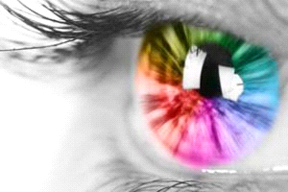
The more I leaned to the right; the colors I would see would go back up the scale, all the way past blue into indigo and violet. It was a very small window.
If I leaned too far either direction, the colors would disappear.
I stood there for a long time, moving side to side, fascinated by the vividness of these colors.
The colors were celestial and other worldly, and produced within me strong feelings of excitement, peacefulness, joy, and gratitude.
I had seen nothing like this before in the physical world.
This now makes a lot of sense to me, because I have learned that saturated colors do not occur in nature.
I left the crystal on the table in the same place, and the next day, around the same time, the sun would shine through the window and into the crystal and produce the same vivid colors.
Since then, I have played done multiple experiments with crystals to achieve the same effect.
It really isn’t too complicated, it just requires a bit of patience and some moving around.
Firstly, to expedite the process, an optically clear crystal, like this one, is ideal.
This is an optical grade quartz crystal from a recent find in Columbia.
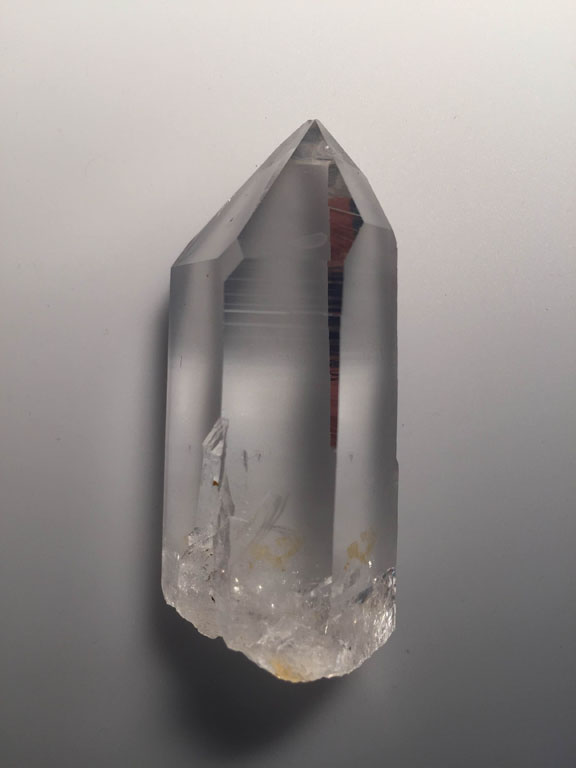
Optically clear crystal
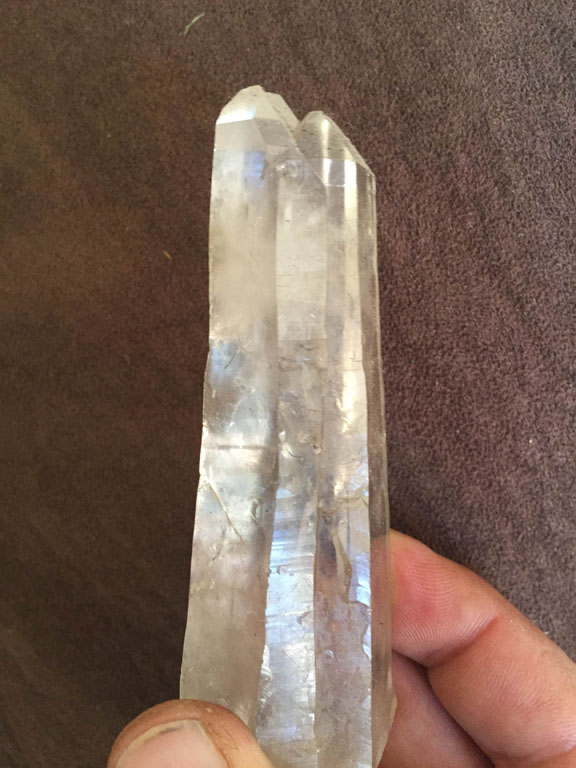
Optically flawed crystal
I have found in my research that crystals with optical qualities will throw off saturated colors more easily and effectively than crystals that are cloudy or have inclusions.
There are many optical grade crystals available to purchase online or at your local rock shop.
Some of the more affordable and easily attainable crystals for this exercise would be optical calcite.
So, what you want to do, is take your optical grade crystal, and stand near a wall outdoors.
From here, you hold the crystal up in the air and position it so the sun is shining through it and reflecting Light onto the wall.
Crystals have many faces, so you will see many different beams of polarized light shining onto the wall through the crystal.
Once you have found the right way to hold the crystal so it reflects on the wall, you want to slowly turn or rotate the crystal in either direction, until you see something special.
What you will see is a full spectrum rainbow reflecting out of the crystal onto the wall.
Once you have found the proper way to hold the crystal to where it is reflecting the rainbow of colors onto the wall, you will want to use some kind of a stand or table to hold the crystal in that position.
Ideally, you want the saturated colors to be reflecting at eye level, that way you can stand there and do your techniques peacefully, without having to worry adjusting the crystal.
Sometimes, if it is later in the day, you have to hold the crystal a lot higher have the colors reflect at eye level.
Morning or evening when the sun is lower in the sky is most ideal for this exercise.
Once you have your crystal in place, and it is reflecting saturated colors onto the wall, position yourself between the crystal and the wall, so that the saturated colors are now shining into your eyes.
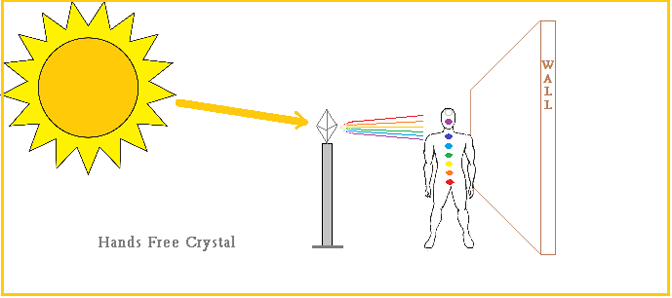
Position yourself between the crystal and the wall, so that the saturated colors are now shining into your eyes.
From here, you can get acquainted with the saturated colors.
You can figure out which way to lean to see each individual color.
Once you have this system in place, you can proceed to do any number of solar techniques you have learned, hands free.
It will be helpful, once you figure out exactly where you need to set your crystal to achieve this effect, to mark down the time of day, and take note of the position of the crystal on the stand or table.
You should then be able to come out the next day and position the crystal in the same manner, around the same time, and more easily find where the saturated colors are reflecting.
I would like to note, that for centuries, people have been fascinated by prismatic effects producing these saturated colors. A similar technique was done in the 1600’s by Sir Isaac Newton. It is recorded that he made the first prism discoveries, while he was developing a telescopic lens.
He covered the window in his room to darken it.
He cut a slit in the window cover so only a tiny beam of light was allowed in.
He then put a prism in front of the beam of light, and noticed a rainbow on the opposite wall.
He concluded that light is a mixture of all of the colors and the prism separated them into red, orange, yellow, green, blue, indigo, and violet.
As the light travels from the air to the prism, it slows down as it enters the prism.
If light enters the prism at an angle, this slowing makes it change direction, as well as speed.
The bending of Light is called refraction, and is determined by the wavelength and the angle the light hits the surface of the prism.
Each color has a slightly different wavelength, so the colors are dispersed at different angles according to their respective wavelengths.
Interestingly enough, it is possible to put another prism in the path of the colored rays in such a way that they will emerge from the second prism as a beam of white light, and the light beam will have returned to its faster speed in air.
The thatch technique we learned about in the academy texts, which involves spreading your hands open and waving them in front of your eyes while looking at the sun, can also produce saturated colors.
Using crystals to reflect the saturated colors is just a quick way to achieve the same goal.
Some Cosolargists are familiar with saturated colors, as they can be present while experiencing having 5th dimensional experience or vision.
I believe it is important for all of us to familiarize ourselves with these colors, to know what they look like, and feel like, as they can be useful in recognizing when we are having a 5th dimensional experience.
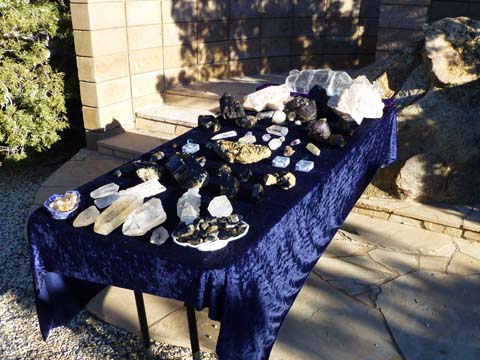
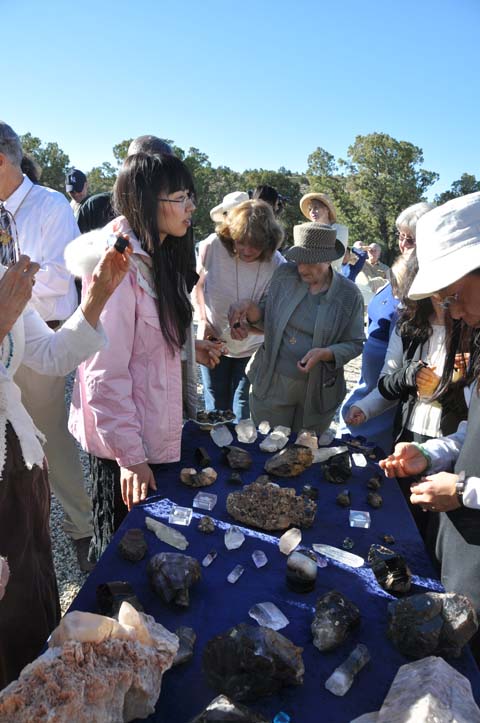
So, in front of me is a table of crystals. In a moment, I would like everyone to feel free to come over and have a look at what’s here.
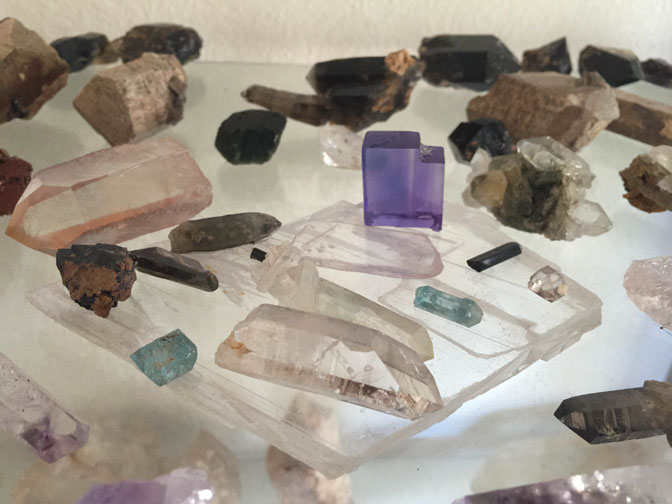
Crystal display
There are crystals on the table from all over the world, including South America and Africa, but most of them are local, from California.
Feel free to pick them up, hold them, whatever you want.
But first, to take to topic of crystal memory one step further, let us consider this final idea.
Crystals, spending most of their existence in the ground, have been subjected to the pulse of the earth for millennia.
We can presume, from what we know about the memory and storage capabilities of crystals, that they contain subtle information from of our planets past.
Could it be possible, that we, as humans, could use crystals, to reflect the Light of the Sun into our eyes and download the terrestrial memory stored within said crystal?
I believe, that using the Light of the sun, it is possible to process the geo-information stored within crystals. In the same manner we process intelligence factors from looking at the sun.
I would urge each of you to do your own experiments with crystals, play around and saturated colors, and record your data.
— written and prepared by Ryan Anderson