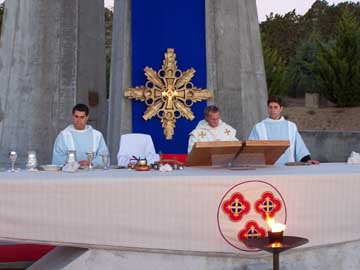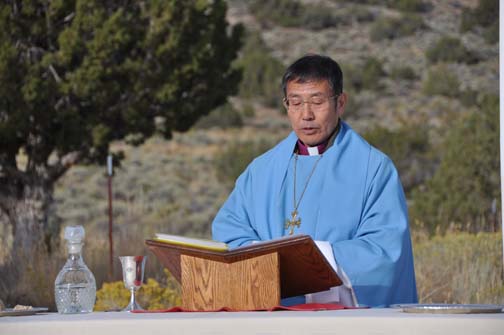
Rt. Rev. Yukinori Matsushita officiating Communion Service at the Church of the End Times PHOTO: Stephan Fuelling
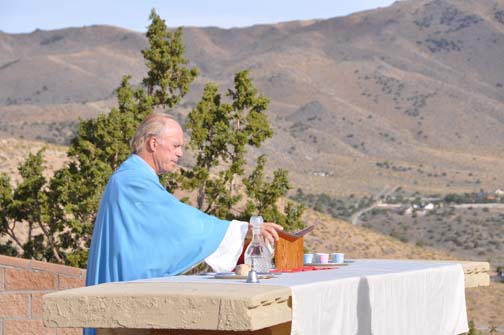
Rev. Jim Elliott performs Communion Service at the Church of the End Times PHOTO: Stephan Fuelling
The 2015 Convocation of members of the International Community of Cosolargy/Christ took place from September 9 through September 13. Lecture programs included the Clergy Counsels and the Residence Training III Seminar on COLOR & SACRED IMAGERY. Later in the week, Residence Training in Christology and Liturgical Practice was held for those needing to fulfill those requirements.
To open the Convocation week, the Residence Training III program, “Color & Sacred Imagery,” was presented in the new multimedia format that was developed in 2009 to improve the original 1980 presentation. Highlights of the program were accentuated with live presentations by Rebecca Willis on gemstones, Robert and Noriko Roy on jewelry, Elizabeth Reece on stained glass, and Gary Buchanan on recent developments in sound and light therapy research. The seminar connected those in attendance to profound concepts through the Oral Tradition of the School.
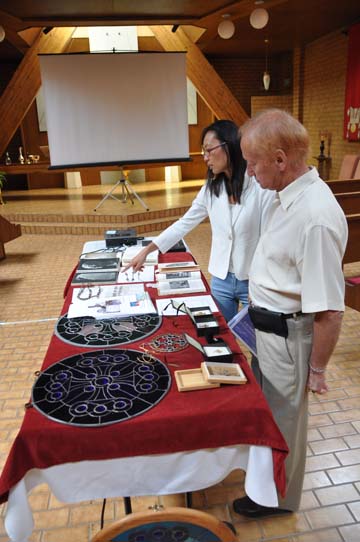
Revs. Noriko and Robert Roy present Jewelry Guild display. PHOTO: Stephan Fuelling
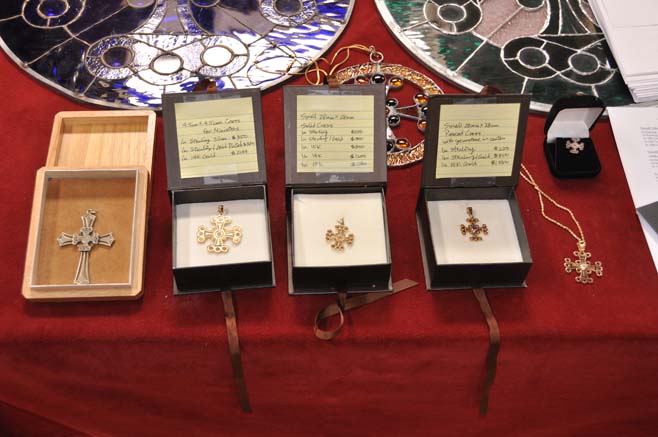
Jewelry Guild display of cross pendants PHOTO: Stephan Fuelling

Sacred Thread design on display during residence training seminar on Color & Sacred Imagery PHOTO: Stephan Fuelling
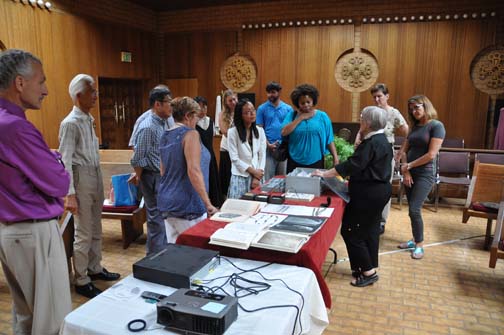
Rev. Canon Rebecca Willis presents during residence training seminar on Color & Sacred Imagery PHOTO: Stephan Fuelling
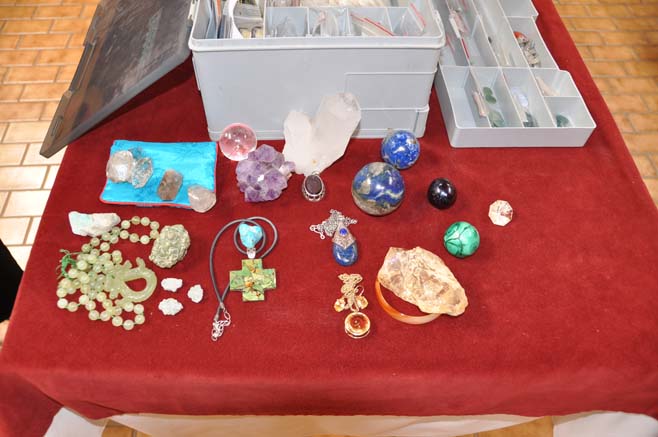
Partial display of stones and minerals presented during residence training seminar on Color & Sacred Imagery PHOTO: Stephan Fuelling
At the Clergy Counsels, this year held at the Red Rock Sanctuary Monastery Gardens, Bishop Gene presented a preliminary multi-year plan of action for the advancement of the religious arts, spiritual sciences and therapeutic technologies of Cosolargy. His overview began with the establishment of The Community in Mexico; the construction of another self-sustaining, off-grid and solar-powered parsonage at the Sanctuary; and an update of the Sanctuary tax exemption, which is now complete.
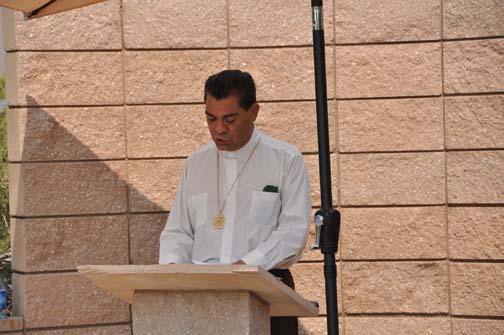
Rt. Rev. Gene Savoy Jr. delivers 2015 Counsels lecture PHOTO: Stephan Fuelling
Bishop Gene went on to explain that the most important and primary goal and mission of The Community is to reach out and inspire people and that this is accomplished through The Academy and the Jamilian University, by the three primary ordinations of water, fire and the Light. He then went on to discuss the restructuring of The School by means of social media and the expansion of the Cosolargy Institute of Japan which hosted the first international Cosolargy conference earlier this year in May. Besides The Academy texts having been translated in Japanese, the Project X text, Jamil: Child of Light, and two prophecies have also been translated for distribution.
Returning to Mexico, the Bishop went on to explain his vision for Community Centers in various parts of the world which would revolve around the concept of healing attached to mineral springs and geothermal waters. The idea he presented is to locate places around the world that can operate as healing centers which can then fund the primary objective which is the Cosolargy Centers. The places he mentioned were: Japan (already established), Mexico (in process), Peru, New Zealand, and Europe (possibly Ireland, Portugal and the Czech Republic).
The Counsels closed with a review of the accomplishments achieved at the Red Rock Sanctuary over the past several years, including the renovation of the churches of New Epiphany and New Pentecost; the acquisition of three horses; the building of greenhouses and vegetable gardens; and the constriction of the pier at the reservoir. Plans are also in the works for the growing of the herb gardens. The Bishop finalized his remarks with a reading from the Book of God’s Revelation.
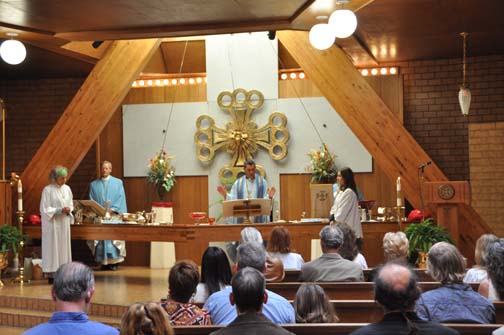
Saturday Communion Service in Chapel of The Holt Child PHOTO: Stephan Fuelling
On Saturday morning, participants gathered at the Chapel of the Holy Child in Reno for a Community Communion Service. In public presentation at the Chapel of the Holy Child during the Service, Sophia Savoy was received into the Minor Order of Acolytes and took her place for the first time in acolyte service.
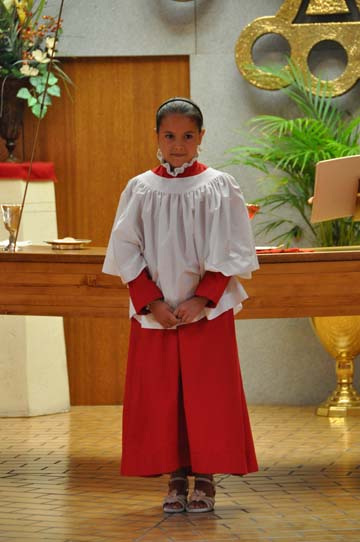
Sophia Savoy recognized as new Acolyte by the congregation PHOTO: Stephan Fuelling
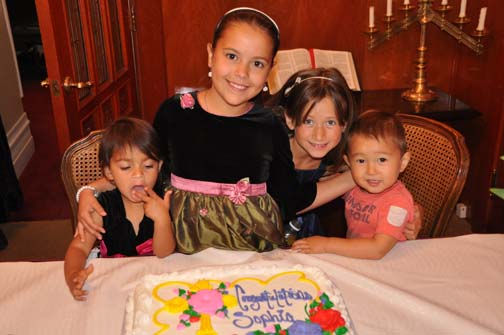
Sophia Savoy and friends at reception table PHOTO: Stephan Fuelling

Reception cake for Sophia Savoy to congratulate her on her appointment to the Minor Order of Acolytes PHOTO: Stephan Fuelling
On Sunday morning, as per usual, a concelebrated Sunrise Divine Service was held at the Cathedral Church of the Americas at Red Rock Consecrated Sanctuary, followed by a sumptuous outdoor brunch hosted by Revs. Mary and Peter Foust at the Refectory.
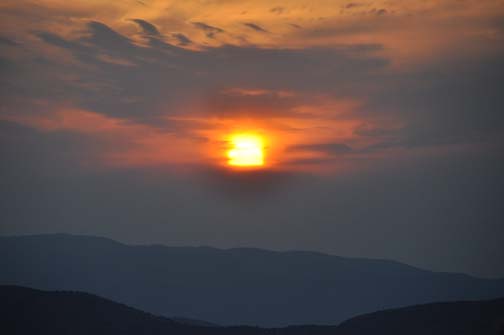
Sunrise viewed from Cathedral Church of the Americas PHOTO: Stephan Fuelling
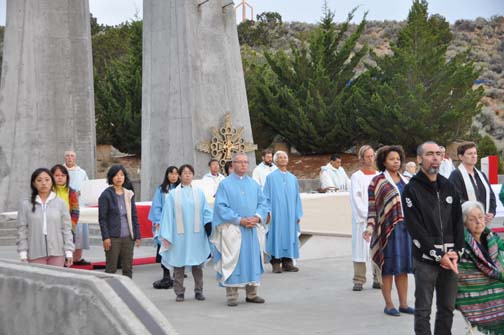
Ministers and congregation awiting sunrise at Cathedral Church of the Americas PHOTO: Stephan Fuelling
The Convocation concluded that afternoon with a two-hour chartered yachting experience across Lake Tahoe. On board the Tahoe Paradise, the Andean Explorers held a short annual meeting and made announcements of future prospects and endeavors.
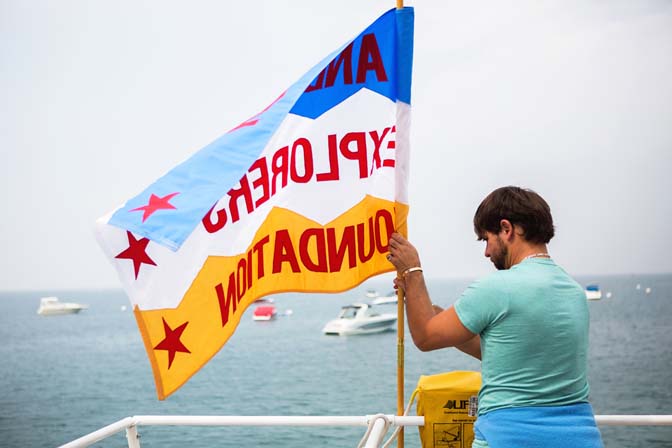
Ryan Anderson set Andean Explorers flag at helm of excursion yacht Tahoe Paradise PHOTO: Rachelle Elliott
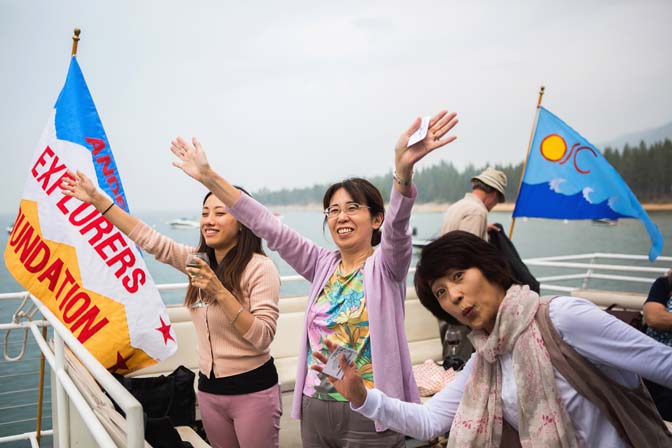
Visiting Community members from Japan (from left to right) Asuki Morii, Shoko Ohba, and Eriko Ueno wave good-bye to people on shore PHOTO: Rachelle Elliott
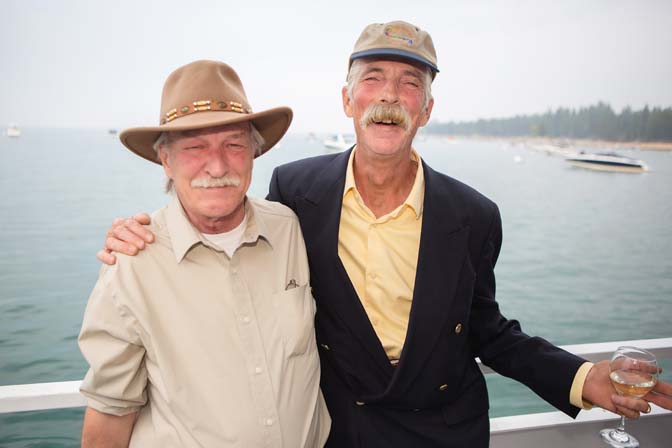
Longtime Andean Explorers members Gary Buchanan and Roger Weld on deck PHOTO: Rachelle Elliott
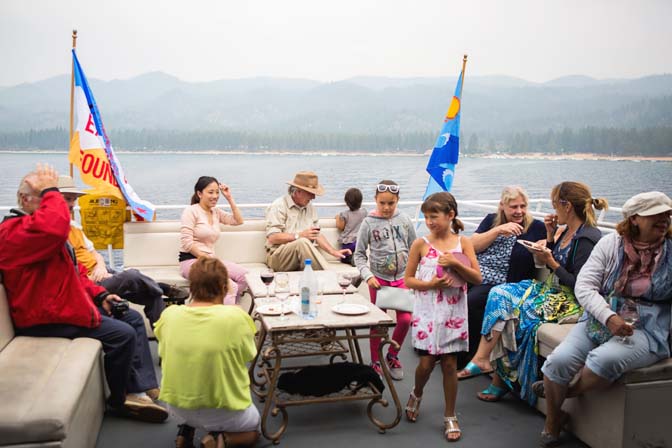
Small gathering on deck during Lake Tahoe excursion PHOTO: Rachelle Elliott
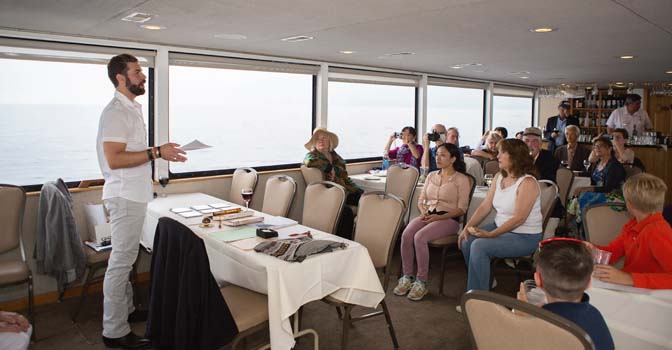
Andean Explorers President Sean Savoy leads annual meeting on board Tahoe Paradise PHOTO: Rachelle Elliott
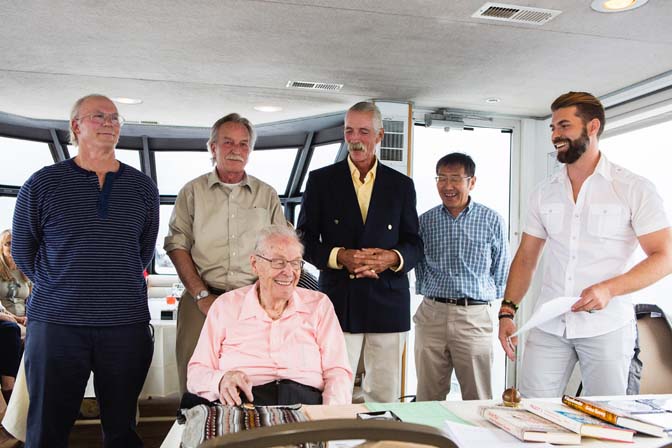
Present board members of Andean Explorers (standing left to right) Jim Elliott, Gary Buchanan, Roger Weld, Yukinori Matsushita, Sean Savoy (seated) Gerry Simonson PHOTO: Rachelle Elliott
The 2016 Convocation is scheduled to take place September 7-11, 2016. Mark the dates on your calendar and start making arrangements to attend.