Services for the Week of September 8, 2012


Saturday, September 8, 2012
10:00 AM COMMUNION
Chapel of Holy Child

RR Gene Savoy, Jr
Lector: RC Elizabeth Reece
Cantor: Rev. Michael McIntyre
Reader: Dea. Stephan Fuelling
Organist: RC Gary Buchanan


Sunday, September 9, 2012
6:25 AM NEW DIVINE SERVICE
Church of New Pentecost
Leave: 5:15
Gate: 6:05
Sunrise: 6:40

RR Gene Savoy, Jr
Concelebrant: RR Sean Savoy
Assistants:
RC Roger Weld
RC Robert Petrovich 
RC Rebecca Willis
Organist: RC Gary Buchanan

OPEN-AIR COMMUNION
Church of the Races of Man                    Rev. Ted Staver
Church of the Christian Churches                            Rev. Michael McIntyre
Church of the Americas                 Rev. Gary Huss, Sr.


Wednesday, September 12, 2012
 12 N COMMUNION
Chapel of the Holy Child
Rev. Michael Spohn


Friday, September 14, 2012
9:00 AM PRAYER & FELLOWSHIP
Chapel of the Roses
Rev. Vickie Hewlett


2012 World Conference: Dawn of the Golden Age

You’ve heard the buzz about the unprecedented spiritual awakening taking place worldwide. Discussion about this transformation is all over the media and there’s a groundswell of speculation about what’s taking place on planet Earth and what’s in store for humanity. Have you ever asked what’s really going on? And what your personal role is during this time of change? Won’t you join us in a powerful conversation about spiritual transformation?

Conference topics will range from ecology and information technology, to new spiritual revelations and personal transformation techniques. Enjoy lectures, panels, and workshops hosted by some of the world’s foremost applied and spiritual thinkers, including:

  • Puran and Susana Bair, Founders, Institute for Applied Meditation
  • James L. Oschman, PhD, Biophysicist and Cell Biologist
  • Karl Maret, MD, MEng, President of Dove Health Alliance and author of The Mystery of 2012
  • Gene Savoy, Jr., Head Bishop of the International Community of Christ and President, Nevada Clergy Association
  • Peig Myota, BSN, MSW, BCD, Holistic Health Counselor
  • Stephan Fuelling, PhD, Research Assistant Professor, Physics, University of Nevada, Reno
  • Rowena Kryder, PhD, Founder of Creative Harmonics Institute
  • Sean Savoy, Chancellor, Jamilian University of the Ordained and President, Andean Explorers Foundation
  • Jim Eaglesmith, songwriter, performance artist, and storyteller
  • Gary Buchanan, DMA, Director of Wave Front BIOresonance research, Steamboat Hot Springs Healing Center and author of SONA: Healing with Wave Front BIOresonance
  • Jacob Liberman, O.D., Ph.D., D.Sc. (Hon.), author of Light: Medicine of the Future, and Take Off Your Glasses and See

We welcome spiritual seekers of all kinds. You can register for two-day, one-day or half-day segments at spritualstateoftheworld.org, with registration fees ranging from $75 to $225.

This is a unique opportunity to gain in-depth perspective, to more fully understand the power of thought, to apply universal principles, and to be a conscious part of harmonious global coexistence.

Additional weekend events also include:

  • Friday, September 28 in the Atlantis Paradise Room: “Spirit of Exploration” gala dinner with multicultural musical performances, 7 to 10 p.m., $75
  • Saturday, September 29 at the Steamboat Hot Springs Healing Center: Open House and Health Fair, 1 to 5 p.m., 16010 South Virginia Street Reno, no charge
  • Sunday, September 30 at the International Community of Christ & Jamilian University’s Desert Sanctuary: Sunrise Prayer Service; 6:30 a.m., 5015 Matterhorn Blvd., Reno, no charge
  • Sunday, September 30 at the Atlantis: Speakers and Presenters’ Round Table discussion and reception, 1 to 4 p.m., $25 for round table, $25 for reception


2012 “Spiritual State of the World” Conference Posters Available for Printing & Distribution

CLICK HERE to download a PDF of the 2012 “Spiritual State of the World” Conference Poster that you can print and distribute or post in your vicinity.

NOTE: The poster is designed for printing on 8.5″ x 14″ paper.


The Divine Child of Virgil, Part 3

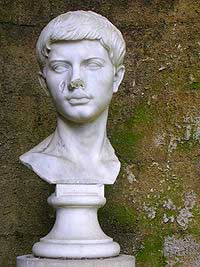
A bust of Virgil from his tomb at Naples, Italy. PHOTO A. Hunter Wright

3

As fate had it, the promising peace of Brundisium proved to be illusory and the promising boy-child which Virgil expected did not appear: if that child were to have been the child of Octavian, that child was born Julia, a girl; if one of the boys fathered by Pollios himself, one died at birth and the other was starved to death by order of Tiberius; if the promising young nephew of Octavian, Marcellus, he died unexpectedly before reaching manhood, a death that is pathetically alluded to in book six of the Aeneid.

The void in Virgil’s prophecy remained to be fulfilled in a future century. In 339 C.E. Emperor Constantine’s bishop of Caesarea, Eusebius, perhaps believing himself to be in time near the mid-point of the expected one-thousand-year Golden Age, identified the Divine Child with Christ Jesus (Oration in Praise of Constantine, chapters 19–20). Many Christians since Eusebius have made the same identification and thus made Virgil into the gentile prophet of Christ. By the Middle Ages, the poetic works of Virgil were considered to be an oraclular engine of unlimited signification by the Christian populace: Christian consultants opened Virgil’s text at random and interpreted the first verse they chanced upon in relation to their present situation in a process of divination called by them sortes Vergilianae. Modern commentators have tended to approach Virgil in less haphazard fashion, but the variety of their interpretations continue to attest to the poet’s oracular appeal.

In 1907, after centuries of speculation, three British scholars published their excellent thoughts on what they had found behind the prophetic image embedded in Virgil’s Fourth Eclogue (SEE Virgil’s Messianic Eclogue: Its Meaning, Occasion & Sources). A century of historical and literary clarifications followed. To the discoveries of these three, I now add a discovery of my own: The Divine Child who would fulfill the original intention of the Jewish oracle was born, not around 40 B.C.E., as Virgil had hoped, nor around the turn of the first millennium, as medieval Christians believed, but in the year 1959 of our own age (SEE Jamil: Child of Light).

Robert Petrovich
March 2011

REFERENCES

Apocrypha and Pseudepigrapha of the Old testament, Volume Two: Pseudepigrapha, R.H. Charles, ed. (Clarendon Press, Oxford, UK, 1913)
Link to Apocryphile Press facsimile edition, 2004 (SEE pp. 369-406) HERE.

Jamil: Child of Light, Gene Savoy (1973)
For ebook, click HERE.
For printed text, click HERE.

“The Life of Virgil,” Suetonius Tranquillus (second century B.C.E.)
To link to this article online, click HERE.

Virgil’s Messianic Eclogue: Its Meaning, Occasion & Sources; Three Studies by Joseph B. Mayor, W. Warde Fowler, and R.S. Conway; with the Text of the Eclogue, and a Verse Translation, R.S. Conway (London: John Murray, 1907)
To link to this book online, click HERE.


INSIGHT POEM: “Transition”

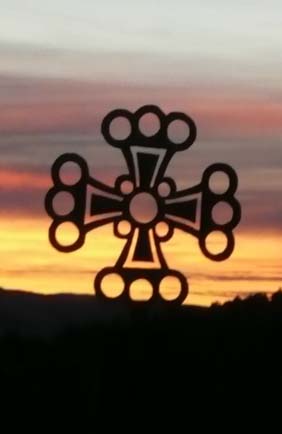
Cross at the Church of New Epiphany. PHOTO: Tom Fee

TRANSITION

My soul feels free

slowly drifting upward

becoming  one  with Spirit

as I leave my body behind

rising toward the Light

and Eternal Peace

as the vibrations  of my soul

become one

with the Rhythm of the Universe

as I again return

to the flowing Life Force

of His Divine and Holy Love.

Written 9-9-71 / Revised 11- 25-10

Submitted by Tom Fee (aka Tom McFee)


Project “X” Tours Japan Day by Day: DAY 13


21 MAY


Japan-U.S. air route on the screen in the aircraft on the way to Los Angeles. PHOTO: Ron Theriault


Breakfast at hotel. Transfer to airport today for your afternoon flight back to the U.S. via Seoul, Korea. One group returns to U.S.A. immediately. Another group remains in Seoul for extended tour.


GOOD-BYE TO JAPAN

Final breakfast in Japan PHOTO Jim Elliott


“After breakfast at the hotel, we say good-bye to all of our dear Japanese friends and head out for the airport. Some of them, Yuki, Koshu, Miyuki, and Shinobu, accompany us on the train and to the airport. It is a sad departure, as they so much enjoyed having us with them for two weeks in Japan. Now, we are on our way back to the U.S. via the same way we came, i.e., Korea and a long flight back to LAX/Reno.”

—Journal entry by Gary Buchanan


<DAY 12>


**THIS ENDS YOUR JAPAN TOUR WITH PROJECT X**


Services for the Week of September 1, 2012


Saturday, September 1, 2012
10:00 AM COMMUNION
Chapel of Holy Child

RR Gene Savoy, Jr
Lector: RR Sean Savoy
Cantor: Rev. Greg Klinedinst
Reader: Rev. Amanda Buchanan
Organist: RC Gary Buchanan


Sunday, September 2, 2012
6:18 AM NEW DIVINE SERVICE
Church of New Pentecost
Leave: 5:15
Gate: 6:00
Sunrise: 6:33

RR Gene Savoy, Jr
Concelebrant: RR Sean Savoy
Assistants:
RC Roger Weld
Rev. Ted Staver
RM Carol Ann Crabb
Organist: RC Gary Buchanan

OPEN-AIR COMMUNION
Church of the End Times                    Rev. Amanda Buchanan
Church of the Americas                            Rev. Dorothy Kubiak
Church of the New Covenant                 Rev. Michael McIntyre


Wednesday, September 5, 2012
 12 N COMMUNION
Chapel of the Holy Child
Rev. Robert Roy


Friday, September 7, 2012
9:00 AM PRAYER & FELLOWSHIP
Chapel of the Roses
RM Ileana Isfan


The Divine Child of Virgil, Part 2


A bust of Virgil from his tomb at Naples, Italy. PHOTO A. Hunter Wright

2

Virgil was a poet not a prophet. He used in his poem the phrase Cumaeum carmen (“song of the Cumaean Sibyl”) not to write an oracle but to call to mind in his Roman readers the renowned oracle which Rome called The Books of Fate (Libri Fatales). These are the same texts that we call, in the form we have them, The Sibylline Oracles. For hundreds of years, The Books had been preserved in Rome and consulted only upon order of the Senate and only in the most dangerous of times, until they were destroyed in the conflagration of the Temple of Jupiter during the civil war of 83 B.C.E. After the destruction of The Books, the Roman government took great pains to replace them from the oracular collections of Samos, Ilium, Erythris, Africa, and Sicily. The Books were known to the general public only in adulterated and unauthorized copies. Virgil could have found his Cumaeum carmen only in a copy that had found its way to Italy and to him from the busy hands of some Roman soldier, a copy not worthy of admission to the secret collection in Rome.

Roman imagination had long dreamed of a Golden Age that belonged to the infancy of the world. Virgil, in his poem, gave to Rome the image of a Golden Age of the future. Stoic doctrines speak of periodic renewal (apokatastasis) and Virgil may have derived his image from that familiar doctrine, but the main concept of the Golden Age described by Virgil – that human perfection lies not in the past but in the future – is dominant in the thought of the Hebrew. The other remarkable concept in Virgil’s description of the Golden Age, which is also unusual to the classical mind but not to the Hebrew (Isaiah 9:6), is the announcement of the future perfect state by the birth of a wonderful child, a child with a divine nature, deum suboles (line 49), the firstborn of a new race, noua progenies (line 7). The image of nature responding to the birth of the child in lines 18–19 and 29–30 of Virgil’s poem may be found in Hesiod also, but the image appears with far more grandeur in Isaiah (35:1, 40:13) and in the Sibylline Oracles (Book III, 743–59). The roar of the lion that no longer strikes fear in line 22 of Virgil’s poem parallels Isaiah 11:6 and reproduces nearly verbatim lines of The Sibylline Oracles (Book III, 787–94). R.H. Charles, the editor of our modern edition of the Sibylline books, tells us that a cultivated (but anonymous) Jew living in Egypt in the middle of the second century B.C.E. had taken the ancient Hebrew oracles known to him and pieced them together to form, with the exception of a few passages, lines 9–819 of Book III of The Sibylline Oracles. It just so happens that it is from this Book of Oracles, lines 785 et passim – the lines that were written at another time when men’s minds were full of the thought of the coming judgment of God – that Virgil borrowed the elements for his description of the Golden Age to come: the judgment of God that will be a prelude to the establishment of a blessed kingdom among the godly on earth (III.767ff); the godly who will enjoy peace under the rule of a blessed one to come (III.702ff); the earth that will bring forth fruits in extraordinary abundance (III.741ff); the rough places of nature that will be made smooth (III.777ff); the animal world that will share in universal peace and goodwill (III.785ff).

On the day that Virgil determined he would include these prophetic passages among the building materials of his poem, he no doubt considered their oracular power and knew that the words would resonate with the rulers of Rome and with the populace alike. What Virgil did not know is that his copy of the Sibyl’s Book had been grafted, three centuries before, with Hebrew prophecy that had been translated into Greek. Neither did he know that the passages from The Book which he had borrowed for his poem were taken from this grafted prophecy. Nor did he know that this prophecy aligned with the prophecy of Isaiah, with the Essene prophecy of the “Wondrous Child” hymned in the Dead Sea Scrolls, with the Brahman prophecy expounded in the Puranas, with the Zoroastrian prophecy in the Zend-Avesta, with the prophecy of the Buddhist Pali Canon, with the prophecy in the Mandean Ginza on the “Messenger of Light,” and with the prophecy of Islam on the Mahdi that would not be written for another seven hundred years. The original purpose of the oracular words had been to reveal how God’s purpose, as known to the Hebrew prophets, would be fulfilled. Virgil dissembled these words when he embedded them in his poem for a Roman purpose: to announce and illuminate the birth of a Roman boy-child who would restore the Roman world to a place of glory in the cosmos.


To read Part 3, click HERE.


Project “X” Tours Japan Day by Day: DAY 12


20 MAY


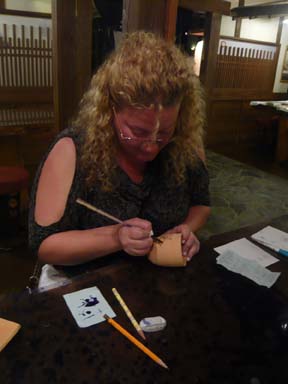
Jalayne Grady painting pottery at artisan display. PHOTO: Sean Savoy


Breakfast at hotel. Tour 2 of the 88 temples on Shikoku’s pilgrimage route. The second temple, Gokurakuji (Sun Light Mountain), is called the Temple of the Pure Land. Lunch and then a visit to Izanagi Shrine. Transfer to Osaka. Free for dinner. Overnight at Hotel Laforet Shin-osaka.


GOKURAKUJI

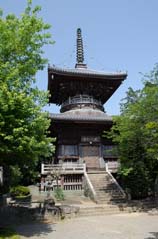
Gokurakuji Temple. PHOTO: Jim Elliott


“Gokurakuji (Sun Light Mountain) is large and is called the “Temple of the Pure Land.” We are particularly impressed with its geographical alignments and prominent sundial-astronomical meter near the entry.”

—Journal entry by Gary Buchanan


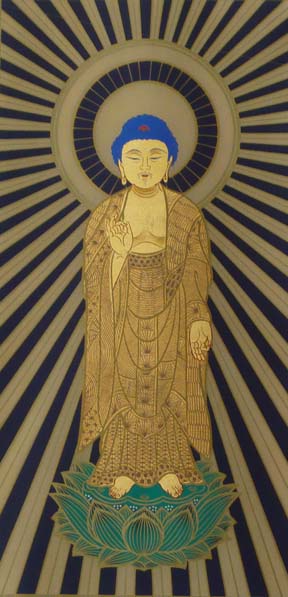
Buddha image. PHOTO: Sean Savoy


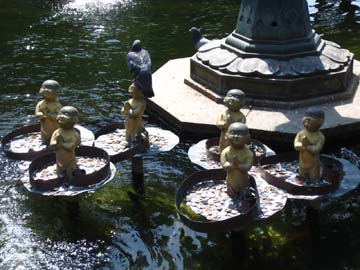
Water scene at Gokurakuji Temple. PHOTO: Ron Theriault


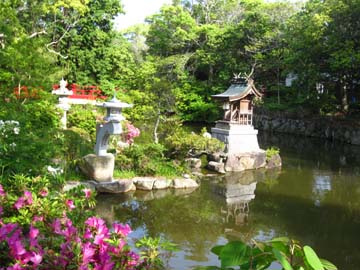
IZANAGI SHRINE


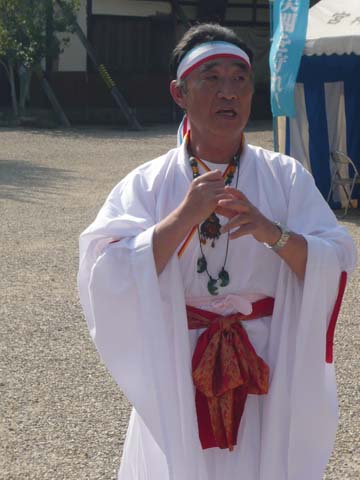
Shinto priest lecturing at lesser Izanagi Shrine. PHOTO: Sean Savoy

“At the lesser Izanagi Shrine we meet up with a Shinto priest who lectures for a couple of hours on the site, its orientation, while several of our group make sure they ring the large bell hanging in a small pagoda nearby.”

—Journal entry by Gary Buchanan


Garden at Izanagi Shrine. PHOTO: Ron Theriault


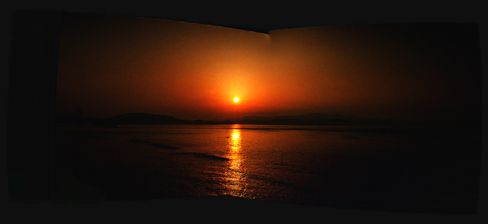
Sunset from Naruto Island. PHOTO: Jim Elliott


<DAY 11>

<DAY 13>


The Divine Child of Virgil, Part 1


A bust of Virgil from his tomb at Naples, Italy. PHOTO A. Hunter Wright

1

 For two thousand years, readers of Virgil’s Fourth Eclogue have speculated, without success, on the identity and nature of the Divine Child described in that poem: How did the prophetic image of the Child enter the poem and why? Where did the image of the Child come from? Who is the Child?. It is the  intention of these pages to bring  speculation to an end.


Late in the year 40 B.C.E., somewhere in Italy, perhaps in Rome or in Sicily or, more likely, in Campania, at Naples, just south of Cuma, the oldest Greek city in Italy and the home of the Cumae Sybil, the young poet Publius Vergilius Maro, a native of Mantua descended from the bardic Celts and a citizen of Rome, better known to us as Virgil, was attempting to solve an aesthetic problem. Reclusive and painfully shy, Virgil had recently turned from writing the glorious epic of Rome, thinking himself unequal to the task. He had also resisted writing a heroic poem on the part which his patron, Gaius Asinius Pollio, played two years earlier in the final battle of the civil war, when Pollios, as general, saved Virgil’s family farm, the root of Virgil’s livelihood, from confiscation when Octavian was awarding land to his troops for their victory at Philippi. Now the glory of his patron was again on the rise: that past September, Pollios salvaged the promise of a lasting peace after a decade of war by designing the Treaty of Brundisium, and he was now about to enter his consulship. Virgil, obligated to Pollios, could procrastinate no longer: the project before him had to be dedicated to his patron.

Virgil had already read with insight the real condition of his troubled and factious time. The ideas he had to express in the poem which he was creating were profound, even soteriological: the world, in need of regeneration, required a new spirit; the Roman Empire had the duty and was intended by Providence to introduce this new spirit; Providence itself would send a special deliverer to begin the act of regeneration, the divine boy-child promised and celebrated each year in the Mysteries of Demeter at Eleusis. Virgil decided: he would praise his patron Pollios in his praise of the blossoming promise of that divine child to come, a child expected to be born within the year, the first year of his patron’s consulship. To accomplish this task, Virgil, who owed more to his Greek predecessors than many other great poets, borrowed from them: from Theocritus, his tone, his artistic structure, and his subjects; from Hesiod, his pastoral images; and from the Oracles of the Sibyl, his prophetic vision. Virgil set to work on the poetic composition that would become his Fourth Eclogue, first drafting his solution to the problem in prose, later turning the first proof before him slowly into sixty-three lines of verse shaped around the mystic number seven (7×9). Suetonius gives us a glimpse of Virgil’s method: The poet would take up each part of his argument as he felt moved to do, in no particular order, compose each morning a number of verses, then reduce them in number for the remainder of the day; and so that the flow of his thought might not be checked, he left the unfinished parts bolstered up with a few slight words (put in, he joked, like props to support the structure until the solid columns arrived). In this way Virgil proceeded for many days, turning even the oracular Greek into Roman verses. His poem, when completed, sang of the Roman consul, spoke of a crime committed by the Roman people, of a terror that gripped the world, and of a mysterious act of primeval treachery, and announced the impending birth of a divine boy-child, “the Light of Ages,” and praised his coming, the sign of the beginning of a new Golden Age.

Virgil’s Ten Eclogues, his first series of poems, was published in 39 B.C.E. The poems were so well received by the literary circle of Rome that his patron Pollios introduced him to the leader of the circle, the wealthy and influential government minister Maecenas, who, in turn, introduced him to the future Caesar Augustus, Octavian. Virgil’s second series of poems, Georgics, was written in honor of Maecenas and with the encouragement of his new patron. Near the end of his life, Virgil wrote his final poem, Aeneid, which succeeded magnificently at the task he had set out for himself initially: to write the epic of Rome. With that poem, Virgil gained fame as the “Roman Homer.”

To read Part 2, click HERE.