ALFRED RUSSEL WALLACE: On the Human Tendency Toward Spiritual Being, Part 2
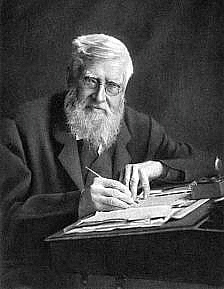
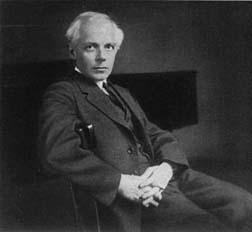
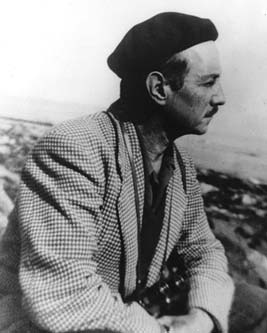
Alfred Russel Wallace (1913) near the end of his life.
A Postulate on Man’s Spiritual Destiny 1
In the first essay that Alfred Russel Wallace devoted exclusively to the law of natural selection and man (in truth, the first essay devoted exclusively to the law of natural selection and man), “The Development of Human Races Under the Law of Natural Selection” (1864), Wallace already remarks that the steady and permanent advance of society toward moral and intellectual elevation cannot be imputed in any way to the survival of the fittest: “I am forced to conclude that it is due to the inherent progressive power of those glorious qualities which raise us so immeasurably above our fellow animals, and at the same time afford us the surest proof that there are other and higher existences than ourselves, from whom these qualities may have been derived, and towards whom we may be ever tending” (Conclusion, p. 185). This human tendency towards spiritual or “angelic” being Wallace merely mentions in his first essay on man. In his second, “The Limits of Natural Selection as Applied to Man” (1870), Wallace exemplifies this tendency with a short list of faculties and characteristics that he believes cannot be the result of natural selection alone: the organ of the mind prepared in advance for the moral and intellectual development of human nature; naked and sensitive skin; erect form; the perfection of the vocal organs; feelings of abstract justice and benevolence; conscience, or the moral sense; the capacity to form ideal conceptions of space, time, eternity, and infinity; the capacity for intense aesthetic pleasure in form and color and composition. This class of phenomena, evidently essential to the perfect development of terrestrial man as a spiritual being, Wallace suitably introduces and then humbly infers: “. . . a superior intelligence has guided the development of man in a definite direction, and for a special purpose, just as man guides the development of many animal and vegetable forms.“2 Later, on the same page, he makes this suggestion: “. . . if we are not the highest intelligences in the universe, some higher intelligence may have directed the process by which the human race was developed, by means of some more subtle agencies than we are acquainted with. At the same time I must confess that this theory has the disadvantage of requiring the intervention of some distinct individual intelligence, to aid in the production of what we can hardly avoid considering as the ultimate aim and outcome of all organized existence – intellectual, ever-advancing, spiritual man” (Summary of the Argument as to the Insufficiency of Natural Selection to Account for the Development of Man, pp. 204– 205). In the 1889 essay “Darwinism Applied to Man,” Wallace transforms the inference he made in 1870 into a bold and forceful statement: “To us, the whole purpose, the only raison d’être of the world – with all its complexities of physical structure, with its grand geological progress, the slow evolution of the vegetable and animal kingdoms, the ultimate appearance of man – was the development of the human spirit in association with the human body” (Concluding Remarks, p. 477).
The above statements, trimmed of all merely rhetorical phrases and joined together into a single statement of teleological principle, we now assume to form Wallace’s postulate on the spiritual destiny of man:
Those glorious qualities which raise us so immeasurably above our fellow animals may have been derived from higher existences than ourselves towards whom we may be ever tending – some higher intelligence that has guided the development of man, just as man guides the development of many animal and vegetable forms, by means of some more subtle agencies than we are acquainted with – to aid in the production of ever-advancing, spiritual man, which, to us, was the whole purpose, the only raison d’être of the world: the development of the human spirit in association with the human body.
Though tentative, this glorifying sentence does contain phrases that some may find questionable. I will attempt briefly to address these questions.
First, you may ask, what are the glorious qualities which raise us so immeasurably above our fellow animals? In his 1870 second essay on man, Wallace gives us a list of these qualities (reproduced above). In his 1889 essay, he suggests the addition of three primary faculties – the mathematical, the artistic, and the musical – as well as the “metaphysical faculty” and the “peculiar faculty of wit and humor.” I see no reason to modify Wallace’s list, except to add to it the spiritual faculty, to which the world’s sacred records attest and to which I, and others, can attest from personal experience. (If you attribute these glorious qualities to some more mundane source, I would beg an answer to the question: “What are the fiduciary credentials, spiritually speaking, of the intellectual authorities in whom you bank your trust?”)
Next, you may ask, what is this superior intelligence Wallace speaks of, and what is the nature of its subtle agencies? This is a question that holds its meaning outside of time and space – in sequences without duration, in forms without spatial limit, incalculable and primary – one of those questions that is called “eternal.”3 Some would deny me this adjective and construct instead some image of the universe that accounts only for what can be perceived and measured by the senses of the terrestrial body or by those same senses refined by technology. To do so, it seems to me, can only result in oversimplification. For myself, I find enough coincident evidence for such a superior intelligence and its agencies, beyond my own experience even, in the formulas and commentaries that remain of the spiritual sciences which the adherents of True Religion have applied over millennia, even since the latest great catastrophe changed again and for all time the rules of physical existence for our world.
Finally, there is the question: Can it actually be that the whole purpose, the only raison d’être of the world is the development of the human spirit in association with the human body? 4 For me, the answer can only be yes. No science, no religion offers another. At best there arises here and there in the intellectual fray a philosophical suggestion, or a theoretical argument, that the world has no purpose or that that purpose cannot be known. The notion that the world has no purpose must, in effect, always be expressed as a kind of tautology, an explanation of the perception of the limits of physical life with perceptory senses that are derivatives of that limited life; in other words, a statement in which like is more or less explained with like, and so, ultimately, a statement in which nothing is more or less explained with nothing – no matter what opposing terms are used to convey the processes of life and nihility. The notion that the purpose of the world cannot be known always betrays a sense of tragic insufficiency, an inability to go deeper than the creation of a formal argument that makes use of the unfortunate but unavoidable imprecisions inherent in human language and its premises; such a notion is the antithesis of the certain experience upon which the theories of science, and the tests of those theories, claim to be built. Both these alternatives are void and insubstantial, and so, untenable, as science.
Robert G. Petrovich 2000, 2010
FOOTNOTES
1. All the essays of Wallace quoted herein may be found in Natural Selection (1891), with the exception of “Darwinism Applied to Man,” which may be found in Darwinism (1889). The emphasis added to the passages quoted is my own.
2. For further discussion of this statement, I refer the reader to Part 4: “Corollary to the First Theory of Natural Selection.”
3. For future discussion of this superior intelligence and its subtle agencies, I refer the reader to Part 8: “General Theory of Natural Selection Applied to Man Under the Influence of the Dark Nature” and Part 9 “General Theory of Natural Selection Applied to Man Under the Influence of the Light Nature.”
4. For further discussion of this question, I refer the reader to Part 5: “General Theory of Natural Selection Applied to Homo sapiens sapiens.”
< PART 3 >