Services for the Week of March 9, 2013


Saturday, March 9, 2013
10:00 AM COMMUNION
Chapel of The Holy Child
RR Gene Savoy Jr.
Lector: RM Carol Ann Crabb
Cantor: Rev. Robert Roy
Reader: Rev. Ben Hubbard
Organist: RC Gary Buchanan


 Sunday, March 10, 2013 *
7:11 AM NEW DIVINE SERVICE
Church of New Epiphany
Leave: 6:15
Gate: 6:56
Sunrise: 7:26
RR Gene Savoy, Jr
Concelebrant: RR Sean Savoy
Assistants:
RC Roger Weld
RC Robert Petrovich
Rev. Barbara Snyder
Organist: RC Gary Buchanan

OPEN-AIR COMMUNION
Church of New Philadelphia                    RM Carol Ann Crabb
Church of New Qumran                   Claudia Grady
Church of New Bethany                   Gary Huss, Jr.

* Daylight Savings Time begins.


Wednesday, March 13, 2013
12 N COMMUNION
Chapel of the Holy Child
RR Sean Savoy


Friday, March 15, 2013
9:00 AM PRAYER & FELLOWSHIP
Chapel of the Roses
RC Rebecca Willis


JAPAN REPORT: Fall 2012 Revisited

On August 26, 2012, a few Community members from Miyazaki joined members from Fukuoka for Sunrise Divine Service, after which Bishop Yukinori presented a lecture on Color and Sacred Imagery. PHOTO: Keiko Inoue

Our Japan correspondent Miyuki Okayama and photographer Keiko Inoue have provided us with a number of photographs and identified them for us, so that we could put together this gallery of photos to revisit some of the events during Fall 2012 at the Cosolargy Institute in Japan. In addition to Sunrise Services on Sunday, the Community in Japan at Fukuoka holds Communion Service on Saturdays, followed by informal meetings with the public, and lecture seminars each weekend for two of the seven Academy classes.

Bishop Yukinori poses with officiants and staff after Communion Service on his birthday, September 1, 2012. PHOTO: Keiko Inoue


Participants in the Sunrise Service held at the ancient solar site of Yakinotouge on September 2, 2012. PHOTO: Keiko Inoue


“Why We Love Beautiful Things”

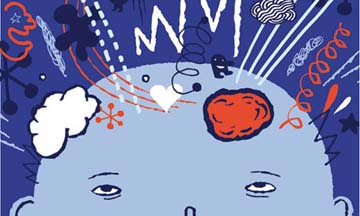
Detail of a drawing by Baptiste Alchourroun

An article by Lance Hosey published February 15, 2013, in the New York Times opinion page caught the eye of one of our Community members, who is a painter. It must have been the discussion of the effect of colors and the concept of our genome-determined sense of beauty that attracted her.

Consociate Robert Anderson had this to say about the article: “It demonstrates what Cosolargists know about the generation of wavefronts and their effects and color and its effects, and it demonstrates that science and art, like science and religion, can reveal the same truths. Our preexistent nature recognizes these higher forms. A materialistic perspective has to resort to a physical cause and the ultimate physical cause for humans (in this perspective) is the gene, but I would say it’s our higher consciousness that finds these attractive because they ARE higher (dimensionally speaking) and thus closer to God and our true Selves.”

Read the entire article online at nytimes.com and tell us what you think about it.

link submitted by Frieda Nelson


Services for the Week of March 2, 2013


Saturday, March 2, 2013
10:00 AM COMMUNION
Chapel of The Holy Child
RR Gene Savoy Jr.
Lector: RM Carol Ann Crabb
Cantor: Dea. Stephan Fuelling
Reader: Dea. Shane Grady
Organist: RC Gary Buchanan

 Sunday, March 3, 2013
6:22 AM NEW DIVINE SERVICE
Church of New Epiphany
Leave: 5:15
Gate: 6:07
Sunrise: 6:37
RR Gene Savoy, Jr
Concelebrant: RR Sean Savoy
Assistants:
RC Roger Weld
Rev. Ted Staver
RM Carol Ann Crabb
Organist: RC Gary Buchanan

OPEN-AIR COMMUNION
Church of the Golden Age of Light                    RC Elizabeth Reece
Church of the Universal Theocracy                   Rev. Barbara Whitney
Church of the New Covenant                   Rev. Vickie Hewlett

Wednesday, March 6, 2013
12 N COMMUNION
Chapel of the Holy Child
RR Gene Savoy Jr.

Friday, March 8, 2013
9:00 AM PRAYER & FELLOWSHIP
Chapel of the Roses
RR Sean Savoy


Approaching the I Ching, Part 7

D. READING THE HEXAGRAM

A young yin or young yang line does not change. An old yin or old yang line is a changing line and turns into its opposite. A hexagram with all young lines is static; only the text of the statement of the hexagram with all young lines applies to you and none of the line commentaries. The oracle then takes into account only the idea represented by the hexagram as a whole, as set down in the Judgment and the Commentary on the Decision, together with the Image.

If there are one or more changing lines in the hexagram cast, the words appended to the given line or lines are also to be considered. These words carry the superscription “Nine in the xth place” or “Six in the xth place.” Further, if there are changing lines, the change in the lines gives rise to a second hexagram, whose meaning also needs to be taken into account. Read the text for this second hexagram but none of its line commentaries.

The first hexagram presents your situation at the moment. The first hexagram is the starting situation of a development that leads, by way of the situation discussed in the changing lines and their appended counsel, to the second hexagram.

As with anything, experience and time are important to achieve success with the I Ching. Properly handled, the I Ching can assist you to make right decisions in important matters. Be wary of misinterpretations. Careful and meditative readings are essential to receive the proper answers.

Reading the First Hexagram: The Development of the Situation
Consult the texts in Book I. With careful thought and meditation, the answer will be found somewhere in the text. Following the reading in Book I, read the commentaries in Book III. Take into account the texts of the Judgment and of the Image and of the commentaries accompanying them, as well as the texts of changing lines that appeared in the hexagram you cast, but not the other line texts.

The texts describe energy fields potent with many meanings. The process of working with these meanings can open a new way of seeing things. The texts speak directly. Meaningful complexes of images open our awareness in the same way that images of a dream remembered activates our imagination, and meaning arrives.

Reading the changing lines
The texts of the changing lines (6 or 9) reveal the potencies of individual action within the situation described by the first hexagram as a whole and suggest what your situation can lead to and how you can get there. The texts of the changing lines advise on the direction of specific actions and the potential consequences.

Each hexagram is built from six lines. These lines are symbols of time and position. The hexagrams represent dynamic developments in time, the possible modes of change in the world. Each hexagram may be seen as a set of six empty places or positions through which energy moves and changes. Energy comes into the hexagram from below and leaves at the top. The places are numbered sequentially, and each of the lines in sequence from bottom to top generally represents a stage of progress in the situation.

The present situation is revealed by the name and structure of the hexagram together with the Decisions, the Commentary on the Decision, the Image, the Commentary on the Image, and the Commentary on the Lines. The interpretation of each changing line involves not only the initial moment of the present situation but also its association with the “approached hexagram” that indicates future potential or tendency. Changing lines describe the various aspects of the change from the first hexagram to the approached hexagram. When several changing lines are received, they should be read, from bottom to top, as sequential events in the change from one situation to the next. They may also describe the points of view that you may develop while in transition.

In the Changes, the position of each line within its hexagram is considered meaningful: the first and lowest line is early and peripheral to the situation, the fifth line is generally the climax of a situation, and the sixth line is late and outside the situation. It may be that a situation in itself favorable may reveal unfavorable aspects at various stages along the way; for example, at the beginning when the situation is still embryonic, or at the end when the influence of the situation is ebbing. In the Changes, that which is late in a cycle changes into its opposite and generates a new cycle. In this way, each hexagram represents a cycle.

Reading the Second Hexagram: The Final Situation in Potential
When the changing lines turn into their opposites, they generate a second hexagram, the “approached hexagram,” which is an image of the overall future potential of the situation. The approached hexagram indicates the direction in which your situation can evolve if you choose to act in the way described. The Image of the approached hexagram does not present an immutable future but indicates the potential contained in your present situation.

The Judgment and the Image of the first hexagram describe the situation in which you find yourself, and the line texts contain the specific advice the situation calls for. When all the changing lines are changed into their opposites, the initial hexagram is transformed, and in this way, the second hexagram emerges. The Judgment and the Image of the approached hexagram show the result that can be attained if this counsel is followed. The counsel in the line texts of the approached hexagram are ignored.

*

As you read through the texts, certain images will present themselves as the key images of your situation. Examine their meanings and let them suggest ways to understand your situation. The ultimate interpretation is cumulative. The commentary on the images of the I Ching by the third-century interpreter of the I Ching, Wang Bi, may help to clarify the process of understanding the images:

It is the images that give meaning, it is the words that make the image clear. To exhaust the meaning there is nothing better than the images; to exhaust the images there is nothing better than the words. The words ought to concentrate on the images, then the right words for contemplating the images are found. The images ought to concentrate on the meaning, then the right images for contemplating the meaning are found. The meaning is exhausted by means of the images. The images are exhausted by means of the words. Thus he who speaks in order to make the images clear obtains the images and becomes oblivious of the words; he who makes images that contain the meaning obtains the meaning and becomes oblivious of the images. It is like following a trail to catch a hare. Once one has the hare, one forgets the trail. Or it is like putting out wicker traps to catch fish. Once one has the fish, one forgets the traps. Now, the words are the trails of the images, and the images are the traps of the meaning. Therefore, whoever retains only the words does not grasp the images, and whoever retains only the images does not grasp the meaning. The images arise from the meaning, but if one retains only the images then what is retained are not the right images. The words arise from the images, but if one retains only the words then what is retained are not the right words. Thus only by forgetting the images can one grasp the meaning, and only by forgetting the words can one grasp the images. In fact, grasping the meaning consists in forgetting the images, and grasping the images consists in forgetting the words. Thus if images are established that exhaust the meaning completely, one may forget the images. And if the trigrams are superimposed on each other in order to exhaust the situation completely, then one may forget the exhaustion. If, then, one hits upon the types, one can make their images; if one is in harmony with the precepts, one can bear witness. . . . Only when one forgets the images and studies the meaning do the precepts emerge.
(Chou I Lueh-li, or General Remarks on the Changes of the Zhou, section 4, Hellmut Wilhelm, translator)


“This column will change your life: pseudoscience”

ILLUSTRATION: Kenneth Andersson for the Guardian

“When does science become pseudoscience? And when is it something else entirely?

“It’s a given that the world of pop psychology contains spadefuls of pseudoscience, but as soon as you start reading Michael Gordin’s compelling new book, you realise you don’t quite know what that word means,” says Guardian writer Oliver Burkeman, author of the article.

“The article does not really present anything new,” says Consociate Robert Anderson, “just the standard dogmatic rejection of fringe thinking and experience, the ‘nothing that happens outside the lab is real science’ mentality. Its point that some things are just not science could be answered with: not science that we have yet figured out, though some people (especially healers) don’t worry about lab replication as much as results—even just one client.”

Read the article online and tell us what you think: < Follow this link to “This column will change your life: pseudoscience” at guardian.co.uk. >


link submitted by Frieda Nelson


Approaching the I Ching, Part 6

B. CASTING THE WANDS TO FORM A HEXAGRAM

According to the ancient tradition we follow, King Wen used wands made of tortoise shell inlaid with ivory to meditate upon the Changes. Ancient Chinese adepts approached the source with great dignity. They made their invocations dressed in ceremonial robes, in the presence of the proper flowers and with incense and candles burning. There were six wands, one for each of the six places in a hexagram. They were exactly alike: one side blank, the other side inlaid. These wands were placed up the sleeves of their robes, three in each sleeve, before they were cast on the floor. The simple arrangement the adept cast gave an answer to the question asked.

Concentrate on your question, and concentrate on addressing your question directly to the Changes (I Ching). With the mind prepared, and while in a kneeling position, pick up the wands, three in each hand, and cast them before you in such a way that all six wands are scattered before you separate from each other.

To form the hexagram, select the wand nearest you and then the wand next nearest you, one at a time, putting them in sequence, from bottom to top, until the hexagram is complete. Place the wands before you in sequence with the side facing up that appeared when they fell. Do not worry if there are two so close that you cannot easily determine which is closer to you. Consider whichever one your hand reaches out for first to be the closest.

C. RECORDING THE LINES OF THE HEXAGRAM CAST

The hexagram that you cast is the one that links your question with the oracle texts that answer it.

Draw the hexagram that is formed from bottom to top.


When the result is ,

draw a broken line with an X in the middle , indicating an open line that is changing, the so-called old yin, and number it “6.”


When the result is [side inlay down figure] ,

draw a whole line with a circle in the middle , indicating a whole line that is changing, the so-called old yang, and number it “9.”


When the result is ,

draw a whole line , indicating a whole line that is at rest, the so-called young yang, and number it “7.”


When the result is ,

draw an open line , indicating an open line that is at rest, the so-called young yin, and number it “8.”


                 9      old yang changing

                 8      young yin at rest

                7      young yang at rest

                6      old yin changing


In this way a hexagram of six stages is built up.

If all the lines in the hexagram are either young yin or young yang lines—meaning lines that are at rest and do not change—simply record the hexagram that they form.

Find your hexagram in the Index and write down the name and number of the hexagram formed.

If the hexagram you cast contains lines that change—meaning old yang or old yin lines—then you need to derive a second hexagram by substituting the opposite line for each of the “old” changing lines. Draw the second hexagram beside your first one. Beginning from the bottom line, copy the lines of the first hexagram. Whenever you arrive at an old yang line, draw a young yin line in its place in your second hexagram. Whenever you arrive at an old yin line, draw a young yang line in its place in your second hexagram. Find the second hexagram in the Index and write down the name and number of this hexagram.

<PART 7>


JAPAN REPORT: Summer 2012 Revisited

Officiants at the first Sunrise Service held at the ancient solar site of Yakinotouge on May 6, 2012. PHOTO: Keiko Inoue

Our Japan correspondent Miyuki Okayama and photographer Keiko Inoue have provided us with a number of photographs and identified them for us, so that we could put together this gallery of photos to revisit events during Summer 2012 at the Cosolargy Institute in Japan.


Congregants and officiants after the Sunrise Service at Yakinotouge on May 6, 2012. PHOTO: Keiko Inoue

View to the east from Yakinotouge. May 6, 2012. PHOTO: Keiko Inoue

View to the south from Yakinotouge. May 6, 2012. PHOTO: Keiko Inoue


Morning sun at Yakinotouge on May 13, 2012. PHOTO: Keiko Inoue


Congregants and officiants after the Sunrise Service June 6, 2012, the day Venus crossed the face of the sun. The group did astronomical observations following the service. PHOTO: Keiko Inoue


Congregants gather for Sunrise Service at Yakinotouge June 24, 2012. PHOTO: Keiko Inou


Yukinori with others at weekly social gathering held at the Cosolargy Institute of Japan after Sunrise Service on July 8, 2012. PHOTO: Keiko Inoue


The sun as seen from the ancient solar site of Yakinotouge on July 9, 2012. PHOTO: Keiko Inoue


Approaching the I Ching, Part 5

III. CONSULTING THE I CHING USING THE SIX-WAND METHOD

A. PREPARATION

To prepare yourself for your introduction to the I Ching, we recommend that you follow the suggestions made in Project “X” Symposium III: Solar Teachings of China. Obtain a copy of the Wilhelm/Baynes English translation of the I Ching and use that as your standard text for reference. (All references made to the I Ching in the Project “X” symposium and in this section are to the Wilhelm/Baynes text unless otherwise noted.) Make yourself familiar with the text by reading the Foreword by Carl Jung, the Translator’s Note by Cary F. Baynes, and the Preface and Introduction by Richard Wilhelm—in that order. Then turn to Book II, “The Material,” and read the Introduction, Part I, and Part II in their entirety. Put aside Book I, “The Text,” and Book III, “The Commentaries,” for later reference and study. You may find all this heavy reading, but do not be discouraged. It takes many years to understand the I Ching. The oracle book can be absorbed and understood only through careful reading, deep reflection , and continual use.

Preparing the Circumstances
The technique of consulting the I Ching is not complicated in itself. What is important is to make it work. When you are in possession of the wands and a copy of the I Ching, you are prepared to consult the oracle.

Approach the oracle with respect. When the book is not in use, it is traditional to wrap the book and the wands in silk or some other elegant cloth, and to place the wrapped book and wands on a shelf at about eye level. It is recommended to wash the hands before divination, then to unwrap the book and the wands and to spread out the wrappers before you as you would tablecloths.

The proper approach to the I Ching is as a ritual. All spiritual matters require us to take the first steps. Then there will be a response. The spiritual does not pursue us first. We must initiate the encounter. This is the purpose of ritual. This is the role that ritual has served since ancient times. Ritual is a symbolic language that has to be acted out to have meaning. Look upon ritual as an aid to the psychic processes that play an important role in consulting the oracle. The psyche functions via symbols and understands them. If you speak to the psyche in symbols, it will respond. By the use of symbols, the adept gains access to information that is not available to the average person. Some form of ritual is recommended, no matter how simple. The I Ching will work only if a proper state of mind has been attained. Ritual helps us to achieve this state.

In Chinese tradition, those in authority faced south when granting an audience. Thus during the consultation, you should sit near the center of the room and face north, prepared to receive the instructions of the oracle (the “authority” in this case).

Privacy is essential. Compose yourself in a clean and quiet room. Be absolutely alone. Let no one disturb you. Place the I Ching and the wands before you. It is helpful to have a vase of fresh flowers nearby with a candle and a stick of incense burning. Offer up a prayer or use a short form of meditation to attain a tranquil and reverent state of mind. During this time, formulate the question in your mind.

Preparing the Question
The I Ching should be used to receive answers to important questions. Do not use it indiscriminately. The I Ching helps you to see what forces are at work, how they can develop, and how you can relate to them.

The I Ching is a book of wisdom that can help you make the right decision in harmony with the natural laws of the universe. Therefore, the question you ask of the I Ching should relate to your life as an adept. The question is the point of contact that focuses the images and connects them to your situation. The question is your point of contact with the unknown. You are asking for a deeper understanding on which to base your decision and actions. The oracle’s response to the question you ask will come through the text of one of the 64 hexagrams. The decisions given are for the betterment of the individual and the world community.

It is vital that the question to be asked is clear in your mind. Have a clear concept of what it is you are asking. The question needs to be presented without any form of confusion. Make the question simple and clear. Avoid vague and either/or questions. The more specific your question, the more specific the answer will be. It is better not to ask for a prediction. The best inquiry is for advice. Phrase the question as an inquiry about your situation: “How can I—?” or “What will happen if—?” or “What should my attitude be toward—?” or “What will be the result of—?”

There is no answer until one inquires. You must first approach and inquire in order to receive. You must initiate the encounter. Make a clear and precise formulation of your question in words and write the question down together with the date in a notebook; in other words, a diary. Below the written question, you will record the hexagram once it is cast.

In a single session, ask only one question. The oracle should not be abused by repeating the same question or by asking irreverent or trivial questions. The Commentary warns: If you approach the I Ching a second time, you will not receive an answer.

< PART 6>


Services for the Week of February 23, 2013


Saturday, February 23, 2013
10:00 AM COMMUNION
Chapel of The Holy Child
RR Gene Savoy Jr.
Lector: RC Gary Buchanan
Cantor: Rev. Bruce Kanzelmeyer
Reader: Rev. Karen Elliot
Organist: Jonathan Kanzelmeyer

  6:00 PM 77th Pannuches Meal Rite
Chapel of the Holy Child
Concelebrants:
RR Gene Savoy Jr
RR Sean Savoy
RM Carol Ann Crabb

 Sunday, February 24, 2013
ADVENT VIGIL
6:33 AM NEW DIVINE SERVICE
Church of New Epiphany
Leave: 5:30
Gate: 6:18
Sunrise: 6:48
RR Gene Savoy, Jr
Concelebrant: RR Sean Savoy
Assistants:
RC Roger Weld
RC Robert Petrovich
Rev. Barbara Whitney
Organist: RC Gary Buchanan

OPEN-AIR COMMUNION
Church of the Races of Man                    RR Sean Savoy
Church of the End Times                   RC Robert Petrovich
Church of the New Covenant                   Dea. Shane Grady

Wednesday, February 27, 2013
12 N COMMUNION
Chapel of the Holy Child
Rev. Dorothy Kubiak

Friday, February 22, 2013
9:00 AM PRAYER & FELLOWSHIP
Chapel of the Roses
RC Robert Petrovich